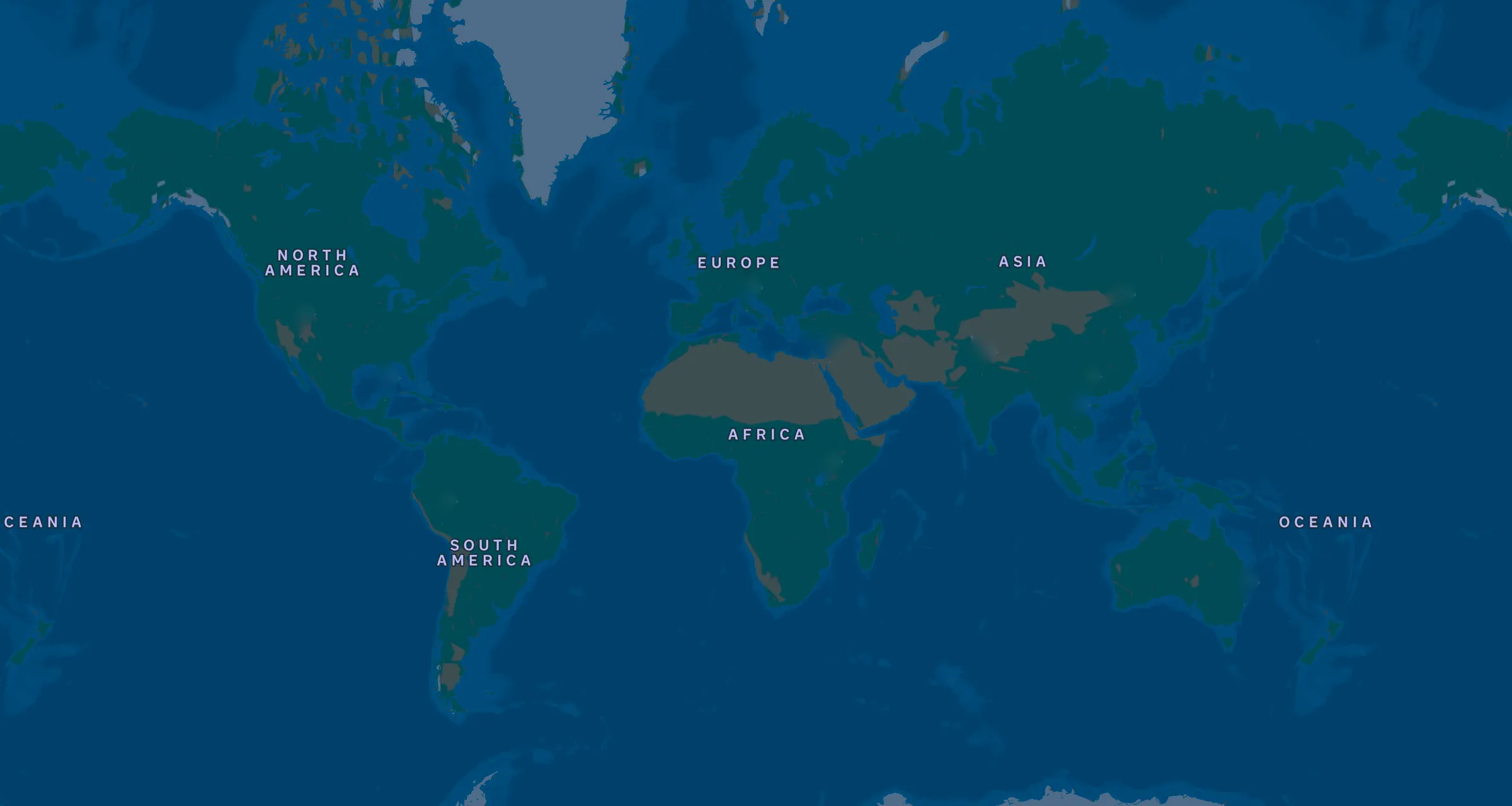
Russia Travel: Moscow, St Petersburg and a Country of Eleven Time Zones
Russia travel spans eleven time zones across two continents. Moscow and St Petersburg anchor most first journeys through the country.
Russia, officially the Russian Federation, is the largest country in the world by area, covering about 17.1 million square kilometres across Eastern Europe and Northern Asia, and its scale shapes every journey: a single train ride can cross forests, steppe and mountains for days, while a short flight can move a traveller from a Baltic port to a Pacific harbour. The capital is Moscow, a city of the Kremlin, Red Square and St Basil’s Cathedral, and the second city, St Petersburg, is a planned imperial capital of canals, palaces and museums on the Neva delta. Russia travel rewards travellers who plan around distance, because the country holds eleven time zones, four seasons that differ sharply by region, and cities whose characters change completely between the European west and the Siberian east.
About 144 million people live in Russia, and most of them live west of the Ural Mountains, in the European part of the country, where Moscow and St Petersburg hold the largest populations. Russian is the official language across the federation, and the country is a federal republic of republics, territories, regions and autonomous districts, with a diversity of peoples, languages and faiths that reflects its size. Its history runs from the early medieval state of Kievan Rus through Mongol rule, the rise of Moscow, the Romanov empire, the Soviet period and the Russian Federation that followed 1991, leaving a heritage of kremlins, monasteries, palaces and wooden churches that few countries can match.
Quick Facts About Russia Travel
| Item | Detail |
|---|---|
| Official name | Russian Federation |
| Capital | Moscow |
| Location | Eastern Europe and Northern Asia; borders Norway, Finland, Estonia, Latvia, Lithuania, Poland, Belarus, Ukraine, Georgia, Azerbaijan, Kazakhstan, China, Mongolia and North Korea |
| Coordinates | 66.42° N, 94.25° E, from Wikidata |
| Wikidata | Q159, verified through the Wikidata API on 22 November 2026 |
| Type | Federal semi-presidential republic |
| Population | About 144 million people |
| Area | About 17,098,246 square kilometres, the largest country in the world |
| Time zones | Eleven, from UTC+2 to UTC+12 |
| Official language | Russian |
| Currency | Russian rouble, RUB |
| Highest peak | Mount Elbrus, 5,642 metres |
| Longest river | Volga, 3,530 kilometres, the longest river in Europe |
| Deepest lake | Lake Baikal, 1,642 metres, the deepest lake in the world |
| UNESCO | 33 World Heritage sites, 22 cultural and 11 natural |
Geography of Russia Travel
Russia travel begins with a map, because no other country covers so much ground: the federation stretches about 9,000 kilometres from the Baltic coast in the west to the Pacific coast in the east, and about 4,000 kilometres from the Arctic Ocean in the north to the Caucasus and the Central Asian steppe in the south. The Ural Mountains, running north to south, mark the conventional boundary between Europe and Asia, yet the country is a single state on both sides of that line, and the great Siberian plain east of the Urals holds most of the territory and a small share of the population. The borders touch fourteen countries, more than any other state except China, and the frontier runs from Norway in the far north-west to Poland on the western plain, while the coastline runs along the Arctic Ocean, the Pacific Ocean, the Baltic Sea, the Black Sea and the Caspian Sea, the last of which is the largest enclosed body of water on Earth.
The relief of Russia travel divides into several great regions, each with its own landscape and climate. The East European Plain, west of the Urals, is a lowland of forests, fields and river valleys that holds Moscow, St Petersburg and most of the historic towns of the Golden Ring. East of the Urals lies the West Siberian Plain, one of the largest flat areas on the planet, covered by taiga forest in the north and steppe in the south, and crossed by the Ob and the Yenisei, two of the longest rivers in the world. Further east, the Central Siberian Plateau rises into hills and tablelands around the Lena, and the far east holds the mountains and volcanoes of Kamchatka, the ranges of the Sikhote-Alin and the island of Sakhalin, while the Caucasus in the south-west holds Mount Elbrus, at 5,642 metres the highest peak in Europe.
Rivers and lakes give Russia travel its great natural landmarks, and several of them hold world records. The Volga, at 3,530 kilometres, is the longest river in Europe, flowing from the Valdai Hills through Kazan and Volgograd to the Caspian Sea, and it has carried trade, pilgrims and armies for a thousand years. The Ob, the Yenisei and the Lena flow north across Siberia to the Arctic Ocean, each longer than 4,000 kilometres, and their basins hold forests, oil, gas and some of the coldest inhabited places on Earth. Lake Baikal in Siberia, at 1,642 metres deep, is the deepest lake in the world and holds about a fifth of the fresh surface water on the planet, while Lake Ladoga near St Petersburg and Lake Onega are the two largest lakes in Europe, and the Caspian Sea, shared with four other states, is a brackish inland sea with its own sturgeon and its own oil fields.
The climate of Russia travel changes more with distance than almost anywhere else, and a traveller must plan for the region rather than the country as a whole. Moscow and St Petersburg have a humid continental climate, with cold winters that often fall below minus ten degrees Celsius and warm summers that can reach thirty degrees, while the Black Sea coast around Sochi is mild and subtropical, with palm trees and a long bathing season. Siberia has one of the most extreme continental climates on Earth, with winters in Yakutsk falling below minus forty degrees and summers that are short, warm and full of mosquitoes, and the far north, beyond the Arctic Circle, has polar nights in winter and the midnight sun in summer. The best months for most journeys are May to September, when the days are long and the roads and rivers are open, and June brings the White Nights to St Petersburg, when the sun barely sets and the bridges rise over the Neva through the night.
The regions of Russia travel each offer a different kind of journey, and the distances between them are part of the experience. The north-west, around St Petersburg and Karelia, holds lakes, wooden churches and the islands of Kizhi and Valaam, while the Golden Ring towns north-east of Moscow, such as Sergiev Posad, Suzdal, Vladimir and Yaroslavl, keep kremlins, monasteries and onion domes in small historic centres. The Volga region holds Kazan, the capital of Tatarstan, where a kremlin stands beside a mosque and a cathedral, and the Urals hold Yekaterinburg, the city where Europe meets Asia and where the last tsar and his family were killed in 1918. Siberia holds Novosibirsk, Irkutsk and the shore of Lake Baikal, and the Russian Far East holds Vladivostok, a Pacific port and the eastern end of the Trans-Siberian Railway, with a harbour, hills and a bridge across the Golden Horn Bay.
The wildlife and protected landscapes of Russia travel are among the largest on Earth, and eleven of the country’s World Heritage sites are natural. The Virgin Komi Forests, inscribed in 1995, are the largest virgin forest in Europe, and the Volcanoes of Kamchatka, inscribed in 1996, hold dozens of active volcanoes, geysers and hot springs on a remote peninsula. The Golden Mountains of Altai, inscribed in 1998, join steppe, taiga and high peaks on the borders with Mongolia, China and Kazakhstan, and the Central Sikhote-Alin, inscribed in 2001, is the last stronghold of the Amur tiger in the wild. Wrangel Island in the Arctic, inscribed in 2004, is a refuge for polar bears, walruses and snow geese, and the Lena Pillars, inscribed in 2012, are stone columns rising above the Lena River in Yakutia, reached by boat in summer and by ice road in winter.
History of Russia Travel
The history behind Russia travel begins with the East Slavs, who settled the forests and river valleys of the East European Plain in the first millennium, and with the state of Kievan Rus, founded in the ninth century around Kyiv and Novgorod, which took Orthodox Christianity from Byzantium in 988 under Prince Vladimir. Kievan Rus traded along the rivers from the Baltic to the Black Sea, built the first stone churches and wrote the first chronicles, and its fragmentation into rival principalities in the twelfth century left the land open to invasion. In 1237 the Mongols under Batu Khan swept through the principalities, destroying Ryazan, Vladimir and Kyiv, and for more than two centuries the Russian lands paid tribute to the Golden Horde, a period that shaped the politics, the taxation and the military organisation of the emerging state of Moscow.
Moscow rose from a small principality on the Moskva River to the centre of a new state, and in 1480 Ivan III ended the tribute to the Horde, gathered the surrounding principalities and rebuilt the Kremlin in Moscow with Italian architects. His grandson Ivan IV, crowned as the first tsar in 1547, took Kazan and Astrakhan, opened the road to Siberia and built St Basil’s Cathedral on Red Square, yet his reign also brought the oprichnina, a terror that killed thousands of boyars and merchants. After the Time of Troubles at the start of the seventeenth century, the Romanov dynasty took the throne in 1613, and under its rule Russia expanded across Siberia to the Pacific, reaching the Sea of Okhotsk by 1639 and founding Irkutsk, Yakutsk and Okhotsk as trading and military posts.
Peter the Great, who ruled from 1682 to 1725, remade Russia travel by turning the country toward Europe: he built a navy, reformed the army and the administration, and in 1703 founded St Petersburg on a marshy delta, a new capital of stone palaces, canals and shipyards that became the window on the west. Catherine the Great, who ruled from 1762 to 1796, extended the empire to the Black Sea, founded Odessa and Sevastopol, and filled St Petersburg with art, including the Hermitage collection, while the empire’s serfs remained bound to the land and to their masters. In 1812 Napoleon invaded Russia with a vast army, reached Moscow and found it burning, and the retreat that followed destroyed his army, a victory that entered Russian memory as the Patriotic War and that Tolstoy later made the centre of his novel War and Peace.
The nineteenth century brought reform and revolt in turn, and Russia travel today still follows the railway lines and the cities of that century. Alexander II freed the serfs in 1861, built the railways that tied the empire together and sold Alaska to the United States in 1867, yet the assassination of the tsar in 1881 and the famine and unrest that followed showed how deep the divisions ran. The Trans-Siberian Railway, begun in 1891 and completed in 1916, linked Moscow with Vladivostok and opened Siberia to settlers, traders and exiles, and the Russo-Japanese War of 1904 to 1905 ended in defeat and in the revolution of 1905, which forced the tsar to grant a parliament, the Duma. In 1917 the February Revolution ended the monarchy, and the October Revolution brought the Bolsheviks to power under Lenin, opening a civil war that lasted until 1922 and the founding of the Soviet Union.
The Soviet period remade the country a second time, through industrialisation, war and the space race, and its traces stand beside the older heritage in every city. Under Stalin the state built heavy industry and collective farms at a terrible human cost, and in the Second World War the Soviet Union bore the heaviest fighting on the Eastern Front against Germany, losing more than twenty million people, with the siege of Leningrad lasting 872 days and the battle of Stalingrad turning the war in 1943. After the war the Soviet Union became a superpower, built the first satellite, Sputnik, in 1957, and sent the first human, Yuri Gagarin, into space in 1961, while its cities grew around factories, metro systems and vast housing blocks. In 1985 Mikhail Gorbachev began the reforms of glasnost and perestroika, and in 1991 the Soviet Union dissolved, leaving the Russian Federation as its largest successor state, with Moscow as its capital and a new constitution adopted in 1993.
The Russian Federation since 1991 has rebuilt its economy around oil, gas, metals and agriculture, restored churches and monasteries that had been closed or destroyed, and opened its cities to visitors from across the world, while St Petersburg celebrated its three hundredth anniversary in 2003 and Moscow rebuilt the Cathedral of Christ the Saviour, demolished in 1931 and reconsecrated in 2000. The country’s museums, from the Hermitage and the Tretyakov Gallery to the regional museums of Siberia and the Far East, hold collections that run from Scythian gold to Soviet posters, and its theatres, from the Bolshoi in Moscow to the Mariinsky in St Petersburg, keep a performing tradition that draws audiences from every continent. The history of Russia travel is therefore a history of distance and endurance, of a state that grew from a river principality into the largest country on Earth and that still measures its journeys in days rather than hours.
UNESCO World Heritage Sites in Russia Travel
Russia travel includes 33 UNESCO World Heritage sites, with 22 cultural sites and 11 natural sites, and the country ratified the World Heritage Convention on 12 October 1988. The first three Russian sites were inscribed in 1990: the Historic Centre of Saint Petersburg and Related Groups of Monuments, Kizhi Pogost on Lake Onega, and the Kremlin and Red Square in Moscow, and each of them remains a centrepiece of a first journey. The cultural list runs from the White Monuments of Vladimir and Suzdal, inscribed in 1992, and the Historic Monuments of Novgorod, inscribed the same year, through the Solovetsky Islands of 1992, the Trinity Sergius Lavra of 1993, the Church of the Ascension at Kolomenskoye of 1994, the Kazan Kremlin of 2000, the Curonian Spit of 2000, shared with Lithuania, and the Bolgar Historical and Archaeological Complex of 2014, to the Astronomical Observatories of Kazan Federal University, inscribed in 2023.
The natural list of Russia travel is just as long, and it holds some of the wildest landscapes in the northern hemisphere. Lake Baikal was inscribed in 1996, the Volcanoes of Kamchatka in 1996, the Golden Mountains of Altai in 1998, the Western Caucasus in 1999, the Curonian Spit in 2000, the Central Sikhote-Alin in 2001, the Uvs Nuur Basin in 2003, shared with Mongolia, the Natural System of Wrangel Island Reserve in 2004, the Putorana Plateau in 2010, the Lena Pillars Nature Park in 2012, the Landscapes of Dauria in 2017, shared with Mongolia, and the Cultural Landscape of Kenozero Lake in 2024. The newest Russian inscription, the Rock Paintings of Shulgan-Tash Cave, joined the list in 2025, and the tentative list holds a further 32 properties, from the Rostov Kremlin to the historic centre of Irkutsk, so the World Heritage map of Russia is still growing.
Travel to Russia
The best months for Russia travel are May to September, when the weather is warmest across the country and the days are longest, and June is the month of the White Nights in St Petersburg, when the bridges rise over the Neva in a twilight that never quite turns to night. July and August are the busiest months in Moscow and St Petersburg, with the warmest days and the largest crowds, while September brings cooler air, autumn colours and fewer visitors to the Golden Ring and the Volga towns. Winter, from December to February, is the season for snow, ice festivals and the frozen surface of Lake Baikal, yet it also brings short days, cold that can fall below minus twenty degrees in Moscow and far lower in Siberia, and a need for warm clothing and careful planning.
Entry rules are the first practical question for Russia travel, and they change by nationality, so every traveller should check the official guidance of their own government and the Russian consular service before booking. Many nationalities can apply for a Russian electronic visa for short tourist stays, while others need a visa issued by a consulate, usually with an invitation or a tourist voucher from a registered travel company, and the passport should remain valid for at least six months beyond the planned stay. Several governments publish travel advice that warns their citizens about the risks of travelling to Russia, and the keywords of this guide show that many readers search for that advice directly, so the sensible step is to read the current advisory of your own foreign ministry, to register your journey where that service exists, and to keep the contact details of your embassy in Moscow.
Getting around is the second question for Russia travel, because the distances are so large that the choice of transport shapes the trip. The Trans-Siberian Railway, at 9,289 kilometres from Moscow to Vladivostok, is the longest railway journey in the world, and its trains also run to Irkutsk and Lake Baikal, to Ulan-Ude and on to Mongolia and China, with sleeper compartments that turn the journey into a moving hotel. Domestic flights link Moscow with St Petersburg in about ninety minutes, with Kazan, Sochi, Yekaterinburg, Novosibirsk and Vladivostok in a few hours, and the high-speed Sapsan trains run between Moscow and St Petersburg in under four hours, while the metros of Moscow and St Petersburg are sights in themselves, with deep stations, marble halls and chandeliers. Inside the cities, walking is the best way to see the historic centres, and the buses, trams and metro cover the rest, with ride-hailing apps working in the large cities and taxis best ordered by app rather than hailed in the street.
Money, language and daily life complete the practical picture of Russia travel. The currency is the rouble, and cash remains useful outside the large cities, while cards issued abroad may not work in Russia, so travellers should check the current payment situation before departure and carry enough cash for small towns and rural areas. Russian is the language of signs, menus and timetables, and the Cyrillic alphabet is used everywhere, so learning the alphabet and a few phrases makes a real difference, even though English is spoken in the larger hotels and museums of Moscow and St Petersburg. Food runs from borscht and pelmeni to the Tatar dishes of Kazan and the fish of Lake Baikal, and the banya, the Russian steam bath, is a social institution that visitors can try in most cities, while the theatre, the ballet and the circus offer evenings that need no translation.
Notable Places in Russia
- Moscow — the Kremlin and Red Square, a World Heritage site since 1990, with St Basil’s Cathedral, the Armoury and the Tretyakov Gallery, and the metro stations that are palaces underground.
- St Petersburg — the Historic Centre, a World Heritage site since 1990, with the Hermitage, the Church of the Saviour on Spilled Blood, the Peter and Paul Fortress and the White Nights of June.
- Kazan — the Historic and Architectural Complex of the Kazan Kremlin, a World Heritage site since 2000, where the Kul Sharif Mosque stands beside the Annunciation Cathedral on the Volga.
- Lake Baikal — the deepest lake in the world at 1,642 metres, a World Heritage site since 1996, with the town of Listvyanka, the island of Olkhon and the ice road of winter.
- Kizhi Pogost — the wooden Church of the Transfiguration with twenty-two domes on Lake Onega, a World Heritage site since 1990, built without nails in the local tradition.
- The Golden Ring — Sergiev Posad, Suzdal, Vladimir and Yaroslavl, a ring of old towns north-east of Moscow with kremlins, monasteries and white stone churches.
- Sochi — the Black Sea resort at the foot of the Caucasus, with a subtropical coast, the mountains of Krasnaya Polyana and the parks of the 2014 Winter Olympics.
- Yekaterinburg — the city on the Europe-Asia border in the Urals, with the Church on the Blood, built where the Romanov family were killed in 1918, and the gateway to Siberia.
- Kamchatka — the Volcanoes of Kamchatka, a World Heritage site since 1996, with active volcanoes, geysers, hot springs and brown bears, reached by air from Moscow.
- The Solovetsky Islands — the Cultural and Historic Ensemble of the Solovetsky Islands, a World Heritage site since 1992, with a monastery fortress in the White Sea that later became a prison camp.
- Derbent — the Citadel, Ancient City and Fortress Buildings of Derbent, a World Heritage site since 2003, one of the oldest cities in Russia, on the Caspian Sea in Dagestan.
- Veliky Novgorod — the Historic Monuments of Novgorod and Surroundings, a World Heritage site since 1992, with St Sophia Cathedral, built in the eleventh century, and the kremlin on the Volkhov River.
Frequently Asked Questions About Russia Travel
Is Russia travel safe for tourists right now?
Russia travel needs careful preparation, and the safest step is to read the current travel advice of your own government before booking, since several foreign ministries warn their citizens about the risks of travelling to Russia. Keep your passport and visa with you, register your stay where the rules require it, and use licensed transport and hotels in the large cities, where the tourist infrastructure is well established. Conditions differ sharply between Moscow, St Petersburg and remote regions, so check the advice for the exact places you plan to visit rather than relying on a general impression.
Do I need a visa for Russia travel?
Most visitors need a visa for Russia travel, and the type depends on nationality, with many nationalities able to apply for an electronic visa for short tourist stays and others needing a visa from a consulate. A tourist visa usually needs an invitation or a tourist voucher from a registered Russian travel company, and the passport should remain valid for at least six months beyond the stay. Apply well before departure, since processing takes days rather than hours, and check the official consular guidance rather than a travel agent alone.
What is the best time of year for Russia travel?
May to September is the best season for Russia travel, with warm days, long daylight and open roads across most of the country. June brings the White Nights to St Petersburg, when the sun barely sets and the city stays light through the night, while September offers cooler air and autumn colours with fewer crowds. Winter suits travellers who want snow, ice festivals and the frozen surface of Lake Baikal, but it needs warm clothing and short days must be planned around.
How long does the Trans-Siberian Railway take?
The Trans-Siberian Railway from Moscow to Vladivostok covers 9,289 kilometres and takes about six to seven days without stops, and most travellers break the journey at Kazan, Yekaterinburg, Novosibirsk, Irkutsk and Lake Baikal. Shorter sections are popular too, such as Moscow to St Petersburg by high-speed train in under four hours, or Moscow to Irkutsk by sleeper train in about three days. Book sleeper compartments early in summer, since the trains fill quickly in the high season.
What are the must-see places for a first trip to Russia?
A first trip to Russia should include Moscow for the Kremlin and Red Square, St Petersburg for the Hermitage and the canals, and at least one more region, such as the Golden Ring towns, Kazan on the Volga or Lake Baikal in Siberia. Ten to fourteen days allow four days in each of the two capitals and a short trip beyond them, while a single week suits Moscow and St Petersburg alone. The three World Heritage sites inscribed in 1990, the Kremlin and Red Square, the Historic Centre of St Petersburg and Kizhi Pogost, are a good starting point for the list.
Can Americans travel to Russia?
Americans can travel to Russia with a visa, and the keywords of this guide show that many United States citizens search for exactly that question, including the rules for entry and the advice of the United States Department of State. United States citizens need a visa issued before departure, and the current advisory of the Department of State should be read in full before booking, since it covers entry, exit, money and the limits on consular help. Travellers from other countries should read the equivalent advice of their own government, since the rules and the warnings differ by nationality.
Verified
Russia travel covers a federation of about 17,098,246 square kilometres, the largest country in the world, with eleven time zones from UTC+2 to UTC+12, and the country holds 33 UNESCO World Heritage sites, 22 cultural and 11 natural, verified on the UNESCO page for the Russian Federation on 22 November 2026. The first three Russian sites were inscribed in 1990, the Historic Centre of Saint Petersburg and Related Groups of Monuments, Kizhi Pogost and the Kremlin and Red Square in Moscow, and the newest, the Rock Paintings of Shulgan-Tash Cave, joined the list in 2025, while Lake Baikal, at 1,642 metres, is the deepest lake in the world and Mount Elbrus, at 5,642 metres, is the highest peak in Europe.
Wikidata Q159 was checked through the Wikidata API on 22 November 2026 and returned Russia as a sovereign state, a federal republic and a country, at 66.42° N, 94.25° E, matching the registry entry exactly. The Trans-Siberian Railway runs 9,289 kilometres from Moscow to Vladivostok, the Volga runs 3,530 kilometres to the Caspian Sea, and St Petersburg was founded in 1703 by Peter the Great, while the registry flag unesco:false for this country entity understates the record, since the federation holds 33 inscribed properties and the article follows the UNESCO record rather than the flag. Verified 22 November 2026.
Sources
- UNESCO, Russian Federation — https://whc.unesco.org/en/statesparties/ru — for the 33 properties, the 22 cultural and 11 natural split, the 1990 first inscriptions and the 2025 newest inscription, checked on 22 November 2026.
- Wikipedia, Russia — https://en.wikipedia.org/wiki/Russia — for the area, the population, the time zones, the geography and the history, checked on 22 November 2026.
- Wikipedia, List of World Heritage Sites in Russia — https://en.wikipedia.org/wiki/List_of_World_Heritage_Sites_in_Russia — for the site names and the years of inscription, checked on 22 November 2026.
- Wikidata, Russia Q159 — https://www.wikidata.org/wiki/Q159 — for the identity, the type and the coordinates, verified through the Wikidata API on 22 November 2026.
- Trans-Siberian Railway, Russian Railways — https://www.rzd.ru/ — for the Moscow to Vladivostok route and the 9,289 kilometre length, checked on 22 November 2026.
- The Vietnamese article russia.vi.md in TheTerraAtlas, checked 18 November 2026 — for the verified facts and sources reused in this original English article.
Unverified
- The exact current population of Russia — the figure changes with each estimate and with the counting of territories, and the latest Rosstat release should be checked before publication.
- Visa rules and electronic visa eligibility by nationality — the rules change by country and by year, and the official Russian consular service should be checked before travelling.
- Current travel advice for Russia from each government — advisories are updated without notice, and the foreign ministry of the traveller’s own country should be read before booking.
- Prices for Trans-Siberian tickets, hotels and museum entry — prices change by season and by booking time, and the official railway and museum sites should be checked before travelling.