
Catacombs Rome: The Underground Cemeteries of Early Christian Rome
The Catacombs of Rome are underground cemeteries beneath the city. They were dug between the second and fifth centuries for burial.
The catacombs Rome hides under its streets form a maze of tunnels that runs for hundreds of kilometres, cut into soft volcanic rock. More than 60 separate catacombs are known, yet only five are open to the public, and each one is a world of its own, with frescoes, inscriptions and family chapels. Travellers who search for catacombs Rome usually picture a single site, but the name covers a whole network of burial places spread around the edge of the ancient city.
This guide treats the catacombs as that network, not as one place. It explains where the main complexes lie, how they grew from private burial plots into vast cemeteries, what visitors actually see underground, and how to plan a visit. A guide to catacombs Rome must also correct a stubborn myth, because these tunnels were cemeteries and places of prayer, not hiding places where Christians lived in secret.
Quick Facts About the Catacombs of Rome
| Fact | Detail |
|---|---|
| Italian name | Catacombe di Roma |
| English name | Catacombs of Rome |
| Location | Around Rome, mainly along the Via Appia Antica and the Via Salaria, Italy |
| Coordinates | 41° 54′ N, 12° 30′ E |
| Period | Second to fifth centuries |
| Number | More than 60 catacombs, with hundreds of kilometres of tunnels |
| Open to the public | 5 main complexes |
| Largest | Saint Callixtus, about 20 km of tunnels on 5 levels |
| Rock | Soft volcanic tuff |
| Visits | Guided tours only, no unaccompanied visits |
| Photography | Not allowed underground |
| Underground temperature | About 15 to 16 degrees Celsius all year |
| Common search phrase | catacombs Rome |
| UNESCO | Not a property in its own right, see Verified |
| Wikidata | Q741051 |
Geography of the Catacombs of Rome
The Via Appia Antica and the Southern Catacombs
Most of the famous catacombs Rome offers to visitors lie along the Via Appia Antica, the ancient Roman road that runs south from the city toward Brindisi. The Catacombs of Saint Callixtus stand at Via Appia Antica 110 to 126, the Catacombs of Saint Sebastian at number 136, and the Catacombs of Domitilla at Via delle Sette Chiese 280, a short distance west of the road. This whole area is now an archaeological park, with Roman ruins, ancient churches and stretches of original stone paving, and it feels quiet and rural beside the noise of central Rome.
The Via Appia itself was built from 312 BC under the censor Appius Claudius Caecus, first to Capua and later extended to Brindisi on the Adriatic coast. Roman law forbade burial inside the city, so the roads leading out of Rome became lines of tombs, and the catacombs grew beneath the fields beside them. The catacombs Rome built along this road are therefore part of a funerary landscape, not isolated monuments. Walking the Via Appia today, a visitor passes the tomb of Caecilia Metella, the Circus of Maxentius and the entrances to the great catacombs within a few kilometres.
The road was inscribed by UNESCO in 2024 as Via Appia, Regina Viarum, reference 1708, under criteria (iii), (iv) and (vi). The listing covers the road and its monuments as a serial property, and it gives the southern catacombs a protected setting that the city centre cannot offer. The catacombs Rome keeps along the Via Appia are best visited together with the road itself, on foot or by bicycle, because the landscape above ground explains why the tunnels were dug where they were.
The Via Salaria and the Catacombs of Priscilla
The Catacombs of Priscilla lie in the north-east of Rome, on the Via Salaria at number 430, and they are the only one of the five open complexes that does not stand on the Via Appia. The Via Salaria was the ancient salt road, running north-east from the city toward the Adriatic, and it too was lined with tombs outside the walls. Priscilla is famous for its frescoes, including a third-century image of the Virgin Mary with the Child, regarded as the oldest surviving image of the Virgin. The complex holds about 13 km of tunnels on two levels, with family chapels and painted ceilings.
The position of Priscilla shows that the catacombs Rome dug were not confined to one road or one district. They ring the ancient city, following every major road out of Rome and the private estates that bordered those roads. Jewish catacombs and pagan burial places lie in the same ring, because the same law and the same geology shaped them all. A visitor who sees only the Via Appia catacombs misses the northern half of the story, and Priscilla is the easiest way to complete it.
Priscilla is reached by bus from the centre, and it is quieter than the Via Appia complexes, with smaller tour groups. Its frescoes are among the oldest Christian paintings in existence, and the Greek Chapel inside it is covered from floor to ceiling with biblical scenes. The catacombs Rome preserves at Priscilla show the art of the early Church at its most intimate, painted for families rather than for crowds.
Tuff Rock and the Underground Structure
The catacombs were cut into tuff, a soft volcanic rock that is easy to dig yet firm enough to hold a tunnel for centuries. Tuff lies under much of the Roman countryside, and the Romans had already quarried it for building stone, leaving underground quarries that were later turned into cemeteries. The tunnels were dug in levels, joined by staircases, with skylights cut down from the surface for light and air.
Inside, the walls are lined with loculi, narrow burial niches stacked in rows, and with cubicula, small family chapels with painted walls and ceilings. The tunnels are narrow, usually wide enough for one person, and the ceilings are low, so visitors walk in single file behind a guide. The catacombs Rome dug in tuff have survived because the rock is stable and dry, but the frescoes are fragile, and humidity, light and touch can damage them. That fragility explains the strict rules of every visit, from the ban on photography to the small size of the tour groups.
The depth of the tunnels varies from one complex to another. Saint Callixtus descends five levels to a depth of about 20 metres, while Priscilla has two levels and Saint Sebastian has three. The total length of all the tunnels in Rome is unknown, because many catacombs have never been fully explored, and new passages are still found. The figure of hundreds of kilometres is an estimate, and it grows as archaeologists map more of the network.
The Ring Around the Ancient City
The catacombs form a ring around ancient Rome, outside the city walls, because Roman law kept the dead outside the living city. The Aurelian Walls, built in the third century, mark the boundary clearly, and almost every catacomb lies beyond them. The Historic Centre of Rome, inscribed by UNESCO in 1980 as reference 91, covers the centre within the walls at their widest seventeenth-century extent, so the catacombs fall outside that property. Their protection comes instead from Italian heritage law, from the archaeological park of the Via Appia, and from the Church, which owns and manages most of the open complexes.
This geography matters for planning a visit, because the catacombs are not in the walkable centre beside the Colosseum and the Trevi Fountain. They need a bus ride, a bicycle or a taxi, and the Via Appia complexes repay a half day rather than a quick stop. The ring of catacombs Rome built around its walls is a separate Rome, quieter and greener than the centre, and it rewards visitors who make the journey.

Rom, Calixtus-Katakombe, Eingangstor zum Park der Katakombe — CC BY-SA 3
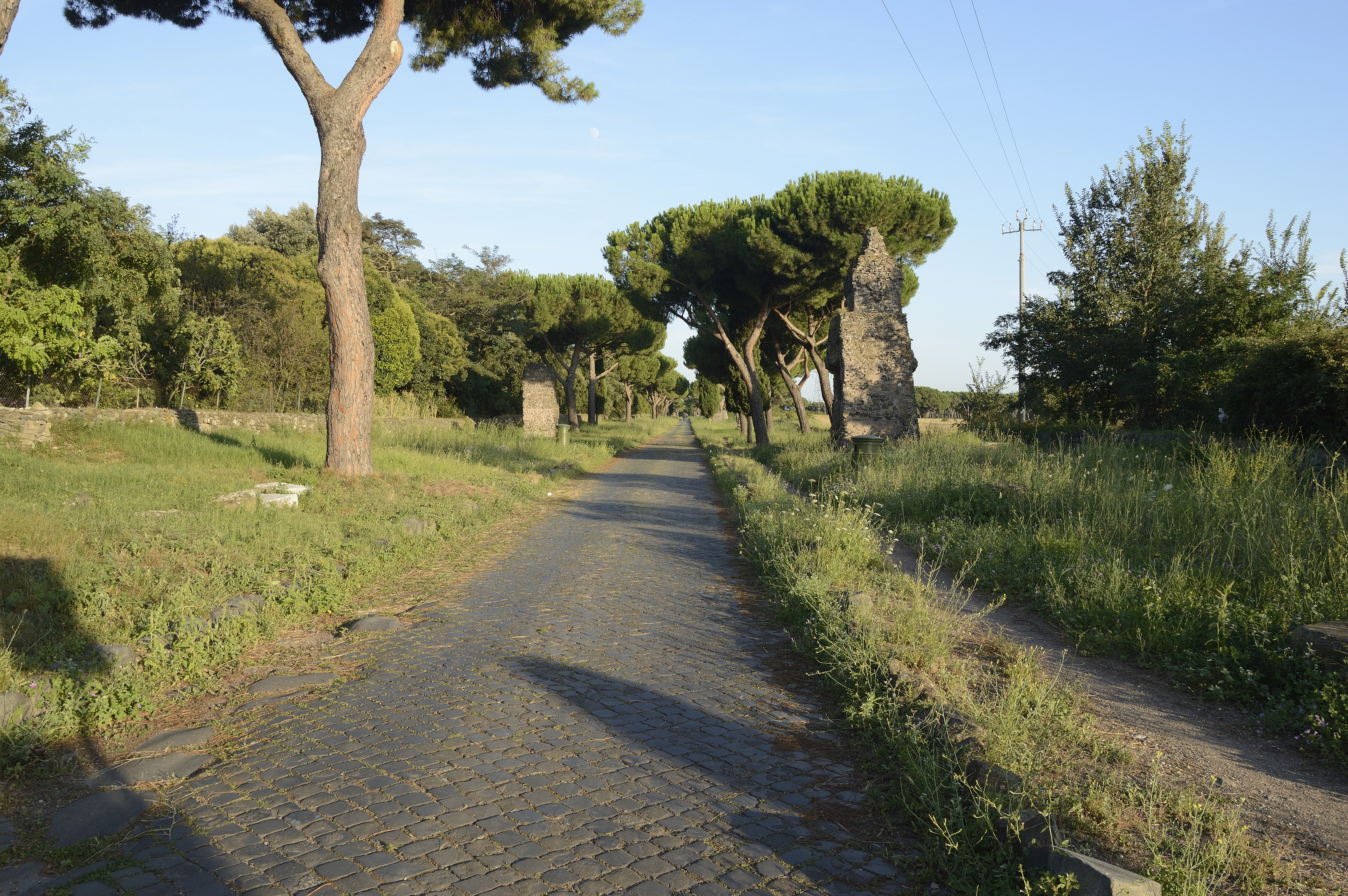
The Appian Way, Rome — Livioandronico2013, CC BY-SA 4

The Annunciation fresco in the Catacomb of Priscilla — Public domain

The underground galleries of the Catacombs of Domitilla — Dnalor 01, CC BY-SA 3
History of the Catacombs of Rome
Origins and the Early Christian Community
The catacombs Rome began to dig in the second century, when the Christian community of the city needed burial places of its own. Roman law forbade burial inside the city, and Christians wanted to be buried together, according to their faith, rather than scattered among pagan tombs. The first catacombs grew from old quarries and private estates, dug deeper into the tuff to make room for the dead. The Catacombs of Saint Callixtus, founded in the second century and managed by the future Pope Callixtus the First, became the first official cemetery of the Church of Rome.
In the first three centuries, the catacombs were places of burial, prayer and remembrance, not places of hiding. Christians gathered there to pray for the dead, to mark the anniversaries of martyrs and to bury their families, but they did not live underground and they did not hold secret services there. The frescoes in the catacombs, with images of Christ, the apostles and stories from the Bible, are evidence of the faith and art of the early community. The catacombs Rome dug in this period were open and known, because the dead had to be carried there in daylight and the living had to visit them.
The community that built the catacombs was not only Christian. Jewish catacombs, with menorahs and Hebrew inscriptions, lie in the same ring around the city, and pagan families also buried their dead in underground chambers. The catacombs were a Roman solution to a Roman problem, the need for burial space outside a crowded city, and every community adapted the same geology to its own rites. The Christian catacombs are the most famous because they are the largest and the best preserved, not because they were the only ones.
The Golden Age of the Third and Fourth Centuries
The catacombs reached their greatest extent in the third and fourth centuries, as the Christian population of Rome grew and the tunnels were extended into vast networks. Saint Callixtus became the burial place of 16 popes and many martyrs, including Saint Cecilia, the patron saint of music. Domitilla grew to about 17 km of tunnels with about 150,000 tombs, and it took its name from Flavia Domitilla, granddaughter of the emperor Vespasian, who is said to have allowed Christians to use her estate as a cemetery. The catacombs were not only cemeteries in this period, but also centres of pilgrimage, where Christians came to pray at the tombs of martyrs.
The art of the catacombs belongs to this golden age. Painters covered the walls of family chapels with scenes of Jonah and the whale, Daniel in the lions’ den, the Good Shepherd and the breaking of bread. The Greek Chapel in Priscilla, painted in the third century, is one of the finest examples of early Christian art, and its image of the Virgin and Child is the oldest known. These paintings were made for the families of the dead, not for public display, and they show a community that expressed its faith in images before it built great churches.
The fourth century brought a change, because Christianity became the religion of the empire under Constantine. Basilicas were built above the catacombs, and pilgrims came in greater numbers to the tombs of the martyrs. The catacombs Rome honoured in this period were the shrines of the early Church, and the popes built churches over them to receive the pilgrims. Saint Sebastian received a basilica above its tunnels, and the names of Saints Peter and Paul were carved into its walls by pilgrims who believed the apostles had once been buried there.
Abandonment, Rediscovery and Protection
After the fifth century, burial in the catacombs declined, as Christians began to bury their dead in churchyards inside the city. The tunnels were visited by pilgrims for centuries, but by the Middle Ages most of them were forgotten, their entrances blocked and their locations lost. The catacombs slept underground while Rome built new churches and palaces above them, and only a few, such as Saint Sebastian, stayed in use as places of worship.
Rediscovery began in the late sixteenth century, when Domitilla was found again in 1593 and scholars began to map the forgotten network. The work of exploration continued for centuries, and it still continues today, as archaeologists open sealed passages and record inscriptions. The catacombs Rome lost for a thousand years came back into the light slowly, one complex at a time, and each rediscovery added to the picture of the early Church.
Modern archaeology of the catacombs began in the nineteenth century with Giovanni Battista de Rossi, who found the Crypt of the Popes in Saint Callixtus in 1854. De Rossi matched the inscriptions in the tunnels with ancient pilgrim guides, and his work turned the catacombs from romantic ruins into a scientific field of study. His discovery proved that the tombs of the early popes lay where tradition said they lay, and it gave scholars a firm chronology for the whole network. The catacombs Rome protects today are mapped and studied with methods that de Rossi founded, and every new passage is recorded before it is opened to visitors.
Protection is now the hardest task, because the frescoes and inscriptions are easily damaged by damp, light and human contact. Visitors may enter only with a guide, in small groups, and photography and filming are forbidden in every open catacomb. The rules protect a heritage that cannot be replaced, and visitors should respect them as part of the experience. The catacombs have survived for eighteen centuries underground, and their future depends on how carefully they are visited now.
Timeline of the Catacombs of Rome
| Year | Event |
|---|---|
| 312 BC | Via Appia built under Appius Claudius Caecus |
| Second century | First catacombs dug, Saint Callixtus founded |
| Third century | Catacombs extended, Priscilla frescoes painted |
| Fourth century | Golden age, basilicas built above the catacombs |
| Fifth century | Burial in the catacombs declines |
| 1593 | Catacombs of Domitilla rediscovered |
| 1980 | Historic Centre of Rome inscribed by UNESCO, reference 91 |
| 2024 | Via Appia inscribed by UNESCO, reference 1708 |

Catacombs of Domitila – Rome 2016 — CC BY-SA 4

The Good Shepherd fresco in the Catacomb of Callixtus, Crypt of Lucina — Public domain

The Good Shepherd fresco in the Catacomb of Priscilla — Public domain
Travel to the Catacombs of Rome
Saint Callixtus, the First Choice
The Catacombs of Saint Callixtus are the largest and most visited of the open complexes, with about 20 km of tunnels on five levels and about half a million tombs. They were the first official cemetery of the Church of Rome, and they hold the tombs of 16 popes, nine of them together in a small chamber called the Crypt of the Popes, with marble inscriptions. Saint Cecilia was first buried here, and a statue of the saint stands in an underground chamber. A visit to the catacombs Rome offers should start here for first-time visitors, because no other complex gathers so much history into one tour.
Tours last about 40 minutes, with departures about every 30 minutes and guides in several languages, so visitors rarely wait long. The complex is closed on Wednesdays, and travellers should check the schedule before going, because hours change with the season. The catacombs Rome shows at Saint Callixtus are the most complete introduction to the underground world, and the guides explain the tombs, the frescoes and the history as the group walks.
The site is reached by bus from the centre, and the walk from the bus stop follows the Via Appia past Roman tombs and pine trees. Visitors should arrive a little early, because tours leave on time and do not wait for latecomers. The tunnels are cool all year, so a light jacket is useful even in summer.
Domitilla and Saint Sebastian
Domitilla is one of the largest catacombs in Rome, with about 17 km of tunnels and about 150,000 tombs, and it is famous for a fourth-century underground basilica cut deep into the rock and decorated with frescoes. The complex was rediscovered in 1593, and its tours focus on the family chapels with painted ceilings and on the basilica, one of the most impressive underground structures in Rome. Domitilla is quieter than Saint Callixtus, and it suits visitors who want a slower visit with more time to look at the paintings.
Saint Sebastian stands at Via Appia Antica 136, with about 12 km of tunnels on three levels, and it is famous for the Basilica of Saint Sebastian above it and for inscriptions that remember Saints Peter and Paul. The complex lies about ten minutes on foot from Saint Callixtus, so visitors can see both in one morning. Saint Sebastian is less crowded than its neighbour, and it is a good choice for travellers who want a quieter visit combined with a walk on the Via Appia.
Ticket prices and hours vary from one catacomb to another, so travellers should check the official website of each site before the visit. Booking ahead is wise in the high season, when the small tour groups can fill up. The catacombs Rome opens to the public are all managed separately, and each one has its own timetable, so a little planning saves a wasted journey.
Priscilla and the Other Open Catacombs
Priscilla is the choice for visitors who care most about art, because its frescoes include the oldest surviving image of the Virgin Mary and Child, painted in the third century. The complex holds about 13 km of tunnels on two levels, and its Greek Chapel is covered with biblical scenes from floor to ceiling. Priscilla is the only open catacomb on the Via Salaria, and it is reached by bus from the centre, so it fits well into a day that also visits the northern quarters of Rome.
Sant’Agnese, on the Via Nomentana, is the fifth of the main open catacombs, with frescoes and stories of Saint Agnes, a young martyr of the early Church. The Catacombs of Marcellinus and Peter, on the Via Labicana, open with more limited hours and suit visitors who have already seen the main complexes and want to explore further. A guide to catacombs Rome is incomplete without these smaller sites, because each one holds paintings and inscriptions that the larger complexes do not.
Practical Advice for the Underground
Every open catacomb is visited only with a guide, and visitors cannot walk underground alone. Tours usually last 30 to 45 minutes, and groups leave on time, so travellers should arrive early. Comfortable walking shoes are needed, because the tunnels have uneven floors and staircases, and a light jacket is useful, because the temperature underground stays about 15 to 16 degrees Celsius all year.
Photography and filming are forbidden in all the catacombs, to protect the frescoes from light and damp, and visitors should follow the rule without exception. Most catacombs are not suitable for wheelchairs, because of the staircases and narrow passages, and travellers with limited mobility should check the access of each site before going. The catacombs Rome welcomes are fragile, and the rules are the price of keeping them open.
A visit to the Via Appia catacombs pairs well with a walk or a bicycle ride on the ancient road, with its Roman paving, tombs and churches. Bicycles can be hired near the city gate, and the ride south past the catacombs is one of the quietest experiences in Rome. The road, the tombs and the tunnels belong together, and seeing them in one day gives the fullest picture of Roman burial.

The Catacombs of Saint Sebastian, Rome — CC BY 2
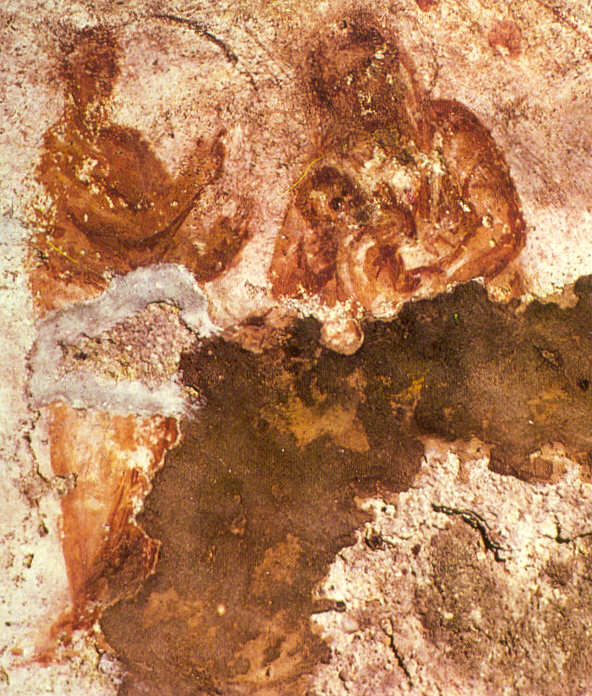
The Madonna fresco in the Catacomb of Priscilla — Public domain
Notable Places in the Catacombs of Rome
The Catacombs of Saint Callixtus. The largest and most famous complex, with about 20 km of tunnels on five levels and about half a million tombs. It was the first official cemetery of the Church of Rome, holding 16 popes and the first tomb of Saint Cecilia.
The Catacombs of Domitilla. One of the largest complexes, with about 17 km of tunnels and about 150,000 tombs, famous for its fourth-century underground basilica and its painted family chapels. It was rediscovered in 1593.
The Catacombs of Priscilla. The complex on the Via Salaria, with about 13 km of tunnels on two levels and the oldest surviving image of the Virgin Mary and Child, painted in the third century. Its Greek Chapel is a masterpiece of early Christian art.
The Catacombs of Saint Sebastian. The complex at Via Appia Antica 136, with about 12 km of tunnels on three levels, famous for the basilica above and for inscriptions remembering Saints Peter and Paul.
The Catacombs of Sant’Agnese. The complex on the Via Nomentana, with frescoes and stories of Saint Agnes, a young martyr of the early Church. It is quieter than the main complexes.
The Catacombs of Marcellinus and Peter. The complex on the Via Labicana, with frescoes and family chapels, open with limited hours. It suits visitors who want to explore beyond the main sites.
The Crypt of the Popes. A small chamber in Saint Callixtus where nine third-century popes were buried together, with marble inscriptions. It is the most visited room in the Roman catacombs.
The Via Appia Antica. The ancient Roman road built from 312 BC, inscribed by UNESCO in 2024 as reference 1708. The road is the setting for the southern catacombs and one of the quietest walks in Rome.
The Basilica of Saint Sebastian. The church above the catacombs of Saint Sebastian, with relics and stories of the martyr, and a good stop on a walk along the Via Appia.
The Greek Chapel. A painted chamber in Priscilla, covered with biblical scenes, and one of the finest examples of early Christian art in Rome.

The Crypt of the Popes in the Catacomb of Callixtus — Dnalor 01, CC BY-SA 3

The Greek Chapel in the Catacomb of Priscilla — Public domain
Frequently Asked Questions
What are the catacombs Rome visitors should see first?
The catacombs Rome visitors should see first are the Catacombs of Saint Callixtus, the largest complex, with the Crypt of the Popes and the first tomb of Saint Cecilia. Tours last about 40 minutes and leave about every 30 minutes with guides in several languages. Visitors who care most about art should choose Priscilla, and those who want a quieter visit should choose Domitilla or Saint Sebastian.
How many catacombs are open to the public?
Five main catacombs are open to the public, namely Callixtus, Domitilla, Priscilla, Sebastian and Sant’Agnese, with the Catacombs of Marcellinus and Peter open for limited hours. More than 60 catacombs are known in Rome, with hundreds of kilometres of tunnels, but most of them are closed for research and protection. Each open complex has its own character, and visitors usually have time for one or two in a day.
Can visitors explore the catacombs alone?
No, every open catacomb is visited only with a guide, and visitors cannot walk underground alone. Guided visits run about half an hour to three quarters of an hour, and the group departs at the stated time, so arriving a few minutes early is wise. The rule protects the frescoes and keeps visitors safe in the narrow tunnels.
Is photography allowed in the catacombs?
No, photography and filming are forbidden in all the catacombs, to protect the frescoes and inscriptions from light and damp. Visitors should follow the rule and enjoy the visit without a camera. The ban applies in every open complex, and guides will ask visitors to put cameras away before entering.
Were the catacombs hiding places for Christians?
No, this is a common misunderstanding. The catacombs were cemeteries and places of prayer and remembrance, not hiding places or sites of secret services. Christians did not live underground, and they came to the catacombs to bury the dead and to pray for them.
Are the Catacombs of Rome a UNESCO World Heritage property?
No, the catacombs as a group are not a World Heritage property in their own right, and they lie outside the Historic Centre of Rome property inscribed in 1980. The Via Appia, which runs past the main southern catacombs, was inscribed in 2024 as Via Appia, Regina Viarum, reference 1708, under criteria (iii), (iv) and (vi).
Verified
Every date and figure in this guide to catacombs Rome was checked against the sources below on 22 November 2026. Rome has more than 60 catacombs, with hundreds of kilometres of tunnels, and five main complexes are open to the public. Saint Callixtus holds about 20 km of tunnels on five levels and the tombs of 16 popes, Domitilla holds about 17 km and about 150,000 tombs, Priscilla holds about 13 km on two levels, and Saint Sebastian holds about 12 km on three levels.
The Via Appia was built from 312 BC, and UNESCO inscribed it in 2024 as Via Appia, Regina Viarum, reference 1708, under criteria (iii), (iv) and (vi). The Historic Centre of Rome was first inscribed in 1980 as reference 91, and its property covers the centre within the walls at their widest seventeenth-century extent, so the catacombs outside the walls fall outside it. Domitilla was rediscovered in 1593, and all open catacombs are visited only with a guide.
Q741051 is the Wikidata record for the Catacombs of Rome, and the API check on 22 November 2026 confirmed its types as church building and archaeological site, with coordinates 41° 54′ N and 12° 30′ E matching the registry entry. The numbers and dates in this article come from the sources listed below, and anything that could not be confirmed is kept under Unverified.
Sources
- UNESCO World Heritage Centre, Via Appia. Regina Viarum (https://whc.unesco.org/en/list/1708/)
- UNESCO World Heritage Centre, Historic Centre of Rome (https://whc.unesco.org/en/list/91/)
- Wikipedia, Catacombs of Rome (https://en.wikipedia.org/wiki/Catacombs_of_Rome)
- Wikidata, Catacombs of Rome Q741051 (https://www.wikidata.org/wiki/Q741051)
Unverified
Current ticket prices for each open catacomb, and the exact opening hours by season, should be confirmed on the official website of each site before a visit. The exact number of tombs in Saint Callixtus, about half a million, and in Domitilla, about 150,000, are widely cited estimates that should be checked against a specialist source before they are used elsewhere. The total length of all the tunnels in Rome, given here as hundreds of kilometres, is an estimate, because many catacombs have never been fully explored. The claim that Flavia Domitilla allowed Christians to use her estate as a cemetery is a tradition recorded in the sources, and it should be treated as tradition rather than as a documented fact.
Illustrations
- Hero: Broken tombstone – Catacombs of Domitilla – Rome 2016. Free image: https://upload.wikimedia.org/wikipedia/commons/3/34/Broken_tombstone_-Catacombs_of_Domitilla-_Rome_2016.jpg — CC BY-SA 4.
- In body, The Catacombs of Saint Callixtus: Rom, Calixtus-Katakombe, Eingangstor zum Park der Katakombe. Free image: https://upload.wikimedia.org/wikipedia/commons/7/7e/Rom%2C_Calixtus-Katakombe%2C_Eingangstor_zum_Park_der_Katakombe.jpg — CC BY-SA 3.
- In body, The Catacombs of Domitilla: Catacombs of Domitila – Rome 2016. Free image: https://upload.wikimedia.org/wikipedia/commons/5/55/Catacombs_of_Domitila_-_Rome_2016.jpg — CC BY-SA 4.
- In body, Via Appia Antica: The Appian Way, Rome. Free image: https://upload.wikimedia.org/wikipedia/commons/c/cd/Appian_Way.jpg — CC BY-SA 4.
- In body, Catacombs of Priscilla: The Annunciation fresco in the Catacomb of Priscilla. Free image: https://upload.wikimedia.org/wikipedia/commons/8/89/Catacomb_of_Priscilla_-_Annunciation.jpg — Public domain.
- In body, Underground galleries of Domitilla: The underground galleries of the Catacombs of Domitilla. Free image: https://upload.wikimedia.org/wikipedia/commons/6/62/Rom%2C_Domitilla-Katakomben_2.jpg — CC BY-SA 3.
- In body, Good Shepherd, Catacomb of Callixtus: The Good Shepherd fresco in the Catacomb of Callixtus, Crypt of Lucina. Free image: https://upload.wikimedia.org/wikipedia/commons/4/4f/Jesus_as_the_Good_Shepherd%2C_Calixtus_Catacomb%2C_Crypt_of_Lucina%2C_from_the_from_the_book_Die_Malereien_der_Katakomben_Roms%2C_plate_35.jpg — Public domain.
- In body, Good Shepherd, Catacomb of Priscilla: The Good Shepherd fresco in the Catacomb of Priscilla. Free image: https://upload.wikimedia.org/wikipedia/commons/0/04/The_Good_Shepherd%2C_Priscilla_Catacomb%2Cfrom_the_1903_book_Die_Malereien_der_Katakomben_Roms_%28Tafeln%29_by_Wilpert%2C_Joseph.jpg — Public domain.
- In body, Catacombs of Saint Sebastian: The Catacombs of Saint Sebastian, Rome. Free image: https://upload.wikimedia.org/wikipedia/commons/3/3c/Catacombs_S._Sebastiano_Rome1.jpg — CC BY 2.
- In body, Madonna fresco, Catacomb of Priscilla: The Madonna fresco in the Catacomb of Priscilla. Free image: https://upload.wikimedia.org/wikipedia/commons/e/e2/Madonna_catacomb.jpg — Public domain.
- In body, Crypt of the Popes: The Crypt of the Popes in the Catacomb of Callixtus. Free image: https://upload.wikimedia.org/wikipedia/commons/2/29/Rom%2C_Calixtus-Katakomben%2C_Krypta_der_P%C3%A4pste.jpg — CC BY-SA 3.
- In body, Greek Chapel, Priscilla: The Greek Chapel in the Catacomb of Priscilla. Free image: https://upload.wikimedia.org/wikipedia/commons/5/5a/Postcard_Capella_graeca_in_de_Katakombe_van_Priscilla_recto.jpg — Public domain.