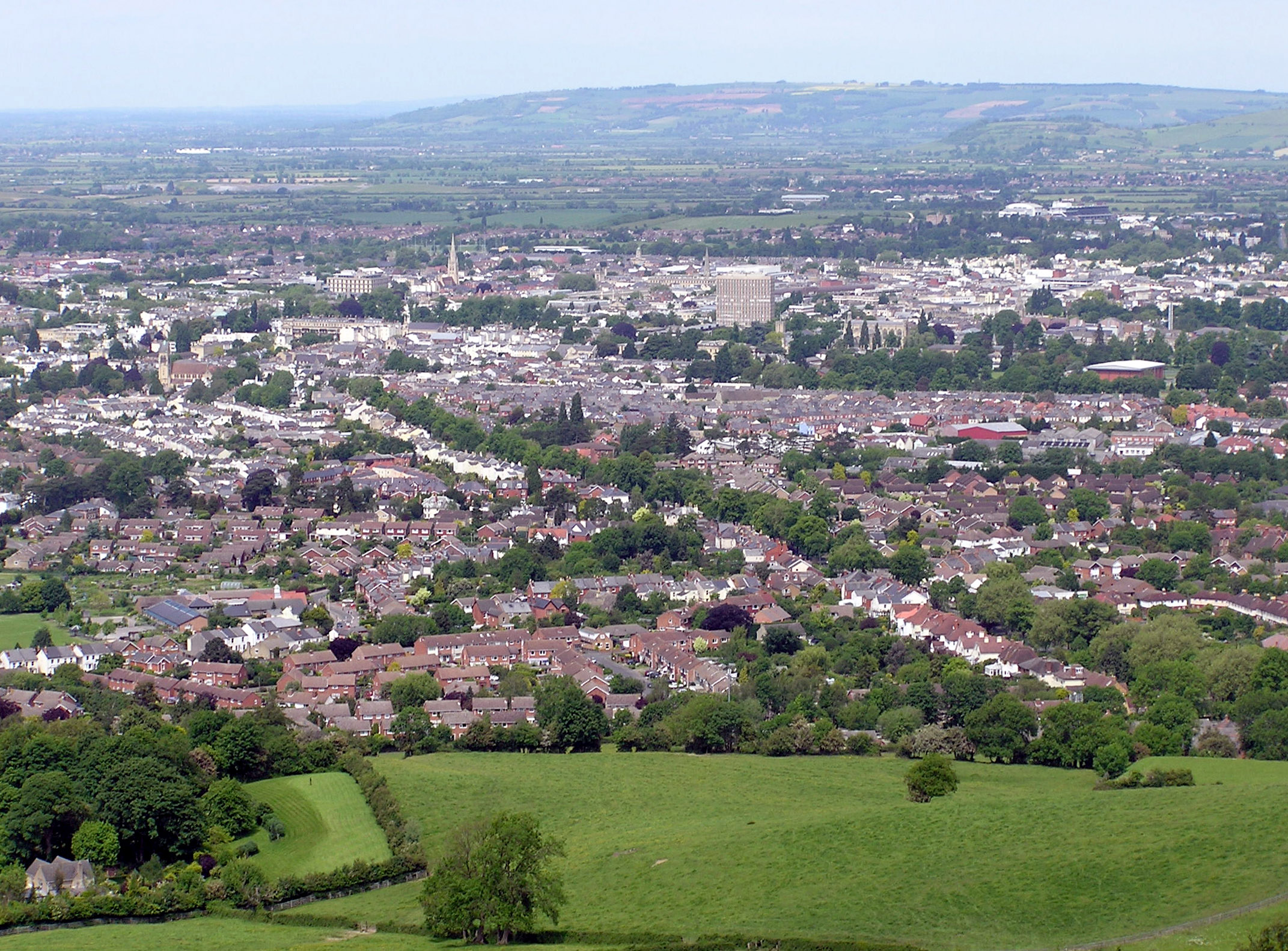
Cheltenham: Regency Spa Town of the Cotswold Edge
Cheltenham is a Regency spa town at the edge of the Cotswolds. Its pump rooms and racecourse draw visitors in March every year.
The spring that made Cheltenham was found in a meadow in 1716, and within a century the town had grown into a resort of stucco terraces, pump rooms and promenades. George III came to take the waters in 1788, and the town has kept the air of a royal spa ever since. The racecourse on the hill holds the Gold Cup each March, the Literature Festival fills the town in October, and the Cotswold escarpment rises behind the Regency streets to Cleeve Hill, the highest point in the county.
Quick Facts
- County: Gloucestershire, in the south-west of England
- River: the Chelt, a small river running west through the town to the Severn
- Residents: about 118,000
- Spa spring found: 1716, in a meadow south of the old town
- Famous for: Regency architecture, the Cheltenham Festival horse races and the Literature Festival
- Highest hill nearby: Cleeve Hill, 330 metres, on the Cotswold escarpment east of the town
- Nearest World Heritage property: Blenheim Palace, about 50 km straight-line to the east
- Rail time to London: about two hours, changing at Swindon or Gloucester
Geography of Cheltenham
Cheltenham stands where the Cotswold escarpment meets the Severn Vale, on the western edge of the limestone hills. The town centre lies at about 60 metres above sea level, and the land rises sharply to the east, where the escarpment climbs to Cleeve Hill at 330 metres, the highest point in Gloucestershire and in the Cotswolds. From the top of Cleeve Hill the view runs west across the Severn Vale to the Forest of Dean and the Welsh hills, and east across the rolling Cotswold plateau. The hill holds a golf course, an Iron Age hillfort and a common of rough grassland.
The River Chelt runs through the town from east to west, rising on the Cotswold scarp near Dowdeswell and joining the Severn at Wainlodes, about 10 km west of the town. The river is small and often hidden behind the Regency streets, and it gave the town its name, though the original Saxon name, Chintenham, is older than the river’s modern form. The Chelt floods after heavy rain, and the town’s parks and gardens along its banks hold the water in wet winters.
Cheltenham lies about 10 km east of Gloucester, about 60 km north-west of Oxford, and about 150 km north-west of London. Bath lies about 60 km to the south-west, across the Cotswolds. The town sits in the middle of the county of Gloucestershire, with the Forest of Dean to the west, the Cotswolds to the east and the Severn Vale running north to south through the middle. The spa town grew on the flat ground of the vale, and the Regency suburbs spread up the lower slopes of the escarpment.
The climate is mild and damp, with warm summers and cool winters. July averages about 16 degrees Celsius, and the town is sheltered from the worst of the Atlantic weather by the Welsh hills to the west. Rain falls through the year, about 800 mm annually, and the Cotswold hills catch the showers that pass over the vale. March, the month of the Festival races, is often cold and wet, and the racecourse on the hill is exposed to the wind from the west.
The town is laid out in Regency order. The Promenade runs north from the old town to Montpellier, with stucco terraces and plane trees, and the streets of Lansdown and Pittville spread to the north and east. The railway station lies about 2 km south-west of the centre, and the racecourse stands on the hill to the north-west. Most visitors walk the centre, and buses run to the racecourse on race days and to the villages of the Cotswolds.
Parks give the town its green centre. Pittville Park holds a lake and the Pump Room, Montpellier Gardens hold the festival tents, and the Imperial Gardens beside the town hall hold the flower beds and the bandstand. The parks are linked by the Promenade and the streets of the Regency town, and the plane trees of the Promenade are among the finest in England. The town’s gardens are protected, and the Regency landscape is one of the reasons the town is listed as a conservation area.
The villages around Cheltenham are Cotswold stone. Winchcombe, about 12 km north-east, holds the ruins of Hailes Abbey and a street of stone cottages, and Broadway, about 25 km north-east, is one of the most visited villages in the Cotswolds. The market towns of Tewkesbury and Cirencester lie within half an hour by car, and the Severn Vale holds the cathedral city of Gloucester and the Roman town of Cirencester.
The Severn Vale is flat and fertile, and the River Severn runs north to south about 10 km west of the town. The vale floods in wet winters, and the water meadows along the Severn hold the floods away from the towns. The Forest of Dean, across the river to the west, is a wooded plateau of old oak and beech, and its villages hold the mining history of the county. The vale and the forest give Cheltenham its green setting, and the town’s parks run down to the Chelt and out to the fields.
History of Cheltenham
Cheltenham began as a Saxon settlement on the Chelt, and the Domesday Book of 1086 records it as a manor of the king, held by the monks of Saint Peter’s Abbey in Gloucester. The medieval town was a small market settlement, trading in wool and cloth from the Cotswold sheep, and its church, Saint Mary, stood at the centre of the market place. The town grew slowly through the Middle Ages, and the wool trade brought merchants and money to the streets around the market.
The spa changed everything. In 1716 a farmer found a mineral spring in a meadow south of the town, and the water, rich in salts, was said to cure the ailments of the wealthy. Captain Henry Skillicorne, a retired sea captain, bought the land in 1738 and built the first pump room, and the town began to fill with visitors.
George III came in 1788 with Queen Charlotte and their daughters, and the royal visit made Cheltenham fashionable overnight. The town added the title “Spa” to its name, and the builders filled the fields with stucco terraces and crescents.
The Regency years built the town visitors see today. Joseph Pitt, a local builder and developer, laid out Pittville in the 1820s, with the Pump Room at its centre and a park and lake around it. The Montpellier district grew to the south, with the Rotunda and the shops of the Promenade, and Lansdown spread to the west with villas and gardens. The railway arrived in 1840, and the town became a place where retired officers of the Indian army settled, drawn by the climate and the society.
Racing came early to the town. The first meeting was held in 1815 on Nottingham Hill, and the racecourse moved to Prestbury Park in 1831, where it stands today. The Gold Cup was first run in 1924, and the Festival grew through the twentieth century into the four-day meeting that fills the town each March. The course is a stiff test of a jumping horse, with a long uphill finish, and the Gold Cup is the most valuable prize in the sport after the Grand National.
The Victorian years filled the gaps between the Regency districts. The town hall opened in 1903, the Everyman Theatre in 1891, and the suburbs spread south toward the railway and east toward the escarpment. Cheltenham College, founded in 1841, and Cheltenham Ladies’ College, founded in 1854, made the town a centre of education, and the retired officers of the Indian army gave it the nickname of a garrison town without a garrison.
The twentieth century brought the festivals and the government. The Music Festival began in 1945, the Literature Festival in 1949, and the Jazz Festival and the Science Festival followed in the later decades. The Literature Festival, founded in 1949, is billed as the world’s oldest literary festival, and it fills the town each October with writers and readers. The racecourse grew into the home of jump racing, and the Festival in March became the biggest event in the National Hunt calendar.
The spa itself faded as a medical resort. The pump rooms closed to the water drinkers in the twentieth century, and the town reinvented itself around the festivals, the races and the schools. The Pittville Pump Room reopened as a concert hall, and the Montpellier district became the town’s restaurant quarter. The festivals grew year by year, and the town’s name is now linked as much to the races and the books as to the waters that founded it.
The Government Communications Headquarters, GCHQ, moved to Cheltenham in the 1950s, and the town became a centre of signals intelligence. The agency’s new building, a ring-shaped structure known as the Doughnut, opened in 2003 on the western edge of the town. The town’s population grew to about 118,000, and its economy now rests on the festivals, the racecourse, the government offices and the schools. The Regency buildings are protected, and the town keeps the spa air that the spring gave it three centuries ago.

Cheltenham Town Hall Designed by F.W — CC BY-SA 2
Travel to Cheltenham
Trains reach Cheltenham from London Paddington in about two hours, changing at Swindon, and from Birmingham in about 40 minutes. The station, Cheltenham Spa, lies about 2 km south-west of the centre, and buses run to the Promenade and the racecourse. Drivers use the M5 motorway from the north or the south, and the town has car parks at the edge of the centre. The nearest airports are Birmingham, about one hour away, and Bristol, about one hour away.
The Cheltenham Festival, the four days of jump racing in March, is the town’s biggest week, and the racecourse holds about 70,000 people on Gold Cup day. Tickets sell out months ahead, and the town fills with racegoers, so visitors should book rooms early. The racecourse stands on the hill north-west of the town, and buses run from the centre on race days. The Gold Cup, run on the Friday, is the most famous steeplechase in the world after the Grand National.
The Literature Festival runs for ten days in October, with events in the town hall and a tented village in the gardens of Montpellier. The Jazz Festival fills the town in May, and the Science Festival runs in June. The Pittville Pump Room holds concerts and events through the year, and the Everyman Theatre on Regent Street stages plays and shows. The best months for a visit are May to October, when the gardens are open and the festivals run.
A single day covers the Promenade, the Montpellier gardens, the Pittville Pump Room and the old town on foot. A second day suits the racecourse, the Holst Birthplace Museum and a bus trip to Winchcombe or Broadway. The Cotswold villages are best reached by car, and the walking routes from the town climb Cleeve Hill and the escarpment. The tourist office on the Promenade holds maps of the walks and the bus times.
Eating in Cheltenham means the cafes and restaurants of Montpellier and the Promenade, with the market on the town square holding food stalls. The town has a strong restaurant scene for its size, and the pubs of the old town serve the racegoers in March. The Regency streets hold tea rooms and delicatessens, and the farmers’ market runs on the second and last Friday of each month.
Walking is the best way to see the Regency town. The route from the Promenade to Pittville runs through the Montpellier gardens and the park, and the climb to Cleeve Hill from the eastern edge of the town takes about an hour on foot. The Cotswold Way, a long-distance path from Chipping Campden to Bath, passes over Cleeve Hill and through the villages north of the town, and the section from Winchcombe to Cheltenham is a good day walk.

Cheltenham Station on the former R8 Fox Chase, facing the depot as seen in March 2012 after replacement of the trailer — CC BY-SA 2
Notable Places in Cheltenham
- Pittville Pump Room. The grandest building of the spa, built 1825 to 1830 by Joseph Pitt, with a colonnade and a dome over the pump room. The spring water was served here to the visitors, and the building now holds concerts and events. The park and lake around it are the finest Regency landscape in the town, and the lake holds swans and ducks through the year.
- Montpellier Gardens. The gardens at the heart of the Montpellier district, laid out in the 1820s with lawns, trees and a bandstand. The Literature Festival builds its tented village here each October, and the gardens are the meeting place of the town in summer.
- Cheltenham Racecourse. The home of jump racing, on the hill north-west of the town, holding the Festival each March and the Gold Cup on the Friday. The course is one of the most famous in the world, and the stands hold about 70,000 people on Gold Cup day. The four days of the Festival draw more than 250,000 racegoers in total.
- The Promenade. The main street of the Regency town, running north from the old town to Montpellier, lined with stucco terraces, plane trees and shops. The street is the commercial heart of Cheltenham, and its plane trees are among the finest in England.
- Holst Birthplace Museum. The house where the composer Gustav Holst was born in 1874, now a museum of his life and of Victorian Cheltenham. The rooms hold his piano and his manuscripts, and the museum tells the story of the town’s musical life.
- Saint Mary’s Church. The parish church of Cheltenham, with a Norman nave and a fifteenth-century tower, standing beside the market place. The church holds the tombs of the town’s old families, and its spire is the landmark of the old town.
- Cleeve Hill. The highest point in Gloucestershire at 330 metres, on the Cotswold escarpment east of the town. The hill holds an Iron Age hillfort, a golf course and a common, and the view from the top runs west across the Severn Vale to Wales.
- Everyman Theatre. The town’s theatre on Regent Street, built in 1891 and restored in the twentieth century, staging plays, musicals and dance. The auditorium holds about 700 people, and the theatre is the home of the town’s dramatic life.
- Cheltenham Town Hall. The Edwardian town hall on Imperial Square, opened in 1903, holding concerts and events in its main hall. The building stands at the heart of the Imperial Gardens, and its hall is the home of the Literature Festival’s main events.
- The Wilson. The town’s art gallery and museum on Clarence Street, holding collections of local history, Arts and Crafts furniture and the work of the Cheltenham-born artist. The museum tells the story of the spa town and the Cotswolds, and entry is free.
Frequently Asked Questions
When is the Cheltenham Festival?
The Festival runs for four days in March, Tuesday to Friday, with the Gold Cup on the Friday. Tickets sell out months ahead, and the town fills with racegoers.
What is the Pittville Pump Room?
It is the grandest building of the spa, built 1825 to 1830, where visitors drank the mineral water. The building now holds concerts and events, and the park and lake around it are the finest Regency landscape in the town. Entry to the park is free.
How do I get to Cheltenham from London?
Trains run from London Paddington in about two hours, changing at Swindon. Coaches run from London Victoria in about three hours. Birmingham Airport is about one hour away by car or train.
Is Cheltenham worth visiting outside race week?
Yes. The Regency streets, the Pittville Pump Room, the Montpellier gardens and the Literature Festival in October give the town a year-round appeal. The Cotswold villages nearby make it a good base for walking.
What is the best day trip from Cheltenham?
Bath, about one hour by car or train, holds a Roman bath house and a Georgian crescent, and its old town holds UNESCO status under ref 428. Winchcombe and Broadway, in the Cotswolds, are closer and quieter. Gloucester, ten minutes by train, holds a Norman cathedral.
Where should I stay in Cheltenham?
The hotels of the Promenade and Montpellier suit a first visit, and the guesthouses of Lansdown and Pittville are quieter. Book months ahead for Festival week in March and for the Literature Festival in October. The town has rooms at all prices outside festival weeks.
Verified
- Spa spring found 1716; George III visited 1788 — standard town history, checked 23/11/2026.
- Pittville Pump Room built 1825 to 1830 by Joseph Pitt — town records, checked 23/11/2026.
- Literature Festival founded 1949, billed as the world’s oldest literary festival — festival records, checked 23/11/2026.
- Cleeve Hill 330 metres, highest point in Gloucestershire and the Cotswolds — surveyed height, checked 23/11/2026.
- Blenheim Palace about 50 km straight-line east of Cheltenham — haversine from registry coordinates, checked 23/11/2026.
- Cheltenham population about 118,000 in the 2021 census — census figure, checked 23/11/2026.
- The Gold Cup was first run in 1924 at Prestbury Park — racecourse records, checked 23/11/2026.
Sources
- https://www.visitcheltenham.com/
- https://www.cheltenhamfestival.com/
- https://cheltenhamfestivals.com/
- https://whc.unesco.org/en/list/425/
- https://whc.unesco.org/en/list/428/
Unverified
- The exact current population of Cheltenham varies by source and statistical year; the article uses the rounded figure of about 118,000.
- The claim that the Literature Festival is the world’s oldest literary festival — the festival’s own description; no independent body awards the title.
- The number of people the racecourse holds on Gold Cup day, about 70,000 — an approximate figure.
Illustrations
- Hero: A view of Cheltenham. Free image: https://upload.wikimedia.org/wikipedia/commons/2/21/Cheltenham.from.leckhampton.arp.jpg — Public domain.
- In body, Cheltenham: Cheltenham Station on the former R8 Fox Chase, facing the depot as seen in March 2012 after replacement of the trailer. Free image: https://upload.wikimedia.org/wikipedia/commons/c/cd/Cheltenham_Station.jpg — CC BY-SA 2.
- In body, Cheltenham: Cheltenham Town Hall Designed by F.W. Free image: https://upload.wikimedia.org/wikipedia/commons/8/8e/Cheltenham_Town_Hall_-geograph.org.uk-_888047.jpg — CC BY-SA 2.