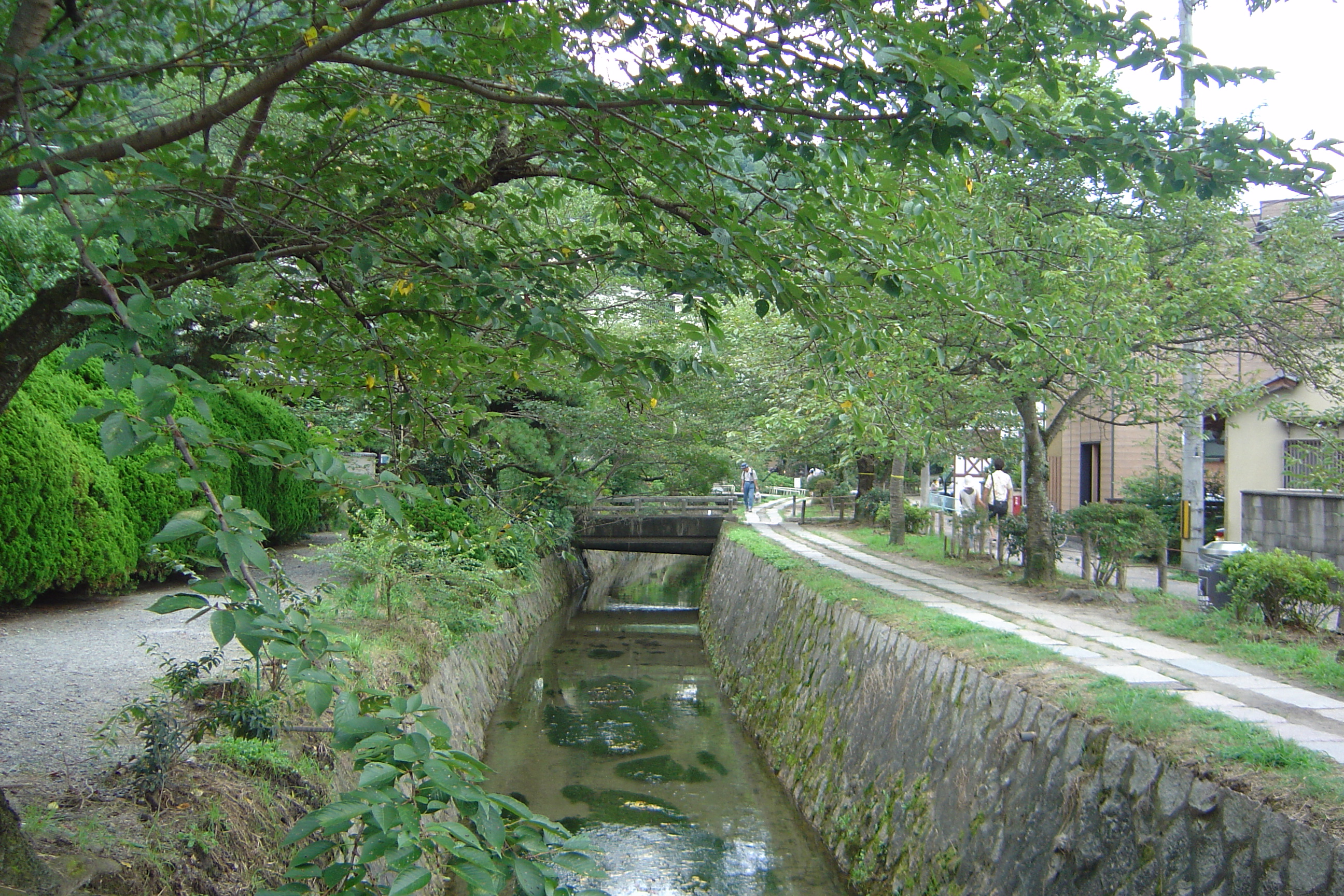
The Philosopher’s Walk in Kyoto: Two Kilometres of Canal, Cherry Trees and Temples
The Philosopher’s Walk is a two-kilometre canal path in Kyoto, from Ginkaku-ji to Nanzen-ji, under five hundred cherry trees.
The Philosopher’s Walk, known in French as the Chemin de la Philosophie and in Japanese as Tetsugaku-no-michi, is a stone path of about two kilometres along the Lake Biwa Canal in Kyoto, Japan, from the Silver Pavilion of Ginkaku-ji in the north to the great gate of Nanzen-ji in the south. The walk is named for the philosopher Nishida Kitaro, who walked it every day on his way to Kyoto University, and it was given his name in 1972. The path is lined with about five hundred cherry trees, planted from the gift of the painter Kanoko Hashimoto in 1922, and it is free and open at every hour. This guide sets out the geography, the history and the practical walk of the Philosopher’s Walk, with the temples along it, the seasons and the way to walk it.
Quick Facts About the Philosopher’s Walk
| Fact | Detail |
|---|---|
| Name | The Philosopher’s Walk (Tetsugaku-no-michi, 哲学の道; Chemin de la Philosophie) |
| Place | Along the Lake Biwa Canal, from Ginkaku-ji to Nanzen-ji, Sakyo Ward, Kyoto, Japan |
| Length | About 2 km |
| Walking time | 30–45 minutes straight; half a day with stops at the temples along the path |
| Named for | The philosopher Nishida Kitaro (1870–1945), founder of the Kyoto School of Philosophy |
| Year named | 1972 |
| Cherry trees | About 500, planted from the gift of the painter Kanoko Hashimoto in 1922 |
| Entry | Free, always open |
| Best seasons | Late March to early April (cherry blossom); mid- to late November (autumn leaves) |
| UNESCO | Ginkaku-ji at the northern end is part of the World Heritage site “Historic Monuments of Ancient Kyoto” (inscribed 1994, ref 688, criteria ii and iv); Nanzen-ji at the southern end is NOT part of that site; the path itself is not a World Heritage site |
| Wikidata | Q1510488 |
| Coordinates | 35.0251° N, 135.7962° E |
Geography of the Philosopher’s Walk
The Philosopher’s Walk runs along the Lake Biwa Canal in the eastern hills of Kyoto, in Sakyo Ward, and it follows the water in a gentle curve from north to south. The canal is narrow, and its water runs clear between stone banks, with the path beside it and the trees above it. The walk begins at Ginkaku-ji, the Silver Pavilion, at the northern end, and it ends at Nanzen-ji, the great Zen temple, at the southern end, so the two kilometres join two of the great temples of Kyoto. The path is flat, and it is paved with stone, so the walk suits every visitor, and the whole of it can be walked in thirty to forty-five minutes without stopping.
The canal beside the path is the Lake Biwa Canal, and it was built to carry water from Lake Biwa to Kyoto, for drinking, for transport and for power. The canal runs from the lake through the mountains to the city, and the stretch beside the Philosopher’s Walk is its most beautiful part, because the water is clear, the banks are stone, and the trees lean over it. The canal is the reason the path exists: the path was the towpath of the canal, and the walkers followed the water before the philosophers gave it a name.
The hills rise to the east of the path, and the houses and temples stand between the path and the hills. The eastern side of the walk is the quiet side, with small temples, gardens and houses hidden behind walls, while the western side opens to the city below. The visitor who walks north to south will have the hills on the left and the city on the right, and the visitor who walks south to north will see the Silver Pavilion at the end. The direction matters little, because the path is the same in both ways, yet the morning light suits the walk from the north, and the afternoon light suits the walk from the south.
The cherry trees are the glory of the Philosopher’s Walk, and there are about five hundred of them along the two kilometres. The trees were planted from the gift of the painter Kanoko Hashimoto in 1922, and they have grown into a tunnel of blossom that covers the path in late March and early April. The blossom falls on the water of the canal, and the petals float downstream, so the canal becomes a river of pink for a week or two. The autumn is the second season of the path, when the maples turn red in mid- to late November, and the leaves fall on the stone and the water in the same way.
The temples along the path are the reason to walk slowly. Ginkaku-ji stands at the northern end, with its Silver Pavilion and its sand garden, and Nanzen-ji stands at the southern end, with its great gate and its aqueduct. Between them stand the small temples of the eastern hills, among them Honen-in, with its moss garden and its quiet gate, and Eikan-do, with its maples and its pagoda.
The visitor who walks the path in half a day can visit two or three of these temples, and the visitor who walks it in an hour will pass them all without entering. The path is therefore a walk that can be short or long, as the visitor chooses.
The wider setting of the walk is the eastern edge of Kyoto, where the hills meet the city, and the temples of the Higashiyama stand in a line along the foot of the mountains. The Philosopher’s Walk is the northern part of that line, and the southern part runs through the lanes of the Higashiyama to Kiyomizu-dera. The visitor who walks the path in the morning can continue south through the temple lanes in the afternoon, and the whole day becomes a walk through the history of Kyoto. The city below the path is the modern Kyoto of streets and shops, and the hills above it are the old Kyoto of temples and gardens.

Philosopher’s Walk, in Kyoto (Japan) — CC BY 4
History of the Philosopher’s Walk
The Lake Biwa Canal and the Path Beside It
The history of the Philosopher’s Walk begins with the Lake Biwa Canal, and the canal begins with the modernisation of Kyoto in the Meiji era. The city needed water, and the lake lay beyond the mountains to the east, so the canal was cut through the hills to bring the water of Lake Biwa to Kyoto. The canal was completed in 1890, and it carried water for drinking, for the boats that moved goods into the city, and for the power that lit the streets. The path beside the canal was the towpath, and the workers and the walkers used it every day, yet it had no name of its own.
The canal changed the eastern edge of Kyoto, because the water brought new life to the temples and the gardens along it. The gardens of the temples were watered from the canal, and the houses along it grew with the new supply, so the path became a walk between gardens rather than a walk beside a ditch. The cherry trees came later, and they came as a gift, so the path became a place of beauty as well as a place of work. The canal is still there, and its water still runs clear, yet the boats are gone, and the path belongs to the walkers now.
Nishida Kitaro and the Name of the Path
The philosopher Nishida Kitaro was born in 1870 and died in 1945, and he was the founder of the Kyoto School of Philosophy, the school that joined the thought of the West with the thought of Zen. Nishida taught at Kyoto University, and he walked the path along the canal every day on his way to the university, thinking as he walked. The walk became his habit, and the habit became his legend, so the path came to be known as the path of the philosopher, the Tetsugaku-no-michi. The city gave the path its name formally in 1972, and the name has stayed ever since.
Nishida’s philosophy was a philosophy of the place, and the path is the place of his philosophy. He wrote of the self and the world, of the East and the West, and he walked the canal path while he thought, so the walk and the thought belong together. The visitor who walks the Philosopher’s Walk today walks the same stones that Nishida walked, beside the same water, under the same trees, and the walk is a quiet one, without the noise of the city. The path is therefore a place of thought as well as a place of beauty, and the name is the memory of the man who walked it.
The Cherry Trees of 1922
The cherry trees of the Philosopher’s Walk were planted from the gift of the painter Kanoko Hashimoto in 1922, and they have grown into the tunnel of blossom that the path is known for. Hashimoto gave the trees to the city, and the city planted them along the canal, so the path became a place of blossom in the spring. The trees are now a century old, and they are tended with care, because the blossom is the season that brings the crowds to the path. The autumn maples are the second gift of the path, and they turn the walk red in November, so the path has two seasons of colour.
The trees have made the path famous, and the fame has made it crowded. In the blossom season, the path fills with visitors from across the world, and the walk that Nishida took alone is now a walk taken by thousands. The crowds are the price of the beauty, and the visitor who wants the quiet of the path should come early in the morning, before the crowds arrive, or late in the afternoon, when they have gone. The path in the rain is the quietest of all, and the blossom on the wet stone is the most beautiful sight of the walk.
The temples at the ends of the path are older than the path itself. Ginkaku-ji, the Silver Pavilion, was built in the fifteenth century, and it is part of the World Heritage site of the Historic Monuments of Ancient Kyoto, inscribed in 1994 under reference 688. Nanzen-ji, the great Zen temple at the southern end, is older still, and it is not part of that World Heritage site, yet it is one of the great temples of Kyoto, with its gate, its gardens and its aqueduct. The path joins them, and the walk between them is a walk through five centuries of the history of Kyoto.

Walking along the tree-lined Tetsugaku no Michi (Philosopher’s Walk) between Nanzen-ji and Ginkaku-ji Needs additional description — CC BY 2
Travel to the Philosopher’s Walk
The way to the Philosopher’s Walk begins at either end, and the visitor should choose the end that suits the day. The northern end stands at Ginkaku-ji, and the bus from the centre of Kyoto runs to the Silver Pavilion, a ride of about half an hour. The southern end stands at Nanzen-ji, and the subway runs to the Keage Station, a walk of a few minutes from the temple. The visitor who walks from the north will end at Nanzen-ji, and the visitor who walks from the south will end at Ginkaku-ji, so the choice is the choice of which temple to see first.
The walk itself takes thirty to forty-five minutes without stopping, and half a day with stops at the temples along the path. The visitor should allow the half day, because the temples are the reason to walk slowly: Honen-in with its moss garden, Eikan-do with its maples, and the small shrines that stand between them. The path is flat and paved, so it suits every visitor, and there are benches along it for resting. The visitor should carry water in the summer, because the path has little shade, and should carry a raincoat in the spring, when the rain can fall on the blossom.
The best seasons for the Philosopher’s Walk are late March to early April, when the cherry blossom is at its best, and mid- to late November, when the autumn leaves turn red. The blossom season is the busiest, and the path fills with visitors, so the early morning is the best time to walk it. The autumn is quieter, and the red of the maples is the finest sight of the path after the blossom. The summer is green and quiet, and the winter is bare and still, yet the path is beautiful in every season, because the canal and the temples do not change.
The visitor should walk the path slowly, and should stop at the canal to watch the water and the petals. The small cafes along the path serve tea and sweets, and the shops sell the crafts of Kyoto, so the walk can be broken by a rest. The visitor who walks the path in the morning can continue south through the temple lanes of the Higashiyama in the afternoon, and the whole day becomes a walk through the history of Kyoto. The path is free and always open, so the visitor can walk it at dawn or at dusk, when the crowds have gone.
Notable Places on the Philosopher’s Walk
Ginkaku-ji, the Silver Pavilion, stands at the northern end of the Philosopher’s Walk, with its sand garden and its pavilion that was never covered in silver. The temple is part of the World Heritage site of the Historic Monuments of Ancient Kyoto, inscribed in 1994, and it is the reason to begin the walk at the north. Nanzen-ji stands at the southern end, with its great Sanmon gate, its gardens and its brick aqueduct, and it is the reason to end the walk at the south.
Honen-in is the small temple between them, with its moss garden and its quiet gate, and it is the most peaceful stop on the path. Eikan-do, the temple of the maples, stands near the southern end, and its pagoda and its gardens are at their best in the autumn. The Lake Biwa Canal itself is the fifth place, with its clear water, its stone banks and its cherry trees, and the walk beside it is the walk that Nishida took every day. The eastern hills above the path are the sixth place, with their forests and their viewpoints over the city below.
Frequently Asked Questions
How long is the Philosopher’s Walk, and how much time should I allow?
The Philosopher’s Walk is about two kilometres long, from Ginkaku-ji in the north to Nanzen-ji in the south. The walk takes thirty to forty-five minutes without stopping, and half a day with stops at the temples along the path, among them Honen-in and Eikan-do. The visitor should allow the half day, because the temples are the reason to walk slowly.
Who was the Philosopher’s Walk named for?
The Philosopher’s Walk was named for the philosopher Nishida Kitaro, who lived from 1870 to 1945 and founded the Kyoto School of Philosophy. Nishida taught at Kyoto University and walked the path along the canal every day on his way to the university, thinking as he walked. The name was given formally in 1972, and it has stayed ever since.
When is the best time to walk the Philosopher’s Walk?
Late March to early April is the best time, when the cherry blossom is at its best, and mid- to late November is the second best, when the autumn leaves turn red. The blossom season is the busiest, so the early morning is the best time to walk. The summer is green and quiet, and the winter is bare and still, yet the path is beautiful in every season.
Is the Philosopher’s Walk free, and is it open all year?
Yes, and the path is free and always open, at every hour of the day and in every season. The temples along the path have their own hours and their own entry fees, and the visitor should check the hours of Ginkaku-ji and Nanzen-ji before going, yet the walk itself needs no ticket and no booking.
What temples stand along the Philosopher’s Walk?
Ginkaku-ji, the Silver Pavilion, stands at the northern end, and Nanzen-ji, the great Zen temple, stands at the southern end. Between them stand Honen-in, with its moss garden, and Eikan-do, with its maples and its pagoda, with small shrines between them. Ginkaku-ji is part of the World Heritage site of the Historic Monuments of Ancient Kyoto, while Nanzen-ji is not part of that site.
Is the Philosopher’s Walk a World Heritage site?
No, and the path itself is not a World Heritage site, yet Ginkaku-ji at its northern end is part of the World Heritage site “Historic Monuments of Ancient Kyoto”, inscribed in 1994 under reference 688 and criteria ii and iv. Nanzen-ji at the southern end is not part of that site, and the walk joins the two temples across two kilometres of canal and cherry trees.
Verified
- The Philosopher’s Walk is about 2 km long, from Ginkaku-ji to Nanzen-ji, along the Lake Biwa Canal in Sakyo Ward, Kyoto; the walk takes 30–45 minutes straight, and half a day with temple stops. Source: Kyoto City tourism (path length and times), verified 21 November 2026.
- The path is named for the philosopher Nishida Kitaro (1870–1945), founder of the Kyoto School of Philosophy; the name was given formally in 1972. Source: Kyoto City tourism (Nishida and the naming), verified 21 November 2026.
- About 500 cherry trees line the path, planted from the gift of the painter Kanoko Hashimoto in 1922. Source: Kyoto City tourism (cherry trees), verified 21 November 2026.
- Ginkaku-ji at the northern end is part of the World Heritage site “Historic Monuments of Ancient Kyoto” (inscribed 1994, ref 688, criteria ii and iv); Nanzen-ji at the southern end is NOT part of that site; the path itself is not a World Heritage site. Source: UNESCO World Heritage List, Historic Monuments of Ancient Kyoto (ref 688), verified 21 November 2026.
- The path stands at 35.0251° N, 135.7962° E; Wikidata Q1510488, instance of a path, with coordinates matching the registry. Source: Wikidata API, Philosopher’s Walk (Q1510488), verified 21 November 2026.
Sources
- Kyoto City Official Travel Guide — https://www.kyoto.travel/en
- Japan National Tourism Organization — https://www.japan.travel/en/
- UNESCO World Heritage List, Historic Monuments of Ancient Kyoto — https://whc.unesco.org/en/list/688/
- Wikidata, Philosopher’s Walk (Q1510488) — https://www.wikidata.org/wiki/Q1510488
Unverified
- Not yet verified: the exact number of cherry trees standing today, given as about 500 by the city sources.
- Not yet verified: the year the Lake Biwa Canal was completed, given as 1890 in general histories rather than in the sources used for this guide.
- Not yet verified: the opening hours and entry fees of the small temples along the path, which change by season.
Illustrations
- Hero: View of The Philosopher’s Walk in Kyoto. Free image: https://upload.wikimedia.org/wikipedia/commons/9/92/Japan_Kyoto_philosophers_walk_DSC00297.jpg — CC BY-SA 3.0.
- In body, The Philosopher’s Walk in Kyoto: Philosopher’s Walk, in Kyoto (Japan). Free image: https://upload.wikimedia.org/wikipedia/commons/0/01/Tetsugaku-no-michi_-Philosopher%27s_Walk-_Kyoto.jpg — CC BY 4.
- In body, The Philosopher’s Walk in Kyoto: Walking along the tree-lined Tetsugaku no Michi (Philosopher’s Walk) between Nanzen-ji and Ginkaku-ji Needs additional description. Free image: https://upload.wikimedia.org/wikipedia/commons/1/13/The_Art_of_Preserving_One%27s_Own_Culture_and_Heritage_IX_%28KYOTO-JAPAN-TETSUGAKU_NO_MICHI-PHILOSOPHER%27S_WALK%29_%28845276601%29.jpg — CC BY 2.