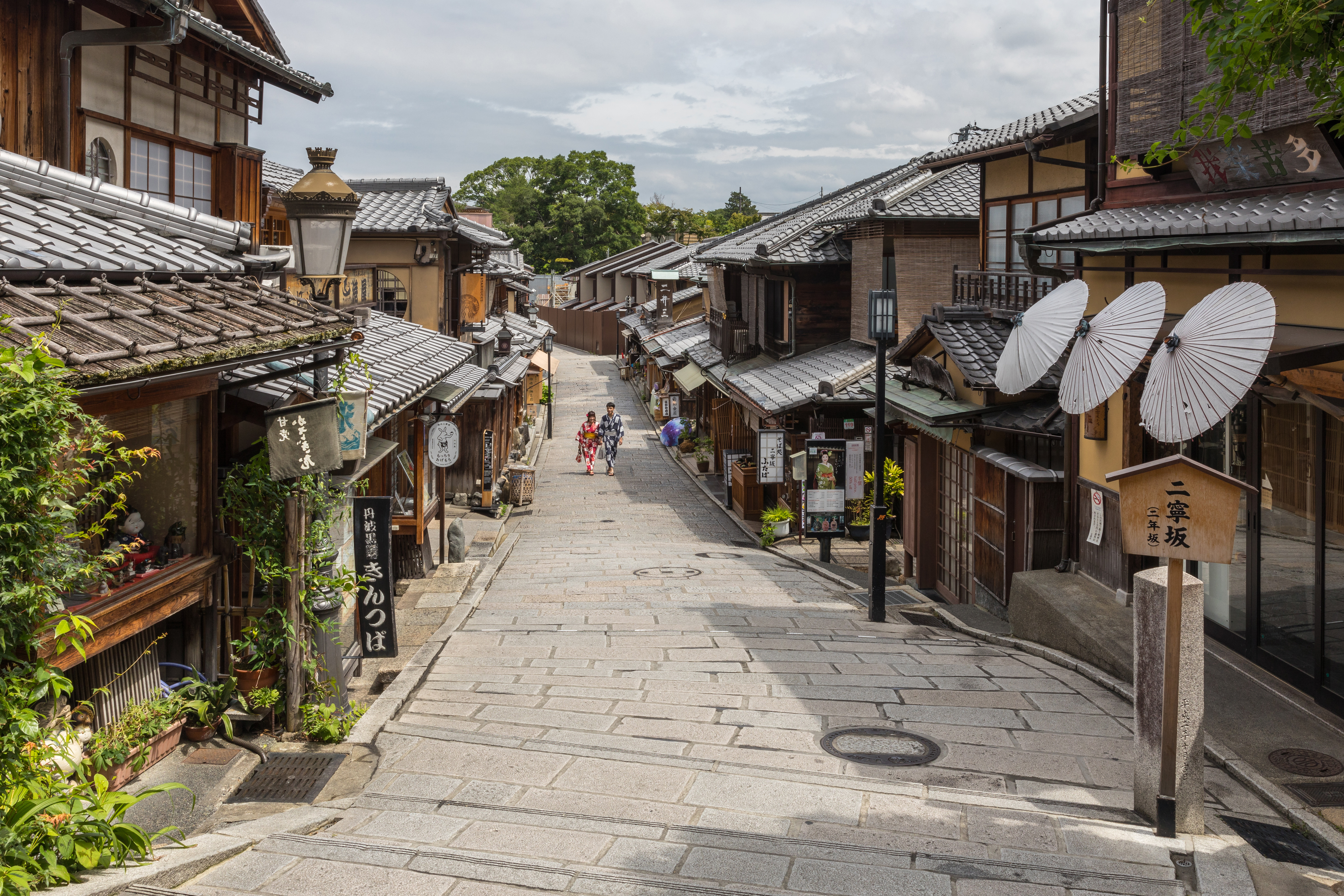
Kyoto: The Old Capital of a Thousand Years and Its Seventeen World Heritage Sites
Kyoto was the capital of Japan for more than a thousand years. Its temples, gardens and old streets still hold the heart of the old country.
The city stands in a basin in the Kansai region of Honshu, ringed by mountains on three sides and crossed by the Kamo River. Emperor Kanmu moved his court here in 794 and named the city Heian-kyo, the capital of peace and tranquillity, and the court stayed until 1868, when the emperor moved to Tokyo. The city escaped the firebombing of the Second World War, so its wooden townhouses, its temples and its shrines survive in a way that few other great cities of the country can match.
Seventeen of its temples, shrines and a castle form a single World Heritage property, inscribed in 1994, and the city holds more than 1,600 Buddhist temples and 400 Shinto shrines. This guide covers the basin and the river, the thousand years of the court, and how to walk a city that rewards slow travel.
Quick Facts About Kyoto
| Item | Detail |
|---|---|
| Name | Kyoto; formerly Heian-kyo |
| Status | Capital of Kyoto Prefecture; former capital of Japan |
| Location | Kansai region, Honshu island, on the Kamo River |
| Coordinates | 35.0116° N, 135.7681° E |
| Population | 1,463,723 people (census, 1 October 2020) |
| Area | 827.83 square kilometres |
| Rank | Ninth largest city in Japan |
| Capital years | 794 to 1868, more than 1,000 years |
| UNESCO | 17 components of the Historic Monuments of Ancient Kyoto, inscribed 1994 |
| Language | Japanese; the Kyoto dialect is known for its softness |
| Time zone | Japan Standard Time, UTC+9 |
| Currency | Japanese yen (JPY) |
| Tallest structure | Kyoto Tower, 131 metres, completed 1964 |
| Temples and shrines | More than 1,600 temples and 400 shrines |
| Wikidata | Q34600, coordinates 35.0116/135.7681 |
Geography of Kyoto
Kyoto sits in a bowl of mountains, with the Higashiyama range to the east, the Kitayama hills to the north and the Arashiyama hills to the west, while the plain opens to the south toward Osaka. The Kamo River runs north to south through the eastern side of the city, and its wide banks are the walking and picnic ground of the whole city, with stepping stones, herons and couples sitting on the grass in the evening. The Katsura River runs through the west, past the bamboo groves of Arashiyama, and the two rivers meet in the south at Fushimi, the old sake-brewing district. The basin traps the heat in summer and the cold in winter, and the city is famous for both: humid summers that pass 35 degrees Celsius and winters with frost on the temple roofs.
The city was laid out on a grid modelled on Chang’an, the capital of Tang China, with wide avenues running north to south and east to west, and the grid still orders the centre today. The Imperial Palace stands in the northern centre, and the old court quarters spread around it, while the merchant districts of the south grew along the rivers and the canals. The eastern hills hold the temples of the Higashiyama district, and the western hills hold the temples of Arashiyama and Sagano, so the city is a ring of sacred hills around a flat centre of streets, markets and townhouses. The mountains are close enough that a bus ride of half an hour from the centre reaches forest trails and mountain temples.
The seasons are the reason most visitors choose their dates. Cherry blossom opens in late March and early April, and the Philosopher’s Path, the canal walk in the east, is lined with trees that turn the water pink. The rainy season arrives in June, and the summer brings the Gion Matsuri, the great festival of July, with its tall floats and its street stalls.
Autumn is the high season: the maples of Tofuku-ji, Eikando and Arashiyama turn red in late November, and the temples open their gates at night to light the leaves. Winter is quiet and cold, with occasional snow on the Golden Pavilion, and the city belongs to those who come then.
The city is smaller and slower than Tokyo or Osaka, and its pleasures are small ones: a garden glimpsed through a gate, a bowl of noodles in a wooden townhouse, a walk along the river at dusk. The bus network carries visitors to the temples, and the subway covers the centre, but the best way to see the old districts is on foot or by bicycle. The crowds gather at Kiyomizu-dera and Fushimi Inari, and they thin quickly on the back streets, where the machiya townhouses, with their narrow fronts and deep gardens, still house workshops, cafes and inns.
The city is watered by the rivers and the canals that the court built. The Uji River, south of the city, runs from Lake Biwa to the Yodo River, and the town of Uji, with its tea fields and its Byodo-in Temple, is the southern gateway of the city. The Lake Biwa Canal, built in the Meiji age and completed in 1890, brought water and power from the great lake to the city, and its stone aqueducts and its locks still stand in the hills. The northern districts of the city, Kurama and Ohara, hold the mountain temples and the farming villages that the city people visit for the autumn leaves and the hot springs, and the bus ride into the hills is one of the classic excursions of the city.
The mountains that ring the city are part of its sacred geography. Mount Hiei, northeast of the city, holds the Enryaku-ji Temple, the great monastery of the Tendai school, and the mountain has been a place of pilgrimage for more than a thousand years. Mount Atago, northwest of the city, holds the shrine of the god of fire, and the night climb to its summit is a tradition of the city. The hills are not scenery; they are the temples, the shrines and the forests that the city was built to face.

Bamboo Forest , Arashiyama , Kyoto , Japan — CC BY-SA 4
History of Kyoto
The history of the city begins in 794, when Emperor Kanmu moved the capital from Nara to a new city built on the plain between the Kamo and Katsura rivers. He named it Heian-kyo, and the court that settled there produced a culture of poetry, calligraphy, silk robes and court novels, including The Tale of Genji, written around the year 1000 by the lady-in-waiting Murasaki Shikibu. The Fujiwara family ruled behind the throne for centuries, marrying their daughters to emperors, and the city became the centre of a refined court culture that valued a well-turned poem above a well-fought battle.
Power drifted away from the court to the warrior families, and in 1185 the first shogunate was founded at Kamakura, far to the east. The court kept its rituals and its poetry, but the real power lay with the samurai, and the city suffered in the wars that followed. The Onin War of 1467 to 1477 burned much of the city and opened the Warring States period, and the temples and palaces were rebuilt again and again. The unifiers Oda Nobunaga and Toyotomi Hideyoshi rebuilt the city in the late sixteenth century, and Tokugawa Ieyasu built Nijo Castle in 1603 as his residence in the capital, a castle of painted screens and nightingale floors that sang under the feet of intruders.
The Edo period was a long quiet age for the city. The court kept its ceremonies, the merchants of the city grew rich on silk, sake and crafts, and the districts of Gion and Pontocho became the home of geiko and maiko, the entertainers of the old capital. The temples rebuilt their halls, the gardens were laid out in the styles that still define the art of the Japanese garden, and the city became the keeper of the old ways while Edo, the new capital of the shoguns, grew into a city of merchants and warriors. The Gion Matsuri, held each July, grew into one of the great festivals of the country, with floats that have paraded the avenues for centuries.
The Meiji Restoration of 1868 ended the thousand years of the capital. The emperor moved to Tokyo, and the city lost its court, its nobles and its income, falling into a deep depression. The citizens answered by building a canal from Lake Biwa to bring water and power, founding schools and factories, and turning the city into a centre of crafts, textiles and universities.
The city escaped the bombing of the Second World War, and its temples, shrines and townhouses survived where other cities lost theirs. In 1994, seventeen of its monuments were inscribed by UNESCO as the Historic Monuments of Ancient Kyoto, and the city became the first place most visitors think of when they think of the old country.
The court of Heian produced a literature that still defines the culture of the country. The Tale of Genji, written around the year 1000 by the lady-in-waiting Murasaki Shikibu, is the great novel of the court, and its poems, its romances and its descriptions of the seasons are the model for a thousand years of writing. The court valued a well-turned poem above a well-fought battle, and the anthologies of poetry that the emperors commissioned are still read and studied today.
The Muromachi age, when the shoguns of the Ashikaga family ruled from the city, gave Kyoto its Zen temples and its gardens. Ryoan-ji, with its rock garden of fifteen stones on raked gravel, is the most famous garden in the country, and the moss garden of Saihō-ji and the sand garden of Ginkaku-ji are the models of the quiet, restrained taste that the city is known for. The shoguns built their villas in the hills, and the temples that grew from them are the places where the tea ceremony, the flower arrangement and the garden art of the country were born.

The illuminated white and purple facade of the office building of Rohm Semiconductor , a Japanese electronic parts manufacturer, in Shimogyo-ku , Kyoto , Japan — CC BY-SA 4
Travel to Kyoto
Kyoto has no airport of its own, and most visitors arrive through Kansai International Airport near Osaka, about 75 minutes away by express train, or by bullet train from Tokyo in a little over two hours. The main station, Kyoto Station, is a vast modern building of glass and steel, and its tower, completed in December 1964, rises 131 metres above the city as its tallest structure. The bus network is the main way to reach the temples, and a day pass covers the buses and the subway, while the flat centre suits bicycles, which can be hired near the station. Taxis are plentiful and honest, and the drivers wear white gloves.
Two or three days cover the main sights, and a fourth day suits a trip to Nara or to the Uji tea town south of the city. The high seasons are cherry blossom in late March and early April, and the maple leaves of late November, when the temples are crowded and the hotels must be booked months ahead. Summer brings the Gion Matsuri in July, and winter brings quiet streets and the chance of snow on the Golden Pavilion. The city is best walked in the early morning, when the temple gates open and the streets are empty, and in the evening, when the lanterns of Gion and Pontocho come on.
Eating in the city means tofu, pickles, green tea and the refined kaiseki cuisine that grew from the tea ceremony. The Nishiki Market, a covered lane of more than a hundred shops, sells the pickles, knives, tofu and sweets that supply the kitchens of the city, and the ramen and soba shops of the station district feed the crowds. The city is more expensive than Osaka for hotels, and the machiya townhouse inns, with their tatami rooms and small gardens, are the most memorable places to stay. Cash is still useful at the temple gates and the small shops, and the ATMs in convenience stores accept foreign cards.
The city asks visitors to behave with care. The temples are places of worship, and photography is forbidden inside the halls, while the geiko of Gion are working women and should not be chased for photographs in the streets. The city has asked visitors not to enter the private lanes of Gion, and the signs at the gates of the district say so plainly. The crowds at the famous sights are real, and the best answer is to rise early, to walk the back streets, and to leave the most famous temple for the last hour of the day.
The city is best explored on foot and by bicycle, and the bus network is the main way to reach the temples that lie beyond the centre. The day pass for the buses and the subway covers the whole city, and the flat centre suits bicycles, which can be hired near the station. The Philosopher’s Path, the canal walk in the east, is lined with cherry trees, and the walk from Ginkaku-ji to Nanzen-ji takes an hour of slow strolling past the temples and the cafes. The crowds gather at the famous sights, and they thin quickly on the back streets, where the townhouses and the workshops keep the old city alive.
Notable Places in Kyoto
Fushimi Inari Shrine
Fushimi Inari Shrine, founded in 711, is the head shrine of about 30,000 Inari shrines across the country, and its mountain path runs under about 10,000 vermilion torii gates. The Senbon Torii, the thousand gates at the foot of the mountain, holds about 800 gates in two dense rows, and the present main hall dates from 1499. The shrine is open day and night without charge, and the full climb to the summit takes two or three hours.
Kinkaku-ji, the Golden Pavilion
Kinkaku-ji, the Temple of the Golden Pavilion, was built in 1397 to 1398 as the retirement villa of the shogun Ashikaga Yoshimitsu, and its top two floors are covered in gold leaf. The pavilion burned in 1950 at the hands of a disturbed monk, was rebuilt in 1955, and was re-gilded in 1987, and it stands 12.5 metres tall above the Mirror Pond. It is one of the seventeen components of the World Heritage property.
Kiyomizu-dera Temple
Kiyomizu-dera, the Pure Water Temple, stands on the eastern hills above the city, and its wooden stage, built without nails, looks out over the valley and the city below. The temple was founded in 778, and the present buildings date from the seventeenth century. The Otowa Waterfall at the foot of the stage gives the temple its name, and the streets of the approach hold the pottery and sweet shops of the old city.
Ginkaku-ji, the Silver Pavilion
Ginkaku-ji, the Temple of the Silver Pavilion, was built in the late fifteenth century as the retirement villa of the shogun Ashikaga Yoshimasa, and its sand garden and moss garden are among the most admired in the country. The pavilion was never covered in silver, despite its name, and the temple is the model of the quiet, restrained taste that the city is known for.
Nijo Castle
Nijo Castle, built in 1603 as the residence of Tokugawa Ieyasu in the capital, holds the Ninomaru Palace with its painted screens and its nightingale floors, designed to sing under the feet of intruders. The castle is one of the seventeen components of the World Heritage property, and its gardens and gates show the power of the shoguns in the city of the emperor.
Gion and Pontocho
Gion is the old entertainment district of the city, with its wooden townhouses, tea houses and the Yasaka Shrine at its eastern end, and Pontocho is the narrow lantern-lit alley along the Kamo River. The geiko and maiko of Gion still walk to their appointments in the evening, and the district is the home of the Gion Matsuri in July.
Arashiyama and the Bamboo Grove
Arashiyama, in the west of the city, holds the bamboo grove, the Togetsukyo Bridge over the Katsura River, and the Tenryu-ji Temple, one of the seventeen World Heritage components. The grove is a path through towering bamboo that draws crowds from dawn, and the hills above it hold the monkey park and the temple of Okochi Sanso.
Kyoto Tower
Kyoto Tower, completed in December 1964, rises 131 metres above the station, and its observation deck at 100 metres looks across the whole basin to the mountains. The tower is the tallest structure in the city, and its shape is said to recall a lighthouse guiding travellers to the old capital.
Frequently Asked Questions About Kyoto
Why is Kyoto famous?
The city was the capital for more than a thousand years, from 794 to 1868, and it keeps the temples, shrines, gardens and townhouses that other cities lost. Seventeen of its monuments form a single World Heritage property.
When is the best time to visit Kyoto?
Late March and early April bring cherry blossom along the Philosopher’s Path, and late November brings red maples at Tofuku-ji and Arashiyama. July brings the Gion Matsuri, and winter brings quiet streets and the chance of snow.
How many days do I need in Kyoto?
Two full days cover the main temples and districts, and three days allow a slower pace with a trip to Nara or Uji. A week suits travellers who want to walk the gardens and the back streets without hurrying.
How do I get around Kyoto?
The bus network reaches the temples, and a day pass covers buses and the subway. The flat centre suits bicycles, and the old districts are best explored on foot in the early morning or the evening.
Is Kyoto a UNESCO World Heritage site?
Seventeen temples, shrines and a castle in the city form the Historic Monuments of Ancient Kyoto, inscribed by UNESCO in 1994 under criteria (ii) and (iv). The list includes Kinkaku-ji, Kiyomizu-dera, Nijo Castle and the shrines of the city.
What is the difference between Kinkaku-ji and Ginkaku-ji?
Kinkaku-ji, the Golden Pavilion, was built in 1397 to 1398 and is covered in gold leaf above its pond. Ginkaku-ji, the Silver Pavilion, was built in the late fifteenth century and was never covered in silver, and it is known for its sand and moss gardens.
Verified
- Kyoto was the capital of Japan from 794 to 1868, more than 1,000 years, and its population was 1,463,723 people in the census of 1 October 2020, with an area of 827.83 square kilometres. Checked 21 November 2026.
- Seventeen monuments of Kyoto form the Historic Monuments of Ancient Kyoto, inscribed by UNESCO in 1994 with reference number 688 under criteria (ii) and (iv). Checked 21 November 2026.
- Fushimi Inari Shrine was founded in 711, is the head shrine of about 30,000 Inari shrines, holds about 10,000 torii gates, and its present main hall dates from 1499. Checked 21 November 2026.
- Kinkaku-ji was built in 1397 to 1398, burned in 1950, rebuilt in 1955, re-gilded in 1987, and stands 12.5 metres tall. Checked 21 November 2026.
- Kyoto Tower is 131 metres tall, was completed in December 1964, has an observation deck at 100 metres, and is the tallest structure in the city. Checked 21 November 2026.
- Heian-kyo was laid out on a grid modelled on Chang’an, the capital of Tang China, and Emperor Kanmu moved the court here in 794. Checked 21 November 2026.
- Nijo Castle was built in 1603 as the residence of Tokugawa Ieyasu in the capital, and its nightingale floors were designed to sound underfoot. Checked 21 November 2026.
- Kiyomizu-dera was founded in 778, and its present buildings date from the seventeenth century. Checked 21 November 2026.
- Coordinates 35.0116/135.7681 and Wikidata Q34600 for Kyoto were verified through the Wikidata API on 21 November 2026. Checked 21 November 2026.
Sources
- Wikipedia, Kyoto — https://en.wikipedia.org/wiki/Kyoto — for population, area, the capital years 794 to 1868, and the UNESCO inscription of 1994.
- UNESCO, Historic Monuments of Ancient Kyoto — https://whc.unesco.org/en/list/688 — for the 17 components, reference number 688 and criteria (ii) and (iv).
- Wikipedia, Fushimi Inari-taisha — https://en.wikipedia.org/wiki/Fushimi_Inari-taisha — for the founding in 711, the torii gates and the main hall of 1499.
- Wikipedia, Kinkaku-ji — https://en.wikipedia.org/wiki/Kinkakuji — for the building of 1397 to 1398, the fire of 1950, the rebuilding of 1955 and the re-gilding of 1987.
- Wikipedia, Kyoto Tower — https://en.wikipedia.org/wiki/Kyoto_Tower — for the height of 131 metres, the completion in December 1964 and the observation deck at 100 metres.
- Japan National Tourism Organization — https://www.japan.travel/en/destinations/kansai/kyoto/ — for visitor information on districts, transport and seasons.
Unverified
- Admission prices and opening hours for the temples and shrines were not checked against their official sites in this round, so no prices or hours are given.
- The exact time of the bullet train from Kyoto to Tokyo depends on the service chosen, so this article gives only a little over two hours as a general figure.
- The count of temples and shrines in the city, more than 1,600 and 400, is a commonly cited figure that varies between sources.
- The dates of the Gion Matsuri events and the temple night openings change each year, so check the official calendar before booking.
Illustrations
- Hero: Kyoto. Free image: https://upload.wikimedia.org/wikipedia/commons/8/86/Pedestrian_road_with_pavements%2C_paper_umbrellas_and_people_in_yukata%2C_Higashiyama-ku%2C_Kyoto%2C_Japan.jpg — CC BY-SA 4.0.
- In body, Kyoto: Bamboo Forest , Arashiyama , Kyoto , Japan. Free image: https://upload.wikimedia.org/wikipedia/commons/4/4a/Bamboo_Forest%2C_Arashiyama%2C_Kyoto%2C_Japan.jpg — CC BY-SA 4.
- In body, Kyoto: The illuminated white and purple facade of the office building of Rohm Semiconductor , a Japanese electronic parts manufacturer, in Shimogyo-ku , Kyoto , Japan. Free image: https://upload.wikimedia.org/wikipedia/commons/0/0e/Illuminated_white_and_purple_facade_of_the_office_building_Rohm_Semiconductor_in_Kyoto%2C_Japan.jpg — CC BY-SA 4.