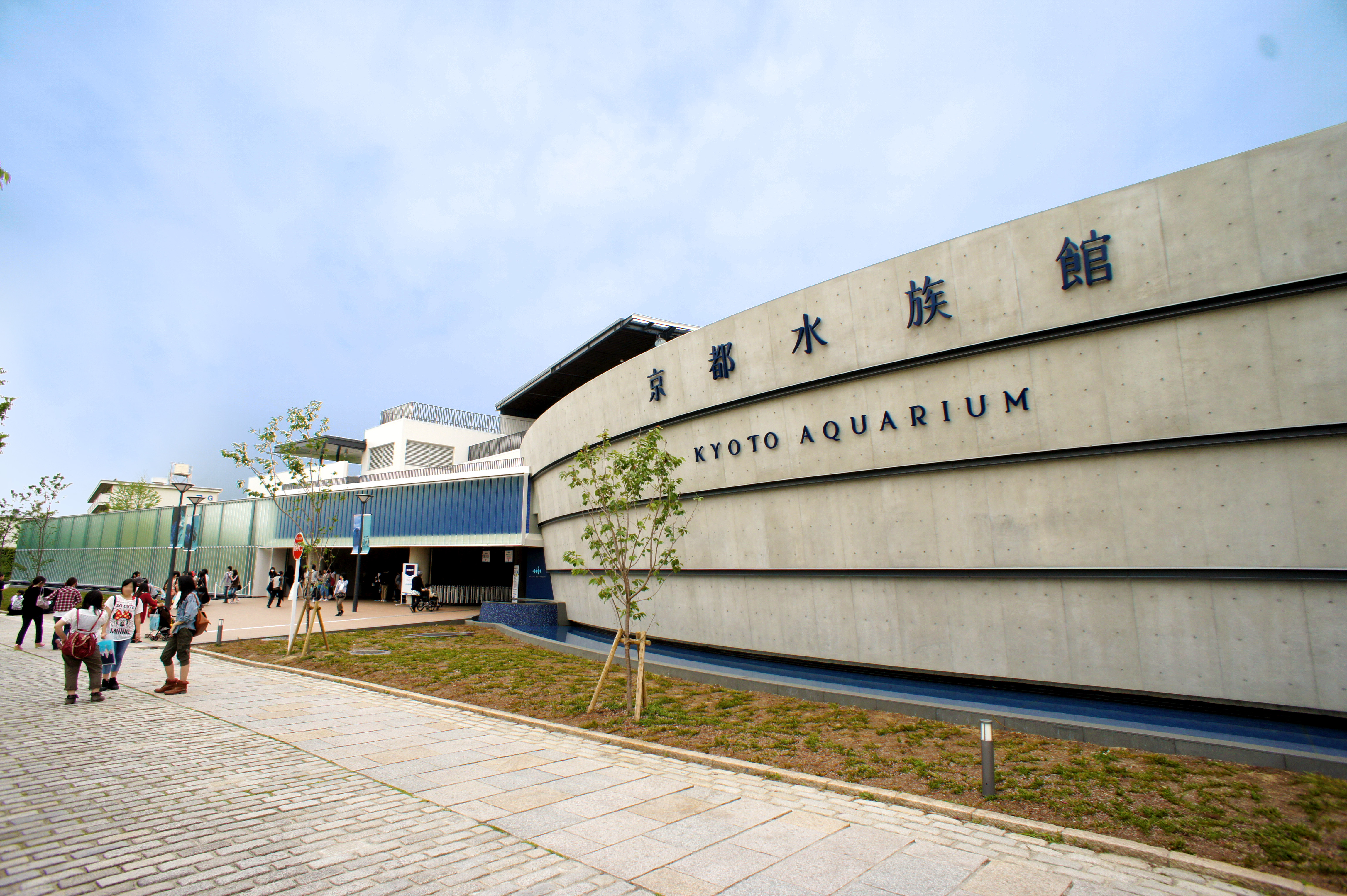
Kyoto Aquarium: The Inland Sea of Umekoji Park
Kyoto Aquarium is the first inland aquarium in Japan, opened in 2012. It keeps the sea alive far from the coast, on artificial seawater.
Kyoto Aquarium, in Umekoji Park in the Shimogyo Ward of Kyoto, Japan, is the most surprising aquarium in the country. Kyoto has no sea, yet the aquarium holds the sea: a great tank called the Kyoto Sea, with about 50 species, an outdoor dolphin stadium, and a hall of the giant salamander, the living fossil of the rivers of Kyoto. The aquarium opened on 14 March 2012, and it was the first inland aquarium in Japan, built on artificial seawater. This article gives the geography, the history and the practical visit of Kyoto Aquarium for a first-time traveller.
Quick Facts About Kyoto Aquarium
| Fact | Detail |
|---|---|
| Name | Kyoto Aquarium (Kyoto Suizokukan,京都水族館) |
| Address | Umekoji Park, 35-1 Kankiji-cho, Shimogyo Ward, Kyoto, Japan |
| Coordinates | 34.987556° N, 135.747611° E |
| Opened | 14 March 2012 |
| Type | Aquarium (L4); the first inland aquarium in Japan, using artificial seawater |
| Highlights | Outdoor dolphin stadium; giant salamander hall; freshwater fish of the Kamo River and Kyoto; the great Kyoto Sea tank |
| Visit | About 1.5–2 hours |
| Getting there | Beside Umekoji-Kyotonishi Station (JR San’in Line); about 15 minutes on foot from Kyoto Station, about 7 minutes from Umekoji-Kyotonishi |
| Wikidata | Q11375621 |
Geography of Kyoto Aquarium
Umekoji Park and the Station
Kyoto Aquarium stands in Umekoji Park, a large park in the Shimogyo Ward of Kyoto, at 35-1 Kankiji-cho. The park is the green heart of the southern city, with lawns, trees, a railway museum and the aquarium, and it is a place of leisure for the families of Kyoto. The aquarium sits at the edge of the park, beside the railway, and its building is low and modern, with a roof that echoes the waves. The park is the setting of Kyoto Aquarium, and the aquarium is its most visited building.
The aquarium is beside Umekoji-Kyotonishi Station, on the JR San’in Line, and the station is the simplest way to reach it. The walk from the station takes about seven minutes, and the walk from Kyoto Station, the great station of the city, takes about fifteen minutes. The aquarium is easy to reach by train, and it fits well into a day that starts at Kyoto Station. The park, the station and the aquarium belong together, and the visitor can walk between them in minutes.
Umekoji Park is also the home of the Kyoto Railway Museum, and the two museums together make a full day in the park. The railway museum holds the great locomotives of Japan, and the aquarium holds the sea, and the park holds both. A family can spend a morning in one and an afternoon in the other, and the park is the link between them. Kyoto Aquarium is not an isolated building but a part of the park, and the park is part of its charm.
An Inland Aquarium on Artificial Seawater
Kyoto Aquarium is an inland aquarium, and that is its defining fact. Kyoto has no sea, and the aquarium is far from the coast, yet it holds marine animals, and it does so on artificial seawater. The seawater is made in the aquarium, mixed to the chemistry of the sea, and it is circulated, filtered and kept at the temperature the animals need.
The aquarium was the first inland aquarium in Japan to work in this way, and its system is a model for aquariums in cities without a sea. The sea in Kyoto Aquarium is a made sea, and it works.
The artificial seawater is not a compromise but a choice. The aquarium can control the water exactly, and it can keep the animals healthy far from the coast. The great tank, the Kyoto Sea, holds about 50 species, and its water is clear and blue, because the system is clean.
The aquarium shows that the sea can be kept anywhere, if the water is made well. Kyoto Aquarium is a proof of that, and its success has been copied by other inland aquariums.
The inland position also shapes the aquarium. The building is compact, and its tanks are arranged in a circuit, so the visitor walks from the sea to the river and back again. The aquarium is a journey from the ocean to the freshwater of Kyoto, and the inland site is the reason for that journey: the aquarium brings the sea to a city that has none, and it brings the river to the surface. The geography of Kyoto Aquarium is the geography of a sea made inland.
The Kyoto Sea Tank
The great tank of Kyoto Aquarium is called the Kyoto Sea, and it is the centre of the building. The tank holds about 50 species, including yellowfin tuna, rays and schooling fish, and it is a great blue volume, seen through a wall of glass. The tuna swim in a circle, the rays glide over the sand, and the small fish move in schools, and the tank is the sea in miniature. The Kyoto Sea is the first tank the visitor sees, and it is the one that stays in the memory.
The tank is designed to show the sea as a system, not as a collection of fish. The species live together, as they do in the sea, and the tank shows their relations: the tuna hunt, the rays rest, and the schools move as one. The aquarium feeds the tank in public, and the feeding is a show, with the tuna rising to the surface.
The Kyoto Sea is a living tank, and its life is the point of the aquarium. The visitor who watches it for ten minutes will see more than a visitor who rushes past.
The tank is also a piece of engineering. The water is artificial seawater, made and kept in the building, and the filtration, the temperature and the light are all controlled. The tank is large, and its glass is thick, and its life depends on the machines behind it.
Kyoto Aquarium is a machine for keeping the sea, and the Kyoto Sea tank is its heart. The tank is the reason the aquarium was built, and it is the reason it is famous.
The Rivers of Kyoto
Kyoto Aquarium does not only hold the sea; it also holds the rivers of Kyoto, and the river halls are its most local part. The Kamo River, the river of the city, runs through Kyoto, and its fish, its crabs and its plants are shown in the aquarium. The river halls are small and quiet after the great tank, and they show the freshwater life of the region: the fish of the Kamo, the loaches, the crabs and the frogs. The river is the other half of Kyoto Aquarium, and it is the half that belongs to the city.
The giant salamander is the star of the river halls. The Japanese giant salamander, the largest amphibian in the world, lives in the rivers of the Kyoto region, and the aquarium holds a hall for it, with a great tank and a dark, cool room. The salamander is a living fossil, little changed for millions of years, and it is a protected species.
The hall is dim and quiet, and the salamander moves slowly in the water, and the visitor must look carefully to see it. The salamander is the most remarkable animal in Kyoto Aquarium, and its hall is the most memorable room.
The river halls also show the connection between the city and its water. The Kamo River is the river of Kyoto, and its life is the life of the city. The aquarium shows that life, and it teaches the visitor to look at the river differently.
A visitor who has seen the river halls will see the Kamo River with new eyes, and will notice the fish and the birds that were invisible before. Kyoto Aquarium is an aquarium of the city as well as of the sea.
History of Kyoto Aquarium
The Opening of 2012
Kyoto Aquarium opened on 14 March 2012, in Umekoji Park, and it was the first inland aquarium in Japan. The aquarium was built by the ORIX group, as part of the renewal of Umekoji Park, and it was designed to bring the sea to Kyoto, a city without a coast. The opening was a success, and the aquarium drew crowds from the first day. The date of 14 March 2012 is the birthday of Kyoto Aquarium, and it is the start of its history.
The aquarium was built at a time when Kyoto was renewing its southern districts, and Umekoji Park was the centre of that renewal. The railway museum opened in the park in 2016, and the aquarium was its predecessor, the first great building of the new park. The two museums together made Umekoji Park a destination, and the park is now one of the most visited parks in Kyoto. The history of Kyoto Aquarium is the history of the park, and the two are joined.
The aquarium was designed from the start as an inland aquarium, and its artificial seawater system was its innovation. The system was new, and it was watched by aquariums across Japan, and its success proved that an inland city could hold the sea. The opening of Kyoto Aquarium was therefore not only a local event but a technical one, and its system has been studied and copied. The aquarium is a young building, yet it has already changed its field.
The Dolphin Stadium and the Shows
The dolphin stadium of Kyoto Aquarium is an outdoor theatre, and its shows are the most popular event in the building. The dolphins perform in a pool open to the sky, with the park and the city behind them, and the shows run several times a day. The stadium is the loudest part of the aquarium, and it is the part that children remember best. The dolphins are the stars of Kyoto Aquarium, and their stadium is its stage.
The shows have changed over the years, and the aquarium has moved from tricks to natural behaviour, showing the dolphins swimming, jumping and playing as they do in the wild. The change reflects a wider change in aquariums, towards education and welfare, and Kyoto Aquarium has followed it. The stadium is still a show, yet it is also a lesson, and the keepers explain the dolphins as they perform. The history of the stadium is the history of the aquarium learning to show its animals well.
The dolphin stadium is also the most debated part of Kyoto Aquarium, because the keeping of dolphins in captivity is debated everywhere. The aquarium has answered that debate with its care, its breeding and its research, and the dolphins are part of its programme. The visitor who sees the show should also see the hall that explains the dolphins, because the two together are the full story. The stadium is the heart of the aquarium, and it is also its question.
The Salamander and the Research
The giant salamander hall of Kyoto Aquarium is the most scientific part of the building, and it reflects the aquarium’s work as a research institution. The Japanese giant salamander is a protected species, and the aquarium breeds it, studies it and teaches about it. The hall is a dark room with a great tank, and it is designed to show the salamander as it lives, in the cool, dark water of the rivers. The hall is the quietest room in the aquarium, and it is the most serious.
The aquarium works with the rivers of the Kyoto region, studying the salamander, the fish and the water, and its research is published and shared. The aquarium is not only a show but a laboratory, and its work matters to the conservation of the rivers. The salamander is the symbol of that work, because it is rare, ancient and local, and the aquarium is its guardian. The history of Kyoto Aquarium is a history of research as well as of display, and the salamander is its emblem.
The aquarium also works on the breeding of its marine animals, and on the care of its seawater system, and its staff are researchers as well as keepers. The building is young, yet its work is already recognised, and its system for artificial seawater is a model. Kyoto Aquarium is a young institution with a serious purpose, and its history is still being written, in its tanks and in its papers.
Umekoji Park and the Railway Museum
The history of Kyoto Aquarium is tied to Umekoji Park, and to the railway museum that joined it in 2016. The park was once a freight yard, and its renewal turned it into a green space with two museums. The aquarium was the first, and the railway museum was the second, and the two together made the park a destination for families. The park is now one of the most visited places in southern Kyoto, and the aquarium is its anchor.
The park and the aquarium belong to the renewal of southern Kyoto, a district that was once industrial and is now a place of leisure. The station, the park and the museums are the new south of the city, and the aquarium is its most visited building. The history of Kyoto Aquarium is therefore a history of the city as well as of the building, and the aquarium is a sign of the change. The sea came to Kyoto, and the park came with it.
Travel to Kyoto Aquarium
Getting There
Kyoto Aquarium is reached most easily by train, to Umekoji-Kyotonishi Station on the JR San’in Line, and then a walk of about seven minutes through the park. The station is small and quiet, and it is the nearest station to the aquarium. Kyoto Station, the great station of the city, is about fifteen minutes away on foot, and the walk is flat and easy, through the streets of the southern city. The aquarium is therefore easy to reach, and it is a good stop on a day that begins at Kyoto Station.
Buses also serve Umekoji Park, and taxis can drop visitors at the park gate. The park is large, and the aquarium is at its edge, so the walk from the gate is short. The aquarium is open every day, and the visit takes about 1.5 to 2 hours, so it fits into a morning or an afternoon. A visitor who combines the aquarium with the railway museum should allow a full day in the park, because the two museums together are a day’s work.
The aquarium is best visited in the morning, when the dolphin shows are fresh and the crowds are thin. The afternoon is busier, especially at weekends and in the school holidays, and the queue for the dolphin stadium can be long. The visit is best planned around the show times, which are posted at the entrance and on the official site. Kyoto Aquarium is a morning visit, and the park rewards the early riser.
Tickets and the Visit
Tickets for Kyoto Aquarium are bought at the entrance, and the price should be checked on the official site before going, because it can change. The ticket covers the whole aquarium, including the dolphin stadium, and the shows are included. The aquarium is not large, and the visit takes about 1.5 to 2 hours, with the Kyoto Sea tank, the dolphin stadium and the salamander hall as the three great stops. The circuit is one way, and it runs from the sea to the river, so the visitor should follow it in order.
The dolphin shows run several times a day, and the times are posted at the entrance. The stadium is outdoor, and it is open to the sky, so the show is best in good weather, and it can be cancelled in heavy rain. The feeding of the Kyoto Sea tank is also a public event, and it is worth watching, because the tuna rise to the surface. The visit should be planned around these events, because they are the highlights of the day.
The aquarium has a shop and a cafe, and the park outside has lawns and benches for a rest. The aquarium is suitable for children, and it is one of the best family sights in Kyoto, because the dolphins, the tuna and the salamander are all memorable. The visit is easy, the building is compact, and the park is green. Kyoto Aquarium is a half-day visit, and it leaves the afternoon free for the city.
When to Go and What to Bring
Kyoto Aquarium is open all year, and each season has its own character. Spring brings the cherry blossom of the park, summer brings the crowds of the school holidays, autumn brings the clear light, and winter brings the quiet.
The aquarium is indoors for the most part, so the weather matters less than for an outdoor sight, yet the dolphin stadium is outdoor, and it is best in good weather. The best time to go is a weekday morning, when the aquarium is quiet and the shows are fresh. A visitor with a full day in Kyoto can pair the aquarium with Fushimi Inari, the shrine of a thousand gates, in the afternoon, or with Arashiyama, the bamboo grove district in the west of the city.
Travellers should bring a camera, because the Kyoto Sea tank and the dolphin stadium are photogenic, and the salamander hall is dark, so a camera that works in low light is useful. Comfortable shoes are needed for the walk through the park, and water is useful in summer. The aquarium is a family sight, and children should bring their curiosity, because the salamander, the tuna and the dolphins are all worth a long look. Kyoto Aquarium is a visit for all ages, and it should not be rushed.

image montrant l’extérieur de l’aquarium de Kyoto — CC BY-SA 4
Notable Places in Kyoto Aquarium
The Kyoto Sea Tank
The Kyoto Sea tank is the great tank of Kyoto Aquarium, holding about 50 species, including yellowfin tuna, rays and schooling fish, in artificial seawater. The tank is a great blue volume, seen through a wall of glass, and the tuna swim in a circle while the rays glide over the sand. The Kyoto Sea opens the visit, and its blue volume is the image most visitors carry home.
The Dolphin Stadium
The dolphin stadium is the outdoor theatre of Kyoto Aquarium, where the dolphins perform several times a day in a pool open to the sky. The stadium is the noisiest corner of the building, and children remember it longest. The shows have moved from tricks to natural behaviour, and the keepers explain the dolphins as they perform.
The Giant Salamander Hall
The giant salamander hall is the most scientific room in Kyoto Aquarium, a dark, cool hall with a great tank for the Japanese giant salamander, the largest amphibian in the world. The salamander is a living fossil of the rivers of the Kyoto region, and the hall is designed to show it as it lives. The hall is quiet and dim, and the salamander moves slowly, and the visitor must look carefully to see it.
The Kamo River Halls
The Kamo River halls show the freshwater life of Kyoto, the fish, the crabs and the plants of the river that runs through the city. The halls are small and quiet after the great tank, and they show the river as the other half of the aquarium. A visitor who has seen the river halls will see the Kamo River with new eyes.

image montrant la façade extérieure du bâtiment principal de l’aquarium de Kyoto — CC BY-SA 4
Frequently Asked Questions
Where is Kyoto Aquarium?
Kyoto Aquarium stands in Umekoji Park, at 35-1 Kankiji-cho in the Shimogyo Ward of Kyoto, Japan. It is beside Umekoji-Kyotonishi Station on the JR San’in Line, about 7 minutes on foot from that station and about 15 minutes from Kyoto Station.
When did Kyoto Aquarium open?
Kyoto Aquarium opened on 14 March 2012. It was the first inland aquarium in Japan, built on artificial seawater, because Kyoto has no sea.
What is the Kyoto Sea tank?
The Kyoto Sea is the great tank of Kyoto Aquarium, holding about 50 species, including yellowfin tuna, rays and schooling fish, in artificial seawater. The tank is seen through a wall of glass, and the public feeding is one of the highlights of the visit.
What is the giant salamander at Kyoto Aquarium?
The Japanese giant salamander is the largest amphibian in the world, a living fossil of the rivers of the Kyoto region, and Kyoto Aquarium holds a hall for it. The hall is dark and cool, with a great tank, and the salamander moves slowly in the water.
How long should I spend at Kyoto Aquarium?
Allow about 1.5 to 2 hours for the aquarium itself. A visitor who combines it with the Kyoto Railway Museum in the same park should allow a full day in Umekoji Park.
Is there a dolphin show at Kyoto Aquarium?
Yes. The outdoor dolphin stadium holds shows several times a day, and the shows are included in the ticket. The stadium is open to the sky, so shows can be cancelled in heavy rain, and the times are posted at the entrance.
Verified
The information here follows the Vietnamese article for this entity and the sources it cites, checked on 22 November 2026. The address in Umekoji Park at 35-1 Kankiji-cho, Shimogyo Ward, Kyoto, the opening date of 14 March 2012, the first inland aquarium in Japan on artificial seawater, the station of Umekoji-Kyotonishi on the JR San’in Line, the walk of about 15 minutes from Kyoto Station and about 7 minutes from Umekoji-Kyotonishi, the visit of about 1.5–2 hours, the Kyoto Sea tank with about 50 species including yellowfin tuna, the outdoor dolphin stadium, the giant salamander hall and the freshwater fish of the Kamo River, and the coordinates 34.987556° N, 135.747611° E are taken from those sources. Wikidata Q11375621 is Kyoto Aquarium (P31 aquarium, P625 34.987556/135.747611), verified by API on 22 November 2026. Whatever rests on an unsettled reading is recorded under Unverified.
Sources
- Kyoto Aquarium, official site — https://www.kyoto-aquarium.com/en/
- Wikidata, Kyoto Aquarium Q11375621 — https://www.wikidata.org/wiki/Q11375621
- Japan National Tourism Organization — https://www.japan.travel/en/
- Wikipedia, Kyoto Aquarium — https://en.wikipedia.org/wiki/Kyoto_Aquarium
Unverified
The ticket prices for Kyoto Aquarium change, and travellers should check the official site before going. The exact number of species in the Kyoto Sea tank is given as about 50 in the sources used here, and it changes as the collection changes. The times of the dolphin shows change with the season, and the times posted at the entrance on the day are the ones that count.
Illustrations
- Hero: View of Kyoto Aquarium. Free image: https://upload.wikimedia.org/wikipedia/commons/a/a7/KYOTO_AQUARIUM.JPG — CC BY-SA 3.0.
- In body, aquarium de kyoto: image montrant la façade extérieure du bâtiment principal de l’aquarium de Kyoto. Free image: https://upload.wikimedia.org/wikipedia/commons/e/e9/Kyoto_Aquarium_hdsr_2019_06_01_9999_1323.jpg — CC BY-SA 4.
- In body, aquarium de kyoto: image montrant l’extérieur de l’aquarium de Kyoto. Free image: https://upload.wikimedia.org/wikipedia/commons/5/51/Kyoto_Aquarium_hdsr_2019_06_01_9999_524.jpg — CC BY-SA 4.