
Nabeul — Pottery Capital and Home of Harissa on the Cap Bon Peninsula
Nabeul is a coastal town on the Cap Bon peninsula in northeastern Tunisia. Its pottery souks and harissa draw day trips from Tunis and Hammamet.
French travellers search for Nabeul with phrases such as “séjour nabeul tout inclus”, “voyages nabeul”, and “nabeul voyage”, mostly wanting a package holiday or a short trip from Tunis. This article follows that intent: the pottery and its souk, the ruins of Neapolis, the food of harissa, and how to combine Nabeul with nearby Hammamet. Nabeul is the capital of its province and the pottery capital of Tunisia, a seaside town where the workshops still work by hand and the orange groves run right up to the edge of the town.
Quick Facts
- Name: Nabeul; the ancient name is Neapolis, meaning “New City” in Greek.
- Position: On the southern shore of the Cap Bon peninsula, northeastern Tunisia, on the Gulf of Hammamet, about sixty to seventy km from Tunis and about thirty km northeast of Hammamet.
- Role: Capital of Nabeul Governorate and the pottery capital of Tunisia.
- People: Eighty-four thousand two hundred and ninety-one residents at the census of 2022.
- Coordinates: Thirty-six degrees twenty-seven minutes north, ten degrees forty-four minutes east.
- Character: A working seaside town of pottery workshops, a morning market, and long sandy beaches, quieter than Hammamet.
- Signature: Hand-painted pottery, the garum ruins of Neapolis, and harissa, the chilli paste that UNESCO listed as Intangible Cultural Heritage in 2022.
- Best season: From May to October, when the sun is steady and the sea is warm; winter is cool and quiet.
Geography of Nabeul
Nabeul lies on the southern shore of the Cap Bon peninsula, in northeastern Tunisia, beside the Gulf of Hammamet. The town sits on a low strip of coastal land, with long sandy beaches and orange and lemon groves inland. That position makes Nabeul both a seaside town and the farming centre of the Cap Bon region, with the sea on one side and orchards on the other.
The Cap Bon peninsula is a long finger of land reaching northeast into the Mediterranean, with Nabeul on its southern shore and towns such as Kelibia at its northern end. The southern shore, where Nabeul stands, has long beaches and shallow water, good for swimming. The eastern shore of the peninsula is steeper, with cliffs and small coves.
The flat southern shore suits swimming and fishing, with shallow water and fine sand. The beaches around the town run along the shore of the gulf, with small resorts and seafront restaurants. Travellers who like swimming should stay near the beach, while travellers who prefer sightseeing should stay near the centre and the pottery souk.
Hammamet lies about thirty km to the southwest, along the shore of the Gulf of Hammamet, and the two towns are joined by a coastal road that passes resorts and long beaches. Many travellers combine both in one trip, because Hammamet has more large hotels while Nabeul has the pottery souk and a more local atmosphere.
Hammamet and Nabeul complement each other on a trip: Hammamet offers large hotels, a long beach, and a medina, while Nabeul offers the pottery souk, the ruins, and local life. Travellers staying in Hammamet often come to Nabeul for the day to visit the pottery souk and buy pottery, since the distance is only about thirty km. Travellers staying in Nabeul often go to Hammamet to swim and visit the medina, because Hammamet has more tourist services. The two towns can be combined in one or two days, depending on what a traveller prefers.
The climate of Nabeul is Mediterranean, and the orange groves around the town show it best: the trees need mild winters and long sunny summers, and they fruit through the cold months. In summer the days are dry and sunny, with daytime temperatures usually from twenty-eight to thirty-two degrees, softened by a sea breeze. In winter the days run about fifteen to eighteen degrees and the nights about eight to ten degrees, and the rain that falls in autumn and winter waters the groves. May, June, and September are quieter than high summer but the sea stays warm enough to swim, at about twenty-four to twenty-six degrees.
The land around the town is fertile, growing oranges, lemons, and olives, with vegetables for the local market. Cap Bon is famous for its citrus fruit, and the orchards ring the town on the inland side. Farming and pottery are the two most important traditional crafts of the region, alongside seaside tourism.
The Gulf of Hammamet curves around Nabeul in a wide bay, and the coast south of the town runs toward Sousse, about seventy km away, with beaches and small resorts along the way. The water of the gulf is shallow for a long way out, which keeps the waves small and the sand soft underfoot. Fishing boats work the bay at dawn, and the catch feeds the restaurants of the town. The gulf gives Nabeul its living as a fishing town as well as its beaches, and the two have shaped each other for centuries.
The old town of Nabeul keeps its narrow lanes and its souks, each with its own trade. Souk El Balgha is one of the oldest in the region, once devoted to the making and selling of balgha, the heelless leather slippers of Tunisia. Souk Haddada belongs to the sheet-metal workers, and Souk Ezzit to the sellers of oil. A weekly souk takes place every Friday, drawing travellers and local people, and the medina is entered through gates such as Beb Blad, the main gate, Beb el Zaouia, and Beb el Khoukha.

Sunset in Nabeul, Tunisia — CC BY-SA 4
History of Nabeul
Nabeul was founded in the fifth century before Christ by Greeks from Cyrene, with the name Neapolis, meaning “New City”. The ancient city lay about two km from the present centre, near the shore. The Greeks chose the site because it had a natural harbour and fertile land, good for trade and farming.
The name Neapolis reflects the founding of a new city in a new land, and the new city quickly grew into a trading centre, with Greek and later Roman merchants trading through the port. The position of the ancient city, about two km from the present centre, lay near the shore and the natural harbour that the Greeks had chosen.
Under Rome, Neapolis became an important trading centre, exporting grain and garum, a fermented fish sauce prized across the Roman Empire. The garum factory at Neapolis was one of the largest in North Africa, with tanks for fermenting fish and salt that survive to this day. The city grew rich from sea trade and from farming in the land around it. The head of the Tunisian-Italian archaeological mission, Mounir Fantar, has said that Neapolis was probably the largest centre for the manufacture of garum and salt fish in the Roman world, a claim that rests on the scale of the factory found underwater.
On the twenty-first of July in the year three hundred and sixty-five, a great earthquake and tsunami destroyed Neapolis together with many coastal cities of the Mediterranean. Much of the ancient city was destroyed and sank into the sea, and the area was never rebuilt at its old scale. The ruins of the ancient city lie under the water and on the shore, with the garum factory discovered by chance in nineteen sixty-five. Divers from the Tunisian National Heritage Institute and the University of Sassari have since found streets, monuments, and around one hundred tanks for storing garum, confirming that about one third of the city now lies underwater.
After Roman times, the area passed through Byzantine and Arab periods, and the name slowly became Nabeul. Under Islam, the town grew as a farming and craft centre, with pottery villages around the area. Pottery here is old, but it grew strong from the seventeenth century, when Andalusians arrived from Spain and brought the technique of glazed pottery.
The craft of Nabeul was restarted in the early twentieth century, when craftsmen such as Tessier, Deverclos, and Jacob Chemla opened new pottery workshops. They joined Andalusian technique with local style, creating the coloured glazed pottery that marks Nabeul. From then on, the town became the pottery capital of Tunisia, with dozens of workshops and pottery shops around the centre.
Today the pottery workshops around the Nabeul souk still keep the technique of the early twentieth century, with craftsmen passing the craft to the next generation inside the family. Each workshop has its own style of glaze colour and pattern, so a traveller who visits several workshops will see the variety of Nabeul pottery. The products of these workshops are sold across Tunisia, and Nabeul is the main supplier of pottery for the whole country. A traveller who buys pottery here does not only buy a product, but meets the craftsmen and sees a living craft at work.
Nabeul was also the first seaside resort of Tunisia, with seaside hotels and guesthouses from the early twentieth century. Travellers from Tunis came here to swim and rest, before Hammamet grew into a larger resort. The town still keeps the air of a local seaside town, with the pottery souk and the old town as its marks.
Harissa, the famous chilli paste of Tunisia, comes from Nabeul and the Cap Bon region. The paste is made from red chillies, garlic, coriander, and olive oil, and it is served with couscous and Tunisian dishes. In twenty twenty-two, UNESCO listed harissa as Intangible Cultural Heritage of Humanity, recognising the role of the food in the daily life and cooking of Tunisia. The traditional recipe of Nabeul is passed down inside families, with each family having its own way of mixing the heat and the spices.
In local meals, harissa appears in most dishes, from couscous to meat and fish. Travellers to Nabeul can buy fresh harissa at the local market, in many kinds that differ in heat and spice. Shops around the souk sell harissa in jars, good as a souvenir, but travellers should check carefully before buying, because fresh harissa needs to be kept cold.
Travel to Nabeul
Most travellers come to Nabeul for the day from Tunis or Hammamet, because the distance is only about sixty to seventy km from Tunis and thirty km from Hammamet. Buses run often between the cities, and a hired car allows stops at the beaches along the way. A day is enough for the pottery souk, the ruins of Neapolis, and the museum, but staying one night allows visits to the pottery workshops without rushing. A package holiday here usually lasts a week, with a gentle rhythm of beach mornings and evening walks through the souk.
The hotels of Nabeul cluster around the beach and the centre, on a smaller scale than in Hammamet. The high season runs from June to September, when the sea is warm and services are fully open. Winter is cooler and quieter, good for visiting the ruins and buying pottery.
Winter in Nabeul is cool and quiet, and it suits travellers who want to visit the ruins and buy pottery without crowds. The pottery shops and the museum stay open in winter, with fewer visitors and a more relaxed mood for shopping. The orange and lemon groves around the town are full of fruit in winter, and the local market sells fresh oranges at prices lower than in summer.
Travellers in winter should bring a warm jacket, because evenings near the sea can feel cold and windy. The orange harvest, from December to February, is a good time to visit the groves around the town.
The pottery souk is the main destination for visitors, with dozens of shops selling coloured glazed pottery, ornaments, and kitchenware. Travellers should spend at least half a day in the souk, because each shop has its own style and glaze colour. The workshops of Nabeul show the whole process, from shaping the clay to glazing and firing in the kiln.
Craftsmen are usually ready to explain the technique and let a visitor shape a small product, with a local guide translating. A visit usually lasts about an hour, and travellers should come in the morning, when the craftsmen are working and the kilns are running. After visiting a workshop, travellers can buy products right there.
The food of the town is tied to harissa and seafood, with restaurants around the souk and the beach serving grilled fish, couscous, and Tunisian dishes. Travellers should try the local harissa, the chilli paste made from red chillies, garlic, and olive oil, served with bread and main dishes. The morning market sells vegetables, spices, and fresh harissa, and it is the clearest place to see local life.
The early morning is the best time to visit the pottery souk, when the shops open and the craftsmen start work. The afternoon suits the ruins of Neapolis and the museum, when the sun is softer. In the evening, the area around the beach is the place for a walk, with cafes looking out over the Gulf of Hammamet.
Travellers with two days in Nabeul should spend the first day on the pottery souk, the pottery workshops, and the old town, and the second day on the ruins of Neapolis, the museum, and the beach. The first day starts at the pottery souk in the morning, continues with the workshops around midday, and ends with a seafood dinner around the beach. The second day starts at the ruins of Neapolis in the morning, when the sun is gentle, then visits the museum and the beach in the afternoon. This two-day rhythm covers the main sights without rushing, and it suits travellers who like to combine shopping with ruins.
Notable Places in Nabeul
The Pottery Souk
The pottery souk is the centre of the pottery craft of Nabeul, with dozens of shops and workshops around the central area. The shops sell coloured glazed pottery with painted patterns, from plates and bowls to vases and decorative tiles. Travellers can walk around the souk for about half a day, visiting the shops and watching craftsmen at work.
Prices for pottery here are usually lower than in Tunis, because the buyer purchases directly from the workshop, but travellers should bargain gently. The morning is the liveliest time, when the shutters roll up and the kilns are already warm.
Pottery Workshops and Craftsmen
The pottery workshops of Nabeul stand around the souk, with kilns, turning wheels, and shelves of drying products that visitors can see directly. Craftsmen in the workshops shape local clay by hand before glazing and firing, and the glaze colours of Nabeul pottery are famous for bright shades, with hand-painted patterns on each piece. A traveller who arrives in the morning will see the craftsmen at work and the kilns running, with the busiest air of the working day. Each workshop has its own palette, so visiting two or three in a row shows how varied the craft is within one town.
The Ruins of Neapolis
The ruins of Neapolis lie about two km from the centre, the remains of the Greek and Roman city. The most striking feature is the garum factory, with its tanks for fermenting fish and salt surviving from Roman times, discovered by chance in nineteen sixty-five. The site also holds the remains of houses, baths, and ancient streets, with boards explaining the history of the city.
Travellers should go with a local guide, because the site is wide and the ruins need explanation. Part of the city lies underwater offshore, and the museum in town explains what the sea still hides.
The Archaeological Museum of Nabeul
The Archaeological Museum stands in the centre of the town, showing finds from Neapolis and the Cap Bon region. The most famous pieces are the Roman mosaics and the Punic statues from the seventh century before Christ. The museum also holds rooms of ancient pottery, jewellery, and finds from the garum factory.
Travellers should allow one to two hours to visit the museum, because the pieces carry much information about the history of the region. The museum is the best complement to the ruins, since it holds the small finds that the open site cannot show.
Nabeul Beach
Nabeul beach is a long stretch of sand right beside the centre of the town, with shallow water and fine sand. The beach suits swimming in summer, with chairs and umbrellas for hire in the high season. Outside summer, the beach is quiet and good for walking, with a view over the Gulf of Hammamet.
Seafront restaurants serve seafood and Tunisian dishes, at prices usually lower than in Hammamet. The beach is the place where the town relaxes, and an evening walk here closes the day after the souk.
The Cap Bon Orange Groves
The land around the town is famous for its orange and lemon groves, one of the most important fruit-growing areas of Tunisia. Travellers can drive out to the groves inland, see the citrus trees, and buy fresh fruit from local growers. The orange harvest runs from December to February, when the groves are full of fruit and the local market sells oranges at low prices.
The groves are also a good place for photographs, with rows of green trees and the sea in the distance. A visit to the groves shows the farming side of Nabeul, the side that feeds the market and scents the air in spring.
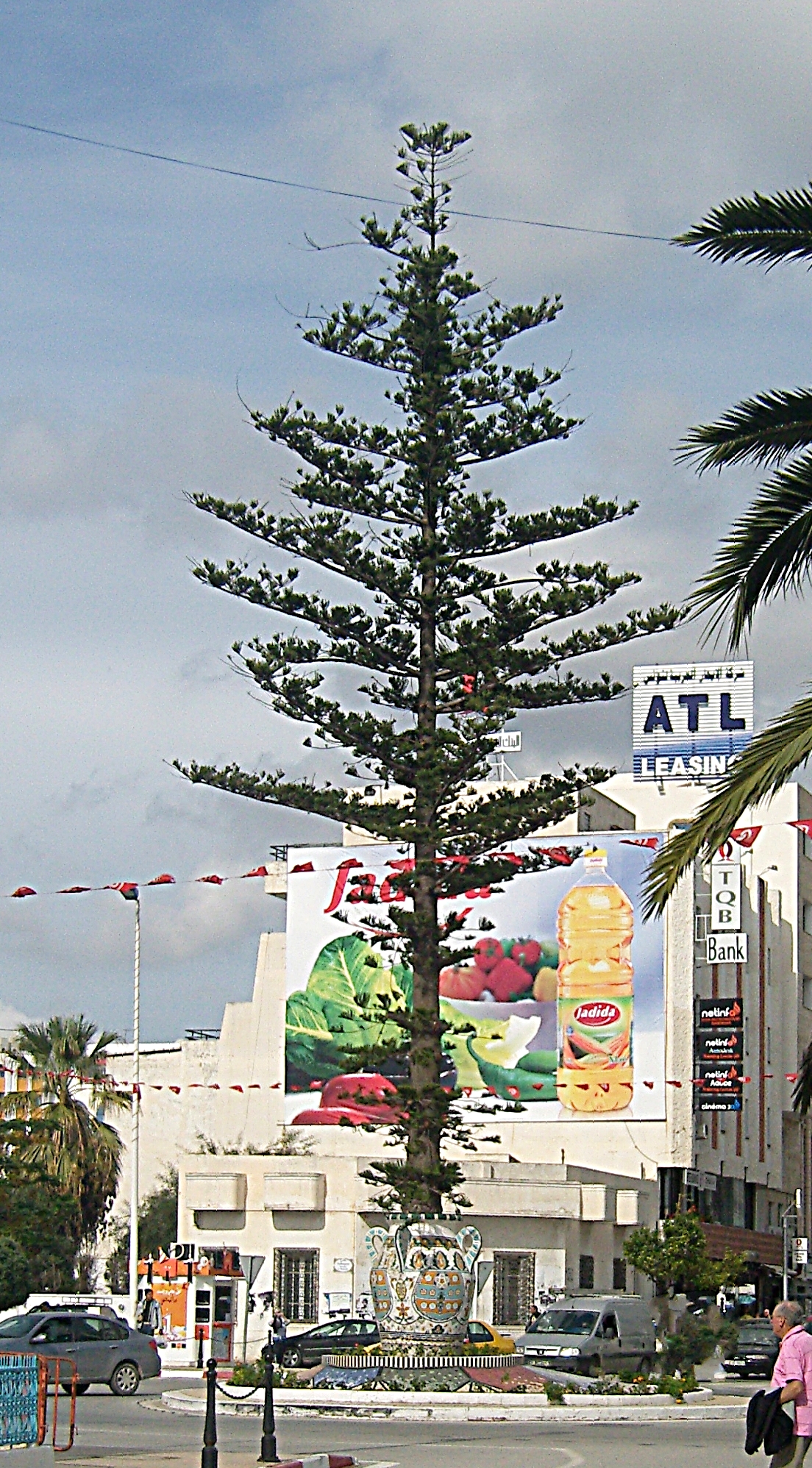
A view of Nabeul — CC BY-SA 3
Frequently Asked Questions
Should I visit Nabeul on a package tour?
A package tour suits a one-week beach holiday, while a day trip from Tunis or Hammamet is easy alone by bus or hired car.
How many days should I stay in Nabeul?
One day covers the pottery souk, the ruins of Neapolis, and the museum, while two days add the workshops and time to swim.
Where is the best place to buy pottery in Nabeul?
The pottery souk around the centre is the best place, with dozens of shops selling directly from the workshops.
When is the best time to visit Nabeul?
From May to October the sun is steady and the sea is warm, while winter suits ruins and pottery shopping.
How do I get from Tunis to Nabeul?
Buses run often between Tunis and Nabeul and take a little over an hour, while a hired car allows beach stops along the way.
Can I combine Nabeul with Hammamet in one day?
Yes, Hammamet is only about thirty km away, so a morning in the pottery souk and an afternoon in the Hammamet medina works well.
Verified
- Nabeul is a coastal town in northeastern Tunisia, on the southern shore of the Cap Bon peninsula, and the capital of Nabeul Governorate.
- The town was founded in the fifth century before Christ by Greeks from Cyrene, with the name Neapolis, meaning “New City”.
- Neapolis was a Roman trading centre, exporting grain and garum, a fermented fish sauce.
- On the twenty-first of July in the year three hundred and sixty-five, an earthquake and tsunami destroyed Neapolis; part of the city now lies underwater.
- The garum factory at Neapolis was discovered by chance in nineteen sixty-five; divers have since found streets, monuments, and around one hundred garum tanks.
- The pottery craft grew strong from the seventeenth century with the Andalusians, and was restarted in the early twentieth century by Tessier, Deverclos, and Jacob Chemla.
- Harissa comes from Nabeul and the Cap Bon region, and UNESCO listed it as Intangible Cultural Heritage in 2022.
- The population of the town is 84,291 at the census of 2022.
- The ruins of Neapolis lie about two km from the centre.
- Nabeul was the first seaside resort of Tunisia.
- The Cap Bon region is famous for oranges and lemons.
- Hammamet lies about thirty km southwest of Nabeul.
- The nearest UNESCO property is the Archaeological Site of Carthage (ref 37), about 57.9 km away in a straight line to the north-west; it was inscribed in 1979 under criteria (ii), (iii), and (vi). The second nearest is the Village of Sidi Bou Saïd (ref 1769), about 58.4 km away to the north-west, inscribed in 2026 under criterion (iii).
- The Medina of Sousse (ref 498) lies about seventy km away; Kairouan (ref 499) lies about one hundred and three km away.
- Nabeul itself is not a UNESCO World Heritage property; the registry flag unesco:false is correct.
- January mean daily maximum temperature is 16.3 degrees and mean daily minimum is 9.1 degrees; August mean daily maximum is 32.4 degrees and mean daily minimum is 23.3 degrees; annual rainfall is 409.1 millimetres (Wikipedia climate table, 1991–2020 normals).
Sources
- Nabeul — Wikipedia (https://en.wikipedia.org/wiki/Nabeul) — position, history, population 2022, pottery, harissa, climate table, verified 23/11/2026.
- Nabeul — Wikivoyage (https://en.wikivoyage.org/wiki/Nabeul) — transport, sights, pottery souk, verified 23/11/2026.
- UNESCO, Harissa, knowledge, skills and culinary and social practices (https://ich.unesco.org/en/RL/harissa-knowledge-skills-and-culinary-and-social-practices-01710) — inscribed 2022 on the Representative List, verified 23/11/2026.
- UNESCO, Archaeological Site of Carthage, ref 37 (https://whc.unesco.org/en/list/37/) — criteria (ii), (iii), and (vi), verified 23/11/2026.
- UNESCO, Village of Sidi Bou Saïd, ref 1769 (https://whc.unesco.org/en/list/1769/) — criterion (iii), inscribed 2026, verified 27/11/2026.
- Wikidata API, Q867615 (https://www.wikidata.org/wiki/Q867615) — Q-ID check, verified 23/11/2026.
- Nature, “Tsunami deposits in Tunisia contemporaneous of the large 365 CE Crete earthquake” (https://www.nature.com/articles/s41598-024-53225-7) — Neapolis and the 365 tsunami, verified 23/11/2026.
Unverified
- The distance from Tunis to Nabeul is given as sixty to seventy km depending on the source; this article gives that range and has not measured it on the ground.
- The list of craftsmen who restarted the pottery craft in the early twentieth century rests on secondary sources; it has not been checked against the official records of the museum.
- Opening hours and ticket prices for the Archaeological Museum and the Neapolis site have not been verified on an official page, so this article does not give them.
- Some road distances in this article are estimates from maps and have not been measured on the ground.
Illustrations
- Hero: View of Nabeul. Free image: https://upload.wikimedia.org/wikipedia/commons/4/44/Souk_de_Nabeul.jpg — CC BY-SA 4.
- In body, Nabeul: A view of Nabeul. Free image: https://upload.wikimedia.org/wikipedia/commons/e/ec/Jarre_Nabeul.JPG — CC BY-SA 3.
- In body, Nabeul: Sunset in Nabeul, Tunisia. Free image: https://upload.wikimedia.org/wikipedia/commons/f/f8/Nabeul%2C_Tunisia.jpg — CC BY-SA 4.