
Dar es Salaam Day Trips — Four Directions from the Port City
Day trips from Dar es Salaam run in four directions from the port city. Each direction shows a different side of Tanzania.
Dar es Salaam is the largest city of Tanzania, on the Indian Ocean, and it is the base for the best day trips on the Swahili coast. The trips run north to the old port of Bagamoyo, out to sea to the coral islands of the marine reserve, west to the savannah of Mikumi, and across the strait to Stone Town in Zanzibar. Each direction needs a different kind of day, and the traveller with a week in the city can take all four, while the traveller with a single day should choose one and give it the whole day. Day trips from Dar es Salaam are the easiest way to see Tanzania beyond the city, and they are the reason many visitors stay longer than they planned.
Quick Facts
- Directions: North to Bagamoyo, out to sea to Bongoyo and Mbudya, west to Mikumi, and across the strait to Stone Town
- Shortest trip: Bongoyo island, about half a day by boat from the city shore
- Longest trip: Mikumi, about four hours by road west, and the only safari day trip from the city
- Ferry: The fast ferry to Stone Town in Zanzibar takes about two hours each way
- City: Dar es Salaam, the largest city of Tanzania, with about 7,776,000 people in the region
- Season: The dry season, from June to October, when the roads are dry and the sea is calm
- Nearest UNESCO: Stone Town, ref 173, about 70 kilometres north in a straight line
- Wikidata: This is a day-trip entity with no single place Q-ID; the city of Dar es Salaam is Q1960
Geography of Day Trips from Dar es Salaam
Dar es Salaam is the largest city of Tanzania, on the shore of the Indian Ocean, with a population of about seven million seven hundred and seventy-six thousand people in the region, and an area of about one thousand five hundred and ninety-nine square kilometres. The city has five districts, Ilala, Kigamboni, Kinondoni, Ubungo and Temeke, and it is the port, the commercial centre and the transport hub of the country. The city sits on a harbour that handles about ninety percent of the seaborne trade of Tanzania, and the airport, Julius Nyerere International, with the code DAR, lies about ten to twelve kilometres from the centre. The day trips from the city run out from this harbour in every direction, and the geography of the trips is the geography of the coast itself.
North from Dar es Salaam runs the coastal road to Bagamoyo, an old town about seventy kilometres north, with the road passing fishing villages and coconut plantations. The coast north of the city is a line of beaches, creeks and old ports, and Bagamoyo is the oldest of them, a town that was once a more important port than Dar es Salaam itself. The road to Bagamoyo takes about an hour and a half, and the town is the history direction of the day trips, with a ruined port, a mission station and a beach that has seen the whole history of the Swahili coast.
Out to sea from Dar es Salaam lie the islands of the Dar es Salaam Marine Reserve, with Bongoyo and Mbudya the closest and the best known. Bongoyo is a small coral island about thirty minutes by boat from the shore, and it is the nearest day trip from the city, with white sand, clear water and a coral reef. The marine reserve, which includes Bongoyo, Mbudya, Pangavini and Fungu Yasini, was founded in 1975 to protect the coral reefs and the marine life, and the water around the islands is clear and calm, good for swimming and snorkelling. The islands are the sea direction of the day trips, and they are the best choice for a traveller with only half a day.
West from Dar es Salaam runs the road to Mikumi, a national park about four hours by road, and the only safari day trip that is possible from the city. Mikumi is a savannah park of about three thousand two hundred and thirty square kilometres, in the Morogoro region, with open floodplain, elephants, lions, buffaloes and more than four hundred species of birds. The park is the west direction of the day trips, and it is the longest and the hardest of them, because the drive is long and the day starts before dawn. Mikumi is a Big Four park, with lion, leopard, elephant and buffalo, and it has no rhinos, so it is not a Big Five park, whatever some websites say.
Across the strait from Dar es Salaam lies Stone Town, the old town of Zanzibar city, on the island of Unguja, about two hours by fast ferry across a strait about seventy kilometres wide. Stone Town is the longest of the sea day trips, because the ferry takes two hours each way, and the traveller needs an early start. The town is a UNESCO World Heritage property, inscribed in 2000 as ref 173, and it is the cultural direction of the day trips, with narrow lanes, carved wooden doors, palaces and mosques from the nineteenth century. The ferry is the link between the mainland and the island, and the crossing is the most scenic part of the day.
The climate of Dar es Salaam is tropical, with two rainy seasons and a long dry season from June to October. The dry season is the best time for day trips from Dar es Salaam, because the dirt roads are dry, the sea is calm and there are fewer mosquitoes. The rainy seasons can make the road to Bagamoyo and Mikumi hard to travel, and the sea rougher, so the traveller should check the weather forecast before a trip. The Pugu Forest, about twenty kilometres south-west of the city, is one of the oldest coastal forests of East Africa, and it is the green direction of the day trips, for a traveller who wants forest and birds close to the city.
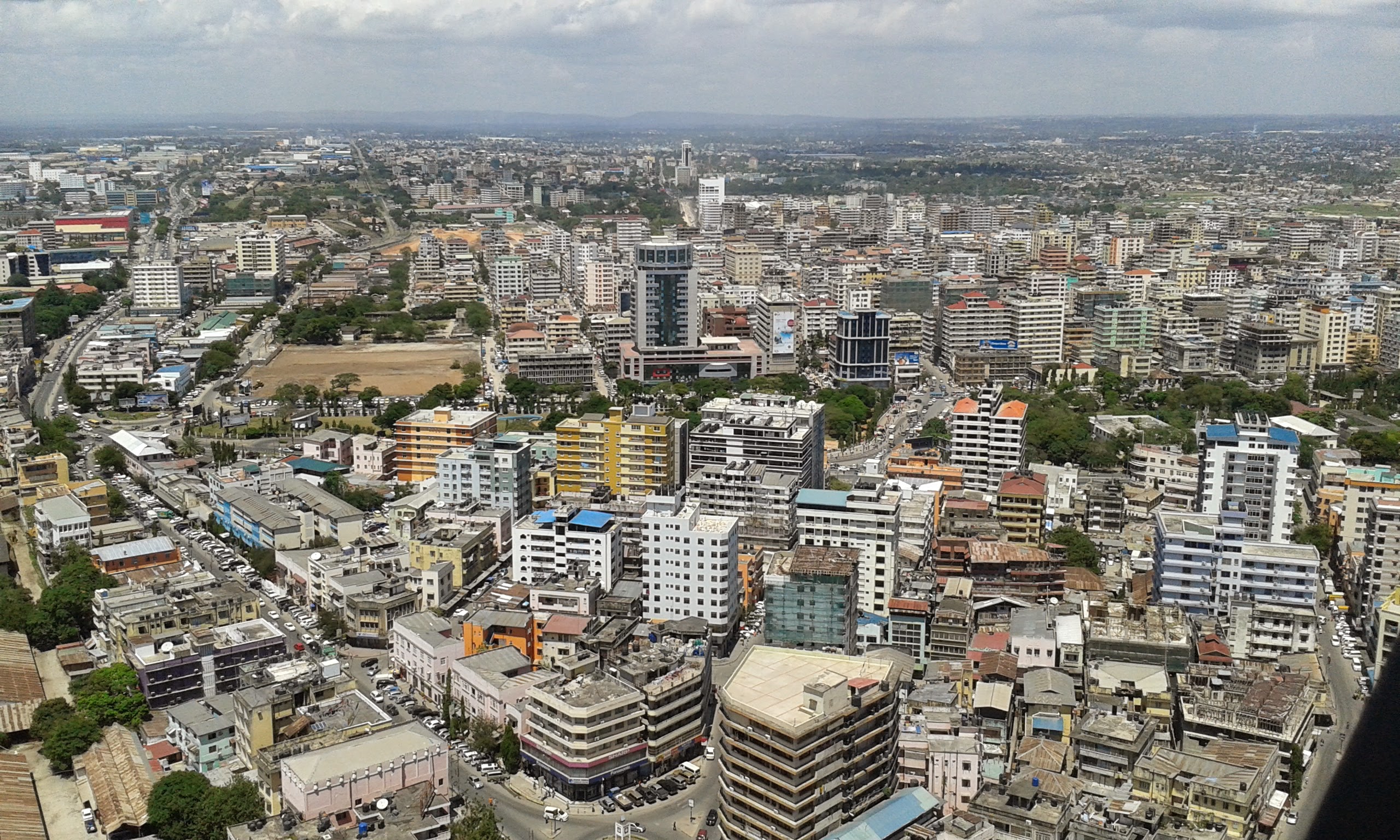
Dar es salaam City — CC BY-SA 4
History of Day Trips from Dar es Salaam
Dar es Salaam was founded in 1862 by Sultan Majid bin Said of Zanzibar, on the site of the fishing village of Mzizima, with a name that means haven of peace in Arabic. The city grew fast as a port, and it became the capital of German East Africa, then of Tanganyika, and then of Tanzania. In 1964, Tanganyika and Zanzibar joined to form Tanzania, with Dar es Salaam as the capital of the new country. The decision to move the capital to Dodoma was taken in 1974 and completed in 1996, but Dar es Salaam is still the largest city, the main port and the commercial capital of Tanzania, and it is the city from which the day trips run.
Bagamoyo, the destination in the north, was once a more important port than Dar es Salaam, and it was the starting point of the expeditions into the interior of Africa in the nineteenth century. The town was the place where the explorers prepared for their last journeys, and it was also one of the centres of the trade in enslaved people on the East African coast. The town has an old town with mission buildings, ruins and a beach, and it is the history direction of the day trips, because it shows the coast before Dar es Salaam existed. The road to Bagamoyo is the oldest road out of the city, and the town is the reason the northern day trip is the most popular.
Stone Town, the destination across the strait, was the commercial centre of the East African coast for centuries, with Arab, Indian and European traders passing through for hundreds of years. The town has buildings from the nineteenth century, including the palace of the Sultan, churches and mosques, and it was inscribed by UNESCO in 2000 as the Stone Town of Zanzibar. The town is the cultural direction of the day trips, and it is the longest of them, because the ferry takes two hours each way. The union of Tanganyika and Zanzibar in 1964 made the ferry a domestic route, and the day trip to Stone Town is now the most popular sea trip from Dar es Salaam.
The railway that runs west from Dar es Salaam is part of the history of the day trips, because it is the line that links the city to the interior. The TAZARA railway was built by China and completed in 1975, and it runs about one thousand eight hundred and sixty kilometres to Zambia, through the southern highlands. The railway is not a day trip, but it is the reason the road to Mikumi exists, and it is the line that the traveller sees on the way west. The marine reserve, founded in 1975, is also part of the history, because it was one of the first marine protected areas in Tanzania, and it protects the islands that the day trips visit.
The older railway west from the city is the Central Line, built by the Germans between 1905 and 1914, and it runs about one thousand two hundred and fifty-two kilometres from Dar es Salaam to Kigoma on Lake Tanganyika. The line was the reason the city became the capital of German East Africa, because it carried the trade of the interior to the port, and the station in the city centre still stands from that time. The two lines together make Dar es Salaam the railway city of Tanzania, and the day trips west follow the same corridor as the Central Line as far as Morogoro, where the road to Mikumi turns south.

little bee-eater (Merops pusillus), Dar es Salaam, Tanzania — CC0
Travel to Day Trips from Dar es Salaam
Day trips from Dar es Salaam usually start early in the morning, because the traffic in the city can take a long time. The trip to Bagamoyo starts at about eight in the morning, with a drive of about an hour and a half, and the town has an old town, ruins and a beach that fill a full day.
The trip to Bongoyo starts later, because the island is only thirty minutes by boat, and half a day is enough for the beach and the reef. The trip to Stone Town starts earliest of all, because the ferry takes two hours each way, and the traveller needs to leave early to have a full day in the town. The trip to Mikumi starts before dawn, because the drive is about four hours, and the safari needs the whole day.
The best time for day trips from Dar es Salaam is from June to October, when the weather is dry and the sea is calm. The rainy seasons can make the road to Bagamoyo and Mikumi hard to travel, and the sea can be rough, so the traveller should check the forecast before a trip. The traveller with a whole day should choose Bagamoyo or Stone Town, because the two have the most history and culture, and the traveller who wants wildlife should choose Mikumi, even though the trip is the longest and needs the earliest start. The traveller with only half a day should choose Bongoyo, because the island is the closest and the easiest.
The ferry from Dar es Salaam to Stone Town runs through the day, and the fast ferry takes about two hours, across a strait about seventy kilometres wide. The traveller should book the ferry in advance in the high season, because the boats fill quickly, and should check the latest timetable with the ferry company before the trip, because the schedule changes by season. The road to Bagamoyo is paved for most of the way, and the road to Mikumi is paved to Morogoro and then good to the park gate, so a car with a driver is the easiest way to travel. The boat to Bongoyo leaves from the city shore, and the trip takes about thirty minutes, with the return in the afternoon.
A day trip from Dar es Salaam is best planned the night before, with the transport booked, the water packed and the start time fixed. The city traffic is the biggest risk to the day, and an early start avoids it, while a late start can lose an hour before the trip has begun. The traveller should carry cash, because card payment is rare on the islands and in Bagamoyo, and should bring sun protection, because the sun on the coast is strong. The day trips are the easiest way to see Tanzania beyond the city, and they reward a traveller who plans them well.
Notable Places in Day Trips from Dar es Salaam
Bagamoyo
The morning in Bagamoyo belongs to the beach, where the fishing boats come in and the town wakes slowly, and the afternoon belongs to the ruins and the museum. The old German boma, the mission station and the crumbling warehouses stand within a short walk of each other, and the town is small enough to see on foot. The museum tells the story of the caravans that set out from here for the interior, and of the people who were taken from here in chains, and it is the place to spend an hour before the beach. Bagamoyo is quiet now, and the quiet is the point, because the town is the coast as it was before Dar es Salaam grew.
Bongoyo Island
The boat to Bongoyo leaves from the city shore in the morning, and the crossing takes about thirty minutes, with the skyline of Dar es Salaam shrinking behind the boat. The island has no cars, no roads and no shops, only a beach, a reef and a few shaded spots under the trees, so the traveller brings everything and takes it all back. The reef lies close to the shore, and the snorkelling is best at high tide, when the water is deep enough to float over the coral without touching it. The boat returns in the afternoon, and the island is empty by evening, which is the reason it feels wild even though it is the closest island to the city.
Mbudya Island
Mbudya is part of the marine reserve founded in 1975, with Bongoyo, Pangavini and Fungu Yasini, and it is home to many species of fish, sea turtles and coral. The island is quieter than Bongoyo, and it is the best place for snorkelling, because the reef is close to the shore and the water is clear. The boat to Mbudya takes about thirty minutes, and the island is a good second choice for a traveller who has already seen Bongoyo. The island has no facilities, so the traveller should bring water, food and sun protection, and should leave the island clean.
Stone Town, Zanzibar
Start the Stone Town walk at the waterfront, where the dhows load and the fish market opens, and then turn into the lanes, where the carved doors are the sight to look for. The doors are the signature of the town, with brass studs, carved frames and names in Arabic, and each one belongs to a house with a courtyard behind it. The afternoon is for the seafront, with the sunset over the strait and the boats returning, and the evening is for the food stalls at the gardens, where the town eats. The ferry back leaves in the late afternoon, so the day in Stone Town is a full one, and the traveller who hurries it misses the lanes, which are the town itself.
Mikumi National Park
The road west leaves the coast behind and climbs into the hills, and the park begins where the road drops onto the Mkata floodplain, a wide grassland ringed by mountains. The floodplain is the heart of Mikumi, and the herds gather on it in the dry season, with the elephants at the edge and the lions in the grass. The drive through the park is slow, because the animals cross the road and the guide stops often, and the day is long, with the return to the city after dark. The park is the only place near Dar es Salaam where the traveller can see a savannah, and the floodplain, with its mountains on every side, is the reason to make the long drive.
Pugu Forest
Pugu Forest is a coastal forest about twenty kilometres south-west of Dar es Salaam, and it is one of the oldest coastal forests of East Africa. The forest has endemic trees and birds, with paths through the trees, and it is the green direction of the day trips, for a traveller who wants forest and birds close to the city. The forest is small, and a visit takes half a day, with a guide, because the paths are hard to follow and some areas are closed. The forest is the closest wild place to the city, and it is a good rest day after the longer trips.
Frequently Asked Questions
What is the best day trip from Dar es Salaam?
The best day trip depends on taste: Bagamoyo for history, Bongoyo for the sea, and Mikumi for safari.
How long does the ferry to Zanzibar take?
The fast ferry from Dar es Salaam to Stone Town takes about two hours each way.
Can I see the Big Five at Mikumi?
No, Mikumi is a Big Four park, with lion, leopard, elephant and buffalo, and no rhinos.
How far is Bagamoyo from Dar es Salaam?
Bagamoyo lies about 70 kilometres north of Dar es Salaam, about an hour and a half by road.
Is Stone Town a UNESCO World Heritage property?
Yes, Stone Town was inscribed by UNESCO in 2000 as ref 173.
When is the best time for day trips from Dar es Salaam?
The dry season, from June to October, when the roads are dry and the sea is calm.
Verified
- Dar es Salaam is the largest city of Tanzania, with about 7,776,000 people in the region in 2023, and an area of 1,599 square kilometres.
- The city was founded in 1862 by Sultan Majid bin Said of Zanzibar, on the site of the fishing village of Mzizima.
- Tanganyika and Zanzibar joined to form Tanzania in 1964; the decision to move the capital to Dodoma was taken in 1974 and completed in 1996.
- The port of Dar es Salaam handles about 90 percent of the seaborne trade of Tanzania; Julius Nyerere International Airport, code DAR, lies 10 to 12 kilometres from the centre.
- Bagamoyo lies 56.5 kilometres north-west of Dar es Salaam in a straight line, and about 70 kilometres by road.
- The fast ferry from Dar es Salaam to Stone Town takes about 2 hours, across a strait about 70 kilometres wide; Stone Town was inscribed by UNESCO in 2000 as ref 173.
- The Dar es Salaam Marine Reserve, with Bongoyo, Mbudya, Pangavini and Fungu Yasini, was founded in 1975.
- Mikumi National Park covers about 3,230 square kilometres and has been protected since 1964; it has no rhinos, so it is a Big Four park, not a Big Five park.
- The TAZARA railway was built by China and completed in 1975, running about 1,860 kilometres to Zambia.
- Stone Town lies 70.1 kilometres north of Dar es Salaam in a straight line; Kilwa Kisiwani, ref 144, lies 245.1 kilometres south.
Sources
- Wikipedia, “Dar es Salaam” — population, area, history, port (https://en.wikipedia.org/wiki/Dar_es_Salaam) — checked 24 November 2026.
- Wikipedia, “Stone Town” — old town of Zanzibar, UNESCO 2000 (https://en.wikipedia.org/wiki/Stone_Town) — checked 24 November 2026.
- Wikipedia, “Dar es Salaam Marine Reserve” — Bongoyo, Mbudya, founded 1975 (https://en.wikipedia.org/wiki/Dar_es_Salaam_Marine_Reserve) — checked 24 November 2026.
- Mikumi National Park guide — Big Four, no rhinos, 3,230 square kilometres (https://mikuminationalpark.com/mikumi-travel-guide/) — checked 24 November 2026.
- UNESCO, “Stone Town of Zanzibar” — ref 173, 2000 (https://whc.unesco.org/en/list/173/) — checked 24 November 2026.
Unverified
- The ferry timetable from Dar es Salaam to Zanzibar changes by season; the traveller should check the latest timetable with the ferry company before the trip.
- The road time from Dar es Salaam to Bagamoyo varies with traffic; this article gives about an hour and a half only.
- The exact number of bird species in Mikumi is given as more than 400 by several sources; this article gives that figure only.
Illustrations
- Hero: Dar es Salaam Day Trips. Free image: https://upload.wikimedia.org/wikipedia/commons/3/3b/Dar_es_Salaam_Panorama.jpg — GFDL.
- In body, dar es salaam: Dar es salaam City. Free image: https://upload.wikimedia.org/wikipedia/commons/f/f1/Dar_es_salaam_City.jpg — CC BY-SA 4.
- In body, dar es salaam: little bee-eater (Merops pusillus), Dar es Salaam, Tanzania. Free image: https://upload.wikimedia.org/wikipedia/commons/b/b9/Little_bee-eater_%28Merops_pusillus%29%2C_Dar_es_Salaam%2C_Tanzania.jpg — CC0.