
Mauritius and South Africa Tours — From the Cape to the Island
A Mauritius and South Africa tour joins the Cape of Good Hope with the island of Mauritius. It runs from the Cape to the beaches of the island.
A Mauritius and South Africa tour is a journey of two coasts, with the Cape of Good Hope as the first and the island of Mauritius as the second, and the tour begins in Cape Town, with the mountain and the harbour, and ends on the island, with the lagoon and the beaches. The two places are joined by a flight of about four to five hours, from Cape Town to Port Louis, and the tour is ten to twelve days, with the Cape and the Winelands as the first half and the island as the second, and the flight as the hinge between the two. Tours to Mauritius from South Africa join the mountain with the lagoon, and this guide explains the route, the places, and the seasons of the journey.
Quick Facts
- Route: Cape Town, the Winelands of Stellenbosch, and then a flight to Port Louis, Le Morne, and Grand Baie in Mauritius.
- Length: Ten to twelve days, with the Cape as the first half and the island as the second.
- Flight: Cape Town to Port Louis takes about four to five hours, with the Indian Ocean as the crossing.
- Table Mountain: One thousand and eighty-five metres high, the flat-topped mountain of Cape Town, in Table Mountain National Park.
- Robben Island: Ref 916, inscribed 1999, criteria (iii) and (vi), where Nelson Mandela spent eighteen years, from 1964 to 1982, of his twenty-seven years in prison.
- Stellenbosch: Founded in 1679, the second-oldest town in South Africa, the centre of the Winelands, and the home of Pinotage.
- Le Morne: Ref 1259, inscribed 2008, criteria (iii) and (vi), the mountain of Mauritius, a symbol of the resistance of the slaves.
- Mauritius: Independent in 1968, an island nation in the Indian Ocean, with the sugar and the beaches as its history.
- South Africa: A democracy since 1994, with Cape Town as the legislative capital and the Cape as the history.
- Best time: September to November and March to May, with the spring and the autumn as the seasons of the tour.
Geography of a Mauritius and South Africa Tour
A Mauritius and South Africa tour is a journey of two coasts, with the Cape of Good Hope as the first, in South Africa, and the island of Mauritius as the second, in the Indian Ocean, and the tour is the change from the one to the other, with the mountain as the first and the lagoon as the second. Cape Town stands between Table Mountain and the Atlantic, with the flat-topped mountain, one thousand and eighty-five metres high, as the landmark, and the City Bowl as the town, and the harbour as the port, and the Cape Peninsula as the finger of land to the south, with the Cape of Good Hope as the tip. The Winelands lie to the east of Cape Town, with Stellenbosch as the centre, founded in 1679, and the vineyards as the green, with the mountains as the frame, and the wine as the product of the valleys.
Mauritius is the second geography of the tour, with the island in the Indian Ocean, east of Madagascar, and the lagoon as the ring, with the coral reef as the breakwater and the beaches as the white, and the mountain of Le Morne as the landmark, ref 1259, inscribed 2008, with the basalt as the rock and the history as the symbol. The island is small, with the capital Port Louis on the north-west coast, and the beaches as the ring, and the interior as the mountains and the sugar cane, with the Black River Gorges as the national park, and the tour moves around the island by road, with the coast as the way and the beaches as the days. The flight from Cape Town to Port Louis takes about four to five hours, with the Indian Ocean as the crossing, and the tour is the journey from the Cape to the island, with the flight as the hinge between the two halves.
The climate of the tour is two climates, with the Mediterranean pattern of the Cape, the dry summer and the wet winter, and the tropical pattern of Mauritius, the warm summer and the cooler winter, and the best time is September to November and March to May, with the spring and the autumn as the seasons, and the two climates overlapping in the shoulder months. Cape Town is warm in summer, with the temperature at around twenty-five degrees, and cool in winter, with the temperature at around fifteen degrees, and Mauritius is warm all year, with the temperature at around twenty-five to thirty degrees, and the sea as the warmth, and the tour is best in the shoulder seasons, with the Cape in spring and the island in autumn, and the rain as the season to avoid.
The wind is the character of the Cape, with the south-easter, the Cape Doctor, blowing in summer, clearing the air and the cloud from the mountain, and the north-wester bringing the rain in winter, with the wind as the weather of the city, and the tour as the guest of the wind, with the mountain as the shelter and the sea as the view.
The fynbos is the vegetation of the Cape, with the proteas and the ericas, and the Cape Floral Region, ref 1007, inscribed 2004, as the protection, with the plants as the diversity and the mountain as the garden, and the tour as the guest of the flowers, with the spring as the blooming and the mountain as the colour. The tour is a journey of the water, with the harbour of Cape Town and the lagoon of Mauritius as the two ports, and the flight as the crossing, with the ocean below and the island ahead, and the change from the Atlantic to the Indian Ocean as the heart of the tour, with the mountain and the lagoon as the pair.
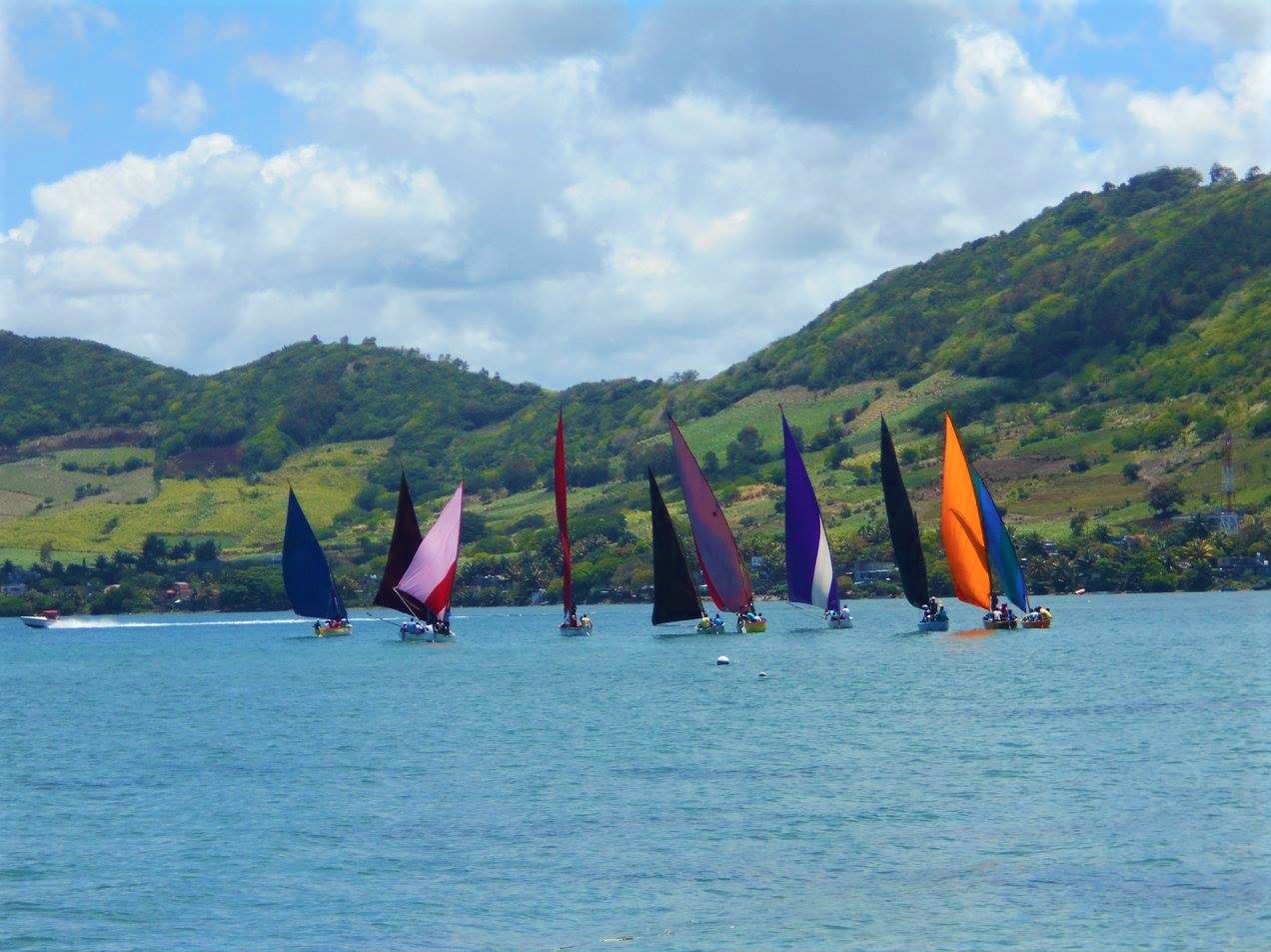
Sailboats in the village of Grand River South East in Mauritius getting to the landing area while a speedboat passes at their back — CC BY-SA 4
History of a Mauritius and South Africa Tour
The history of a Mauritius and South Africa tour is the history of the Cape, with the Dutch as the first, in 1652, and the British as the second, and the Cape as the stop for the ships of the East India trade, with the mountain as the landmark and the harbour as the refreshment. The Cape was the halfway house of the world, with the ships stopping for the water and the food, and the town growing as the port, with the Castle and the Company Gardens as the record, and the Winelands as the farming, with Stellenbosch founded in 1679, the second-oldest town in South Africa, and the wine as the product of the valleys, with Pinotage as the grape of the Cape, bred in 1925, and the wine as the fame of the land.
Robben Island is the history of the Cape, with the island as the prison, and Nelson Mandela spending eighteen years there, from 1964 to 1982, of his twenty-seven years in prison, and the island as the symbol of the struggle, with the limestone quarry and the cell as the record, and the UNESCO listing of 1999, ref 916, criteria (iii) and (vi), as the recognition. The island is the memory of South Africa, with the apartheid as the past and the democracy of 1994 as the present, and the tour visits the island as the history, with the ferry as the crossing and the cell as the place, and the Cape as the city of the mountain and the island as the memory.
The wine of Stellenbosch is the history of the Winelands, with the Huguenots arriving in 1688, bringing the vines from France, and the valleys as the vineyards, with the mountains as the frame and the wine as the product. The Cape Dutch houses of Stellenbosch are the architecture of the wine, with the gables and the thatch, and the estates as the farms, with the cellars and the tasting rooms, and Pinotage as the grape of the Cape, bred in 1925 by Abraham Perold, a cross of Pinot Noir and Cinsaut, and the wine as the fame of the land, with the red as the colour and the estates as the names. The wine route of Stellenbosch is the oldest in South Africa, with the estates as the stops and the tasting as the journey, and the tour visits the Winelands as the wine, with the valleys as the green and the mountains as the frame, and the history of the vines as the story of the Cape.
Mauritius is the island of the sugar, with the cane as the crop and the mills as the industry, and the indentured labourers from India arriving after 1834, with the Aapravasi Ghat in Port Louis as the depot where they landed, ref 1227, inscribed 2006, and the island as the place of the migration, with the Indian, the African, the Chinese, and the European as the mix. The sugar was the wealth of the island, with the plantations and the mills, and the beaches as the other wealth, with the tourism as the new economy, and the island as the place of the two, with the cane as the past and the lagoon as the present, and the tour ends on the island, with the sugar as the history and the beaches as the rest, and the mountain of Le Morne as the symbol of the resistance and the freedom.
Travel on a Mauritius and South Africa Tour
A Mauritius and South Africa tour runs for ten to twelve days, with the Cape as the first half and the island as the second, and the tour begins in Cape Town, with the mountain and the harbour, and the first days are in the city, with Table Mountain, Robben Island, and the Cape Peninsula, and the Winelands of Stellenbosch as the next, with the wine and the valleys, and the Cape as the history and the mountain as the view. The tour then flies from Cape Town to Port Louis, about four to five hours, with the Indian Ocean as the crossing, and the island as the second half, with the lagoon and the beaches, and Le Morne as the mountain, and Grand Baie as the resort, and the island as the rest after the Cape.
The best time for the tour is September to November and March to May, with the spring and the autumn as the seasons, and the Cape in spring, with the flowers and the wind, and the island in autumn, with the warm sea and the clear days, and the two seasons overlapping as the window for the journey. The tour is booked as a package, with the flights, the hotels, and the transfers, and the visitor should book in advance, with the spring and the autumn as the busiest times, and the Seychelles South Africa Tours route as the other way to the islands, from the south-east of Africa. The Cape is visited by car and by cable car, with the mountain as the lift and the peninsula as the drive, and the island is visited by road, with the coast as the way and the beaches as the days, and the tour is the change of the transport, with the car as the Cape and the road as the island.
The tour is a journey of the two coasts, with the Atlantic at the Cape and the Indian Ocean at Mauritius, and the visitor should bring the walking shoes for the mountain and the swimwear for the lagoon, with the two as the packing of the tour, and the journey as the change from the one to the other, with the mountain and the beaches as the pair. The tour ends on the island, with the flight home from Port Louis as the close, and the Cape and the island as the two halves, with the flight as the hinge and the sea as the setting, and the visitor leaving with the mountain and the lagoon as the memories. A traveller who wants the Indian Ocean coast of South Africa can continue to Durban, with the beaches and the warm sea as the next stop.
Notable Places on a Mauritius and South Africa Tour
Table Mountain — The Flat Top of Cape Town
Table Mountain is the landmark of Cape Town, one thousand and eighty-five metres high, with the flat top and the cable car, and the mountain as the view over the city and the sea. The mountain is in Table Mountain National Park, part of the Cape Floral Region, ref 1007, inscribed 2004, with the fynbos as the vegetation and the proteas as the flowers, and the summit as the viewpoint, with the city and the Atlantic as the sight. Come in the morning, when the cloud is off the table and the view is clear, and take the cable car to the summit, with the mountain as the frame and the city as the view.
Robben Island — The Prison of Mandela
Robben Island is the memory of South Africa, ref 916, inscribed 1999, where Nelson Mandela spent eighteen years, from 1964 to 1982, of his twenty-seven years in prison, with the cell and the limestone quarry as the record. The island is reached by ferry from Cape Town, with the tour as the visit, and the cell as the place, and the island as the symbol of the struggle and the democracy of 1994. Come with the history in mind, and see the cell and the quarry, with the island as the memory and the freedom as the present.
Stellenbosch — The Winelands
Stellenbosch is the centre of the Winelands, founded in 1679, the second-oldest town in South Africa, with the vineyards and the Cape Dutch houses, and the wine as the product of the valleys. The town is the place of the wine tasting, with the estates and the cellars, and Pinotage as the grape of the Cape, bred in 1925, and the mountains as the frame of the valleys. Come for a day, with the wine as the tasting and the town as the walk, and see Stellenbosch as the Winelands, with the vineyards as the green and the mountains as the frame.
Le Morne — The Mountain of Mauritius
Le Morne is the mountain of Mauritius, ref 1259, inscribed 2008, with the basalt as the rock and the history as the symbol, where the slaves sought refuge, and the mountain as the landmark of the island. The mountain stands on the south-west peninsula, with the lagoon as the ring and the beaches as the white, and the climb as the view, with the island and the sea as the sight. Come in the morning, when the light is on the mountain, and see Le Morne as the symbol of the island, with the basalt as the rock and the history as the story.
Port Louis and Grand Baie — The Island Towns
Port Louis is the capital of Mauritius, on the north-west coast, with the harbour and the market, and the town as the centre of the island, with the Caudan Waterfront as the shops and the harbour as the view. Grand Baie is the resort of the north, with the beaches and the boats, and the town as the pleasure of the island, with the lagoon as the swimming and the restaurants as the evening. Come to Port Louis for the market and the harbour, and to Grand Baie for the beach and the boats, with the two towns as the island, and the lagoon as the setting.
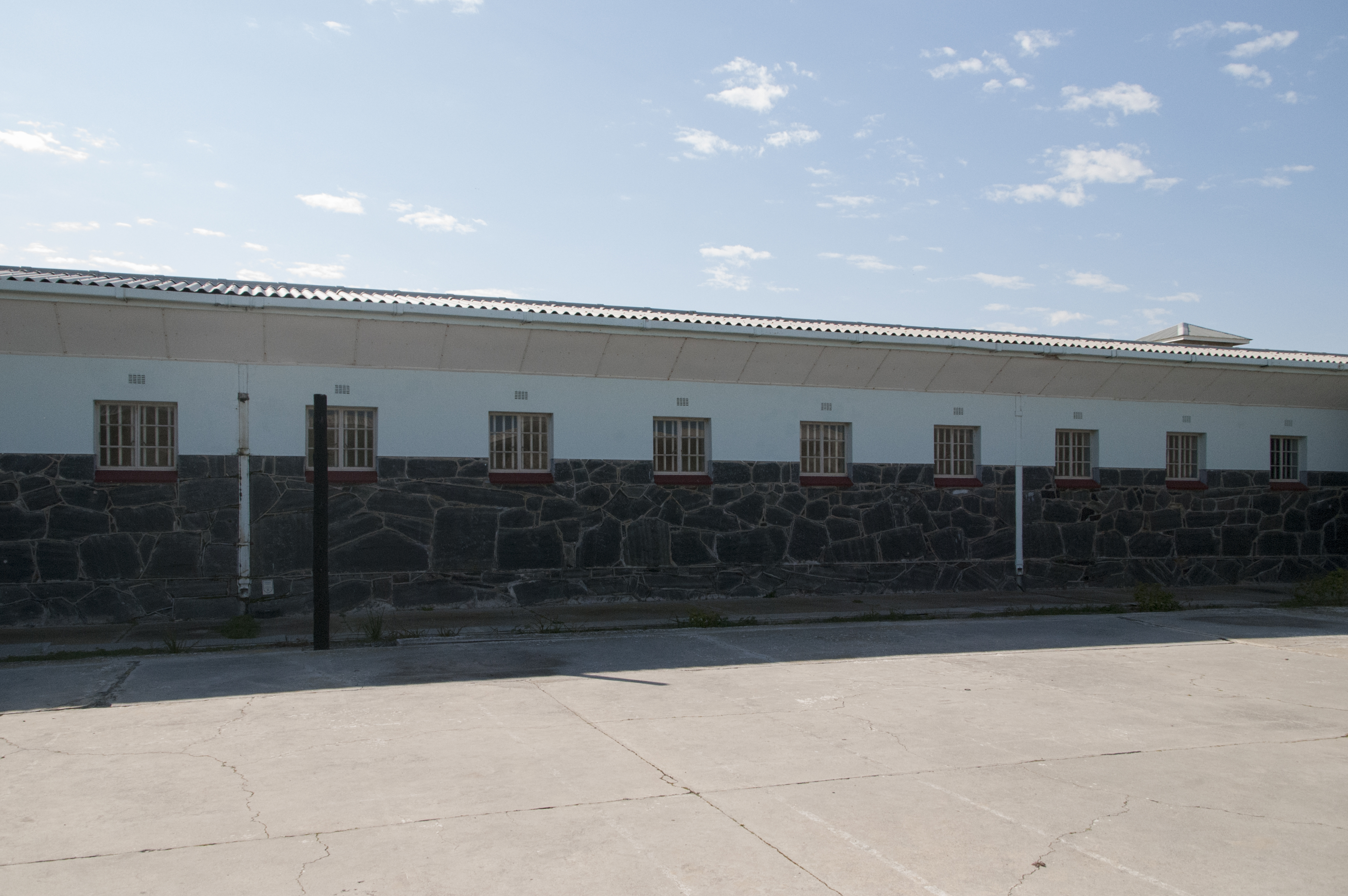
View from the middle of the Section B courtyard, Maximum Security Prison, Robben Island — CC BY-SA 4
Frequently Asked Questions
How long is a Mauritius and South Africa tour?
Ten to twelve days is the usual length, with the Cape first and the island second.
When is the best time for the tour?
September to November and March to May, with the spring and the autumn as the seasons.
How do I fly between South Africa and Mauritius?
The flight from Cape Town to Port Louis takes about four to five hours, across the Indian Ocean.
Is Robben Island a World Heritage site?
Yes, Robben Island is ref 916, inscribed in 1999, for the prison history and the struggle.
Is Le Morne a World Heritage site?
Yes, Le Morne is ref 1259, inscribed in 2008, for the history of the slaves who sought refuge there.
What does a Mauritius and South Africa tour cost?
The tour price depends on the season, the hotels, and the flights, so the operator quotes it for the dates chosen.
Verified
- Table Mountain is one thousand and eighty-five metres high, checked 24/11/2026.
- Robben Island, ref 916, was inscribed in 1999, criteria (iii) and (vi), checked 24/11/2026.
- Nelson Mandela spent eighteen years on Robben Island, from 1964 to 1982, of his twenty-seven years in prison, checked 24/11/2026.
- Stellenbosch was founded in 1679, the second-oldest town in South Africa, checked 24/11/2026.
- Pinotage was bred in 1925, checked 24/11/2026.
- Le Morne, ref 1259, was inscribed in 2008, criteria (iii) and (vi), checked 24/11/2026.
- Mauritius became independent in 1968, and South Africa became a democracy in 1994, checked 24/11/2026.
- The flight from Cape Town to Port Louis takes about four to five hours, checked 24/11/2026.
Sources
- Robben Island — UNESCO (https://whc.unesco.org/en/list/916/) — checked 24/11/2026.
- Le Morne Cultural Landscape — UNESCO (https://whc.unesco.org/en/list/1259/) — checked 24/11/2026.
- Cape Town — Wikipedia (https://en.wikipedia.org/wiki/Cape_Town) — checked 24/11/2026.
- Mauritius — Wikipedia (https://en.wikipedia.org/wiki/Mauritius) — checked 24/11/2026.
Unverified
- The flight time from Cape Town to Port Louis, about four to five hours, varies with the route and the airline, so this article gives it as an approximate time.
- The length of the tour, ten to twelve days, is the length commonly offered, and the exact length depends on the operator and the itinerary chosen.
- The number of wine estates in Stellenbosch is not given in this article, because the count changes with the openings and was not checked in this round.
- The height of Le Morne, and the exact length of the climb, are not given in this article, because the figures differ between the sources and were not reconciled in this round.
Illustrations
- Hero: Le Morne Beach with Le Morne Brabant Mountain in Mauritius. Free image: https://upload.wikimedia.org/wikipedia/commons/b/b5/Le_Morne_Beach_with_Le_Morne_Brabant_Mountain_in_the_background%2C_Mauritius_%2853698223315%29.jpg — CC BY 2.
- In body, mauritius south africa: Sailboats in the village of Grand River South East in Mauritius getting to the landing area while a speedboat passes at their back. Free image: https://upload.wikimedia.org/wikipedia/commons/3/3c/Sailboats_in_the_village_of_Grand_River_South_East_in_Mauritius.jpg — CC BY-SA 4.
- In body, Robben Island: View from the middle of the Section B courtyard, Maximum Security Prison, Robben Island. Free image: https://upload.wikimedia.org/wikipedia/commons/0/08/B-Section%2C_Maximum_Security_Prison%2C_Robben_Island_%2801%29.jpg — CC BY-SA 4.