
Egypt Tours: The Classic Route Down the Nile
Egypt tours follow the river, which has carried travellers for five thousand years. The classic route runs from Cairo to Aswan, then to the Red Sea.
The route is the oldest journey in the world, and it has barely changed since the first travellers came to see the pyramids. It starts in Cairo, where the pyramids stand on the edge of the desert, and it runs south along the Nile to Luxor and Aswan, where the temples stand on the banks, and it ends on the Red Sea, where the desert meets the water. The whole journey takes eight to twelve days, and it can be done by train, by road and by boat, and the boat is the part that makes it a tour rather than a list of sights.
The Nile cruise from Luxor to Aswan takes three or four nights, and the boat stops at the temples along the way, and the river is the road that the pharaohs used. This guide follows the classic route from the first morning in Cairo to the last evening on the Red Sea, explains what each stop is and why it matters, and tells how to join the stops together without wasting a day.
Quick Facts
- The classic route: Cairo, Giza, Luxor, Aswan, Abu Simbel, then the Red Sea
- Days on the road: eight to twelve days for the full route, five to seven for Cairo and the Nile alone
- The river: the Nile, from Cairo south to Aswan, with the cruise taking three or four nights
- The desert stop: Abu Simbel, about 280 km by road south of Aswan, near the border with Sudan
- The sea end: Hurghada or Sharm El Sheikh, on the Red Sea
- World Heritage on the way: seven properties in Egypt, from Memphis to Wadi Al-Hitan
- Registry: TA-L5-egypt-tours, a tour guide, with no Wikidata record
Geography of Egypt Tours
Egypt tours run along a single line, and the line is the Nile. The river runs north through a desert that is empty on both sides, and the whole of the country lives on a strip of green a few kilometres wide on either bank. Cairo stands where the river divides into the Delta, and the pyramids stand on the desert edge to the west of the city, and the tour begins there because the pyramids are the first sight and the last sight of every Egyptian journey.
The road south from Cairo follows the river, and the towns along it are the towns of the Nile valley, with the fields on one side and the desert on the other, and the temples stand on the banks where the river bends. Luxor stands about 650 km south of Cairo, and Aswan stands about 200 km further south, and the river between them is the cruise, with the temples of Edfu and Kom Ombo on the banks.
The climate of Egypt tours is the climate of the river valley, and it is hot in the south and warm in the north. The winter is the season for the tour, from October to April, when the days are warm and the nights are cool, and the summer is the season to avoid in Luxor and Aswan, where the temperature passes 45 degrees and the stone of the temples is too hot to touch. The Red Sea is warm in every month, and the water is clear and the wind is steady, so that the sea end of the tour is the place to recover from the heat of the valley. The desert around the river is dry in every month, and the rain is rare, and the dust of the desert is the dust that the pyramids have stood in for four thousand years.
The tour is a journey between two kinds of Egypt. The valley is the Egypt of the river, with the fields and the towns and the temples, and the desert is the Egypt of the pyramids and the tombs, with the sand and the stone and the silence. The pyramids stand on the desert edge because the dead belonged to the west, where the sun sets, and the temples stand on the river because the living belonged to the water.
The Red Sea is the third Egypt, and it is the Egypt of the reef and the resort, with the coral and the fish and the wind, and the tour ends there because the desert and the river are hard work and the sea is the rest. The map of the tour is a line down the river and a turn to the sea, and the whole of Egypt fits on it.
The distances of the tour are the distances of the river. Cairo to Luxor is about 650 km by road and by rail, and the train runs overnight, and the flight takes about an hour. Luxor to Aswan is about 200 km by road, and the cruise covers it in three or four nights, stopping at the temples on the way.
Aswan to Abu Simbel is about 280 km by road through the desert, and the bus leaves before dawn and reaches the temples at sunrise. Aswan to Hurghada is about 400 km by road across the desert, and the road runs from the river to the sea in about five hours. The tour is long, and the distances are the reason the boat and the train matter, because the road alone would take the whole holiday.

A beach in the north coast in Egypt — CC BY-SA 4
History of Egypt Tours
Egypt tours began with the pyramids, and the pyramids are the oldest tourist attraction in the world. The Greek historian Herodotus came to Egypt in the fifth century BC and wrote about the pyramids, and the Romans came after him, and the Arab travellers came after them, and the tour has run ever since. The Great Pyramid was built in about 2580 to 2560 BC, for the pharaoh Khufu, and it stood 146.6 m high when it was finished, and it stands 138.8 m high today, and it is the only surviving wonder of the ancient world. The pyramids of Giza were the reason the tour existed, and they are still the reason it exists, and every tour of Egypt begins where the first tours began, on the plateau at Giza.
The tour grew in the nineteenth century, when the steamboat and the railway made the Nile into a road. The travellers of the Victorian age came up the river by steamer, and they stopped at the temples and the tombs, and they wrote the books that made Egypt the destination of the age. The tomb of Tutankhamun was found in 1922, by Howard Carter, in the Valley of the Kings, and the discovery made the tour into the tour of the world, and the valley became the place every traveller wanted to see. The temples of Abu Simbel were moved in 1964 to 1968, when the Aswan High Dam threatened to drown them, and UNESCO cut the temples into blocks and raised them on the cliff above the lake, and the rescue was the largest in the history of the organisation, and it was the reason UNESCO made the World Heritage Convention of 1972.
The modern tour is the tour of the rescue and the museum. The Aswan High Dam was finished in 1970, and Lake Nasser filled behind it, and the temples that the rescue saved stand on the new shore. The Grand Egyptian Museum, which stands about 2 km from the pyramids, fully opened on 1 November 2025, and the public entered on 4 November 2025, and the museum holds the complete collection of Tutankhamun, more than 5,000 objects together for the first time since the tomb was found in 1922.
The museum is the newest stop on the oldest tour, and it is the place where the tour of the pyramids and the tour of the museum meet. The tour that began with Herodotus now ends in a museum that was twenty years in the building, and the river still carries it.
The tour of Egypt is the tour of the pharaohs, and the pharaohs built for eternity. The Old Kingdom built the pyramids of Giza, and the New Kingdom built the temples of Luxor and the tombs of the Valley of the Kings. The temples of Karnak were built over two thousand years, and every pharaoh added a hall or a pylon, and the temple grew into the largest religious building ever made. The valley holds the tombs of the kings who built them, and the tombs were cut into the rock so that no robber would find them, and the robbers found them anyway.
The modern tour began with Thomas Cook, who ran the first organised tour of Egypt in 1869, and with the steamers that carried the travellers up the river. The winter season of the cruise began with those boats, and the grand steamers of the age were the hotels of the river. The discovery of Tutankhamun in 1922 made the valley the most famous place in the world, and the tour that had been a journey for the few became a journey for the many. The hotels of Luxor and Aswan were built for that crowd, and the cruise boats followed, and the tour of today is the tour that the steamers began.
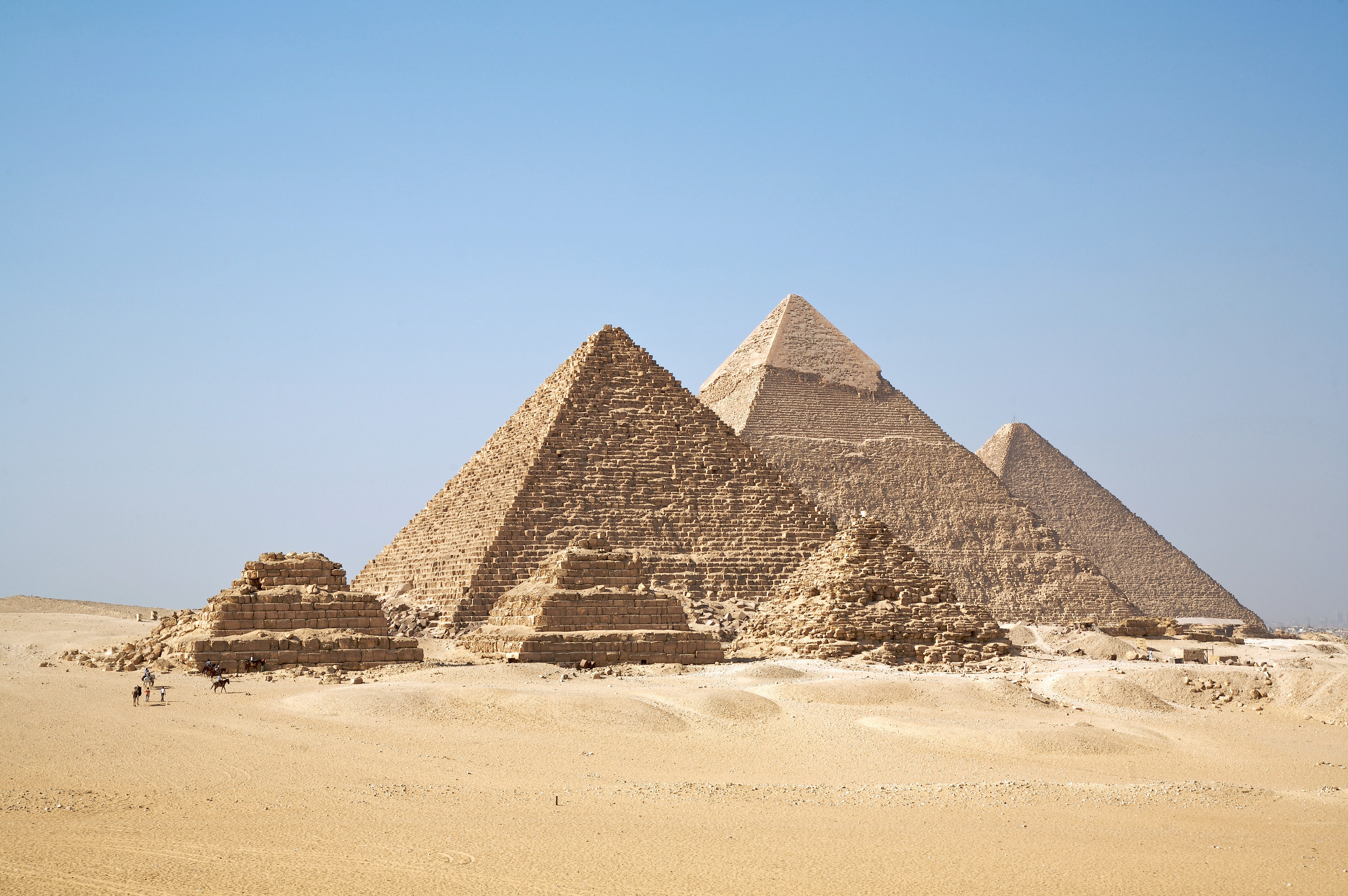
All Giza Pyramids in one shot — CC BY-SA 2
Travel to Egypt Tours
Egypt tours begin in Cairo, and Cairo is reached by air through Cairo International Airport, which stands to the north-east of the city. The airport is the busiest in the country, and the ride from the airport to the pyramids takes about an hour when the traffic is kind. The first days belong to the city, and the pyramids are the first sight, and the Egyptian Museum in Tahrir Square and the new Grand Egyptian Museum at Giza are the two museums of the tour, and the Citadel and the market of Khan el-Khalili are the old city. The pyramids are best seen in the morning, when the light is low and the crowds are thin, and the museum is best seen in the afternoon, when the heat is at its worst outside.
The Nile is the middle of the tour, and the cruise is the way to see it. The cruise runs from Luxor to Aswan, and it takes three or four nights, and the boat stops at the temples of Edfu and Kom Ombo on the way, and the cabins look out on the river and the fields. Luxor is the city of the temples, with Karnak on the east bank and the Valley of the Kings on the west, and the valley holds 63 tombs, and the tomb of Tutankhamun is the one every visitor asks for.
Aswan is the city of the river, with the island temple of Philae and the High Dam and the unfinished obelisk, and the felucca on the river at sunset is the quietest hour of the tour. The bus to Abu Simbel leaves before dawn, and the temples are reached at sunrise, and the visit takes two hours before the bus returns to Aswan at noon.
The Red Sea is the end of the tour, and it is reached by road from Aswan or by air from Cairo. Hurghada is the resort of the western shore, and Sharm El Sheikh is the resort of the Sinai shore, and both hold the reefs and the fish and the wind, and the diving and the snorkelling are the reason to go. The sea is warm in every month, and the winter is the best time for the water, when the air is cool and the sea is clear. The tour ends on the sea because the valley is hard work and the desert is harder, and the sea is the place to rest before the flight home.
The season for the tour is the winter, and the months to choose are October to April. The days are warm and the nights are cool, and the temples can be walked in comfort, and the river is at its best. The summer, from May to September, brings heat that passes 45 degrees in Luxor and Aswan, and the stone of the temples is too hot to touch, and the cruise is the only way to see the valley in comfort. The Red Sea is warm in every month, and the sea end of the tour can be taken at any time, and the winter is the time for the whole route.
Notable Places in Egypt Tours
- Giza Complex. The pyramids and the Sphinx on the plateau west of Cairo, with the Great Pyramid of Khufu, built in about 2580 to 2560 BC, and the pyramid of Khafre and the pyramid of Menkaure beside it. The plateau is the first stop of every tour, and the morning light on the stones is the sight that the tour exists for.
- Great Pyramid of Giza. The pyramid of Khufu, 138.8 m high today, and the only surviving wonder of the ancient world. The pyramid holds the King’s Chamber and the Grand Gallery, and the climb to the top is not allowed, and the view from the plateau is the view of the whole of Cairo.
- Luxor and the Valley of the Kings. The city of the temples, with Karnak on the east bank and the valley on the west, and the valley holds 63 tombs. The tomb of Tutankhamun was found in 1922 by Howard Carter, and the tomb of Seti I is the finest in the valley, and the Colossi of Memnon stand on the plain between the river and the tombs.
- Aswan and Philae. The city of the river, with the island temple of Philae, moved by UNESCO to the island of Agilkia when the dam was built, and the High Dam and the unfinished obelisk. The felucca on the river at sunset is the quietest hour of the tour, and the Nubian villages on the islands are the place to eat after the temples.
- Abu Simbel. The two temples of Ramses II, cut into the cliff on the shore of Lake Nasser, about 280 km south of Aswan. The temples were moved in 1964 to 1968, cut into blocks and raised on the cliff, and the rescue was the largest in the history of UNESCO.
- The Grand Egyptian Museum. The museum at Giza, about 2 km from the pyramids, fully opened on 1 November 2025, with the complete collection of Tutankhamun, more than 5,000 objects together for the first time since 1922. The museum is the newest stop on the oldest tour, and the grand staircase and the colossus of Ramses II are the first sights inside.
Frequently Asked Questions
How long does the classic Egypt tour take?
Eight to twelve days for the full route, from Cairo to Aswan and out to the Red Sea. Five to seven days cover Cairo and the Nile alone, without the sea.
When is the best time to take an Egypt tour?
Take the Nile in the winter, from October to April, when the days are warm and the nights are cool. The summer brings heat above 45 degrees in Luxor and Aswan, and the Red Sea is warm in every month.
What is the Nile cruise like?
The cruise is the way to see the river, with the temples on the banks. Cabins face the water, and mornings are for going ashore.
How do I get to Abu Simbel?
Take the bus from Aswan, about 280 km through the desert, leaving before dawn and reaching the temples at sunrise. The visit takes two hours, and the bus returns to Aswan at noon.
What are the World Heritage properties on the Egypt tour?
Egypt holds seven, and the tour passes most of them. They are Memphis and the Giza pyramids, Ancient Thebes at Luxor, the Nubian monuments with Abu Simbel, Historic Cairo, Abu Mena, Saint Catherine and Wadi Al-Hitan.
Is the Grand Egyptian Museum open?
Yes, and it is the stop to make after the pyramids. The Tutankhamun galleries are the reason to allow a full morning there.
Verified
- Egypt holds seven World Heritage properties, and the list is confirmed on the UNESCO Egypt country page. The seven are Memphis, Ancient Thebes, the Nubian Monuments, Historic Cairo, Abu Mena, Saint Catherine and Wadi Al-Hitan, and all were inscribed in 1979 except Saint Catherine in 2002 and Wadi Al-Hitan in 2005.
- The Great Pyramid was built in about 2580 to 2560 BC for the pharaoh Khufu, and it stood 146.6 m high when it was finished, and it stands 138.8 m high today. The pyramid is the only surviving wonder of the ancient world, and the plateau at Giza is part of the Memphis property, ref 86.
- The tomb of Tutankhamun was found in 1922 by Howard Carter, in the Valley of the Kings, and the Grand Egyptian Museum holds the complete collection of more than 5,000 objects together for the first time since the tomb was found. The museum fully opened on 1 November 2025, and the public entered on 4 November 2025, and the museum stands about 2 km from the pyramids.
- The temples of Abu Simbel were moved in 1964 to 1968, cut into blocks and raised on the cliff above Lake Nasser, and the rescue was the largest in the history of UNESCO. The move was the reason UNESCO made the World Heritage Convention of 1972, and the temples are part of the Nubian Monuments property, ref 88.
- The Valley of the Kings holds 63 tombs, and the tomb of Tutankhamun is the one every visitor asks for. The cruise from Luxor to Aswan takes three or four nights, and the boat stops at the temples of Edfu and Kom Ombo on the way.
- The country of Egypt is the land of the tour, and the route runs from Cairo to Aswan and out to the Red Sea. The distances are Cairo to Luxor about 650 km, Luxor to Aswan about 200 km, and Aswan to Abu Simbel about 280 km by road.
Sources
- UNESCO World Heritage Centre — Memphis and its Necropolis, inscribed 1979, ref 86: https://whc.unesco.org/en/list/86/
- UNESCO World Heritage Centre — Egypt, seven properties inscribed: https://whc.unesco.org/en/statesparties/eg
- Wikidata — Egypt, Q79: https://www.wikidata.org/wiki/Q79
Unverified
- The driving times between the cities of the tour follow the Vietnamese corpus, and the current road conditions were not rechecked on the check date.
- The number of tombs in the Valley of the Kings, 63, follows the standard count, and whether any new tomb has been found since the count was made was not rechecked on the check date.
- The claim that the Great Pyramid is the only surviving wonder of the ancient world follows the standard telling, and the comparison with the other wonders was not rechecked on the check date.
- The opening hours and the admission arrangements of the Grand Egyptian Museum follow press reports from the opening, and the current arrangements were not checked against the museum on the check date.
Illustrations
- Hero: View of Egypt. Free image: https://upload.wikimedia.org/wikipedia/commons/4/41/Balloon_over_Luxor_-_Egypt_denoised.jpg — CC BY-SA 3.0.
- In body, egypt: A beach in the north coast in Egypt. Free image: https://upload.wikimedia.org/wikipedia/commons/1/18/North_Coast%2C_Egypt.jpg — CC BY-SA 4.
- In body, egypt: All Giza Pyramids in one shot. Free image: https://upload.wikimedia.org/wikipedia/commons/a/af/All_Gizah_Pyramids.jpg — CC BY-SA 2.