
Los Angeles — The Film Capital and the City of Neighbourhoods
Los Angeles is the largest city in California, a city of neighbourhoods and beaches. Its story runs from a Spanish pueblo to the capital of film.
Los Angeles stands on the Pacific coast of Southern California, in a basin ringed by mountains and open to the ocean, and it is the commercial, financial and cultural centre of the region. The city has about three million eight hundred and seventy thousand residents within its limits, as of 2025, and it is the principal city of a metropolitan area of about twelve million nine hundred thousand people, as of 2024. Los Angeles is not a city with a single downtown, but a city of many centres, with Hollywood, Downtown, the Westside, the San Fernando Valley and the beach towns each as a city in itself, and the traveller who visits Los Angeles should choose a neighbourhood first, and a list of sights second. The film industry, the beaches, the museums and the mountains are the four faces of the city, and they are spread across a basin that is wider than most visitors expect.
Quick Facts
- Name: Los Angeles, the largest city in California, in the United States, known as LA.
- Position: On the Pacific coast of Southern California, in the Los Angeles Basin, between the Santa Monica Mountains and the San Gabriel Mountains.
- Coordinates: Thirty four degrees three minutes north and one hundred and eighteen degrees fourteen minutes west, by the city Wikidata item Q65.
- Population: About three million eight hundred and seventy thousand residents within the city limits, as of 2025, and about twelve million nine hundred thousand people in the metropolitan area, as of 2024.
- Rank: The second most populous city in the United States, behind New York City, and the largest city in the western United States.
- Founded: On 4 September 1781, as El Pueblo de Nuestra Senora la Reina de los Angeles, by 44 settlers.
- Film: The first permanent film studio in Hollywood opened in 1911, and the Hollywood Sign was erected in 1923.
- Museum: The Getty Center opened to the public on 16 December 1997, on a hill in the Santa Monica Mountains.
- Nearest World Heritage: Yosemite National Park, ref 308, inscribed in 1984, about four hundred and thirty eight kilometres north west in a straight line.
- Climate: Mediterranean, with warm dry summers and mild wet winters, and sunshine in most months.
- Language: English is the language of the United States, and Spanish is widely spoken in Los Angeles.
Geography of Los Angeles
Los Angeles stands in a basin on the Pacific coast of Southern California, with the Santa Monica Mountains to the north west, the San Gabriel Mountains to the north east, and the Pacific Ocean to the west and south. The city is built on a coastal plain that runs from the mountains to the sea, with the Los Angeles River running south through the basin to the port at San Pedro, and the hills of Hollywood, Griffith Park and the Westside rising from the plain. The basin is wide, and the city covers a large area, with the neighbourhoods spread across it, so the traveller who visits Los Angeles should think of it as a region rather than a town, with the distances between its parts measured in hours rather than minutes. The mountains that ring the basin are the reason the city has its climate, its smog and its views, because they trap the air over the plain and they give the city its backdrop, with the snow on the San Gabriel Mountains visible from the beaches on a clear winter day.
The coast of Los Angeles is a succession of beaches, from Malibu in the north west, through Santa Monica and Venice, to the South Bay towns of Manhattan Beach, Hermosa Beach and Redondo Beach, and to Long Beach in the south east. The beaches are wide and sandy, with the Pacific Ocean as their setting, and they are the most visited places in the city, with the Santa Monica Pier as the most famous of them. The pier stands at the foot of Colorado Avenue in Santa Monica, with a small amusement park, concession stands and areas for views and fishing, and it is part of the Santa Monica Mountains National Recreation Area. The coast is the western edge of the city, and the traveller who stands on the pier looks east to the mountains and west to the ocean, with the city between them, and the sunset over the Pacific is the most famous sight in Los Angeles.
The climate of Los Angeles is Mediterranean, with warm dry summers and mild wet winters, and with sunshine in most months of the year. The summers are dry, with the temperature rising in the valleys and staying cooler on the coast, and the winters are mild, with rain falling in short storms from the Pacific. The city is partly located in a subtropical desert, and the water that supplies it comes from the Owens Valley, through the Los Angeles Aqueduct, which was completed in 1913, and from the Colorado River, so the green of the city is a green that is watered, not a green that grows on its own. The best time to visit Los Angeles is the spring and the autumn, when the air is clear, the temperatures are mild and the mountains are visible, and the traveller who visits in the summer should be ready for heat in the valleys and for the marine layer, the fog that covers the coast in the morning.
The neighbourhoods of Los Angeles are the geography of the city, because each of them is a place with its own character, its own streets and its own life. Hollywood, in the north of the basin, is the home of the film industry, with the Walk of Fame, the Chinese Theatre and the Hollywood Sign on Mount Lee above it. Downtown Los Angeles, in the centre of the basin, is the home of the government, the courts and the towers, with the historic core, the arts district and the markets as its most interesting parts.
The Westside, with Westwood, Brentwood and the Getty Center, is the home of the universities and the museums, and the San Fernando Valley, north of the Santa Monica Mountains, is the home of the suburbs, with the studios of Burbank and the streets of the Valley as its centre. The beach towns, with Santa Monica, Venice and Malibu, are the home of the coast, and the traveller who visits Los Angeles should choose one or two neighbourhoods and explore them well, rather than trying to see the whole basin in a single day.
The nearest World Heritage site to Los Angeles is Yosemite National Park, ref 308, inscribed in 1984, about four hundred and thirty eight kilometres north west of the city in a straight line. Yosemite is a national park in the Sierra Nevada mountains of California, with granite cliffs, waterfalls and giant sequoias, and it is the closest World Heritage property to Los Angeles, although it is a long drive north through the Central Valley. Los Angeles itself has no World Heritage Site, and California has only a few inscribed properties, with Yosemite as the nearest and the most visited, so the traveller who wants a World Heritage day from Los Angeles should plan a long drive or an overnight stay in the mountains. The city is a place of film and of neighbourhoods, not of World Heritage, and its value is in its streets, its beaches and its museums, not in a single inscribed site.
The mountains of Los Angeles are the other geography of the city, because the Santa Monica Mountains run through the middle of it, from the coast to the valleys, and Griffith Park, with the observatory on Mount Hollywood, is the largest urban park in the United States. Griffith Observatory stands on the south facing slope of Mount Hollywood in Griffith Park, and it commands a view of the Los Angeles Basin, including Downtown Los Angeles to the south east, Hollywood to the south, and the Pacific Ocean to the south west. The observatory is a popular tourist attraction, with a close view of the Hollywood Sign and an extensive array of space and science displays, and the traveller who climbs to it sees the whole basin in a single view, with the towers, the beaches and the mountains as the parts of the city. The San Gabriel Mountains, to the north east, are higher and wilder, with the Angeles National Forest as their protected area, and the traveller who drives into them leaves the city behind in an hour.
The rivers of Los Angeles are small and seasonal, with the Los Angeles River as the most important, running south through the basin to the sea, and the city was founded on its banks, because the river was the water of the pueblo. The river is now channelled in concrete for much of its length, and the city has grown away from it, with the freeways as the new rivers of the basin, and the traveller who visits Los Angeles should think of the freeways as the geography of the city, because they join the neighbourhoods and they shape the life of the people who live there. The port of Los Angeles, at San Pedro, is the largest port in the United States, and it is the southern end of the city, with the ships, the cranes and the warehouses as the working face of Los Angeles, far from the beaches and the studios.

Getty Center from Central Garden on 2009-02-08, — CC BY-SA 4

A star on the Hollywood Walk of Fame, for Gary Cooper, on Hollywood Boulevard — CC BY-SA 4
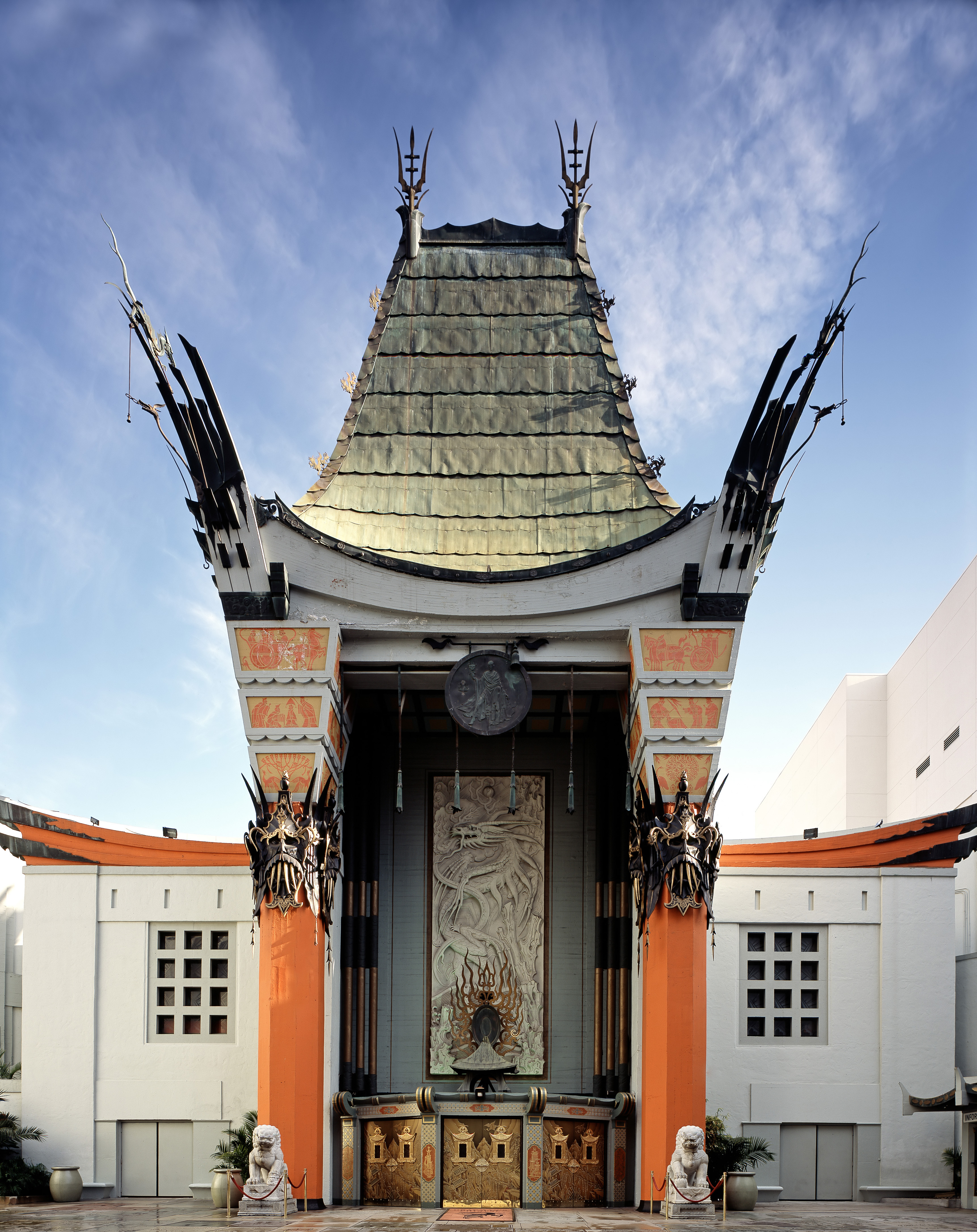
The TCL Chinese Theatre on Hollywood Boulevard — Public domain

Venice Beach in Los Angeles — CC BY-SA 4

The skyline of Downtown Los Angeles from the Toy District — CC BY-SA 4

Malibu Beach in California — CC BY 2

The view of Los Angeles from Mount Hollywood in Griffith Park — CC BY-SA 4
History of Los Angeles
Los Angeles began as a Spanish pueblo, founded on 4 September 1781 by a group of 44 settlers, who journeyed more than one thousand miles across the desert from present day northern Mexico and established a farming community, naming it El Pueblo de Nuestra Senora la Reina de los Angeles de Porciuncula, which in English means the Town of Our Lady the Queen of the Angels of Porciuncula. The area had been home to the Chumash and Tongva Native American tribes before the Spanish arrived, and the first European to explore the territory was the Spanish navigator Juan Rodriguez Cabrillo in 1542. The pueblo grew slowly under Spanish rule, and then under Mexican rule, after Mexico achieved independence in 1821, and it became United States territory after the Mexican American War of 1846, with California admitted to the United States as the thirty first state in 1850. The city was incorporated in 1850, with a population of about three thousand five hundred people, and it grew slowly until the railroad arrived in 1876, when the Southern Pacific track from Los Angeles to San Francisco was completed, and the population began to increase.
The film industry came to Los Angeles in the early twentieth century, with the opening of the first movie theatre in 1902 and the establishment of Hollywood’s first film studio in 1911. The first feature length movie was directed by Cecil DeMille in 1913, and the now world famous Hollywood Sign was erected in 1923 as a temporary advertisement for a real estate development, spelling out Hollywoodland in letters fifty feet tall. The sign became a landmark and a cultural icon, overlooking Hollywood from Mount Lee, above Beachwood Canyon in the Santa Monica Mountains, and the district of Hollywood became the world capital of cinema within a decade, with the studios, the stars and the Golden Age of the nineteen thirties and forties as its height. The city grew with the film industry, and the population rose to more than one million by 1930, with the highways, the suburbs and the studios as the shape of the new city.
The water of Los Angeles is the other history of the city, because the Los Angeles Aqueduct, which brings water from the Owens Valley, some two hundred and fifty miles north, was completed in 1913, and it made the growth of the city possible. The aqueduct was built by William Mulholland, and its opening was greeted with the words there it is, when the first water arrived in the city, and the aqueduct still supplies much of the water that the residents need. The city also grew by annexation, with Hollywood and East Hollywood becoming part of the city in 1910, and with San Pedro and Wilmington becoming part of the city, giving Los Angeles its port and its access to the sea. The Olympic Games were held in Los Angeles in 1932, and again in 1984, and the city became a global metropolis, with the film industry, the aerospace industry and the port as its three economies.
The Getty Center, which opened to the public on 16 December 1997, is the most recent landmark in the history of Los Angeles, and it is a campus of the Getty Museum on a hill in the Santa Monica Mountains, known for its architecture, its gardens and its views over the city. The centre cost more than one billion dollars to build, and it is connected to its parking garage by a tram, with the museum, the research institute and the gardens as its parts. The Walk of Fame, which was created in 1958 on Hollywood Boulevard, is the other landmark of the modern city, with its stars honouring the people of film, television and music, and the traveller who walks it sees the history of Hollywood in the pavement. The city has kept growing, with the towers of Downtown, the beaches of the Westside and the studios of the Valley as its present, and its history is the history of a pueblo that became a metropolis in less than two centuries.
Today, Los Angeles is a city of about three million eight hundred and seventy thousand people, and a metropolitan area of about twelve million nine hundred thousand, and it is the second most populous city in the United States, behind New York City. The city is the principal city of Southern California, and its film industry, its port, its universities and its museums make it one of the most important cities in the world, with a population that is ethnically and culturally diverse. The traveller who visits Los Angeles sees a city that is still growing, with new towers, new museums and new neighbourhoods, and with the history of the pueblo, the railroad, the aqueduct and the film industry as the layers of its past.
Travel to Los Angeles
Travellers reach Los Angeles by air through Los Angeles International Airport, which is one of the busiest airports in the world, with flights from every continent, and the airport lies on the coast, south west of the city centre, with the beach towns to the north and the port to the south. The traveller who arrives at the airport should allow time for the drive into the city, because the traffic is heavy and the distances are long, and the best way to reach the hotels is by taxi, by shuttle or by rental car, with the car as the most useful transport in a city that is built for driving. The city is also served by the smaller airports of Burbank, Long Beach and Orange County, and the traveller who flies to one of them will find a shorter drive to the Valley or to the South Bay.
Getting around Los Angeles is by car, because the city is wide and the public transport, though improving, does not reach every neighbourhood. The freeways join the parts of the city, and the traveller who drives them should allow time for traffic, especially in the morning and the evening, when the roads are full. The Metro rail system runs through Downtown, Hollywood and the Westside, and the buses run through the whole city, so the traveller who stays in one neighbourhood can use public transport for that area, and a car for the longer journeys. The traveller who wants to see Hollywood, the Getty, Griffith Observatory and the beaches in a single trip should hire a car for the whole stay, because the distances between them are long and the buses are slow.
The best time to visit Los Angeles depends on what the traveller wants from the city, because the film calendar, the beaches and the museums peak at different times. The film and awards season fills Hollywood, and the traveller who comes for the studios and the Walk of Fame should book early, while the beach season fills Santa Monica, Venice and Malibu. Hotel rates follow the pattern, with the busiest weeks costing the most, and longer days give the traveller more hours for the Getty, Griffith Observatory and the coast. The school holidays bring the most families, so the traveller who wants a quieter stay should choose the weeks between the holiday peaks.
The city is busy all year, with the film industry, the festivals and the tourism as its constant life, and the traveller who visits at any time will find the museums, the beaches and the studios open. Day trips from Los Angeles run south along the coast to San Diego and inland through the desert to Las Vegas, and both are a drive of a few hours from the city.
Travellers stay in Los Angeles by neighbourhood, and the choice of neighbourhood is the choice of the trip. Hollywood suits the traveller who wants the film industry, with the Walk of Fame, the theatres and the studios at the door. Santa Monica and Venice suit the traveller who wants the beach, with the pier, the boardwalk and the ocean as the setting.
Downtown suits the traveller who wants the museums, the markets and the towers, with the historic core and the arts district as the most interesting parts. The Westside, with Westwood and Brentwood, suits the traveller who wants the Getty and the universities, and the Valley suits the traveller who wants the studios of Burbank and a quieter stay. The traveller who stays in Los Angeles should choose one neighbourhood as a base, and visit the others by car, because the city is too wide to see from a single place.

Aerial Photo of Santa Monica Pier, — Public domain
Notable Places in Los Angeles
The Hollywood Sign — The Icon on Mount Lee
The Hollywood Sign is an American landmark and cultural icon overlooking Hollywood, Los Angeles, on Mount Lee, above Beachwood Canyon in the Santa Monica Mountains. The sign was originally erected in 1923 as a temporary advertisement for a local real estate development, and it spelled out Hollywoodland in fifty foot tall white letters, in a word four hundred and fifty feet long. The sign became a landmark, and the letters were shortened to Hollywood, and the traveller who climbs to the sign sees the whole basin below, with the city, the mountains and the ocean as the view. Come in the morning, when the light is clear and the sign is bright, and walk the trail from Griffith Park, because the sign is best seen from the trail, with the city below and the mountains behind.
Griffith Observatory — The View Over the Basin
Griffith Observatory is an observatory in Los Angeles, on the south facing slope of Mount Hollywood in Griffith Park, and it commands a view of the Los Angeles Basin, including Downtown Los Angeles to the south east, Hollywood to the south, and the Pacific Ocean to the south west. The observatory is a popular tourist attraction, with a close view of the Hollywood Sign and an extensive array of space and science displays, and it is named for its benefactor, who gave the land and the money for the park and the observatory. Come at sunset, when the city lights come on and the observatory is at its best, and look through the telescopes, because the observatory is both a museum and a viewpoint, and the view is the finest in Los Angeles.
The Getty Center — The Museum on the Hill
The Getty Center is a campus of the Getty Museum and other programs of the Getty Trust in Los Angeles, and it opened to the public on 16 December 1997, on a hill in the Santa Monica Mountains. The centre is well known for its architecture, its gardens and its views overlooking Los Angeles, and it is connected to its parking garage at the bottom of the hill by a tram, a three car cable pulled people mover. The museum holds paintings, sculptures and manuscripts, and the gardens, with their plants and their water, are a place to walk and to rest. Come in the morning, when the light is on the gardens and the museum is quiet, and allow a full day, because the Getty is a museum, a garden and a viewpoint in one place.
Santa Monica Pier — The Pier at the End of the Road
The Santa Monica Pier is a large pier at the foot of Colorado Avenue in Santa Monica, California, and it contains a small amusement park, concession stands and areas for views and fishing. The pier is part of the greater Santa Monica Mountains National Recreation Area, and it is the most famous pier in the United States, with the beach, the boardwalk and the ocean as its setting. The traveller who walks the pier sees the coast of Los Angeles, with Malibu to the north and the South Bay to the south, and the sunset from the pier is the most famous in the city. Come at sunset, when the pier is lit and the ocean is gold, and walk to the end of the pier, because the view back to the city is the best in Los Angeles.
El Pueblo de Los Angeles — The Birthplace of the City
El Pueblo de Los Angeles Historical Monument is the birthplace of Los Angeles, and it is a living museum that continues to fulfil its role as the historic and symbolic heart of the city. The monument stands on the site of the pueblo founded in 1781, with twenty seven historic buildings, eleven of which are open to the public as businesses or as museums, and with Olvera Street, the famous marketplace, as its centre. The monument reflects the Native American, African American, Spanish, Anglo, Mexican, Chinese, Italian and French cultures that contributed to the early history of the city, and the traveller who visits it sees the city at its beginning. Come in the morning, when the market is opening and the museums are quiet, and walk Olvera Street, because the pueblo is the oldest place in Los Angeles, and its history is the history of the city.

Griffith Observatory, Los Angeles 2015-07-19, — CC BY-SA 4

Olvera Street in Los Angeles, the old Mexican marketplace — CC BY-SA 3

Verified
- Los Angeles is the most populous city in California, with an estimated 3.87 million residents within the city limits as of 2025, the second most populous city in the United States, checked 26/11/2026.
- The metropolitan area of Los Angeles has 12.9 million people, as of 2024, checked 26/11/2026.
- Los Angeles is Wikidata item Q65, a city in California, at 34.05223 degrees north and 118.24368 degrees west, checked 26/11/2026.
- The city was founded on 4 September 1781 by 44 settlers, as El Pueblo de Nuestra Senora la Reina de los Angeles de Porciuncula, checked 26/11/2026.
- The first permanent film studio in Hollywood opened in 1911, and the Hollywood Sign was erected in 1923, checked 26/11/2026.
- The Getty Center opened to the public on 16 December 1997, checked 26/11/2026.
- Yosemite National Park is ref 308, inscribed in 1984, about 438.3 kilometres north west of Los Angeles in a straight line by haversine from live coordinates, checked 26/11/2026.
- The Santa Monica Pier is a large pier at the foot of Colorado Avenue in Santa Monica, and it contains a small amusement park, concession stands and areas for views and fishing, checked 26/11/2026.
Sources
- Los Angeles — Wikipedia (https://en.wikipedia.org/wiki/Los_Angeles) — population, metropolitan area, second most populous; checked 26/11/2026.
- History of Los Angeles — City of Los Angeles (https://lacity.gov/government/history-los-angeles) — founded 1781, 44 settlers, pueblo name; checked 26/11/2026.
- Hollywood Sign — Wikipedia (https://en.wikipedia.org/wiki/Hollywood_Sign) — erected 1923, Hollywoodland; checked 26/11/2026.
- Getty Center — Wikipedia (https://en.wikipedia.org/wiki/Getty_Center) — opened 16 December 1997; checked 26/11/2026.
- Yosemite National Park — UNESCO (https://whc.unesco.org/en/list/308/) — ref 308, inscribed 1984; checked 26/11/2026.
- Wikidata API — Q65 (https://www.wikidata.org/wiki/Q65) — Los Angeles, city, coordinates; checked 26/11/2026.
Unverified
- The current traffic conditions and the driving times between the neighbourhoods of Los Angeles change with the day, and have not been checked against a live source, so the article gives no fixed driving times.
- The opening hours of Griffith Observatory and the Getty Center change with the season, and have not been checked against an official source, so the traveller should check before going.
- The population figures are from 2025 and 2024, and no newer count has been checked, so the numbers are given as the latest available figures.
- The exact distance from Los Angeles to Yosemite National Park by road has not been checked, so the article gives only the straight line distance.
Illustrations
- Hero image, the Hollywood Sign above the city: Hollywood Sign, https://upload.wikimedia.org/wikipedia/commons/0/00/Hollywood_Sign.jpg — CC BY-SA 3.
- In-body image, Griffith Observatory above Los Angeles: Griffith Observatory, Los Angeles 2015-07-19, https://upload.wikimedia.org/wikipedia/commons/a/a6/Griffith_Observatory%2C_Los_Angeles_2015-07-19.jpg — CC BY-SA 4.
- In-body image, the Santa Monica Pier from the air: Aerial Photo of Santa Monica Pier, https://upload.wikimedia.org/wikipedia/commons/4/47/Aerial_Photo_of_Santa_Monica_Pier.jpg — Public domain.
- In-body image, the Getty Center from its garden: Getty Center from Central Garden on 2009-02-08, https://upload.wikimedia.org/wikipedia/commons/d/d2/Getty_Center_from_Central_Garden_on_2009-02-08.png — CC BY-SA 4.
- In body, the Hollywood Walk of Fame: A star on the Hollywood Walk of Fame, for Gary Cooper, on Hollywood Boulevard. Free image: https://upload.wikimedia.org/wikipedia/commons/b/be/Los_Angeles_%28California%2C_USA%29%2C_Hollywood_Boulevard%2C_Gary_Cooper_–2012–_4981.jpg — CC BY-SA 4.
- In body, the TCL Chinese Theatre: The TCL Chinese Theatre on Hollywood Boulevard. Free image: https://upload.wikimedia.org/wikipedia/commons/2/25/Grauman%27s_Chinese_Theatre%2C_by_Carol_Highsmith_fixed_%26_straightened.jpg — Public domain.
- In body, Venice Beach: Venice Beach in Los Angeles. Free image: https://upload.wikimedia.org/wikipedia/commons/3/3d/Venice_Beach%2C_Los_Angeles%2C_CA.jpg — CC BY-SA 4.
- In body, Downtown Los Angeles: The skyline of Downtown Los Angeles from the Toy District. Free image: https://upload.wikimedia.org/wikipedia/commons/9/94/Downtown_Los_Angeles_skyline_from_Toy_District.jpg — CC BY-SA 4.
- In body, Malibu Beach: Malibu Beach in California. Free image: https://upload.wikimedia.org/wikipedia/commons/3/38/Malibu_Beach%2C_California.jpg — CC BY 2.
- In body, Olvera Street: Olvera Street in Los Angeles, the old Mexican marketplace. Free image: https://upload.wikimedia.org/wikipedia/commons/2/27/Olvera_Street%2C_Los_Angeles-1.jpg — CC BY-SA 3.
- In body, Griffith Park: The view of Los Angeles from Mount Hollywood in Griffith Park. Free image: https://upload.wikimedia.org/wikipedia/commons/0/04/View_of_Los_Angeles_from_Mount_Hollywood_in_Griffith_Park%2C_Los_Angeles%2C_in_2017.jpg — CC BY-SA 4.
- In body, El Pueblo de Los Angeles: The bandstand in the plaza of El Pueblo de Los Angeles. Free image: https://upload.wikimedia.org/wikipedia/commons/5/59/El_pueblo_Los_Angeles_-_Historical_Monument.jpg — CC0, by Andrek02.