Nicaragua Tours — Lakes, Volcanoes and Colonial Cities
Nicaragua Tours cross a land of lakes and volcanoes. Its tours join two colonial cities, twin volcanoes and a wild river.
Nicaragua Tours are journeys through the largest country in Central America, a land of great lakes, a chain of volcanoes and two colonial cities that have been rivals for centuries. The tours of Nicaragua begin in Granada, the bright colonial city on the shore of Lake Nicaragua, and they run north to Leon, the university city under the volcanoes, and south to the island of Ometepe, the Pacific surf town of San Juan del Sur and the river of the Caribbean east. The volcanoes are the thread of the tours, with the lava of Masaya, the boarding slope of Cerro Negro and the twin cones of Ometepe as the sights that no other country in the region can match. This guide explains the land of Nicaragua Tours, the history behind them and the itineraries that join them, with the lakes and the volcanoes as the two threads.
Quick Facts
- Name: Nicaragua Tours, guided circuits across Nicaragua, in Central America, from Granada and Leon to Ometepe and the Rio San Juan.
- Position: Nicaragua lies between Honduras to the north and Costa Rica to the south, with the Pacific Ocean to the west and the Caribbean Sea to the east.
- Two cities: Granada, founded in fifteen twenty-four on Lake Nicaragua, and Leon, the university city in the northwest.
- Great lake: Lake Nicaragua, the largest lake in Central America, with the island of Ometepe and the Isletas of Granada in its waters.
- Great river: The Rio San Juan, one hundred and ninety-two kilometres long, from Lake Nicaragua to the Caribbean Sea.
- Volcanoes: Masaya, with its lava lake, Cerro Negro, the youngest volcano in Central America, and Concepcion and Maderas, the twin volcanoes of Ometepe.
- World Heritage: The Ruins of Leon Viejo, ref 613, inscribed in two thousand, and Leon Cathedral, ref 1236, inscribed in two thousand and eleven.
- Biosphere: Ometepe is a UNESCO Biosphere Reserve, designated in two thousand and ten, which is a different designation from the World Heritage List.
- Getting there: By plane to Managua, the capital, by road from Liberia in Costa Rica, and by ferry from San Jorge to Ometepe.
- Best time: December to April, the dry season, with the volcano boarding and the hiking at their best.
Geography of Nicaragua Tours
Nicaragua Tours cross the largest country in Central America, a land that runs from the Pacific Ocean in the west to the Caribbean Sea in the east, with a chain of volcanoes down its Pacific side and a great lake in its centre. The country is divided by the lake and the volcanoes, with the Pacific lowlands in the west, the central highlands in the middle and the Caribbean lowlands in the east, and the tours stay mostly in the west, where the cities, the volcanoes and the lake are. The Pacific coast is a coast of surf beaches and fishing towns, with San Juan del Sur as its centre, and the Caribbean coast is a coast of rainforest and rivers, with the Rio San Juan as its road.
Lake Nicaragua is the largest lake in Central America, and it is the centre of Nicaragua Tours. The lake is a vast freshwater sea, with the island of Ometepe in its middle and the Isletas of Granada, a group of small islands, at its northwestern shore. The lake drains to the Caribbean through the Rio San Juan, a river one hundred and ninety-two kilometres long, which runs from the lake to the sea through rainforest and past the fortress town of El Castillo. The lake is home to freshwater bull sharks and to many birds, and its shores are the home of the cities of Granada and Rivas, with the volcanoes of Mombacho and Concepcion rising from its waters.
The volcanoes of Nicaragua are the most active chain in Central America, with more than a dozen volcanoes along the Pacific side of the country. Masaya Volcano, near Granada, is the most visited, with a lava lake in its crater that glows at night and a visitor centre at its rim. Cerro Negro, near Leon, is the youngest volcano in Central America, born in eighteen fifty, with black ash slopes that are used for volcano boarding, the sport of sliding down the ash on a wooden board.
Mombacho, above Granada, is a cloud forest volcano with trails through the forest, and Concepcion and Maderas, the twin volcanoes of Ometepe, rise from the lake as two great cones joined by a narrow isthmus. The volcanoes are the reason the tours exist, and each one is a different kind of visit.
Ometepe is the great island of Nicaragua Tours, an island of two volcanoes in the middle of Lake Nicaragua. The island is formed by Concepcion, an active cone, and Maderas, a cloud forest cone, joined by a low isthmus, and it is a UNESCO Biosphere Reserve, designated in two thousand and ten under the Man and the Biosphere Programme. The Biosphere Reserve is a different designation from the World Heritage List, so Ometepe is not a World Heritage Site, though it is protected by UNESCO in another way. The island is a place of petroglyphs, beaches, kayaking and farm stays, with the two volcanoes as the climb of the island and the lake as the view from every shore.
The climate of Nicaragua is tropical, with a dry season from December to April and a wet season from May to November, and the best time for Nicaragua Tours is the dry season, when the volcano trails are dry and the lake is calm. The Pacific side is drier than the Caribbean side, and the highlands are cooler than the lowlands, so the traveller should pack for heat and for the cool of the cloud forest. The hurricane season runs from June to November, and the Caribbean coast has been hit by hurricanes, while the Pacific side is less exposed. The traveller should allow for the heat of Leon, which is one of the hottest cities in Central America, and for the cool of the mornings on Ometepe.
The World Heritage Sites of Nicaragua are both in the west, and they are both on the tour routes. The Ruins of Leon Viejo, ref 613, inscribed in two thousand, are the ruins of the first capital of Nicaragua, buried by an earthquake and a volcanic eruption in the sixteenth century, and they lie near the modern city of Leon. Leon Cathedral, ref 1236, inscribed in two thousand and eleven, is the largest cathedral in Central America, and it stands in the centre of Leon, with its white domes and its roof walk as the sight of the city. The two sites are the inscribed heritage of Nicaragua Tours, and they are the reason the Leon leg of the tour is a historical leg as well as a volcano leg.
The towns of Nicaragua Tours are Granada, Leon, San Juan del Sur and the villages of Ometepe, with Managua, the capital, as the arrival and the departure. Granada is the bright colonial city on the lake, with its cathedral, its plaza and its horse-drawn carriages, and Leon is the university city of the northwest, with its murals, its markets and its revolutionary history. San Juan del Sur is the Pacific surf town, with its bay, its surf schools and its sunsets, and the villages of Ometepe are the farm stays and the eco lodges of the island. The roads between the towns are good, and the shuttles run between them, so the tours move by road, by ferry and by boat.
History of Nicaragua Tours
The history of Nicaragua Tours begins with the cities, and Granada is the oldest of them. Granada was founded in fifteen twenty-four by the Spanish, on the shore of Lake Nicaragua, and it became one of the richest cities of the Spanish empire in Central America, with its trade on the lake and the river to the Caribbean. The city was attacked by pirates in the seventeenth century, and it was burned by the filibuster William Walker in eighteen fifty-six, during the civil wars of the nineteenth century, yet its colonial houses, its churches and its plaza survived, and Granada is today the most photogenic city in Nicaragua. The city is the first stop of Nicaragua Tours, and its history is the history of the country in one place.
Leon is the rival of Granada, and its history is the other half of the country. The first Leon, Leon Viejo, was founded in fifteen twenty-four as the first capital of Nicaragua, and it was buried by an earthquake and by the eruption of the Momotombo volcano in sixteen ten, when the city was moved to its present site. The ruins of Leon Viejo are the local Pompeii, with the excavations of the buried city as the sight, and they were inscribed as a World Heritage Site in two thousand. The new Leon became the university city and the revolutionary city, with its murals, its cathedral and its history of the Sandinista revolution, and the cathedral of Leon, the largest in Central America, was inscribed as a World Heritage Site in two thousand and eleven.
The volcanoes have shaped the history of Nicaragua as much as the cities, and the eruptions are part of the story of the tours. The Masaya volcano was known to the indigenous people as the mouth of hell, and the Spanish placed a cross at its rim to exorcise it, and the cross still stands at the crater. The Cerro Negro volcano was born in eighteen fifty, in a field near Leon, and it has erupted many times since, with its black ash as the newest land in the country. The Momotombo volcano, on the shore of Lake Managua, buried Leon Viejo and has erupted through the centuries, and the volcanoes of the country are still active, with Masaya and Concepcion as the most watched.
The river of the east, the Rio San Juan, was the great road of Nicaragua for centuries, and the fortress of El Castillo, built in sixteen seventy-two, guarded it against pirates and invaders. The river runs from Lake Nicaragua to the Caribbean Sea, and it was the route of the gold, the timber and the trade of the country, with the town of El Castillo as the fort and the port. The Indio Maiz Biological Reserve, at the mouth of the river, is one of the most pristine rainforests in Central America, and the river tour from the lake to the sea is the wildest leg of Nicaragua Tours, with monkeys, birds and the forest as the sights.
The recent history of Nicaragua is a history of revolution and of change, and the tours of the country have grown in the years since the revolution. The Sandinista revolution of nineteen seventy-nine and the wars of the nineteen eighties kept travellers away, and the country opened to tourism in the nineteen nineties, with Granada and Leon as the first destinations. The volcano boarding of Cerro Negro, the lava of Masaya and the island of Ometepe became the draws of the new tourism, and the tours grew around them. The traveller should read the current official travel advice before going, because the political situation in Nicaragua has been difficult in recent years, and the advice for the country is cautious, but the tours themselves run on the same routes that travellers have used for decades.
Today Nicaragua Tours are the way to see a country of lakes and volcanoes that is still little visited, with the colonial cities, the volcanoes and the river as the three draws. The tours are small and guided, with local guides in Granada and Leon, on Ometepe and on the river, and the traveller who takes a Nicaragua tour sees a country that is still close to its history, with the colonial facades, the revolutionary murals and the volcanoes as the record of it. The coffee of the highlands, the chocolate of Granada and the surf of San Juan del Sur are the other tastes of the tour, and the lake is the water that joins them all.
Travel to Nicaragua Tours
Travellers reach Nicaragua Tours by plane to Managua, the capital, or by road from Liberia in Costa Rica, in the south. Managua is the usual arrival, with the airport as the gateway to the country, and the tours begin with a transfer from the airport to Granada, a drive of less than an hour, where the first days are spent in the colonial city. The road from Liberia, in Costa Rica, is the other arrival, with the border at Las Tablillas and the boat down the Rio San Juan as the way in for the traveller who comes from the south. The traveller should check the visa and the entry rules before going, because the rules for Nicaragua change, and should carry a passport for the border.
The classic Nicaragua tour runs for seven days, from Granada to Leon and to San Juan del Sur, and it is the framework that most travellers use. The first days are in Granada, with a walking tour of the colonial city, a boat trip to the Isletas of Granada and a day trip to the Masaya volcano at night, to see the lava lake in its crater. The tour then runs to Leon, with a day at the cathedral and the murals, a day at the ruins of Leon Viejo and a day at Cerro Negro, for the volcano boarding down the black ash. The last days are in San Juan del Sur, with the surf, the beach and the sunsets of the Pacific, and the tour ends with the transfer back to Managua.
The longer Nicaragua tour runs for eight days, and it adds Ometepe and the volcanoes to the classic circuit. The tour adds a day on Ometepe, with the ferry from San Jorge to the island, the climb of Maderas or Concepcion, the kayaking on the lake and the petroglyphs of the island. The tour also adds the Mombacho volcano, with its cloud forest trails above Granada, and the Laguna de Apoyo, a crater lake with clear warm water, as a day trip from the city. The eight day tour is the complete Nicaragua, with the cities, the volcanoes and the island as its three legs, and it is the tour for the traveller who wants to see the whole of the Pacific side of the country.
The river tour is a leg of its own on Nicaragua Tours, and it is the wildest part of the country. The tour runs down the Rio San Juan from the lake to the Caribbean, with the boat from San Carlos to El Castillo, the fortress of sixteen seventy-two, and then to the Indio Maiz Biological Reserve, one of the most pristine rainforests in Central America. The river is one hundred and ninety-two kilometres long, and the boat trip takes a day and a half, with monkeys, birds and the forest as the sights, and the town of El Castillo as the overnight stop. The river tour is the part of Nicaragua Tours that few travellers take, and it is the part that shows the other Nicaragua, the rainforest east.
The volcano trails and the lake ferries decide the shape of Nicaragua Tours, because the route climbs the cones and then crosses the water to Ometepe. The dry months from December to April keep the ash and the rock of the volcano slopes firm underfoot, and the lake stays calm enough that the ferries run on time, while the wet months from May to November turn the trails to mud and can delay the boats. The heat is at its most bearable in the dry months, and the country is at its greenest in the wet months, so the traveller trades easy walking for a greener landscape. The traveller should book the small hotels and the guides in Granada and Leon well ahead, allow a full day for the transfer from Granada to Leon and another for the ferry to Ometepe, read the current official travel advice before going, and travel with a guide on the river and on the volcano climbs.
Notable Places in Nicaragua Tours
Granada is the first of the notable places of Nicaragua Tours, and it is the most photogenic city in the country. The city was founded in fifteen twenty-four, on the shore of Lake Nicaragua, with its cathedral, its plaza and its bright colonial facades, and it is the base for the tours of the lake and the volcanoes. The Isletas of Granada, a group of small islands in the lake below the Mombacho volcano, are a boat trip from the city, with the islands as a place of birds and of lakeside houses. The chocolate of Granada, made from the cacao of the region, is the taste of the city, and the horse-drawn carriages of the plaza are the transport of the old town.
Leon is the second notable place, and it is the university city and the revolutionary city of Nicaragua. The cathedral of Leon, the largest in Central America, is a World Heritage Site, ref 1236, with its white domes and its roof walk, from which the chain of volcanoes can be seen on the horizon. The murals of Leon tell the history of the revolution, and the markets and the university give the city its life. The ruins of Leon Viejo, ref 613, lie near the city, with the excavations of the buried first capital as the sight, and the Cerro Negro volcano, the youngest in Central America, is the day trip from the city, with the volcano boarding down its black ash.
Ometepe is the third notable place, and it is the island of two volcanoes in the middle of Lake Nicaragua. The island is formed by Concepcion and Maderas, joined by a narrow isthmus, and it is a UNESCO Biosphere Reserve, designated in two thousand and ten. The island is a place of petroglyphs, beaches, kayaking and farm stays, with the climb of Maderas as the great hike of the island and the Charco Verde lagoon as the wildlife of the isthmus. The traveller who has a day for the island should take the ferry from San Jorge, and should allow a full day for the climb and the lake.
Masaya Volcano is the fourth notable place, and it is the volcano of the night. The lava lake in its crater glows at night, and the guided night tour from Granada takes the traveller to the rim to see it, with the visitor centre and the museum as the other sights of the park. The Cerro Negro volcano is the fifth notable place, with its black ash slopes and its volcano boarding, and the Rio San Juan, with the fortress of El Castillo, is the sixth, with the river as the wildest journey of the country. San Juan del Sur, the Pacific surf town, is the last notable place, with its bay, its surf schools and its sunsets as the end of the tour.
Verified
- The Ruins of Leon Viejo is a World Heritage Site, ref 613, inscribed in two thousand, criteria (iii) and (iv), checked 26/11/2026.
- Leon Cathedral is a World Heritage Site, ref 1236, inscribed in two thousand and eleven, criteria (ii) and (iv), checked 26/11/2026.
- Ometepe was designated a UNESCO Biosphere Reserve in June two thousand and ten, under the Man and the Biosphere Programme, checked 26/11/2026.
- The Rio San Juan is one hundred and ninety-two kilometres long, from Lake Nicaragua to the Caribbean Sea, checked 26/11/2026.
- Granada was founded in fifteen twenty-four, checked 26/11/2026.
- Cerro Negro was born in eighteen fifty, and it is the youngest volcano in Central America, checked 26/11/2026.
- The fortress of El Castillo was built in sixteen seventy-two to defend the Rio San Juan, checked 26/11/2026.
- Nicaragua Tours is a tour entity with no Wikidata item, so no Q-ID is given for it, checked 26/11/2026.
Sources
- Nicaragua Tours — Adventure Life (https://www.adventure-life.com/nicaragua/tours/3600/discover-nicaragua) — Ometepe, Leon Viejo, Cerro Negro, Rio San Juan, El Castillo 1672; checked 26/11/2026.
- Things to Do in Nicaragua in 2026 — Travel Tip Now (https://traveltipnow.com/things-to-do-in-nicaragua/) — Masaya, Cerro Negro, Ometepe, Granada, San Juan del Sur; checked 26/11/2026.
- Ruins of Leon Viejo — UNESCO (https://whc.unesco.org/en/list/613/) — ref 613, inscribed 2000, criteria (iii) (iv); checked 26/11/2026.
- Leon Cathedral — UNESCO (https://whc.unesco.org/en/list/1236/) — ref 1236, inscribed 2011, criteria (ii) (iv); checked 26/11/2026.
- Nicaragua in 2026 — Backpack Travel (https://www.backpack.travel/en/countries/nicaragua/) — Granada 1524, Cerro Negro boarding, Ometepe, Leon Viejo; checked 26/11/2026.
Unverified
- The claim that Ometepe is a UNESCO Biosphere Reserve is given as designated in June two thousand and ten in the reserve sources, but the exact month has not been re-checked against the UNESCO programme page for this article, so the article gives June as given in those sources.
- The exact road distances between Granada, Leon, San Juan del Sur and the ferry port of San Jorge have not been checked against an official road source, so the article gives drive times only as commonly stated.
- The number of islets in the Isletas of Granada is given as three hundred and sixty-five in some guides, but no single official count has been checked, so the article gives no number for them.
- The ferry timetable from San Jorge to Ometepe changes with the season and has not been checked against an official source, so the article gives no fixed timetable.
- The claim that Leon Cathedral is the largest cathedral in Central America is commonly stated but has not been checked against a ranked source, so the article gives it as commonly stated.
Illustrations
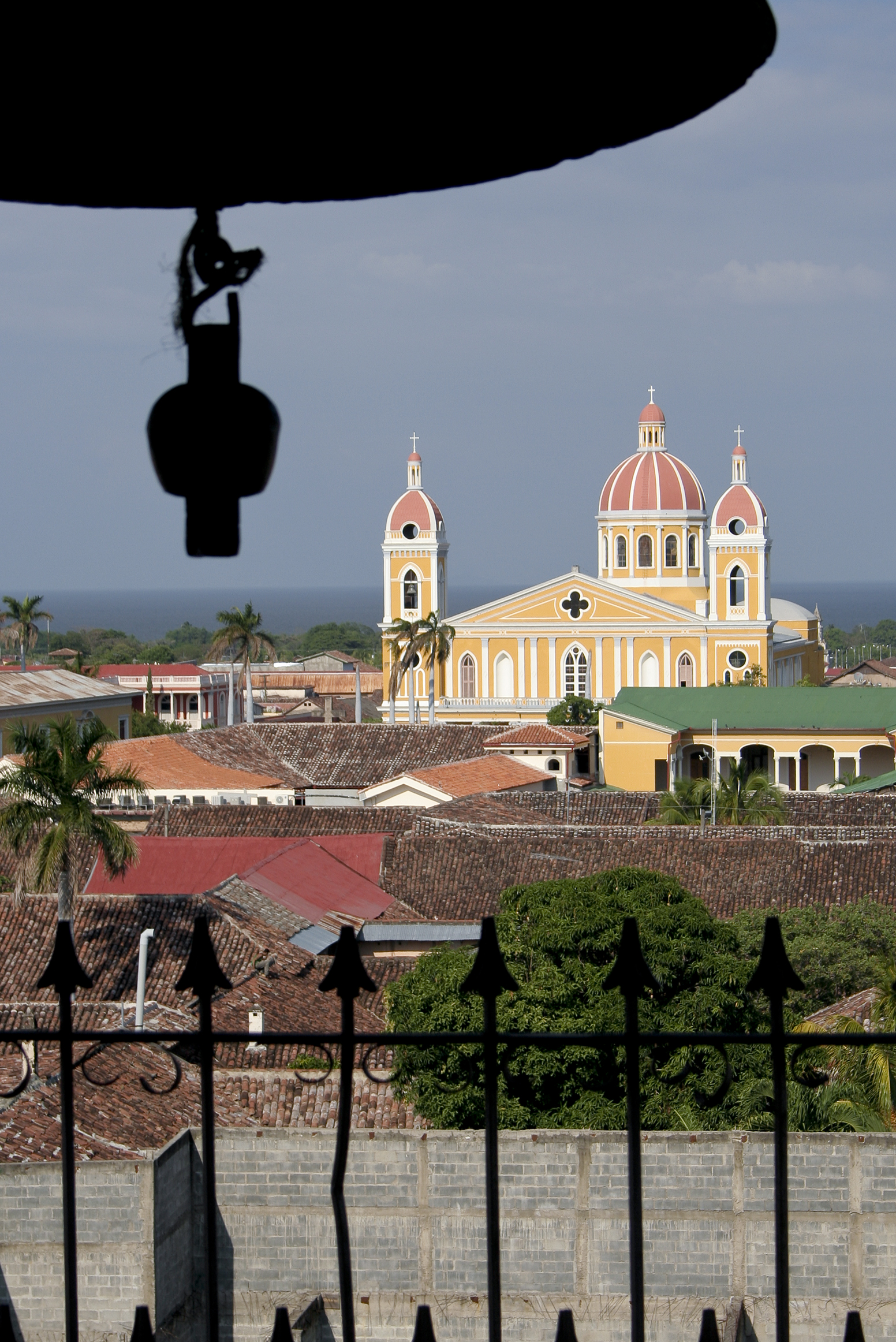
- Hero image, at the top of the article: the cathedral of Granada, Nicaragua. Free image: https://upload.wikimedia.org/wikipedia/commons/a/a9/Cathedral_of_Granada_Nicaragua.jpg — License CC BY-SA 4.
- In-body image, in Geography: Concepcion volcano on Ometepe Island, Nicaragua. Free image: https://upload.wikimedia.org/wikipedia/commons/f/f5/Nicaragua_Ometepe_Concepci%C3%B3n_15.jpg — License CC BY 3.
- In-body image, in Notable Places: volcano boarding on Cerro Negro, Nicaragua. Free image: https://upload.wikimedia.org/wikipedia/commons/9/98/Volcano_Boarding_Cerro_Negro.jpg — License CC0.
- In-body image, in Travel: the cathedral of Leon, Nicaragua, in an old view. Free image: https://upload.wikimedia.org/wikipedia/commons/b/b1/Cathedral_of_Le%C3%B3n_%28Nicaragua%29_in_1852.jpg — Public domain.