
Calgary — The Stampede City on the Bow River at the Foot of the Rockies
Calgary is a prairie city in Alberta, set where the Bow and Elbow rivers meet. Its skyline rises by the Rockies, and its heart beats for the Stampede.
Calgary is the largest city in Alberta, and the third largest city in Canada, with more than one million three hundred thousand people. It stands on the prairie at the foot of the Rocky Mountains, where the Bow River runs through the downtown and the Elbow River joins it from the south. The city is known for the Calgary Stampede, the ten-day rodeo and festival of July, for the Winter Olympics of nineteen eighty-eight, and for the oil and gas industry that built its towers. Calgary is also the gateway to Banff, and the traveller who comes here finds a modern city with a cowboy heart, and the mountains always in view.
This guide is written for the traveller who searches for Calgary and finds flights, because the city is more than its airport. It explains where Calgary stands, how it grew from a police fort on the prairie to the city of the Stampede and the Olympics, and how a traveller spends three or four days here, with the rivers, the parks, and the mountains.
Quick Facts
- Name: Calgary, the largest city in Alberta, in western Canada, and the third largest city in Canada.
- Position: In southern Alberta, at the meeting of the Bow River and the Elbow River, east of the Rocky Mountains.
- Coordinates: Fifty-one degrees three minutes north and one hundred and fourteen degrees four minutes west, by the city Wikidata item Q36312.
- Elevation: One thousand and forty-five metres above sea level.
- Population: One million three hundred and six thousand seven hundred and eighty-four people in the city, by the census of two thousand and twenty-one, and one million four hundred and eighty-one thousand eight hundred and six in the metropolitan area.
- Founded: In eighteen seventy-five, as Fort Calgary of the North-West Mounted Police; a town in eighteen eighty-four, a city in eighteen ninety-four.
- First Stampede: In nineteen twelve, the first Calgary Stampede, founded by Guy Weadick.
- Olympics: In nineteen eighty-eight, Calgary became the first Canadian city to host the Olympic Winter Games.
- Rivers: The Bow River, which runs through the downtown, and the Elbow River, which joins it from the south.
- Climate: Semi-arid prairie climate, with cold winters, warm summers, and the warm Chinook winds of winter.
- Best months: From June to September, when the days are long and warm, and July for the Stampede.
- Airport: Calgary International Airport, north-east of the city, the main gateway to the Rockies.
- Nearest World Heritage: Banff National Park, part of the Canadian Rocky Mountain Parks, ref 304, about one hundred and six kilometres west of the city in a straight line.
- Indigenous name: Mohkínstsis, the Blackfoot name for the place where the rivers meet.
Geography of Calgary
Calgary stands on the prairie of southern Alberta, at the eastern foot of the Rocky Mountains, where the Bow River and the Elbow River meet. The city is built on the flat prairie, with the downtown on the south bank of the Bow, and the suburbs spreading across the plain in every direction. The land is high, at more than one thousand metres above sea level, and the air is dry and clear, with the mountains visible to the west on most days. The Bow River runs through the city from west to east, and the Elbow River runs from the south-west to join it, and the meeting of the two rivers is the reason the city stands here.
The Blackfoot people called the place Mohkínstsis, the elbow, for the bend of the rivers, and the name is still used today.
The Bow River is the river of Calgary, and it shapes the city. The river rises in the Rocky Mountains, in Banff National Park, and it runs east through the foothills to Calgary, and then across the prairie to join the South Saskatchewan River. In the city the river is wide and fast, with parks and paths along its banks, and the downtown stands on its south bank, with the skyline rising behind the river. Prince’s Island Park sits in the river at the edge of the downtown, and the Bow River pathway runs along the banks for many kilometres, with walkers, runners, and cyclists in every season.
The river is also the water of the city, and the floods of the river, most recently in two thousand and thirteen, have shaped the city and its defences.
The Elbow River is the smaller river of Calgary, and it joins the Bow at the eastern edge of the downtown. The Elbow rises in the mountains to the south-west, and it runs through the foothills and through the southern suburbs of the city, with parks and paths along its banks. The Elbow is the river of the Stampede grounds, and the Stampede Park stands on its banks, and the river is part of the festival as much as the rodeo. The two rivers together make Calgary a city of water in a dry land, and the parks along the rivers are the green heart of the city.
The climate of Calgary is the climate of the high prairie, with cold winters, warm summers, and little rain. The winters are cold, with snow from November to March, and the summers are warm, with long days and cool nights. The Chinook winds, warm winds from the mountains, blow in winter and melt the snow in hours, and the city can warm by twenty degrees in a day when the Chinook comes. The city is one of the sunniest in Canada, with more than three hundred days of sunshine a year, and the light is bright and clear, with the mountains sharp on the horizon.
The best months to visit are June to September, when the days are long and the Stampede fills the city, and the winter months are for the skiing in the mountains.
The land around Calgary is the prairie and the foothills, and the city is the gateway to the mountains. The foothills rise to the west, with the ranches and the small towns of the cowboy country, and the Rocky Mountains rise beyond them, with Banff National Park about one hundred and six kilometres west of the city in a straight line. The road west, the Trans-Canada Highway, runs from Calgary to Banff in about an hour and a half, and it is one of the great drives of Canada, with the mountains growing as the road climbs. The prairie to the east runs flat to the horizon, with the wheat and the cattle, and the city stands on the edge between the prairie and the mountains, with one foot in each world.
The parks of Calgary are the green spaces of the city, and they are among the largest in Canada. Fish Creek Provincial Park, in the south of the city, is one of the largest urban parks in North America, with forests, with meadows, and with the Fish Creek running through it. Nose Hill Park, in the north-west, is a great hill of native grassland, with views over the whole city and the mountains. Prince’s Island Park, in the Bow River at the edge of the downtown, is the park of the festivals, with concerts and markets in the summer.
The city is a city of parks, and the traveller who walks the river paths sees the city at its best.
The nearest World Heritage site to Calgary is Banff National Park, part of the Canadian Rocky Mountain Parks, ref 304, inscribed in nineteen eighty-four. The park lies about one hundred and six kilometres west of the city in a straight line, to the town of Banff, and the park boundary is closer still. The next nearest is Head-Smashed-In Buffalo Jump, ref 158, inscribed in nineteen eighty-one, about one hundred and forty-seven kilometres south of the city in a straight line, a cliff where the Indigenous peoples of the plains drove the bison over the edge for thousands of years. Calgary stands between the two, with the mountains to the west and the plains to the south, and the traveller can reach both in a day.

The Bow River in Calgary — DXR, CC BY-SA 4
History of Calgary
Calgary began as a fort of the North-West Mounted Police, built in eighteen seventy-five at the meeting of the Bow and Elbow rivers. The police came to the prairie to bring order to the whisky trade and to the frontier, and they built Fort Calgary on the south bank of the Bow, where the rivers meet. The fort was a small post of log buildings, with a handful of men, and it stood on the land of the Blackfoot, the Stoney Nakoda, and the Tsuut’ina peoples, who had lived on the prairie for thousands of years. The fort gave the place its name, Calgary, after a bay on the Isle of Mull in Scotland, and the town that grew around the fort kept the name.
The railway made Calgary, and the Canadian Pacific Railway reached the town in eighteen eighty-three. The railway brought the settlers, the cattle, and the trade, and the town grew from a fort to a town in eighteen eighty-four, and to a city in eighteen ninety-four. The cattle trade made Calgary the centre of the ranching country, with the ranches of the foothills sending their cattle to the stockyards of the city, and the city became known as Cowtown, a name it still carries with pride. The grain trade followed, and the city became the market town of the southern prairie, with the elevators and the rail yards as its landmarks.
The first Calgary Stampede was held in nineteen twelve, and it made the city famous. Guy Weadick, an American trick roper, came to Calgary with the idea of a great rodeo, a celebration of the cowboy life that was already passing, and the businessmen of the city, the Big Four, put up the money. The Stampede drew more than one hundred thousand people in six days, and it was a success, and it became the annual festival of the city, held every July. The Stampede grew into the Greatest Outdoor Show on Earth, with the rodeo, the chuckwagon races, the midway, and the parade, and it draws more than a million visitors a year.
The Stampede is the heart of Calgary, and the city wears its cowboy hat for ten days every July.
The oil boom changed Calgary, and the city became the oil capital of Canada. Oil was found at Leduc, near Edmonton, in nineteen forty-seven, and the oil industry grew in Alberta, with Calgary as its head office city. The towers of the downtown rose in the nineteen seventies and eighties, with the oil companies building their headquarters, and the city grew from a prairie town to a modern city of glass and steel. The oil booms and busts shaped the city, with growth in the good years and hardship in the bad, and the city learned to live with the price of oil.
The towers still stand, and the Calgary Tower, built in nineteen sixty-eight, is the landmark of the skyline. The city also became the home of the Canadian energy industry, with the head offices of the oil and gas companies filling the towers, and the industry still shapes the city today, with the boom years bringing new towers and the bust years bringing empty offices.
The Winter Olympics of nineteen eighty-eight were the other great event in the history of Calgary, and they made the city known around the world. Calgary became the first Canadian city to host the Olympic Winter Games, and the city built the Olympic Park, the speed skating oval, and the ski jumps for the Games. The Olympics brought the world to Calgary, and the city has kept the Olympic legacy, with the park still used for skiing and for training, and the oval still used for speed skating. The Games were a success, and they gave the city its modern identity, as a city of sport and of the mountains, as well as a city of oil and of cattle.
The flood of two thousand and thirteen was the most recent turning point in the history of Calgary, and it showed the power of the rivers. The Bow and the Elbow rose after days of heavy rain in the mountains, and the water flooded the downtown, the Stampede grounds, and the riverside neighbourhoods, and the city was under water for days. The flood caused great damage, and the city rebuilt, with new flood defences and with the Stampede grounds restored in time for the festival only weeks later. The flood is part of the story of the city now, and the rivers that made Calgary are also the rivers that threaten it, and the city lives with them.
Today Calgary is a modern city with a cowboy heart, and it is the city of the Stampede, the Olympics, and the oil towers. The downtown is a city of glass towers and of the Plus Fifteen walkways, the network of enclosed bridges that joins the towers above the streets. The Stephen Avenue Walk, in the heart of the downtown, is the historic street of the city, with its sandstone buildings and its cafes. The city is young, and it is growing, and it is the gateway to the Rockies, with Banff an hour away and the prairie at its door.
Calgary is the city where the prairie meets the mountains, and the traveller who comes here sees both.

Fort Calgary — XeresNelro, CC BY-SA 4
Travel to Calgary
Travellers come to Calgary for the Stampede, for the mountains, and for the city itself, and the best time to come is July, when the Stampede fills the city. The Stampede runs for ten days in July, with the rodeo in the afternoon, the chuckwagon races in the evening, and the midway, the concerts, and the pancake breakfasts all day. The traveller should book the stay and the rodeo tickets well ahead, because the city fills up, and should come early to the grounds, because the Stampede Park is large and the crowds are great. The parade, on the first morning of the Stampede, runs through the downtown, and it is free, and it is the best way to see the Stampede without a ticket.
The Stampede is the reason many travellers come to Calgary, and it is worth the trip.
The city itself is best seen on foot, and the downtown is compact enough to walk. The Stephen Avenue Walk is the historic street, with its sandstone buildings, its shops, and its cafes, and it is closed to traffic, so the traveller can walk it in peace. The Calgary Tower stands at the end of the downtown, with its observation deck and its glass floor, and the view from the top is the best in the city, with the downtown below and the mountains to the west. The Glenbow Museum, on the Stephen Avenue Walk, holds the art and the history of the west, with the Indigenous peoples and the settlers of the prairie.
The traveller should give a day to the downtown, with the tower, the museum, and the river paths, and should walk the Bow River pathway to Prince’s Island Park.
The parks and the rivers are the other half of Calgary, and the traveller should spend time on them. The Bow River pathway runs along the river for many kilometres, and it is the best walk in the city, with the skyline on one side and the river on the other. Prince’s Island Park, in the river at the edge of the downtown, is the park of the festivals, and it is the place to sit in the summer. Fish Creek Provincial Park, in the south, is the great park of the city, with forests and meadows, and the traveller who wants a longer walk should go there.
The Calgary Zoo, on Saint George’s Island in the Bow River, is one of the best zoos in Canada, and it is a full day for a family.
The day trips from Calgary are the reason many travellers come, and the mountains are the first of them. Banff National Park, about one hundred and six kilometres west of the city, is the great day trip, with the town of Banff, Lake Louise, and the Icefields Parkway. The road west takes about an hour and a half, and the traveller should go early, because the park is busy in summer, and should stay the night in Banff if the time allows. The foothills, with the ranches and the small towns, are the other day trip, with the cowboy country of the west, and the Head-Smashed-In Buffalo Jump, to the south, is the World Heritage site of the plains.
One perfect day in Calgary starts on the Bow River pathway at dawn, takes in the tower and Stephen Avenue by noon, and ends at the Stampede grounds. A second day belongs to the drive west, with Banff and Lake Louise under the mountains.
Getting to Calgary is easy, and the city is reached by air through Calgary International Airport, north-east of the city. The airport is the main gateway to the Rockies, with flights from Toronto, Vancouver, and across Canada, and the transfer to the downtown takes about half an hour by taxi or by bus. The city is also reached by road, on the Trans-Canada Highway from the east and the west, and by bus from Banff and from Edmonton. The traveller who arrives by air should take a taxi or the bus to the downtown, and the traveller who drives should know that the city is easy to drive, with wide streets and free parking in the suburbs, though the downtown is best walked.
The best time to visit Calgary is the summer, from June to September, when the days are long and warm and the Stampede fills the city in July. The winter, from November to March, is cold and snowy, and it is the time for the skiing in the mountains, with Banff and Lake Louise an hour away. The spring and the autumn are quiet, with the city at its calmest, and the traveller who comes then finds the city without the crowds. The traveller should dress for the weather, with layers in every season, because the Chinook winds can warm the city in hours in winter, and the mountain weather can change in a day.

Free image, Wikimedia Commons:

Calgary International Airport — Milan Suvajac, CC BY-SA 4
Notable Places in Calgary
The Calgary Stampede — The Greatest Outdoor Show on Earth
The Calgary Stampede is the great festival of the city, held for ten days every July since nineteen twelve. The Stampede Park, on the banks of the Elbow River, holds the rodeo, the chuckwagon races, the midway, and the concerts, and the city wears its cowboy hat for the whole ten days. The rodeo is the heart of the Stampede, with the bull riding, the barrel racing, and the roping, and the chuckwagon races, the Rangeland Derby, are the most famous races in the world. The parade, on the first morning, runs through the downtown, and it is free.
Come in July, and book ahead, because the city fills up, and come early to the grounds, because the Stampede is large and the crowds are great.
The Calgary Tower — The View Over the City
The Calgary Tower stands in the downtown, and it is the landmark of the skyline. The tower was built in nineteen sixty-eight, and it rises to about one hundred and ninety-one metres, with an observation deck and a glass floor at the top. The view from the tower is the best in the city, with the downtown below, the Bow River to the north, and the Rocky Mountains to the west. The tower has a revolving restaurant, and it is the place to eat with the city turning below.
Come at sunset, when the light is low on the mountains and the city lights come on, and stay for the view. The tower is the symbol of Calgary, and it is the first place the traveller should go.
Stephen Avenue Walk — The Historic Street
Stephen Avenue Walk is the historic street of Calgary, in the heart of the downtown, and it is closed to traffic. The street holds the sandstone buildings of the early city, with their carved facades, and the shops, the cafes, and the restaurants of the downtown. The Glenbow Museum stands on the walk, with the art and the history of the west, and the street is the place where the city meets, with buskers and with markets in the summer. The walk is the best street to walk in Calgary, and the traveller should give it an afternoon, with the museum and the cafes.
Come in the summer, when the street is full and the cafes spill onto the pavement, and walk the whole length of the avenue.
Prince’s Island Park and the Bow River Pathway — The Green Heart
Prince’s Island Park sits in the Bow River at the edge of the downtown, and it is the green heart of Calgary. The park is an island of lawns, of trees, and of paths, with the river on both sides and the skyline behind, and it holds the festivals and the concerts of the summer. The Bow River pathway runs along the river from the park, for many kilometres in both directions, with walkers, runners, and cyclists, and it is the best walk in the city. The park is the place to sit in the summer, with the river and the skyline, and the pathway is the place to walk in every season.
Come in the morning, when the light is soft on the river and the park is quiet, and walk the pathway to the east, with the city behind you.
Heritage Park Historical Village — The Prairie Past
Heritage Park Historical Village stands on the Glenmore Reservoir, in the south-west of the city, and it is the largest living history museum in Canada. The park holds the buildings of the prairie past, with the houses, the shops, and the railway station of the early city, and the steam train runs around the park in the summer. The park is the place to see the Calgary of the eighteen eighties and nineties, with the settlers, the ranchers, and the railway. The village is a full day, with the train, the paddle steamer, and the exhibits, and it is the best place for a family.
Come in the summer, when the park is open and the train is running, and give it a whole day.
Banff and the Rockies — The Day Trip West
Banff National Park lies about one hundred and six kilometres west of Calgary, and it is the great day trip from the city. The town of Banff, in the park, is the mountain town of the Rockies, with its shops, its hot springs, and its views, and Lake Louise, further west, is the most famous lake in Canada. The road west, the Trans-Canada Highway, runs from Calgary to Banff in about an hour and a half, with the mountains growing as the road climbs. The traveller who has a day should go to Banff and to Lake Louise, and the traveller who has two days should drive the Icefields Parkway to Jasper.
Come early, because the park is busy in summer, and stay the night if the time allows, because the mountains are best at dawn.

Free image, Wikimedia Commons:

The Calgary Tower — Adam Bishop, CC BY-SA 4

Stephen Avenue Walk, Calgary — Milan Suvajac, CC BY-SA 4

Prince’s Island Park, Calgary — Milan Suvajac, CC BY-SA 4

Heritage Park Historical Village, Calgary — Bernard Spragg. NZ from Christchurch, New Zealand, CC0
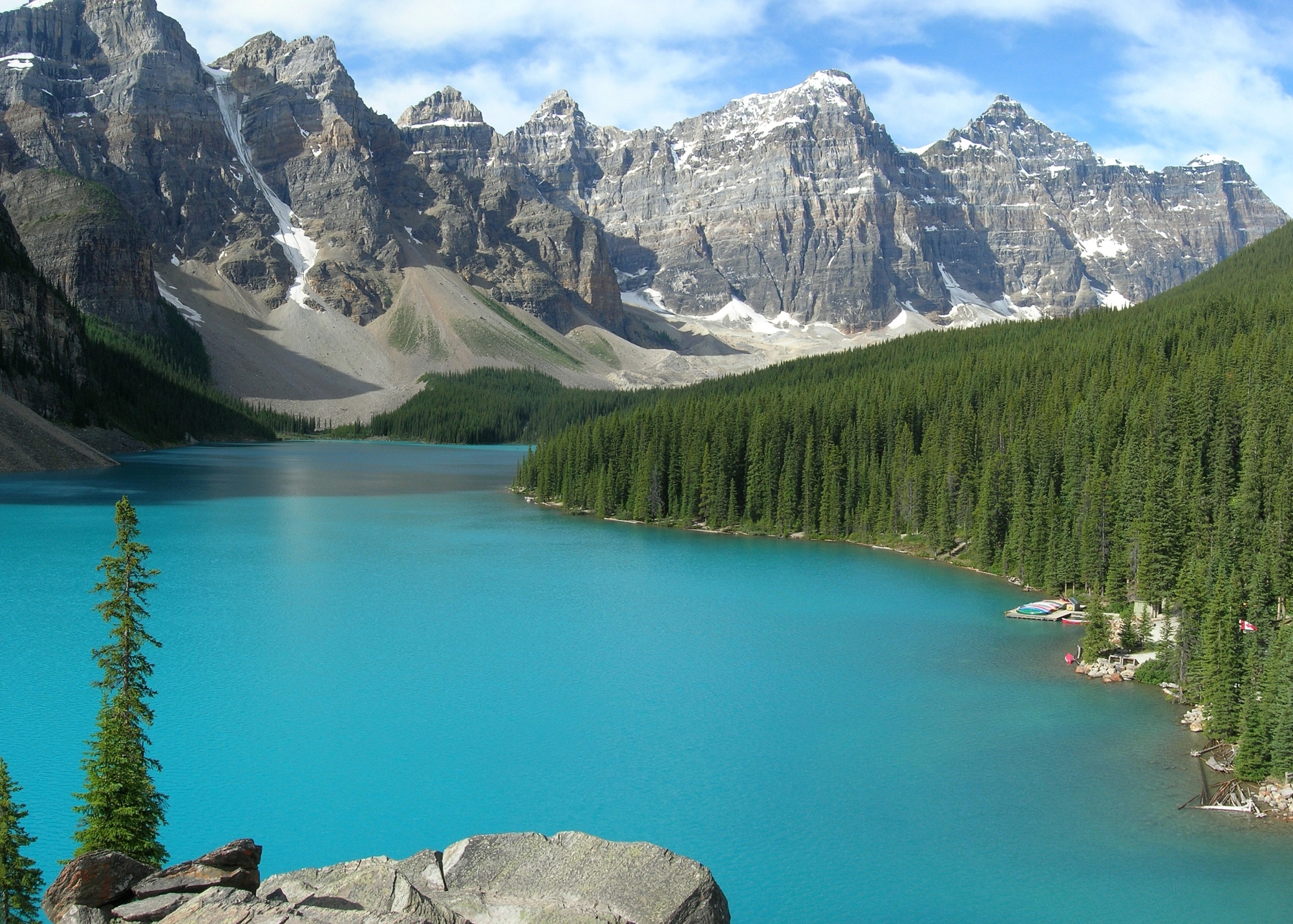
Moraine Lake, Banff National Park — Tobias Alt, Tobi 87, CC BY-SA 4

Lake Louise, Banff National Park — Chensiyuan, CC BY-SA 4
Verified
- Calgary is the largest city in Alberta, and the third largest city in Canada, with one million three hundred and six thousand seven hundred and eighty-four people at the census of two thousand and twenty-one, checked 26/11/2026.
- Calgary is Wikidata item Q36312, a city in Alberta, at fifty-one degrees three minutes north and one hundred and fourteen degrees four minutes west, checked 26/11/2026.
- Fort Calgary was built in eighteen seventy-five, and Calgary became a town in eighteen eighty-four and a city in eighteen ninety-four, checked 26/11/2026.
- The Canadian Pacific Railway reached Calgary in eighteen eighty-three, checked 26/11/2026.
- The first Calgary Stampede was held in nineteen twelve, and it was founded by Guy Weadick, checked 26/11/2026.
- Calgary hosted the Olympic Winter Games in nineteen eighty-eight, and it was the first Canadian city to do so, checked 26/11/2026.
- Calgary stands at one thousand and forty-five metres above sea level, at the meeting of the Bow River and the Elbow River, checked 26/11/2026.
- Banff National Park, part of the Canadian Rocky Mountain Parks, ref 304, inscribed in 1984, lies about one hundred and six kilometres west of Calgary in a straight line, checked 26/11/2026.
- Head-Smashed-In Buffalo Jump, ref 158, inscribed in 1981, lies about one hundred and forty-seven kilometres south of Calgary in a straight line, checked 26/11/2026.
- The flood of two thousand and thirteen flooded the downtown of Calgary and the Stampede grounds, checked 26/11/2026.
Sources
- Calgary — Wikipedia (https://en.wikipedia.org/wiki/Calgary) — population 2021, elevation, founded 1875, railway 1883, Stampede 1912, Olympics 1988, flood 2013; checked 26/11/2026.
- Canadian Rocky Mountain Parks — UNESCO (https://whc.unesco.org/en/list/304/) — ref 304, inscribed 1984; checked 26/11/2026.
- Head-Smashed-In Buffalo Jump — UNESCO (https://whc.unesco.org/en/list/158/) — ref 158, inscribed 1981; checked 26/11/2026.
- Wikidata API — Q36312 (https://www.wikidata.org/wiki/Q36312) — city in Alberta, coordinates, elevation; checked 26/11/2026.
Unverified
- The claim that Calgary has more than three hundred days of sunshine a year is widely repeated but has not been checked against a current official source, so it is stated as a common claim.
- The exact driving time from Calgary to Banff, and to Lake Louise, changes with the traffic and the season, so the article gives the time in hours only.
- The attendance figure for the Calgary Stampede, of more than a million visitors a year, varies by year and by source, so the article gives the round figure only.
- The height of the Calgary Tower is given as about one hundred and ninety-one metres, and the exact figure varies by source, so the article gives the round figure only.
Illustrations
- Hero — The Bow River Bridge and the Calgary skyline, with the downtown towers behind the river. Free image, Wikimedia Commons: Bow River Bridge and Calgary Skyline.jpg (https://upload.wikimedia.org/wikipedia/commons/0/0a/Bow_River_Bridge_and_Calgary_Skyline.jpg), licence CC BY-SA 4. Placement: hero image at the top of the article.
- In-body — The rodeo at the Calgary Stampede, on the final day. Free image, Wikimedia Commons: Calgary Stampede Rodeo final day 17 – 2011.jpg (https://upload.wikimedia.org/wikipedia/commons/8/8d/Calgary_Stampede_Rodeo_final_day_17_-_2011.jpg), licence CC BY-SA 4. Placement: in the Notable Places section, with the Calgary Stampede entry.
- In-body — The Calgary skyline at night, with the towers lit. Free image, Wikimedia Commons: Calgary skyline at night (Quintin Soloviev).png (https://upload.wikimedia.org/wikipedia/commons/5/52/Calgary_skyline_at_night_%28Quintin_Soloviev%29.png), licence CC BY-SA 4. Placement: in the Geography section, with the downtown passage.
- In-body — The Calgary Tower. Free image, Wikimedia Commons: Calgary_Tower_between_buildings.jpg (https://upload.wikimedia.org/wikipedia/commons/6/61/Calgary_Tower_between_buildings.jpg), licence CC BY-SA 4. Placement: in the Notable Places section, with the Calgary Tower entry.
- In-body — Stephen Avenue Walk, Calgary. Free image, Wikimedia Commons: Calgary_AB_8-Avenue-SW_2022-09-28_(33).jpg (https://upload.wikimedia.org/wikipedia/commons/7/76/Calgary_AB_8-Avenue-SW_2022-09-28_%2833%29.jpg), licence CC BY-SA 4. Placement: in the Notable Places section, with the Stephen Avenue Walk entry.
- In-body — Prince’s Island Park, Calgary. Free image, Wikimedia Commons: Calgary_AB_Prince’s-Island-Park_2022-09-28.jpg (https://upload.wikimedia.org/wikipedia/commons/3/39/Calgary_AB_Prince%27s-Island-Park_2022-09-28.jpg), licence CC BY-SA 4. Placement: in the Notable Places section, with the Prince’s Island Park entry.
- In-body — Heritage Park Historical Village, Calgary. Free image, Wikimedia Commons: Heritage_Park_Calgary._(32634415956).jpg (https://upload.wikimedia.org/wikipedia/commons/f/f1/Heritage_Park_Calgary._%2832634415956%29.jpg), licence CC0. Placement: in the Notable Places section, with the Heritage Park Historical Village entry.
- In-body — The Bow River in Calgary. Free image, Wikimedia Commons: Bow_River_and_Peace_Bridge,_Calgary_20240819_1.jpg (https://upload.wikimedia.org/wikipedia/commons/c/c1/Bow_River_and_Peace_Bridge%2C_Calgary_20240819_1.jpg), licence CC BY-SA 4. Placement: in the Geography section, with the Bow River entry.
- In-body — Fort Calgary. Free image, Wikimedia Commons: Barracks,_Fort_Calgary.jpg (https://upload.wikimedia.org/wikipedia/commons/e/e9/Barracks%2C_Fort_Calgary.jpg), licence CC BY-SA 4. Placement: in the History section, with the Fort Calgary entry.
- In-body — Calgary International Airport. Free image, Wikimedia Commons: Calgary_AB_Airport_Calgary-International-Airport_2022-09-29.jpg (https://upload.wikimedia.org/wikipedia/commons/1/1e/Calgary_AB_Airport_Calgary-International-Airport_2022-09-29.jpg), licence CC BY-SA 4. Placement: in the Travel to Calgary section, with the Calgary International Airport entry.
- In-body — Moraine Lake, Banff National Park. Free image, Wikimedia Commons: Moraine_Lake-Banff_NP.JPG (https://upload.wikimedia.org/wikipedia/commons/e/e0/Moraine_Lake-Banff_NP.JPG), licence CC BY-SA 4. Placement: in the Notable Places section, with the Banff National Park entry.
- In-body — Lake Louise, Banff National Park. Free image, Wikimedia Commons: 1_lake_louise_pano_2019.jpg (https://upload.wikimedia.org/wikipedia/commons/6/6c/1_lake_louise_pano_2019.jpg), licence CC BY-SA 4. Placement: in the Notable Places section, with the Lake Louise entry.