
Westminster Bridge: The Green Bridge Beside Parliament
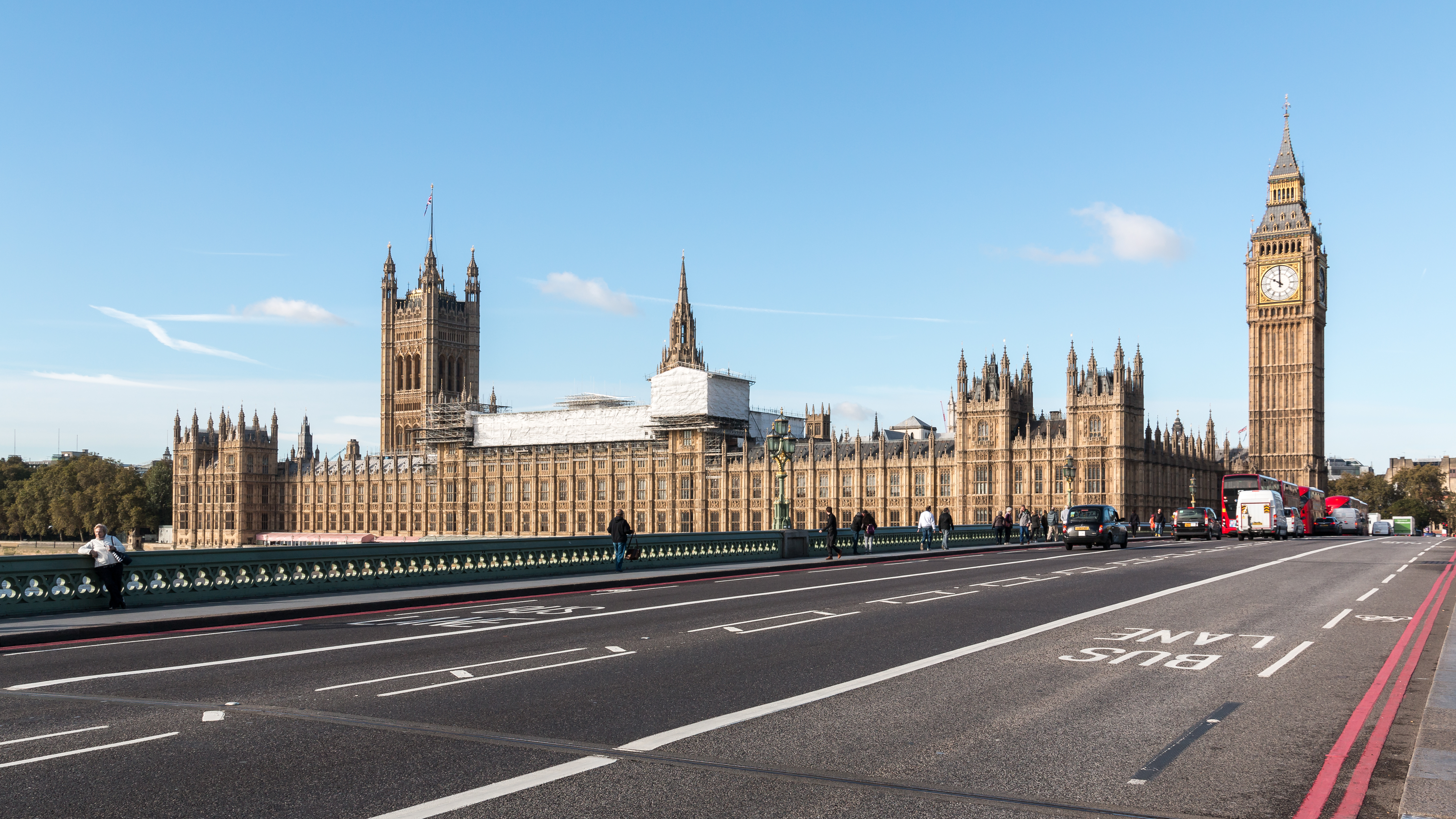
Westminster Bridge is the green iron bridge that crosses the Thames beside Parliament. Its seven arches frame the most photographed view in London.
Westminster Bridge spans the River Thames in the heart of London, England, joining Westminster on the north bank with Lambeth on the south. The bridge carries the A302 road, wide pavements and thousands of walkers every day, and its eastern pavement gives the classic view of the Palace of Westminster and the Elizabeth Tower. Westminster Bridge is painted green to match the benches of the House of Commons, and its Gothic details were designed to harmonise with the Parliament building beside it. The bridge is a working road crossing and a viewpoint at the same time, and it is one of the most photographed places in the world.
The present Westminster Bridge opened on 24 May 1862, and it is the second bridge on the site, replacing a stone bridge of 1750 that had served for more than a century. Westminster Bridge is 252 metres long and 26 metres wide, with seven iron arches, and it has been a Grade Two star listed building since 1981. The bridge stands beside the World Heritage property of the Palace of Westminster and Westminster Abbey, though the bridge itself holds no inscription. Westminster Bridge is therefore a neighbour of world heritage rather than a part of it, and a walk across it is a walk through the political heart of Britain.
This guide covers Westminster Bridge in full: where the bridge stands on the Thames, how it replaced the first bridge of 1750, how to walk it and photograph it, and what to see at either end. Westminster Bridge is free to cross at all hours, and it needs no ticket, so the guide concentrates on its history, its architecture and the practical advice that makes a crossing memorable. The bridge is the best place in London to stand between Parliament and the London Eye, and this guide explains how to make the most of it.
Quick Facts About Westminster Bridge
| Fact | Detail |
|---|---|
| Location | Across the River Thames, between Westminster and Lambeth, London, England |
| Coordinates | 51.5008 degrees north, 0.1219 degrees west |
| Length | 252 metres |
| Width | 26 metres |
| Arches | 7 iron arches |
| Designed by | Thomas Page, with Gothic details by Charles Barry |
| Opened | 24 May 1862 |
| First bridge | 1750, designed by Charles Labelye |
| Colour | Green, matching the benches of the House of Commons |
| Listing | Grade Two star, since 1981 |
| UNESCO | No inscription of its own, beside the Westminster property of 1987, ref 426 |
| Wikidata | Q456960 |
Geography of Westminster Bridge
Across the Thames at Westminster
Westminster Bridge crosses the River Thames at the bend where the river turns in front of the Palace of Westminster, and the bridge links Bridge Street in Westminster with Westminster Bridge Road in Lambeth. The Thames flows from west to east through London, and Westminster Bridge stands at the point where the river passes the seat of Parliament. The bridge is the crossing that joins the political quarter on the north bank with the cultural quarter on the south bank, and it carries the A302, one of the main roads of central London. The bridge is therefore a working part of the city as well as a landmark, and tens of thousands of vehicles and walkers cross it every day.
Upstream of Westminster Bridge stands Lambeth Bridge, and downstream stands Hungerford Bridge with its two Golden Jubilee footbridges. The bridge is one link in the chain of bridges that joins the two banks of the Thames in central London, and each bridge has its own character. The river at Westminster Bridge is wide and tidal, and the embankments on both banks are lined with the great buildings of the city. The bridge gives a view in both directions along the river, west towards Lambeth Bridge and east towards Saint Paul’s Cathedral and the City.
The Thames at Westminster Bridge is a tidal river, and the water rises and falls with the tide of the estuary. The bridge piers stand in the riverbed, and the arches are high enough for the river traffic to pass beneath. The bridge is built of iron, and its green paint protects the metal from the damp air of the river. The bridge is a piece of Victorian engineering that still carries the traffic of the twenty first century, and its arches have held the road for more than a hundred and sixty years.

Westminster Bridge over the Thames — CC BY-SA 4
The North Bank and Parliament
The north end of Westminster Bridge stands in the political heart of Britain, beside Parliament Square, Westminster Abbey and the Palace of Westminster with the Elizabeth Tower. The tower holds the bell known as Big Ben, and its clock face looks out over the bridge and the river. Westminster Bridge is the first sight of Parliament for many visitors, because the Underground station of the same name opens directly onto the bridge. The north bank is the seat of government, and the bridge is the threshold of that quarter.
Parliament Square holds the statues of statesmen, and Westminster Abbey stands a few steps from the north end of the bridge. The abbey has been the coronation church of the monarchs of England for almost a thousand years, and its towers rise above the square. The bridge is therefore the starting point for a visit to the abbey, the palace and the square, and it is the best place to photograph them. The north bank is formal and historic, and the bridge is its gateway to the river.
The streets around the north end of Westminster Bridge are among the busiest in London, with government offices, the Supreme Court and the headquarters of the civil service. The bridge carries the traffic of the whole quarter, and its pavements are crowded from morning to night. The bridge is a place of movement, and the flow of people across it never stops. The north bank gives the bridge its purpose, and the bridge gives the north bank its view.
The Palace of Westminster from the river — CC BY-SA 4
The South Bank and Lambeth
The south end of Westminster Bridge stands in Lambeth, a quarter of open space, culture and views. The old County Hall stands at the south end of the bridge, and the London Eye rises a few minutes to the east along the river. The bridge is the best place to reach the South Bank, and the walk from it along the river passes the aquarium, the theatres and the galleries of the South Bank. The south bank is more open than the north, and its riverside walk is one of the finest in London.
Saint Thomas Hospital stands to the west of the south end of Westminster Bridge, and its gardens run down to the river. The hospital is one of the oldest in London, and its buildings face the Palace of Westminster across the water. The bridge joins the hospital quarter with the Parliament quarter, and it is used every day by the staff and patients of the hospital. The south bank is a place of healing and of leisure, and the bridge is its link to the centre of power.
From the south end of Westminster Bridge, the view north is the great panorama of London: the Palace of Westminster, the Elizabeth Tower and the abbey, reflected in the Thames. The south bank is the best place to photograph that view, because the whole front of the palace can be seen from across the river. The bridge is the middle of that view, and a walker who stands on it is inside the picture. The south bank gives the bridge its finest prospect, and the bridge gives the south bank its access.

The pavement of Westminster Bridge that faces the Palace of Westminster and the Elizabeth Tower, giving the classic view of Parliament — CC BY-SA 4

The London Eye on the South Bank — CC BY-SA 3
History of Westminster Bridge
The First Bridge of 1750
Before Westminster Bridge was built, anyone who wanted to cross the Thames here had to take a ferry or walk east to London Bridge, the only bridge in the city. The idea of a bridge at Westminster was discussed for many years, and in 1736 Parliament passed an act allowing one to be built. The first Westminster Bridge was designed by the Swiss engineer Charles Labelye, and it opened on 18 November 1750. The bridge was the second crossing of the Thames in London, after London Bridge, and it changed the city at once.
The first Westminster Bridge was built of stone, with a series of arches, but it gave trouble from the start. Some of its piers sank into the soft bed of the river, and the bridge needed repeated repairs. The tolls charged for crossing it were unpopular, and the bridge was a source of argument for decades. The first bridge nevertheless transformed the south bank, because the roads that opened from its southern end turned Lambeth from a low and thinly settled marsh into a busy residential and commercial district, and the city grew around it.
The first Westminster Bridge served for more than a century, and it carried the traffic of a growing capital. By the middle of the nineteenth century it was in poor repair, and it could no longer carry the weight of the traffic that crossed it every day. Parliament decided to replace it, and the old bridge was taken down. The old bridge had proved that a crossing at Westminster was essential, and its replacement was built to last far longer than the first.

The first Westminster Bridge in 1747, painted by Canaletto — Public domain
The Iron Bridge of Thomas Page
The new Westminster Bridge was designed by the engineer Thomas Page, and it was built of iron, with seven arches and Gothic details designed by Charles Barry, the architect of the Palace of Westminster. The details were chosen to harmonise with the palace beside the bridge, and the green paint was chosen to match the benches of the House of Commons. The new bridge opened on 24 May 1862, and it was at once a piece of engineering and a piece of architecture. The bridge is a Victorian monument, and its iron arches have carried the traffic of London ever since.
The construction of Westminster Bridge was a great undertaking, and the new bridge was built beside the old one so that traffic could continue while the work went on. The iron arches were cast and fitted in place, and the road was laid over them with pavements on either side. The bridge was one of the finest iron bridges of its age, and its design influenced the bridges that followed it. The bridge has needed little structural change since 1862, and its arches are the same ones that carried the first horse drawn traffic of the Victorian age.
The bridge has been repainted many times, and its green colour has become one of the symbols of London. Westminster Bridge is green because the Commons sits in green, while Lambeth Bridge upstream is red to match the benches of the House of Lords. The two bridges are a pair, and their colours are a quiet joke about the two houses of Parliament. The bridge is therefore a political monument as well as a crossing, and its colour tells a visitor which house of Parliament it serves.

Lambeth Bridge and the Thames — CC BY-SA 2
Westminster Bridge in the Modern Age
The twentieth century brought the motor car to Westminster Bridge, and the bridge adapted to the traffic of the modern city. The bridge was listed at Grade Two star in 1981, which recognises it as a building of more than special interest, and its ironwork and its Gothic details are protected. The bridge has been maintained and repainted, and its pavements have been widened for the crowds of walkers who cross it. The bridge remains a main road of central London, and it carries buses, taxis and cars as well as pedestrians.
On 22 March 2017, Westminster Bridge was the scene of a terrorist attack in which a man drove into pedestrians on the bridge and then attacked a police officer at the Palace of Westminster. Five people were killed, including the attacker and the officer, and many were injured. The attack changed the way London protects its public places, and security barriers were fitted along the pavements of Westminster Bridge and many other bridges over the Thames. Westminster Bridge carries that memory, and the barriers are now part of the bridge.
Today Westminster Bridge is one of the most photographed bridges in the world, and its view of the Palace of Westminster is the image of London that travellers carry home. The bridge is a working crossing, a viewpoint and a monument, and it is part of the daily life of the city. The bridge has stood for more than a hundred and sixty years, and it still does the job it was built to do. The bridge is the green link between the two banks of the Thames, and it is the heart of the image of London.

The iron arches of Westminster Bridge, designed by Thomas Page and opened in 1862, spanning the Thames in a single rhythm — CC BY-SA 4
Travel to Westminster Bridge
Walking the Bridge and Taking Photographs
The best way to experience Westminster Bridge is on foot, and the crossing takes about five minutes from one end to the other. The eastern pavement gives the finest view of the Palace of Westminster and the Elizabeth Tower, so most walkers use that side and stop to take photographs. The bridge is quietest in the early morning, and the late afternoon is the best time for light on the front of the palace. The bridge is free to cross at all hours, and it is open day and night.
Sunset is the favourite time for photographers on Westminster Bridge, when the sun sets in the west and the sky behind the palace turns orange and pink, and the lights come on in the Parliament building and the London Eye. A photographer who stands at the south end of the bridge at sunset can capture the whole palace reflected in the Thames. The bridge is at its best in the golden hour, and a visitor should arrive about thirty minutes before sunset to choose a place. The bridge is crowded at sunset, and patience is needed for a clear photograph.

Westminster Bridge at dusk — CC BY-SA 4
When to Go and How Long to Stay
The bridge can be crossed at any time of year, and the best months are April to October, when the days are long and the weather is mild. The bridge is busiest in the summer, when the crowds of tourists fill its pavements, and quietest in the early morning of winter. The bridge is a place to linger, and a crossing with stops for photographs takes about twenty minutes. The bridge is a good place to start a day in central London, because the sights at either end fill a whole day.
A visit to Westminster Bridge combines well with the Palace of Westminster, Westminster Abbey, Parliament Square and the London Eye. The bridge is the centre of that group of sights, and a walker can cover them all on foot in a day. The bridge is also the starting point for a walk along the South Bank, which leads east to the theatres, the galleries and the Tower of London. The bridge is a small place with a large neighbourhood, and it rewards a slow visit.
Getting There and Getting Around
Westminster Bridge is reached by the Underground station of the same name, which opens directly onto the bridge at its north end. The station is served by the District, Circle and Jubilee lines, and it is one of the busiest stations in London. Many bus routes cross Westminster Bridge, and the bridge is a short walk from Waterloo Station across the river and from Victoria Station to the west. Westminster Bridge is step free from the station to the pavements, and the bridge is flat and easy to cross on foot or in a wheelchair.
The bridge is a road crossing as well as a footway, and the pavements are separated from the traffic by the security barriers fitted after 2017. The bridge is safe for walkers, and its pavements are wide enough for the crowds. A visitor who arrives by Underground should leave by the exit signed for the bridge, and the Elizabeth Tower will be visible at once. Westminster Bridge is the easiest landmark in London to reach, and it is the natural meeting point for the centre of the city.
Notable Places in Westminster Bridge
The Seven Arches. The iron arches of Westminster Bridge, designed by Thomas Page and opened in 1862, spanning the Thames in a single rhythm. The arches are the engineering heart of the bridge, and they have carried the road for more than a hundred and sixty years.
The Eastern Pavement. The pavement of Westminster Bridge that faces the Palace of Westminster and the Elizabeth Tower, giving the classic view of Parliament. The pavement is the most photographed walkway in London, and it is where most visitors stop.
The Elizabeth Tower. The tower at the north end of Westminster Bridge, holding the bell known as Big Ben, and the clock face that looks out over the bridge and the river. The tower is the symbol of London, and the bridge is the best place to see it.
The Palace of Westminster. The Parliament building beside the north end of Westminster Bridge, rebuilt from 1840 in the Gothic style, and the seat of the two houses of Parliament. The palace is the reason the bridge is green, and its front is the view from the bridge.
Westminster Abbey. The coronation church a few steps from the north end of Westminster Bridge, where the monarchs of England have been crowned for almost a thousand years. The abbey is part of the World Heritage property beside the bridge, and its towers rise over Parliament Square.
Parliament Square. The square at the north end of Westminster Bridge, holding the statues of statesmen and the gardens beside the palace and the abbey. The square is the political heart of Britain, and the bridge is its gateway to the river.
The London Eye. The great wheel a few minutes east of the south end of Westminster Bridge, on the South Bank of the Thames. The wheel gives a view over the whole city, and it is the modern counterpart to the Victorian bridge.
The Old County Hall. The former headquarters of London government at the south end of Westminster Bridge, now a hotel, an aquarium and an entertainment complex. The building marks the southern threshold of the bridge, and its riverside front faces the palace.
The South Bank Walk. The riverside walk east from the south end of Westminster Bridge, passing the aquarium, the theatres and the galleries of the South Bank. The walk is one of the finest in London, and the bridge is its starting point.
Lambeth Bridge. The bridge upstream of Westminster Bridge, painted red to match the benches of the House of Lords, the pair to the green of Westminster Bridge. The two bridges are a quiet joke about the two houses of Parliament, and they frame the palace between them.

The tower at the north end of Westminster Bridge, holding the bell known as Big Ben, and the clock face that looks out over the bridge and the river — CC BY 4

Westminster Abbey — CC BY-SA 3
Frequently Asked Questions About Westminster Bridge
Where is Westminster Bridge?
Westminster Bridge crosses the River Thames in the heart of London, joining Westminster on the north bank with Lambeth on the south. The bridge is reached by the Underground station of the same name, which opens directly onto its north end, and the crossing takes about five minutes on foot.
When was Westminster Bridge built?
The present Westminster Bridge opened on 24 May 1862, and it was designed by the engineer Thomas Page, with Gothic details by Charles Barry. The bridge replaced a stone bridge of 1750, designed by Charles Labelye, which was the second crossing of the Thames in London.
Why is Westminster Bridge green?
Westminster Bridge is painted green to match the benches of the House of Commons, and its Gothic details were designed to harmonise with the Palace of Westminster beside it. Lambeth Bridge upstream is painted red to match the benches of the House of Lords, and the two bridges are a pair.
Is Westminster Bridge a UNESCO World Heritage Site?
The bridge itself holds no inscription, though it stands beside the property of the Palace of Westminster, Westminster Abbey and Saint Margaret’s Church, inscribed in 1987 under reference 426. The property covers the palace, the abbey and the church on the north bank, and the bridge across the river is outside its boundary.
How long is Westminster Bridge?
Westminster Bridge is 252 metres long and 26 metres wide, with seven iron arches spanning the Thames. The crossing takes about five minutes on foot, and the eastern pavement gives the finest view of the Palace of Westminster and the Elizabeth Tower.
What is the best time to photograph Westminster Bridge?
Sunset is the best time to photograph Westminster Bridge, when the sky behind the palace turns orange and pink and the lights come on in the Parliament building and the London Eye. A visitor should arrive about thirty minutes before sunset to choose a place, because the bridge is crowded at that hour.
Verified
The measurements and dates of the bridge were checked on 22 November 2026 against the bridge records and the UNESCO list below, and this guide follows those records. The present Westminster Bridge opened on 24 May 1862, it was designed by Thomas Page with Gothic details by Charles Barry, it is 252 metres long and 26 metres wide, and it has seven iron arches. The first bridge on the site opened on 18 November 1750, it was designed by Charles Labelye, and it was the second crossing of the Thames in London. The bridge has been listed at Grade Two star since 1981, and it is painted green to match the benches of the House of Commons.
Wikidata records the bridge as Q456960, classed as a road bridge and an arch bridge, and the coordinates given there, 51.5008 degrees north and 0.1219 degrees west, are the same as the coordinates in the registry for Westminster Bridge. The registry and Wikidata agree on the Q-ID and on the coordinates, so the identity of the bridge is confirmed by two records that match. The bridge crosses the Thames between Westminster and Lambeth, and it carries the A302 road across the river.
The Palace of Westminster, Westminster Abbey and Saint Margaret’s Church were inscribed by UNESCO in 1987 under reference 426 and criteria one, two and four, and the property covers the palace, the abbey and the church on the north bank. Westminster Bridge stands outside the boundary of that property, so the registry flag of false is correct for the bridge itself, and the article states the adjacency rather than claiming an inscription. The bridge is a neighbour of the World Heritage property, and the UNESCO record itself notes that associated attributes outside the boundary could be considered for inclusion in the future.
Sources
- UNESCO World Heritage Centre, Palace of Westminster and Westminster Abbey including Saint Margaret’s Church — https://whc.unesco.org/en/list/426/
- Wikipedia, Westminster Bridge — https://en.wikipedia.org/wiki/Westminster_Bridge
- Wikidata, Westminster Bridge Q456960 — https://www.wikidata.org/wiki/Q456960
- Historic England, Westminster Bridge — https://historicengland.org.uk/listing/the-list/list-entry/1357298
Unverified
The exact number of vehicles and walkers who cross Westminster Bridge each day changes with the season, and it should be checked on the current transport statistics before a visit. The times of sunset over the Thames vary through the year, and a photographer should check the sunset time for the day of the visit. The opening times of the London Eye and the attractions at the south end of the bridge change with the season, and they should be confirmed on their official sites.
Illustrations
- Hero: The Green Bridge Beside Parliament. Free image: https://upload.wikimedia.org/wikipedia/commons/0/0b/At_London_2025_566_-Westminster_Bridge_with_Palace_of_Westminster.jpg — CC BY-SA 4.
- In body, The Seven Arches: The iron arches of Westminster Bridge, designed by Thomas Page and opened in 1862, spanning the Thames in a single rhythm. Free image: https://upload.wikimedia.org/wikipedia/commons/7/70/At_London_2025_569_-_Westminster_Bridge_with_Palace_of_Westminster.jpg — CC BY-SA 4.
- In body, The Eastern Pavement: The pavement of Westminster Bridge that faces the Palace of Westminster and the Elizabeth Tower, giving the classic view of Parliament. Free image: https://upload.wikimedia.org/wikipedia/commons/f/fb/At_London_2025_570_-_Westminster_Bridge_with_Palace_of_Westminster.jpg — CC BY-SA 4.
- In body, The Elizabeth Tower: The tower at the north end of Westminster Bridge, holding the bell known as Big Ben, and the clock face that looks out over the bridge and the river. Free image: https://upload.wikimedia.org/wikipedia/commons/f/f7/Big_Ben_Elizabeth_Tower_London_2023_01.jpg — CC BY 4.
- In body, Thames at Westminster: Westminster Bridge over the Thames. Free image: https://upload.wikimedia.org/wikipedia/commons/a/a0/London_MMB_%C2%BB0Y0_Westminster_Bridge.jpg — CC BY-SA 4.
- In body, Palace of Westminster: The Palace of Westminster from the river. Free image: https://upload.wikimedia.org/wikipedia/commons/0/0c/London%2C_Palace_of_Westminster_–2016–_4800.jpg — CC BY-SA 4.
- In body, London Eye: The London Eye on the South Bank. Free image: https://upload.wikimedia.org/wikipedia/commons/0/04/London_Eye_by_Day.jpg — CC BY-SA 3.
- In body, Old Westminster Bridge: The first Westminster Bridge in 1747, painted by Canaletto. Free image: https://upload.wikimedia.org/wikipedia/commons/1/11/Canaletto_Westminster_Bridge_1747.jpg — Public domain.
- In body, Lambeth Bridge: Lambeth Bridge and the Thames. Free image: https://upload.wikimedia.org/wikipedia/commons/0/06/GOC_London_Public_Art_025_Lambeth_Bridge_%2831078079461%29.jpg — CC BY-SA 2.
- In body, Westminster Bridge at sunset: Westminster Bridge at dusk. Free image: https://upload.wikimedia.org/wikipedia/commons/2/2a/Westminster_Bridge_at_dusk.jpg — CC BY-SA 4.
- In body, Westminster Abbey: Westminster Abbey. Free image: https://upload.wikimedia.org/wikipedia/commons/e/e0/Westminster_Abbey_-_02.jpg — CC BY-SA 3.