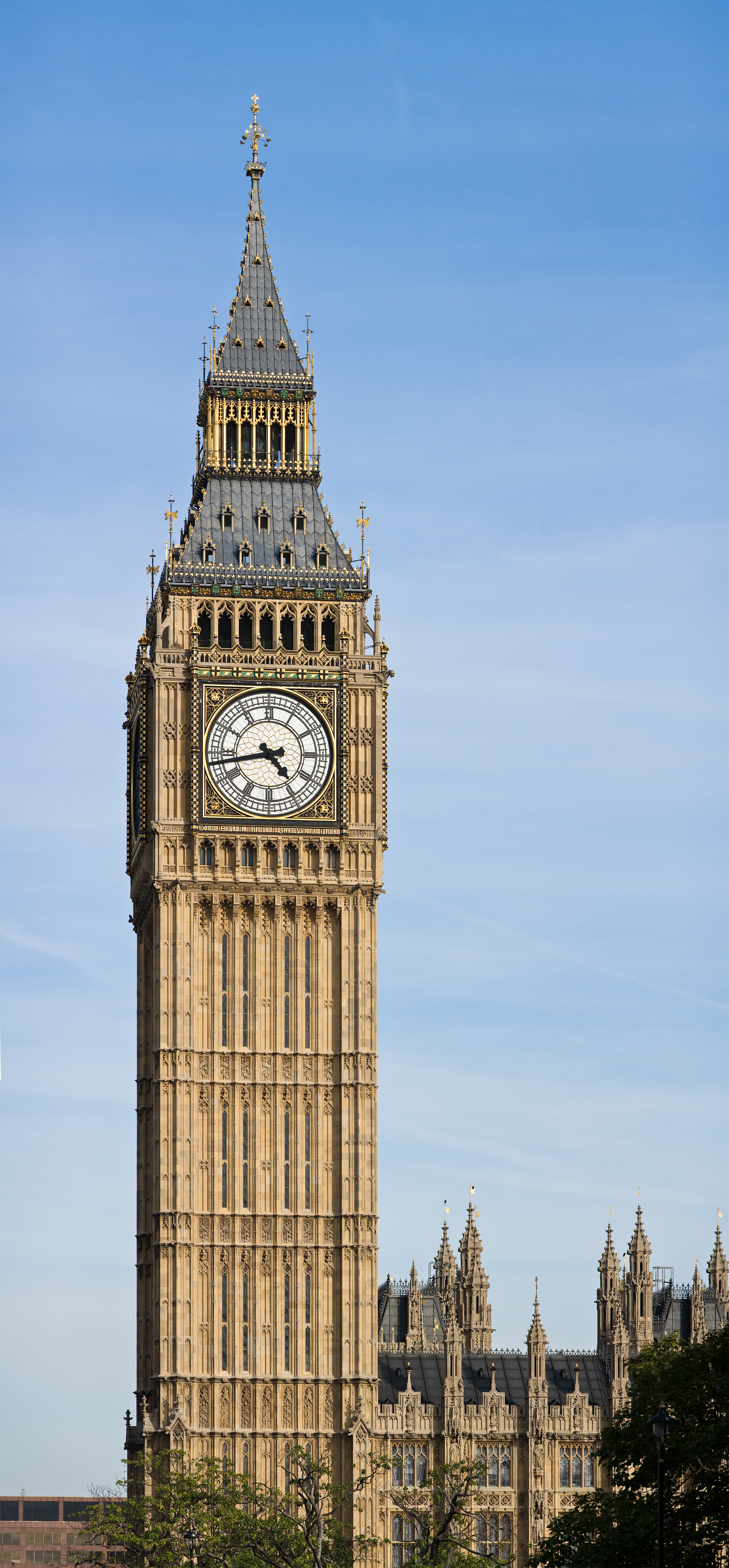
Palace of Westminster — The Seat of Parliament on the River Thames
The Palace of Westminster stands on the north bank of the Thames in the heart of London. It is the home of the Parliament of the United Kingdom.
The Palace of Westminster is a building, not an institution, and that distinction matters: the Palace is the great Gothic Revival palace on the river, while Parliament, the House of Commons and the House of Lords, is the body that works inside it. Together with Westminster Abbey and St Margaret’s Church, the Palace of Westminster forms a World Heritage property inscribed in 1987, and its river frontage of nearly 300 metres, with the Elizabeth Tower at one end and the Victoria Tower at the other, is one of the most recognisable skylines in the world. The Palace has been the centre of English and British government for nine centuries, and it still does its original job every working day.
Quick Facts
| Item | Detail |
|---|---|
| Name | Palace of Westminster |
| Location | Westminster, north bank of the River Thames, central London, England |
| Coordinates | 51.4994° N, 0.1242° W |
| Type | Palace, parliament building |
| Architects | Charles Barry, Augustus Welby Pugin |
| Style | Gothic Revival, Perpendicular Gothic |
| Rebuilt | 1840 to about 1870, after the fire of 1834 |
| Elizabeth Tower | 96 m, completed 1859, Big Ben bell 13.5 tonnes |
| Victoria Tower | 98.5 m, completed 1860 |
| Size | More than 1,100 rooms, 100 staircases, 4.8 km of corridors, floor area 112,476 m² |
| UNESCO | Palace of Westminster, Westminster Abbey and St Margaret’s Church, 1987, ref 426, criteria (i), (ii), (iv) |
| Function | Seat of the Parliament of the United Kingdom: House of Commons and House of Lords |
| Wikidata | Q62408 |
The Palace of Westminster stands on land that was once Thorney Island, in the Thames, where Edward the Confessor built a palace and an abbey in the eleventh century. Parliament Square lies directly in front of the Palace, facing Westminster Abbey, and Westminster Bridge crosses the Thames just south of the building. From the south bank of the Thames, visitors see the whole river frontage of the Palace of Westminster, with its two towers and its long run of Gothic windows, and in the evening the illuminated building reflected in the river is one of the most famous views in London.
Geography of the Palace of Westminster
The Palace of Westminster occupies a long, narrow site on the north bank of the Thames, with a river frontage of about 300 metres. The building stands in the Westminster district, where the power of Britain is concentrated: Downing Street, the home of the Prime Minister, the Treasury, and many government departments all lie within a few minutes’ walk. Westminster underground station, where the Jubilee, District, and Circle lines meet, sits beneath Westminster Bridge, steps from the Palace of Westminster, and the station’s own design, a great concrete cavern, is itself a landmark of modern London.
The Thames is inseparable from the Palace. The river frontage, with its towers and Gothic windows, was designed to be seen from the water, and visitors on a river boat watch the Palace appear gradually as the boat approaches Westminster Bridge. In the evening, the building is lit, and the Elizabeth Tower reflected in the river is one of the most photographed scenes in London. The south bank, across the river, gives the best views of the whole frontage, and the walk along the South Bank from Westminster Bridge to the London Eye is one of the great free pleasures of the city.
The climate of London is mild, with cool summers, temperatures usually around 20 to 25 degrees Celsius, and damp winters, with temperatures rarely falling below freezing. Rain can arrive at any time of year, so visitors exploring the open spaces around the Palace should carry a light waterproof. The Palace is best seen from outside at sunset and in the evening, when the lights come on and the crowds thin, and the view from Westminster Bridge, with its distinctive green paint, is the classic photograph of the building.
Parliament Square lies directly in front of the Palace, a green space ringed by Westminster Abbey, the government buildings of Whitehall, and the statues of statesmen. The square holds Churchill, Lincoln, Gandhi, and many other figures, and it is the place where demonstrations gather and celebrations are held, so the square is as much a part of the politics of Britain as the building behind it. Whitehall runs north from the square toward Trafalgar Square, lined with the ministries and the grand offices of the state, and the whole district around the Palace is the working heart of British government.
The bridges around the Palace carry a quiet joke in paint. Westminster Bridge, just south of the building, is painted green, the colour of the benches in the House of Commons, while Lambeth Bridge upstream is painted red, the colour of the benches in the House of Lords. The two bridges frame the river frontage, and from a boat on the Thames the Palace appears gradually, its towers and Gothic windows rising above the water, exactly as Barry and Pugin intended it to be seen. The river is the reason the Palace looks the way it does: the long frontage, the towers at each end, and the vertical rhythm of the windows were all designed for the view from the water.
History of the Palace of Westminster
The history of the Palace of Westminster begins in the eleventh century, when Edward the Confessor built a royal palace and an abbey on Thorney Island, in the Thames. The palace became the main residence of the kings of England and the meeting place of Parliament, while Westminster Abbey became the place of coronation and burial of the monarchs. Westminster Hall, the great hall of the palace, was built from 1097 to 1099 under William II, and its hammerbeam roof, made in the 1390s, is one of the greatest achievements of medieval carpentry.
For centuries, the Palace of Westminster was the centre of English power, and the scene of events that changed the history of the country. In 1605, the Gunpowder Plot of Guy Fawkes, an attempt to blow up Parliament at the State Opening, was discovered at the last moment, and the event is still marked every year on 5 November. In 1649, Charles I was tried in Westminster Hall and executed, a turning point of the English Civil War. The Palace of Westminster witnessed the long journey from feudal monarchy to parliamentary democracy, and its stones carry that story in a way few buildings in the world can match.
On the night of 16 October 1834, a fire broke out from a stove used to burn old wooden tally sticks of the Exchequer, and it quickly destroyed most of the medieval palace. Only a few buildings survived, among them Westminster Hall, the Jewel Tower, the Chapel of St Mary Undercroft, and St Stephen’s Cloister. The government held a competition for a new palace, requiring a Gothic or Elizabethan style, and the design of Charles Barry won in 1835.
Barry worked with Augustus Welby Pugin, a young architect of the Gothic Revival, who designed most of the decoration, the interiors, and the clock tower. The foundation stone was laid on 23 October 1840, and construction lasted three decades, until about 1870, running over budget and behind schedule many times. Both Barry and Pugin died before the Palace was finished: Pugin died in 1852, aged only 40, and never saw the clock tower he designed standing complete.
The Elizabeth Tower, usually called Big Ben, was completed in 1859, rising 96 metres, with the great bell weighing 13.5 tonnes. The name Big Ben, strictly speaking, belongs to the bell, not the tower or the clock, but the whole world uses it for the tower, and the tower was renamed the Elizabeth Tower in 2012, for the Diamond Jubilee of Queen Elizabeth II. The Victoria Tower, at the southern end of the Palace, is 98.5 metres high, completed in 1860, and was the largest and tallest square tower in the world at the time, holding the archives of Parliament.
During the Second World War, the Palace was damaged by bombing, and on the night of 10 to 11 May 1941, the chamber of the House of Commons was completely destroyed. The chamber was rebuilt to a simpler design and reopened in 1950, deliberately smaller than before, to keep the intimate atmosphere of debate in the Commons. Westminster Hall, Westminster Abbey, and St Margaret’s Church all survived the war, and the whole group was inscribed on the World Heritage List in 1987 as ref 426.
Today, the Palace remains the daily workplace of the British Parliament, with more than 1,100 rooms, 100 staircases, and 4.8 km of corridors. The building is deteriorating after more than 150 years of use, and Parliament voted in 2018 to carry out a comprehensive restoration programme, expected to last many decades. The Palace continues to serve, and its restoration is the largest conservation challenge of any working parliament building in the world.
Timeline
| Year | Event |
|---|---|
| 1097–1099 | Westminster Hall is built under William II |
| 1390s | The hammerbeam roof of Westminster Hall is made |
| 1605 | The Gunpowder Plot of Guy Fawkes is discovered |
| 1649 | Charles I is tried in Westminster Hall and executed |
| 1834 | The great fire of 16 October destroys most of the medieval Palace of Westminster |
| 1835 | Charles Barry wins the competition for a new palace |
| 1840 | The foundation stone is laid on 23 October; construction runs to about 1870 |
| 1852 | Augustus Welby Pugin dies, aged 40 |
| 1859 | The Elizabeth Tower is completed, 96 m high, with the Big Ben bell of 13.5 tonnes |
| 1860 | The Victoria Tower is completed, 98.5 m high |
| 1941 | The Commons chamber is destroyed by bombing on the night of 10–11 May |
| 1950 | The rebuilt Commons chamber reopens |
| 1987 | The Palace of Westminster, Westminster Abbey and St Margaret’s Church are inscribed on the World Heritage List, ref 426 |
| 2012 | The clock tower is renamed the Elizabeth Tower |
| 2018 | Parliament votes for a comprehensive restoration programme |
Travel to the Palace of Westminster
The best way to see the Palace of Westminster is from outside, and it costs nothing. Visitors should start at Parliament Square, with its statues of famous statesmen, then walk along the Thames over Westminster Bridge to see the river frontage of the Palace of Westminster. From the South Bank, visitors can photograph the whole building with the Elizabeth Tower, above all at sunset and in the evening when the building is lit. Westminster Bridge, with its distinctive green paint, is the classic viewpoint, and crossing it takes only a few minutes.
Guided tours inside the Palace are run by the British Parliament, and visitors should book in advance on the official website parliament.uk, because tours often sell out in high season. The tour passes through Westminster Hall, the Central Lobby, the chambers of the House of Commons and the House of Lords, and the richly decorated rooms of Pugin. Visitors can also attend a sitting of Parliament from the public galleries, free of charge, subject to queuing and strict security. Tour prices change by tour type, so check the official price list before booking.
The Elizabeth Tower tour is a separate experience and demands fitness, with 334 steps to the top of the tower, where visitors see the clock mechanism and the Big Ben bell at close range. The tour has very limited numbers each day and often books out weeks ahead, so visitors should book early on the official website. Children under 11 are not allowed on the tower tour, and visitors need identification to pass security.
The area around the Palace deserves another half day. Westminster Abbey, directly opposite the Palace, is the coronation church of the monarchs of England since 1066 and the burial place of many famous figures, from writers and scientists to statesmen. St Margaret’s Church, the parish church of the Palace since 1614, is a smaller and quieter Gothic building than the busy Abbey.
Visitors can also walk along the Thames to the London Eye, the great observation wheel on the south bank, to see the Palace from above. The Tower of London lies about 3.5 km downstream, and the London Eye and Big Ben complete the classic circuit of central London.
Notable Places in the Palace of Westminster
The Elizabeth Tower and Big Ben. Stand on Westminster Bridge at dusk, when the tower is lit and the great bell sounds the hour over the river, and you hear why the whole world knows this building. The bell itself weighs 13.5 tonnes and gives the tower its famous name, though the tower was renamed for Queen Elizabeth II in 2012. At 96 metres, it is the landmark by which visitors find their bearings in central London.
The Victoria Tower. The square tower at the southern end of the Palace of Westminster is 98.5 metres high, completed in 1860, and was the largest square tower in the world at the time. It holds the archives of Parliament and serves as the royal entrance to the Palace, where the monarch enters for the State Opening of Parliament.
Westminster Hall. The medieval great hall of the Palace, built from 1097 to 1099, is the oldest part of the palace still standing. Its hammerbeam roof from the 1390s is one of the greatest achievements of medieval carpentry, and the hall was the place where Charles I was tried in 1649.
The House of Commons chamber. The chamber of the Commons was rebuilt after bombing destroyed it in 1941 and reopened in 1950. It is small and intimate by design, with two rows of benches facing each other in the tradition of the British Parliament, and it keeps the close atmosphere of debate that the Commons is known for.
The House of Lords chamber. The chamber of the Lords is richly decorated to the designs of Pugin, with the throne of the monarch, from which the monarch reads the speech at the State Opening of Parliament each year. It is the most ornate room of the Palace.
The Central Lobby. The octagonal hall at the centre of the Palace, where the two Houses meet, holds mosaics and statues of monarchs and statesmen. It is the starting point of the guided tours and the most ceremonial space of the building.
Westminster Abbey. The Gothic church opposite the Palace is the coronation church of the monarchs of England since 1066 and part of the same World Heritage property. The Abbey is the burial and memorial place of many famous figures of Britain, and its full story is told in the article on Westminster Abbey.
St Margaret’s Church. The parish church of the Palace since 1614, a small and quiet Gothic building, holds the services of Parliament and forms part of the World Heritage property.
Parliament Square. The square in front of the Palace holds statues of Winston Churchill, Abraham Lincoln, Mahatma Gandhi, and many other statesmen, and it is a gathering place for demonstrations and celebrations in London.
Westminster Bridge and the Thames. The green bridge across the Thames just south of the Palace gives the finest view of the river frontage, above all in the evening when the building is lit.
Frequently Asked Questions
Is the Palace of Westminster a building or the Parliament itself?
The Palace of Westminster is a building, a palace in the architectural sense, and the seat of the Parliament of the United Kingdom. Parliament, made up of the House of Commons and the House of Lords, is the body that works inside the building. The Wikidata record Q62408 classifies the Palace as a palace, not an organisation, and the official website of the building is parliament.uk. When people say “Westminster” in British politics, they usually mean Parliament, but this article is about the building.
Is Big Ben the tower, the clock, or the bell?
The bell, strictly speaking, though nobody uses the name that way in everyday speech. The great bell inside the tower weighs 13.5 tonnes, and the nickname Big Ben belongs to it alone. The tower that holds it is the Elizabeth Tower, renamed in 2012 for the Diamond Jubilee of Queen Elizabeth II, and the clock faces are nearly seven metres across. The origin of the nickname is not settled: it may honour Benjamin Hall, the minister who oversaw the bell’s installation, or the boxer Ben Caunt, a famous heavyweight of the day.
What did the fire of 1834 destroy, and what survived?
It burned. In 1834, workmen used a stove to burn the Exchequer’s old wooden tally sticks, the fire got out of hand, and most of the medieval building was lost in a single night, including the chambers of both Houses. The loss forced a competition for a new palace, won by Charles Barry in 1835, and the building that stands today rose between 1840 and about 1870, with Augustus Pugin designing most of the decoration and the clock tower.
Can I visit the inside of the Palace?
Yes, on guided tours run by Parliament, which take visitors through Westminster Hall, the chambers of both Houses, and the decorated lobbies of Pugin. Book ahead on the official website parliament.uk, because the tours often sell out in high season. A separate tour climbs the Elizabeth Tower, 334 steps with very limited numbers each day, and visitors can also watch Parliament at work from the public galleries, free of charge.
Is the Palace a UNESCO World Heritage site?
Yes, the Palace is part of the World Heritage property “the Palace, Westminster Abbey and Saint Margaret’s Church”, inscribed by UNESCO in 1987 as ref 426, criteria (i), (ii), and (iv). The property recognises the palace, the Abbey, and the church as a symbol of constitutional monarchy and parliamentary democracy, with Gothic architecture spanning nine centuries. The United Kingdom has 35 World Heritage properties, and Westminster is among the most famous.
Why is the Palace being restored, and does it affect visits?
the Palace is more than 150 years old and is deteriorating seriously, with outdated electrical, water, and fire systems, so Parliament voted in 2018 to carry out a comprehensive restoration programme. The programme is expected to last many decades, but guided tours still run when Parliament is not sitting, and the Elizabeth Tower has reopened after years of restoration. Visitors should check the latest notices on the official website before booking, because tour schedules can change with the restoration work.
Verified
The Palace, Westminster Abbey, and St Margaret’s Church were inscribed on the World Heritage List in 1987 as ref 426, criteria (i), (ii), and (iv), and the Palace is a named component of that property, not a separate listing. Wikidata records the Palace of Westminster (Q62408) as a palace, with coordinates 51.4994° N, 0.1242° W, matching the registry entry for the Palace. All the figures in this article were checked on 23 November 2026 against the sources listed below.
The United Kingdom has 35 World Heritage properties. The fire of 16 October 1834, the competition of 1835, the foundation stone of 23 October 1840, the building period of 1840 to about 1870, the Elizabeth Tower of 96 m completed in 1859, the Victoria Tower of 98.5 m completed in 1860, the destruction of the Commons chamber in 1941 and its reopening in 1950, and the scale of more than 1,100 rooms and 4.8 km of corridors were all checked against the sources below. The Tower of London, ref 488, lies about 3.5 km from the Palace in a straight line.
Sources
- the Palace (Q62408), palace, coordinates 51.4994° N, 0.1242° W: Wikidata API, 23/11/2026
- the Palace and Westminster Abbey including Saint Margaret’s Church, ref 426, 1987, criteria (i), (ii), (iv): UNESCO, https://whc.unesco.org/en/list/426/
- United Kingdom, 35 World Heritage properties: UNESCO, checked 19/11/2026
- The fire of 1834, the 1835 competition, Charles Barry and Augustus Welby Pugin, the Elizabeth Tower, the Victoria Tower: Parliament UK, https://www.parliament.uk/about/living-heritage/building/palace/big-ben/building-clock-tower/designing-a-new-palace-of-westminster/
- Foundation stone 23 October 1840, building 1840 to 1870, Big Ben bell 13.5 tonnes, more than 1,100 rooms, 100 staircases, 4.8 km of corridors: sources as recorded in the Vietnamese article, checked 19/11/2026
- Distance computed from coordinates (straight line): the Palace to the Tower of London, about 3.5 km
Unverified
- Tour prices for the Palace, the Elizabeth Tower tour, and opening hours by season — check the official website parliament.uk before booking, since prices and tour schedules change with the sitting calendar of Parliament.
- The progress and the exact cost of the comprehensive restoration programme — sources differ on the total cost and the completion date, so this article records only that Parliament voted in 2018 and that the programme will last many decades.
- The conditions for international visitors on the Elizabeth Tower tour — the rules have changed over time, so visitors should check the official website before booking.
- The exact number of rooms in the Palace — sources give figures from more than 1,000 to more than 1,100 rooms, so this article follows the most commonly cited figure of more than 1,100.
Illustrations
- Hero: View of Palace of Westminster. Free image: https://upload.wikimedia.org/wikipedia/commons/b/b2/Clock_Tower_-Palace_of_Westminster%2C_London-_September_2006-2.jpg — CC BY 3.0.