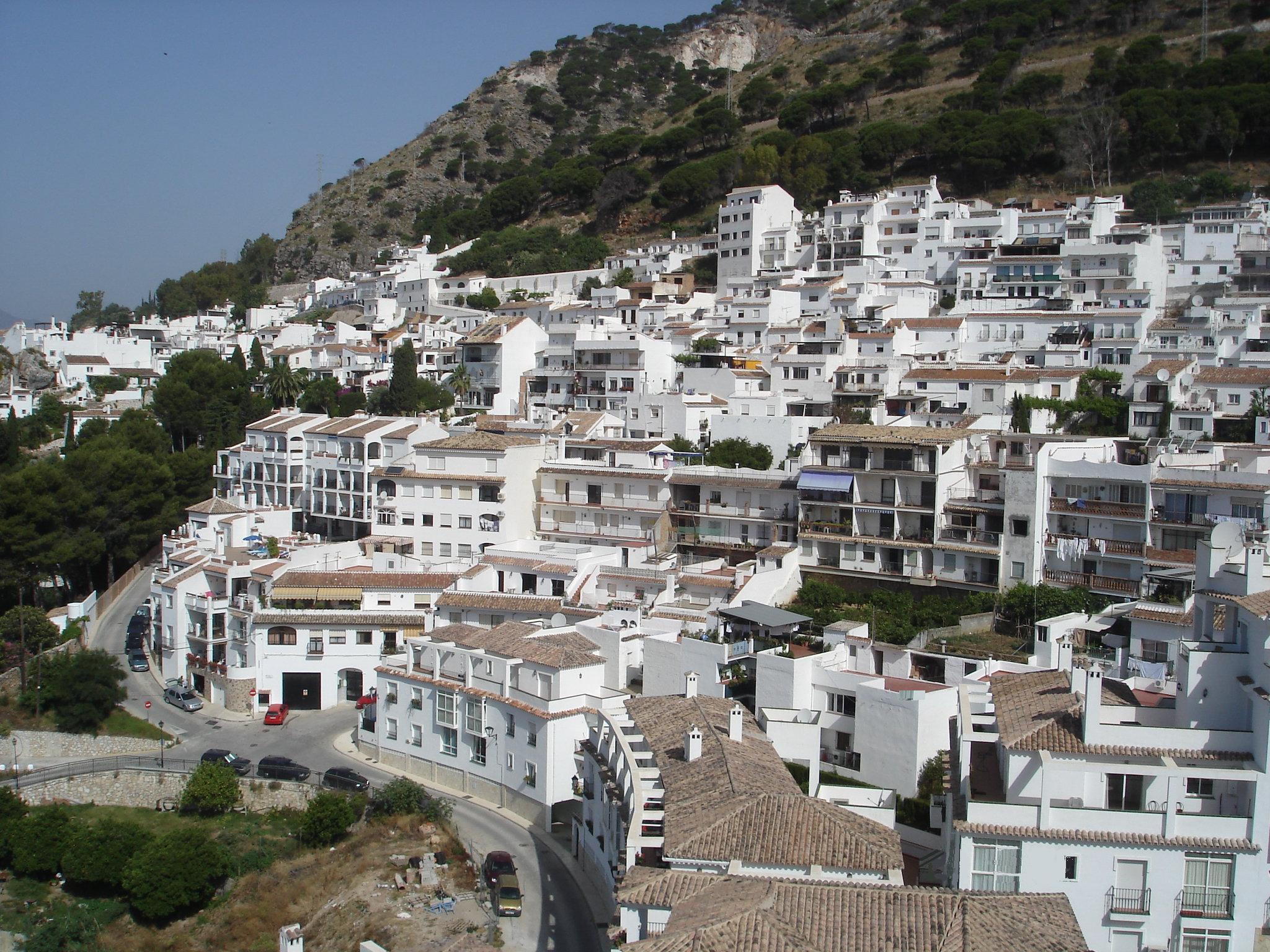
Mijas — The White Village above the Costa del Sol
Mijas is a white village in the hills above the Costa del Sol, in southern Spain. Its donkey taxis, its views and its old streets make it a classic day trip.
Give Mijas half a day, and walk slowly, because the village is small and its sights lie close together. Spend the morning in the white streets of the old village, with the church, the bullring and the square of the Virgin of the Rock, and spend the afternoon on the coast at La Cala, with the beach and the sea. From Mijas, Málaga lies half an hour to the east by road, and Marbella lies half an hour to the west, so the village works as a stop on a tour of the Costa del Sol.
Quick Facts
- Name: Mijas, a municipality in the province of Málaga, in Andalusia.
- Location: on the southern slope of the Sierra de Mijas, above the Costa del Sol.
- Coordinates: 36.5956° N, 4.6372° W.
- Elevation: the village stands about 428 m above sea level.
- Donkey taxis: the first donkey taxi ran in 1962, and about 60 donkey taxis work in the village today.
- Bullring: the Plaza de Toros of Mijas, built in 1900, is oval in shape.
- Language: Spanish is the language of the town, and English is common in hotels and restaurants.
- Time zone: CET (UTC+1), CEST (UTC+2) in summer; the euro is the currency.
- Country context: Spain holds 50 World Heritage properties, and the nearest is Antequera, ref 1501, about 48 km north in a straight line.
Geography of Mijas
Mijas stands on the southern slope of the Sierra de Mijas, a mountain range that rises behind the Costa del Sol, and the old village, Mijas Pueblo, sits on a ledge of the mountain, about 428 m above sea level, with a view over the coast and the sea. The municipality of Mijas holds three parts: the old village in the hills, Las Lagunas, the modern town on the plain below, and La Cala de Mijas, the beach town on the coast, about 7 km by road from the village. The mountain gives the village its white houses, its steep streets and its views, and the coast gives it its beaches, its hotels and its summer crowds, and the two together make Mijas a place of both mountain and sea.
The Sierra de Mijas rises to 1,150 m at its highest point, and its slopes are covered in pine forest, scrub and the white rock of the quarries that once fed the village. The mountain shelters the village from the north wind, and the sea breeze climbs the slope in the afternoon, so the village is cooler than the coast in summer, with the air fresh and the views clear. The old village is built on the slope, with its streets running in steps and its houses painted white, and the balconies and the terraces face south, over the coast, the sea and, on a clear day, the mountains of Africa across the water. The village is a balcony over the Costa del Sol, and its views are the reason that visitors climb the hill.
The climate of Mijas turns on the contrast between the mountain and the coast. The village is cooler than the coast in summer, with the mountain air and the sea breeze keeping the days pleasant, while the coast below is hot, with temperatures above 30 degrees. Winters are mild, with rain from November to March and rare frost, and the sun shines on most days of the year, so the village is a place for the winter as much as for the summer.
The finest months for a visit are April and May, when the hills are green and the flowers are out, and September and October, when the sea is warm and the crowds thin. The summer months are busy, with the village full of visitors, and the winter months are quiet, with the town to itself.
The coast below the village holds the other two parts of the municipality, and they show how Mijas has grown. Las Lagunas, on the plain between the mountain and the sea, is the modern town, with its shops, its markets and its schools, and it has grown fast in the last decades, as the coast filled with houses and hotels. La Cala de Mijas, on the beach, holds the promenade, the restaurants and the long sand, and its old watchtower, built in the sixteenth century, stands on the shore as a reminder of the days when the coast was watched for pirates. The golf courses of Mijas, two eighteen-hole courses in the hills between the village and the coast, draw players from across Europe through the year, and the paths of the Sierra de Mijas climb from the village through the pine forest to the hermitages and the viewpoints, with the sea below and the mountain above.
The wider setting of Mijas is the Costa del Sol, the coast of the province of Málaga, and the village sits in the middle of it. Málaga, the capital of the province, lies about 30 km by road to the east, and Marbella lies about 30 km by road to the west, and both are reached by bus or by car in half an hour. Granada, with the Alhambra, lies about 130 km by road to the northeast, and Seville lies about 200 km by road to the northwest.
Spain as a whole holds 50 World Heritage properties, and the nearest to Mijas is Antequera, ref 1501, about 48 km to the north in a straight line, with its dolmens and its mountain. Mijas is a village of the coast, yet its mountain sets it apart from the towns below.

The view of Mijas Costa from the park in Mijas Pueblo — CC BY 4
History of Mijas
The history of Mijas reaches back to the Phoenicians and the Romans, when the town was known as Tamisa, and the Romans worked the marble and the stone of the Sierra de Mijas. The Moors held the town for centuries, and called it Mixa, and the old village, with its white houses and its narrow streets, keeps the shape of the Moorish town, with the castle on the hill and the lanes running down the slope. The Moors built the walls and the castle, and the town lived on its agriculture, its quarries and its fishing, with the mountain above and the sea below. The history of Mijas is the history of Andalusia, of Romans, Moors and Christians, each leaving a layer on the town.
In 1487, Mijas was taken by the Catholic monarchs, Ferdinand and Isabella, with the city of Málaga, in the Reconquista, and the Moors who stayed were driven out or forced to convert. The Church of the Immaculate Conception was built on the site of the old mosque, and it stands in the heart of the old village, with its tower looking over the coast. The centuries that followed were quiet, and Mijas was a farming village, with its people living on agriculture, on the rearing of animals and on the quarrying of stone, and the donkeys of the village carried the stone down the mountain paths to the coast. The village changed little for centuries, and its white houses, its church and its square kept the shape of the old town.
The nineteenth century brought the bullring, built in 1900, in an oval shape, and the town grew with the quarries and the farms. The twentieth century brought the tourists, and the Costa del Sol grew from the 1950s, with hotels, beaches and visitors from across Europe. The donkey taxis of Mijas began in 1962, when the mayor of the time, Salvador Jiménez Leiva, asked a local man, Julián Núñez, to bring a donkey to the Málaga Fair and give rides, and the idea caught on, until the village held about 60 donkey taxis, with their own stop at the entrance to the old town.
In 1963, Julián and his brother Antonio started giving rides in Mijas with two donkeys, and the donkey taxi became the symbol of the village. In 2015, the town council honoured Julián Núñez after his death with the Mijas Tourism Award, as the creator of the donkey rides.
In 1969, the old village of Mijas was declared a historic-artistic site, and the town began to protect its white houses, its streets and its squares. The declaration kept the white houses, the flower pots and the narrow streets of the old village intact, while the new building went to Las Lagunas and La Cala, on the plain and the coast. The years since have brought the growth of Las Lagunas and La Cala de Mijas, the modern parts of the municipality, with their shops, their hotels and their beaches, while the old village has kept its character, with its donkey taxis, its flower pots and its views.
Colomares Castle, a tribute to Christopher Columbus, was built between 1987 and 1994 by Esteban Martín Martín, in a mix of styles, with towers, arches and a chapel, and it stands on the road from the village to the coast. The castle is a fantasy, not a history, yet it draws visitors, and it shows the Mijas of the tourist age.
Today Mijas is a municipality of three parts, the old village in the hills, the modern town on the plain, and the beach town on the coast, and its life turns on the visitors who come for the sun, the sea and the white village. The old village holds the donkey taxis, the church, the bullring and the square, and its streets are full of flower pots, craft shops and cafés. Mijas shows the Costa del Sol at its most charming, a white village above the sea, with the mountain behind and the coast below, and a place where the old Andalusia survives beside the new. A visit to Mijas is a visit to the village that the coast grew around, and the town rewards the traveller who climbs the hill.

A view of Mijas — CC BY 3
Travel to Mijas
The bus from Fuengirola is the way to reach Mijas, because the village has no station of its own. The bus numbered M-122 runs from Fuengirola to Mijas Pueblo in about thirty minutes, with services through the day, and the ride climbs the mountain road from the coast to the village, with views over the sea. Buses also run from Málaga to Mijas, and from the towns of the coast, and the bus stop in the village stands near the square and the donkey taxis. The bus is the practical choice for the village, because the road is steep and the parking in the old town is limited, so most visitors arrive by bus and walk the village on foot.
Málaga Airport lies about 30 km by road to the east of Mijas, and the bus and the taxi both run from the airport to the village, with the journey taking about forty minutes. Drivers take the A-7 motorway along the coast and then the road up the mountain to the village, or take the AP-7 toll motorway, and the drive from the airport takes about the same time as the bus. The road up the mountain is winding, with hairpins and views over the coast, and the drive is one of the finest on the Costa del Sol. Parking in the village is limited, with car parks at the edge of the old town, and the streets of the village are narrow, so drivers should park and walk.
Inside Mijas, the old village is best explored on foot, because the streets are steep, stepped and narrow, and the sights lie close together. From the square of the Virgin of the Rock, walk to the church, the bullring and the viewpoint, and then down the lanes of flower pots and craft shops to the lower streets. The donkey taxis wait at the entrance to the old town, and the horse carriages wait in the square, and both carry visitors on a slow tour of the village. The walk through the village takes an hour, and the views from the terraces and the viewpoints, over the coast and the sea, repay the climb.
Food in Mijas is the food of Andalusia, with fried fish, goat cheese and the dishes of the mountains. The restaurants of the old village serve the fish of the coast, the meat of the hills and the salads of the gardens, with the wine of Málaga and the beer of the region. The goat cheese of Mijas, made in the hills, is served with honey and bread, and the fried fish of La Cala, with the anchovies and the sardines of the coast, is the dish of the beach town.
The cafés of the square serve coffee and the pastries of Andalusia, and the bars of the village serve tapas through the day. Visitors should try the fried fish at La Cala, the goat cheese in the village, and a glass of the sweet wine of Málaga.
Stay in the old village for the views and the quiet, with the guesthouses and the small hotels in the white streets, or stay on the coast at La Cala for the beach and the hotels. The village suits a night of its own, because the town is at its finest in the evening, when the day visitors have gone and the streets are quiet, with the lights of the coast below. From Mijas, the day trips are Málaga, half an hour to the east by road, with its old town, its castle and its museums, Marbella, half an hour to the west, with its old town and its harbour, and Ronda, an hour to the northwest, with its gorge and its bridge. A week on the Costa del Sol gives the coast its due, and a day in Mijas gives the village itself a fair measure.
Notable Places in Mijas
The Plaza de la Virgen de la Peña, the square of the Virgin of the Rock, is the heart of the old village, and the donkey taxis wait at its edge. The square holds the sanctuary of the Virgin of the Rock, a small chapel cut into the rock, with the statue of the patron of Mijas, and the viewpoint beside it looks over the coast and the sea. The square is the meeting place of the village, with cafés, restaurants and craft shops around it, and the donkey monument stands in the square, in honour of the donkey taxis. The square is the first place that visitors see, and the last place they leave, and its views are the finest in the village.
The Church of the Immaculate Conception stands in the heart of the old village, built on the site of the old mosque, with its tower looking over the coast. The church was built after the conquest of 1487, and its interior holds paintings, sculptures and a fine altar, with the light falling through the windows onto the stone. The church is the parish church of the village, and its feast, on 8 December, fills the square with processions and music. The church shows the Mijas of the Christians, the town that rose on the site of the mosque, and its tower is the landmark of the village.
Colomares Castle stands on the road from the village to the coast, and it is a tribute to Christopher Columbus, built between 1987 and 1994 by Esteban Martín Martín. The castle mixes the styles of Spain, with towers, arches, a chapel and a ship, and its stones tell the story of the voyage of Columbus, with the three ships, the three cultures of Spain, and the pages of the history. The castle is a fantasy, built by one man over seven years, and its towers and its arches rise above the road, with views over the coast. A visit to the castle takes an hour, and it shows the Mijas of the tourist age, a place of dreams and of stone.
The bullring of Mijas, the Plaza de Toros, was built in 1900, and it is oval in shape, one of the few oval bullrings in Spain. The bullring stands on a terrace above the village, with views over the coast, and its museum holds the costumes, the posters and the history of the bullfights of Mijas. The bullring is still used for fights in the summer, and its terrace is a viewpoint in its own right, with the sea below and the mountains behind. The bullring shows the Mijas of the nineteenth century, the town of the quarries and the farms, and its oval shape is the mark of the village.
La Cala de Mijas is the beach town of the municipality, on the coast about 7 km by road from the village, with a long beach, a promenade and the restaurants of the coast. The beach holds the sand, the sea and the sunbeds of the summer, and the promenade runs along the coast, with cafés, bars and shops. The old watchtower of La Cala, built in the sixteenth century, stands on the beach, and the town holds the church of the village and the market of the coast. La Cala is the Mijas of the beach, and a day there, with the sea and the sun, completes the visit to the village above.
Frequently Asked Questions
When is the best time of year for Mijas?
Spring, from March to May, is the finest season in Mijas, when the almond trees flower on the mountain and the days are warm without being hot. Autumn, from September to November, brings the warm sea, the quiet streets and the harvest of the olives and the grapes. Summer is busy on the coast, though the village, 428 m above the sea, stays cooler than the beach, and winter is mild, with the sun shining on most days.
How many days does a visit to Mijas need?
Half a day gives Mijas a fair measure, with the morning in the old village and the afternoon on the coast at La Cala. Stay the night if you can, because the village is at its finest in the evening, when the day visitors have gone and the streets are quiet, with the lights of the coast below. Add a day for Málaga, and a day for Marbella, and the trip becomes a proper tour of the Costa del Sol.
How do I travel from Fuengirola or Málaga to Mijas?
Take the bus numbered M-122 from Fuengirola to Mijas Pueblo, which takes about thirty minutes and climbs the mountain road from the coast. Buses also run from Málaga to Mijas, and the journey takes about an hour, with the bus running along the coast and then up the mountain. Drivers can take the A-7 motorway along the coast and then the road up to the village, and the drive from Málaga Airport takes about forty minutes.
Are the donkey taxis of Mijas still running?
The donkey taxis still run in Mijas, with about 60 donkeys working in the village, and their stop stands at the entrance to the old town. The first donkey taxi ran in 1962, and the rides have run ever since, carrying visitors through the white streets of the village. The donkey taxis are a symbol of Mijas, and the town honours their creator, Julián Núñez, with a monument in the square and an award in his name.
Is Mijas only the village?
The old village is the most famous part of Mijas, yet the municipality holds far more than a single village. Las Lagunas, the modern town on the plain, holds the shops, the markets and the life of the municipality, and La Cala de Mijas, the beach town on the coast, holds the beach, the promenade and the restaurants of the sea. The mountain, the plain and the coast together make Mijas, and a visit should take in all three.
Can I visit the coast from Mijas in the same trip?
La Cala de Mijas lies about 7 km by road from the village, and the bus runs between the two in minutes. The beach at La Cala offers swimming, sunbathing and the restaurants of the coast, and the promenade runs along the sea. Give the village the morning and the coast the afternoon, and the day shows both faces of Mijas, the white village in the hills and the beach town on the sea.
Verified
- Q492744 is a municipality of Spain, at 36.5956° N and 4.6372° W.
- The village of Mijas stands about 428 m above sea level.
- The first donkey taxi of Mijas ran in 1962, and about 60 donkey taxis work in the village today.
- The bullring of Mijas was built in 1900 and is oval in shape.
- Mijas was taken by Ferdinand and Isabella in 1487, with the city of Málaga.
- The old village of Mijas was declared a historic-artistic site in 1969.
- Colomares Castle was built between 1987 and 1994.
- Antequera was inscribed by UNESCO in 2016, ref 1501, criteria (i)(iii)(iv), and lies about 48 km north of Mijas in a straight line.
- Spain holds 50 World Heritage properties.
Sources
- Mijas — Wikidata Q492744 (https://www.wikidata.org/wiki/Q492744)
- Mijas — Wikipedia (https://en.wikipedia.org/wiki/Mijas)
- Antequera — UNESCO (https://whc.unesco.org/en/list/1501/)
- Mijas — Tourist Office (https://turismo.mijas.es/en/)
Unverified
- The current population of Mijas has not been checked on the municipality page.
- Ticket prices for the donkey taxis have not been checked on the town page.
- Current timetables for the bus numbered M-122 have not been checked on the transport page.
- Hotel prices in Mijas Pueblo and La Cala have not been checked on the hotel pages.
Illustrations
- Hero: Mijas. Free image: https://upload.wikimedia.org/wikipedia/commons/8/8a/Mijas_Andalousie_%281%29.JPG — CC BY-SA 3.
- In body, Mijas: The view of Mijas Costa from the park in Mijas Pueblo. Free image: https://upload.wikimedia.org/wikipedia/commons/f/f2/Mijas-muralla-garden-path-coastal-view.webp — CC BY 4.
- In body, Mijas: A view of Mijas. Free image: https://upload.wikimedia.org/wikipedia/commons/3/3a/Mijas_10.jpg — CC BY 3.