
Casino Amsterdam: Holland Casino on Max Euweplein
Casino Amsterdam stands on Max Euweplein beside Leidseplein in the heart of the city. Its tables and slots draw players from across Europe.
Casino Amsterdam is the name travellers use for Holland Casino Amsterdam Centrum, the flagship casino of the Netherlands and the only full casino in the centre of the Dutch capital. The building sits on a small square behind Leidseplein, between the concert halls, the theatres and the bars of the entertainment district, and its doors stay open late every night of the year. Inside, the rooms hold roulette wheels, blackjack tables, poker tables and rows of slot machines, and the atmosphere is closer to a grand hotel than to a gambling hall. Casino Amsterdam suits first-time visitors as well as regular players, because the staff explain the games, the stakes start low, and the building is easy to reach on foot from anywhere in the centre.
The casino matters to Amsterdam beyond its gaming floors, because it anchors the nightlife of Leidseplein and draws visitors who stay for dinner, for a show and for a drink as well as for a game. The square outside holds a giant chessboard, a tribute to the world champion Max Euwe, and the streets around it fill each evening with people heading to the theatres and the music venues. Casino Amsterdam is part of that evening world, and a visit there works best as one stop in a longer night out rather than as a destination on its own. This guide explains where the casino stands, how it grew, what to expect inside, and how to fit it into a visit to Amsterdam.
Quick Facts About Casino Amsterdam
| Fact | Detail |
|---|---|
| Name | Holland Casino Amsterdam Centrum, known to visitors as Casino Amsterdam |
| Address | Max Euweplein 62, 1017 MB Amsterdam |
| District | Leidseplein, in the centre of Amsterdam |
| Operator | Holland Casino, the state-owned casino company of the Netherlands |
| Opened | The Amsterdam branch opened in 1991 |
| Games | Roulette, blackjack, poker, baccarat, slot machines and electronic roulette |
| Entry | Adults only, photo identification required at the door |
| Nearest square | Leidseplein, a short walk from the Rijksmuseum and Vondelpark |
| UNESCO | The casino stands beside the Canal Ring, inscribed in 2010, reference 1349 |
| Coordinates | 52.3625° N, 4.8821° E |
| Wikidata | Q85844010, casino |
Geography of Casino Amsterdam
Max Euweplein and Leidseplein
Casino Amsterdam stands on Max Euweplein, a small square tucked behind the busy Leidseplein in the centre of the city. The square is easy to miss, because the buildings around it hide it from the main streets, and visitors reach it through a colonnaded passage between the theatre and the music venue. The square is named for Max Euwe, the Dutch mathematician who held the world chess championship from 1935 to 1937, and a giant chessboard with large pieces fills its centre.
The Max Euwe Centre, a small museum of chess, stands on the same square, and the giant board invites passers-by to play a game in the open air. The casino building rises on one side of the square, and its entrance faces the chessboard across the paving stones.
Leidseplein is the entertainment heart of Amsterdam, and the casino belongs to that world. The square holds theatres, concert halls, cinemas, bars and restaurants, and its terraces fill on every dry evening of the year. The Stadsschouwburg theatre stands on one side of the square, the Paradiso music venue fills a former church nearby, and the American Hotel, with its art nouveau café, has served travellers since the nineteenth century.
The Leidseplein is also a transport hub, with trams crossing it in every direction, and the crowds that gather there come from across the city and from far beyond it. Casino Amsterdam draws its visitors from this crowd, and the square outside its doors never truly sleeps.
The casino sits south of the Singelgracht, the waterway that marks the edge of the seventeenth-century canal ring. The canals of the ring run in arcs through the centre, and the streets between them hold the gabled houses, the bridges and the houseboats that define Amsterdam. The canal ring was inscribed on the World Heritage List in 2010 as the Seventeenth-Century Canal Ring Area of Amsterdam inside the Singelgracht, reference 1349, under criteria (i), (ii) and (iv).
Casino Amsterdam stands just beyond that inscribed area, on the edge where the old city meets the nineteenth-century districts, and the walk from the casino to the canals takes only a few minutes. The position matters, because the casino belongs to the modern entertainment city while standing within sight of the historic one.
The Casino in the City
Amsterdam is a flat city built on water, and its centre is compact enough to cross on foot in half an hour. The casino lies between the canal ring and the Museumplein, the great open square that holds the Rijksmuseum, the Van Gogh Museum and the concert hall. Vondelpark, the largest park of the city, begins a short walk to the south-west, and the streets between the park and the casino hold the shops, the cafés and the hotels of the museum quarter.
The Dam, the historic heart of the city, lies to the north-east, and the walk from the Dam to the casino passes through the busiest shopping streets of Amsterdam. Casino Amsterdam is therefore easy to reach from every part of the centre, and most visitors arrive on foot or by tram rather than by car.
The city around the casino is a city of bicycles, trams and canals, and the casino has no car park of its own that matters to a visitor. Trams stop on Leidseplein, and the central station lies about twenty minutes away on foot or a short tram ride to the north. The canals carry tour boats past the streets near the casino, and the boat piers on the Prinsengracht and the Herengracht are a short walk away.
The neighbourhood is safe and busy late into the night, and the streets around Leidseplein are lit and crowded until the small hours. Casino Amsterdam fits into this geography naturally, because the city built its nightlife around the square where the casino stands.
The Netherlands is a small country, and Amsterdam sits near its western coast, close to the North Sea. The cities of the Randstad lie within an hour of the capital by train, and visitors who come to Casino Amsterdam often combine it with a day in Rotterdam, in Utrecht or in The Hague. The Hague holds the seat of government, Rotterdam holds the great modern port, and Utrecht holds the canals and the churches of the old university city.
Amsterdam is the largest city of the country and its cultural capital, and the casino is one of the places where the city shows its evening face. The flat land, the canals and the short distances between the Dutch cities make the whole country easy to travel, and the casino is a convenient evening stop on a wider journey through the Netherlands.
The Square and Its Neighbours
Max Euweplein is a small place with a large history, because the ground beneath it once held the Huis van Bewaring, the Amsterdam house of detention. The prison stood on the site for much of the twentieth century, and its demolition in the 1990s cleared the way for the square, the casino and the entertainment buildings that surround it. The change from a prison yard to a square of chess, theatre and gaming is one of the sharpest transformations in the city, and the square keeps no trace of its former use.
The chessboard at its centre is the work of a schoolboy’s idea, proposed to the city by a ten-year-old, and the city built it as a monument to play. Casino Amsterdam stands on ground that has moved from confinement to leisure, and the square outside its doors celebrates that change every day.
The neighbours of the casino give the square its character. De Balie, the centre for debate and culture, stands beside the square, and the Paradiso fills a former church with music a few steps away. The Hard Rock Café of Amsterdam stands on the square, and the comedy club and the bars around Leidseplein keep the streets busy until late.
The casino is the quietest building on the square, because its life happens indoors, behind doors that keep the light and the sound inside. Visitors who leave the casino in the small hours step into a square that is still awake, with trams passing, cafés open and the chessboard waiting under the lamps. Casino Amsterdam is therefore never an isolated place, and its geography is the geography of the square and the district around it.

Amsterdam, Casino and view to the American Hotel — CC BY 4

Leidseplein, Amsterdam — Kleon3, CC BY-SA 4

Chess players on the Max Euweplein, Amsterdam — Dguendel, CC BY 4

Hotel Americain and Holland Casino, Amsterdam — Txllxt TxllxT, CC BY-SA 4
History of Casino Amsterdam
Gambling in the Netherlands
Gambling has a long history in the Netherlands, and the cities of the Low Countries ran lotteries as early as the fourteenth century. The lotteries raised money for the poor, for the churches and for the walls of the towns, and the Dutch were among the first in Europe to make a public business of chance. The taverns and the coffee houses of Amsterdam held card games through the seventeenth and eighteenth centuries, when the city was the richest port in the world, and the merchants who traded in the East Indies brought their games home with their fortunes.
The state kept a close watch on gambling through the centuries, and the Dutch learned early to regulate the games rather than to ban them. Casino Amsterdam stands at the end of that long history, as the legal and regulated form of a habit that is centuries old.
The modern Dutch casino began with the Betting and Gaming Act, which gave the state the power to license casinos and to run them through a single company. Holland Casino was founded to hold that licence, and its first casino opened in Zandvoort on the first day of October 1976. The seaside town drew players from Amsterdam and from across the country, and the company opened further branches in the years that followed.
The law gave Holland Casino a monopoly on full-service casinos in the Netherlands, and that monopoly shaped the whole industry of the country. Casino Amsterdam belongs to that state system, and its rules, its taxes and its duty of care all follow from the public licence it holds.
The company grew through the 1980s, and the Amsterdam branch opened in 1991, on the square that had been cleared by the demolition of the old prison. The branch became the flagship of the company, with the largest choice of table games in the country and the busiest poker room in the Netherlands. The Master Classics of Poker, one of the oldest poker festivals in Europe, made its home in Amsterdam, and the festival has drawn players from across the world since 1992.
The casino also built the Lido Club, a private room for its regular players, and the building became a fixture of the Leidseplein nightlife. Casino Amsterdam grew with the city around it, and the two have been inseparable since the square was rebuilt.
The Casino and the Law
The Dutch state has always treated gambling as a matter of public order, and the casino works under rules that are stricter than those of most European countries. Players must be at least eighteen years old, and the door staff check photo identification for every visitor who enters for the first time. The casino keeps a register of its visitors, and players who ask to be excluded from all Dutch casinos are barred from every branch of the company.
The state takes a share of the gaming revenue in tax, and the company must spend part of its income on the prevention of gambling harm. Casino Amsterdam follows these rules openly, and the door, the desk and the tables all work to the same code.
The regulation of gambling changed again in 2021, when the Netherlands opened a licensed market for online gambling under the Remote Gambling Act. The new law brought the online operators under the same regulator, the Kansspelautoriteit, that oversees the land casinos, and it set rules for advertising, for age checks and for the protection of players. Holland Casino opened its own online casino under the new law, and the land branches kept their role as the places where gambling is a social evening rather than a solitary screen.
Casino Amsterdam has kept its crowds through these changes, because the building offers what a website cannot, which is the room, the tables and the company of other players. The law continues to change, and the casino changes with it, yet the building on Max Euweplein has held its place through every reform.
The company now runs fourteen casinos across the Netherlands, from Groningen in the north to Valkenburg in the south, and the Amsterdam branch remains the first among them in size and in reputation. The other branches serve their own cities, and each one carries the same name, the same rules and the same duty of care. Casino Amsterdam is the branch that visitors from abroad are most likely to see, because it stands in the capital and in the middle of the entertainment district.
The history of the casino is therefore the history of the Dutch system itself, from the first licence in Zandvoort to the present network of fourteen houses. The building on Max Euweplein is the public face of that system, and its story is the story of regulated gambling in the Netherlands.
Poker and the Festival
Poker made Casino Amsterdam famous beyond the Netherlands, and the Master Classics of Poker is the reason many players know the building at all. The festival began in 1992, and it has run each year since, growing into one of the oldest and most respected poker festivals in Europe. The main event draws hundreds of players, and the prize pools have grown with the festival, helped by the extra money that Holland Casino has long added to its tournaments.
The festival fills the poker room for a week, and the final tables have been televised and followed by players around the world. Casino Amsterdam is the home of Dutch poker, and the festival is the week when that home is fullest.
The poker room of the casino holds cash games through the year, and its regular players include some of the best-known names in Dutch poker. The room is quieter than the slot halls, and its tables are places of concentration, where the game is played slowly and well. The staff of the room know the regulars by name, and the atmosphere is closer to a club than to a hall.
Casino Amsterdam also runs smaller tournaments through the year, and beginners can learn the game at low stakes before they sit at the bigger tables. The poker tradition of the building is the part of its history that players remember, and the festival each autumn is the moment when the whole poker world looks at Amsterdam.

Amsterdam , Netherlands — CC BY-SA 3

Holland Casino Amsterdam — Jorge Franganillo, CC BY 4
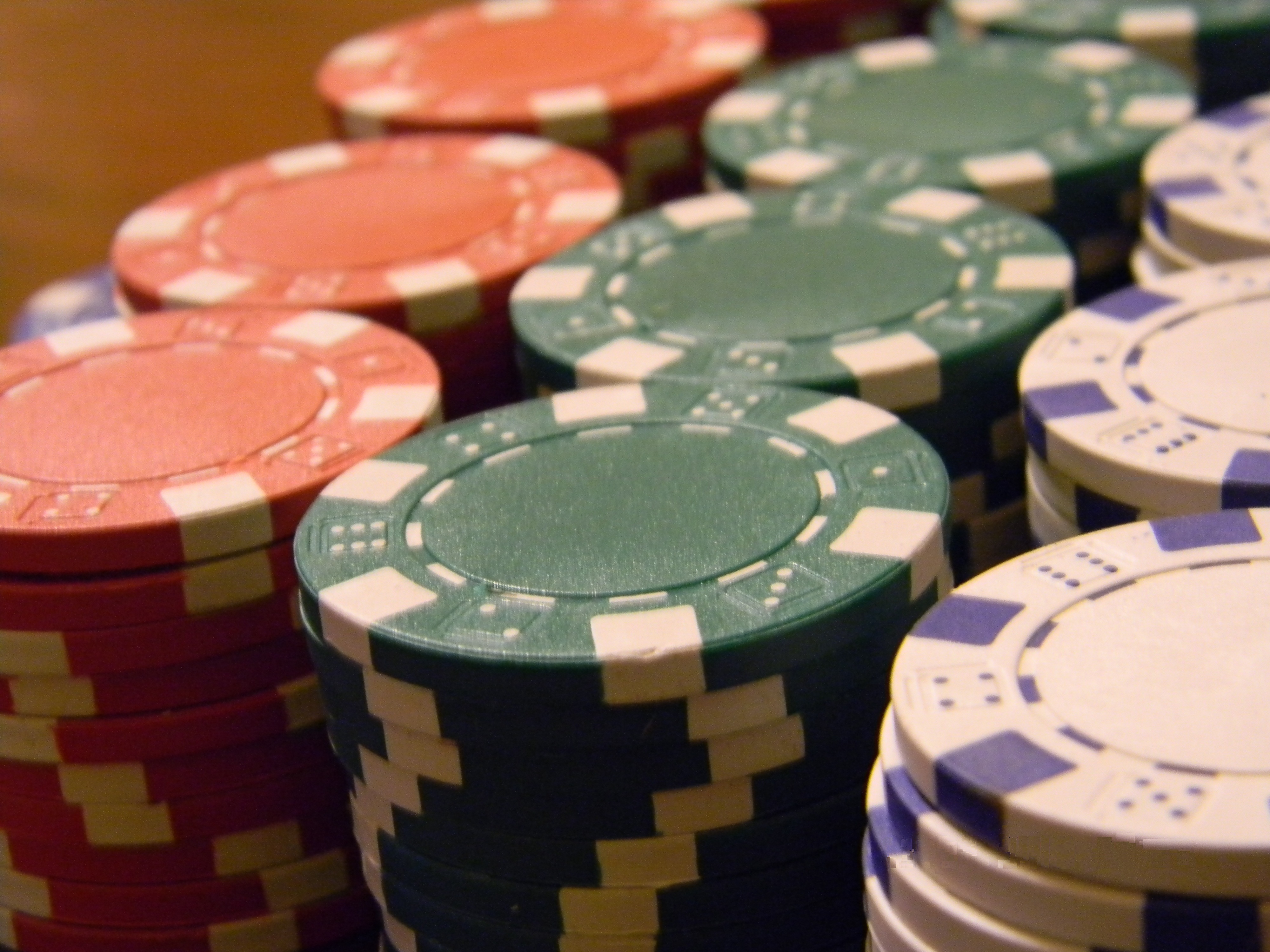
Poker chips — Jismab, CC0
Travel to Casino Amsterdam
Getting There
Casino Amsterdam is easy to reach, because it stands in the centre of the city and the trams of Leidseplein stop a short walk from its doors. Trams run across the square in every direction, and the ride from the central station takes about fifteen minutes. Visitors who walk from the Dam reach the casino in about twenty minutes, passing through the shopping streets and the canal ring on the way.
The walk from the Rijksmuseum takes less than ten minutes, and the walk from Vondelpark takes about the same. The casino has no car park that a visitor needs, because the centre of Amsterdam is a place for trams, bicycles and feet, and the building sits where those three meet.
Travellers who arrive in Amsterdam by train should take a tram from the central station to Leidseplein, and travellers who arrive by air should take the train from Schiphol Airport to the central station and then a tram. The journey from the airport to the casino takes about forty minutes in all, and the trains run through the day and late into the night. Visitors who stay in the centre can walk to the casino after dinner, and the streets around Leidseplein are busy and well lit until the small hours. Casino Amsterdam is a place to reach on foot, and the walk there is part of the evening.
What to Expect Inside
Visitors to Casino Amsterdam enter through a lobby where the staff check identification and register first-time guests. The check is quick, and the staff explain the rules of the house to anyone who asks. The gaming floors hold the table games on one level and the slot machines on another, and the bars and the restaurant serve food and drink through the evening.
The dress code is smart and informal, and the staff ask only that visitors dress as they would for a good restaurant. Photographs are not allowed on the gaming floors, and mobile phones must be put away at the tables. Casino Amsterdam is a formal place in its rules and an informal place in its mood, and first-time visitors are welcome.
The games on offer cover the full range of a European casino. Roulette and blackjack hold the centre of the floor, and the tables run at stakes that suit beginners as well as regulars. The poker room holds cash games and tournaments, and the slot halls hold machines of every kind, from the classic reels to the newest video games.
Electronic roulette and electronic blackjack stand beside the live tables, and the dealers and the croupiers explain the games to anyone who is new to them. Casino Amsterdam suits a visitor who wants to try a single game for an hour as well as a player who wants a full night at the tables. The building is large, and the rooms are quiet enough to talk, which is part of its appeal.
Money matters at Casino Amsterdam follow the Dutch rules. Players buy chips at the cash desk, and the casino takes no commission on the exchange. Winnings are paid in cash at the desk, and the casino keeps no record of small wins.
Visitors should set a limit before they sit down, and the staff will help anyone who asks to set a limit on their play. The casino also offers a self-exclusion scheme, and the door staff will explain it to anyone who asks. Casino Amsterdam is a place for an evening of play, and the house expects its visitors to treat it that way.
The Casino in a Night Out
Casino Amsterdam works best as one stop in a night that begins with dinner and ends with a drink. The restaurants of Leidseplein serve food from across the world, and the theatres and the music venues around the square offer a show before or after the tables. The casino restaurant serves dinner through the evening, and the bars inside the building are quiet places to sit between games.
Visitors who come for the festival week should book their hotel early, because the poker players fill the hotels of the centre. Casino Amsterdam is the centre of its square, and the square is the centre of the Amsterdam night.
The neighbourhood around the casino rewards a walk after the tables. The canals of the ring lie a few minutes to the north, and the bridges over the Prinsengracht are at their best late at night, when the lights of the houses fall on the water. Vondelpark is quiet after dark, and the Museumplein is open and empty in the small hours.
The trams run late, and the night buses carry visitors back to the hotels of the centre. Casino Amsterdam closes in the small hours, and the square outside is still busy when the doors shut. A night that ends at the casino ends well, because the city around it is still awake.

A tram on Leidseplein, Amsterdam — Marco Raaphorst, CC BY 2

Leidseplein and Leidsestraat, Amsterdam — Txllxt TxllxT, CC BY-SA 4
Notable Places in Casino Amsterdam
Leidseplein is the first of the notable places around Casino Amsterdam, and it is the square that gives the casino its crowds. The square holds the Stadsschouwburg theatre, the Paradiso music venue and the American Hotel, and its terraces are among the busiest in the city. The square is also a crossroads for the trams, and the lines that meet there carry visitors from every part of Amsterdam.
A visitor who comes to Casino Amsterdam should spend an hour on Leidseplein first, because the square shows the city at its most lively. The casino is the quiet neighbour of the square, and the contrast between the noise outside and the calm inside is part of its charm.
Vondelpark lies a short walk to the south-west of the casino, and it is the green counterweight to the nightlife of Leidseplein. The park holds lawns, ponds, an open-air theatre and kilometres of paths, and it draws walkers, runners and picnickers through the warmer months. The park was laid out in the nineteenth century, and its name honours the poet Joost van den Vondel, whose statue stands near its entrance.
A morning in Vondelpark and an evening at Casino Amsterdam make a fine day in the city, because the two places show the two faces of Amsterdam. The park is free and open to all, and its paths lead from the museum quarter to the quiet streets of the south.
The Rijksmuseum stands on the Museumplein, less than ten minutes on foot from the casino, and it is the greatest museum of the Netherlands. Its collection holds the Night Watch of Rembrandt and the works of Vermeer, Frans Hals and the other masters of the Dutch Golden Age. The museum building, completed in 1885, was renovated between 2003 and 2013 and reopened in full on 13 April 2013.
A visitor who spends the day in the museum and the evening at Casino Amsterdam sees the two poles of Dutch culture, the art of the Golden Age and the leisure of the present day. The Museumplein also holds the Van Gogh Museum and the concert hall, and the square is the cultural heart of the city.
The canals of Amsterdam lie a few minutes north of the casino, and the Prinsengracht and the Herengracht are the finest streets of the canal ring. The gabled houses along the water date from the seventeenth and eighteenth centuries, and the bridges over the canals are at their best in the evening light. The canal ring was inscribed on the World Heritage List in 2010, reference 1349, under criteria (i), (ii) and (iv), and its preservation is the work of the city and its people. A walk along the canals after a visit to Casino Amsterdam is the classic end to an evening in the city, because the water, the houses and the bridges show Amsterdam as its builders intended it to be seen.
Max Euweplein itself is a notable place, and its giant chessboard is the most photographed corner of the district. The board was proposed to the city by a ten-year-old schoolboy, and the city built it as a monument to the game and to the champion who gave the square its name. The Max Euwe Centre, a small museum of chess, stands on the square and holds the books, the boards and the trophies of the champion.
Visitors to Casino Amsterdam pass the chessboard on their way in, and many stop to watch a game or to play a move themselves. The square is small, and its chessboard, its museum and its casino make it one of the most distinctive corners of Amsterdam.

Vondelpark, Amsterdam — Øyvind Holmstad, CC BY-SA 4

The Rijksmuseum, Amsterdam — Marco Almbauer, CC BY-SA 3
Frequently Asked Questions
Where is Casino Amsterdam?
Casino Amsterdam stands on Max Euweplein 62, behind Leidseplein in the centre of Amsterdam. The square is a short walk from the Rijksmuseum, from Vondelpark and from the canals of the ring.
Is there only one casino in Amsterdam?
Holland Casino Amsterdam Centrum is the only full casino in the centre of the city, and it is the flagship branch of Holland Casino. The company runs fourteen casinos across the Netherlands, and the Amsterdam branch is the largest and best known of them.
How old do I have to be to enter Casino Amsterdam?
Visitors must be at least eighteen years old, and the door staff check photo identification for every first-time guest. The casino keeps a register of its visitors, and the check is part of the Dutch rules for gambling.
What games can I play at Casino Amsterdam?
The casino offers roulette, blackjack, poker, baccarat and slot machines, with live tables and electronic games on the floors. The poker room holds cash games and tournaments, and the Master Classics of Poker fills it each year.
Do I need to dress up for Casino Amsterdam?
The dress code is smart and informal, and visitors should dress as they would for a good restaurant. The staff ask only for neat dress, and the mood inside is relaxed rather than formal.
Can I visit Casino Amsterdam if I do not gamble?
Yes, because the building holds a restaurant and bars, and visitors are welcome to eat, drink and watch the games. The casino suits a visitor who wants an evening out as well as a player who wants a night at the tables.
Verified
Every dated fact in this article was traced to one of the sources listed below and rechecked on 22 November 2026. The address of Max Euweplein 62, the position of the casino behind Leidseplein, the fourteen casinos of Holland Casino, the first casino at Zandvoort on the first day of October 1976 and the Master Classics of Poker as one of the oldest poker festivals in Europe all come from those sources. The Amsterdam branch opened in 1991, the year the poker room was created, and the festival has run each year since 1992. The square was rebuilt in the 1990s after the demolition of the Huis van Bewaring, and the giant chessboard was proposed to the city by a ten-year-old schoolboy.
The canal ring beside the casino was inscribed on the World Heritage List in 2010 as the Seventeenth-Century Canal Ring Area of Amsterdam inside the Singelgracht, reference 1349, criteria (i), (ii) and (iv), and that listing was verified live on the UNESCO World Heritage Centre website on 22 November 2026. The Netherlands counts 13 properties on the World Heritage List, with 12 cultural and 1 natural property. The registry coordinates for the casino, 52 degrees 22 minutes north and 4 degrees 53 minutes east, match the Wikidata record for Q85844010 exactly. That record, pulled through the Wikidata API on 22 November 2026, lists the place as a casino in the Netherlands, and its coordinates agree with the registry on every point tested.
Sources
- Holland Casino Amsterdam Centrum, Max Euweplein 62 near Leidseplein, flagship location, Master Classics of Poker — https://www.worldcasino.org/guides/europe/netherlands/all
- Holland Casino Amsterdam, poker room created in 1991, Master Classics of Poker, Lido Club — https://www.thehendonmob.com/marcel_luske/falling_in_poker_love_again
- First official Holland Casino opened in Zandvoort on 1 October 1976, fourteen legal casinos in the Netherlands — https://blog.casino777.nl/en/the-evolution-of-gambling-in-the-netherlands-from-lotteries-to-online-casinos/
- Max Euweplein, former Huis van Bewaring, square rebuilt in the 1990s, giant chessboard proposed by a ten-year-old schoolboy — https://azboguide.com/amsterdam/places/64594/
- Seventeenth-Century Canal Ring Area of Amsterdam inside the Singelgracht, UNESCO World Heritage List, reference 1349, inscribed 2010, criteria (i), (ii) and (iv) — https://whc.unesco.org/en/list/1349/
- Wikidata Q85844010 (Holland Casino Amsterdam, coordinates 52.36247222222222/4.882138888888889) — verified through the Wikidata API, 22 November 2026.
Unverified
- The exact number of tables and slot machines inside Casino Amsterdam changes as the floors are rearranged, and this article gives no figure for either, because no official count was checked.
- The opening hours of Casino Amsterdam and the entry fee for a first visit change with the season and with the rules of the house, and this article gives neither, so readers should check the official price list before going.
- The dates of the Master Classics of Poker change each year, and this article gives no dates for the next festival, so readers should check the official festival calendar before planning a visit.
- The number of visitors who come to Casino Amsterdam each year is often quoted in tourism reports, and this article gives no figure for it, because no official count was checked.
- The exact boundary of the inscribed canal ring area near Max Euweplein was not measured for this article, and the casino is described only as standing beside the canal ring district.
Illustrations
- Hero: View of Casino Amsterdam. Free image: https://upload.wikimedia.org/wikipedia/commons/f/f9/Holland_Casino_Amsterdam_2009.jpg — CC BY-SA 2.0.
- In body, Casino Amsterdam: Amsterdam, Casino and view to the American Hotel. Free image: https://upload.wikimedia.org/wikipedia/commons/2/2d/Amsterdam%2C_Casino_and_view_to_the_American_Hotel.jpg — CC BY 4.
- In body, Casino Amsterdam: Amsterdam , Netherlands. Free image: https://upload.wikimedia.org/wikipedia/commons/3/30/Amsterdam_%2C_Netherlands_-panoramio%28130%29.jpg — CC BY-SA 3.
- In body, Leidseplein: Leidseplein, Amsterdam. Free image: https://upload.wikimedia.org/wikipedia/commons/d/d2/2019_Amsterdam%2C_Leidseplein_%281%29.jpg — CC BY-SA 4.
- In body, Max Euweplein chessboard: Chess players on the Max Euweplein, Amsterdam. Free image: https://upload.wikimedia.org/wikipedia/commons/d/de/Amsterdam%2C_chessplayers_on_the_Max_Euweplein.jpg — CC BY 4.
- In body, Hotel Americain and Holland Casino: Hotel Americain and Holland Casino, Amsterdam. Free image: https://upload.wikimedia.org/wikipedia/commons/b/ba/Amsterdam_-Leidsebosje–View_on_Singelgracht%2C_Hotel_Am%C3%A9ricain_1902_by_Willem_Kromhout%26_H.G._Jansen%2C_Holland_Casino.jpg — CC BY-SA 4.
- In body, Holland Casino Amsterdam: Holland Casino Amsterdam. Free image: https://upload.wikimedia.org/wikipedia/commons/8/88/Amsterdam_Holland_Casino_%2855000228743%29.jpg — CC BY 4.
- In body, Poker and the Festival: Poker chips. Free image: https://upload.wikimedia.org/wikipedia/commons/2/2c/Poker_chips_2.jpg — CC0.
- In body, Leidseplein tram: A tram on Leidseplein, Amsterdam. Free image: https://upload.wikimedia.org/wikipedia/commons/b/ba/Amsterdam_Leidseplein_Tram_2002_Line_2_%283462951275%29.jpg — CC BY 2.
- In body, Leidseplein and Leidsestraat: Leidseplein and Leidsestraat, Amsterdam. Free image: https://upload.wikimedia.org/wikipedia/commons/d/d0/Amsterdam_-Leidseplein–Leidsestraat-_View_North.jpg — CC BY-SA 4.
- In body, Vondelpark: Vondelpark, Amsterdam. Free image: https://upload.wikimedia.org/wikipedia/commons/e/ed/Vondelpark_Amsterdam_2023_1.jpg — CC BY-SA 4.
- In body, Rijksmuseum: The Rijksmuseum, Amsterdam. Free image: https://upload.wikimedia.org/wikipedia/commons/1/1b/Rijksmuseum_in_Amsterdam.jpg — CC BY-SA 3.