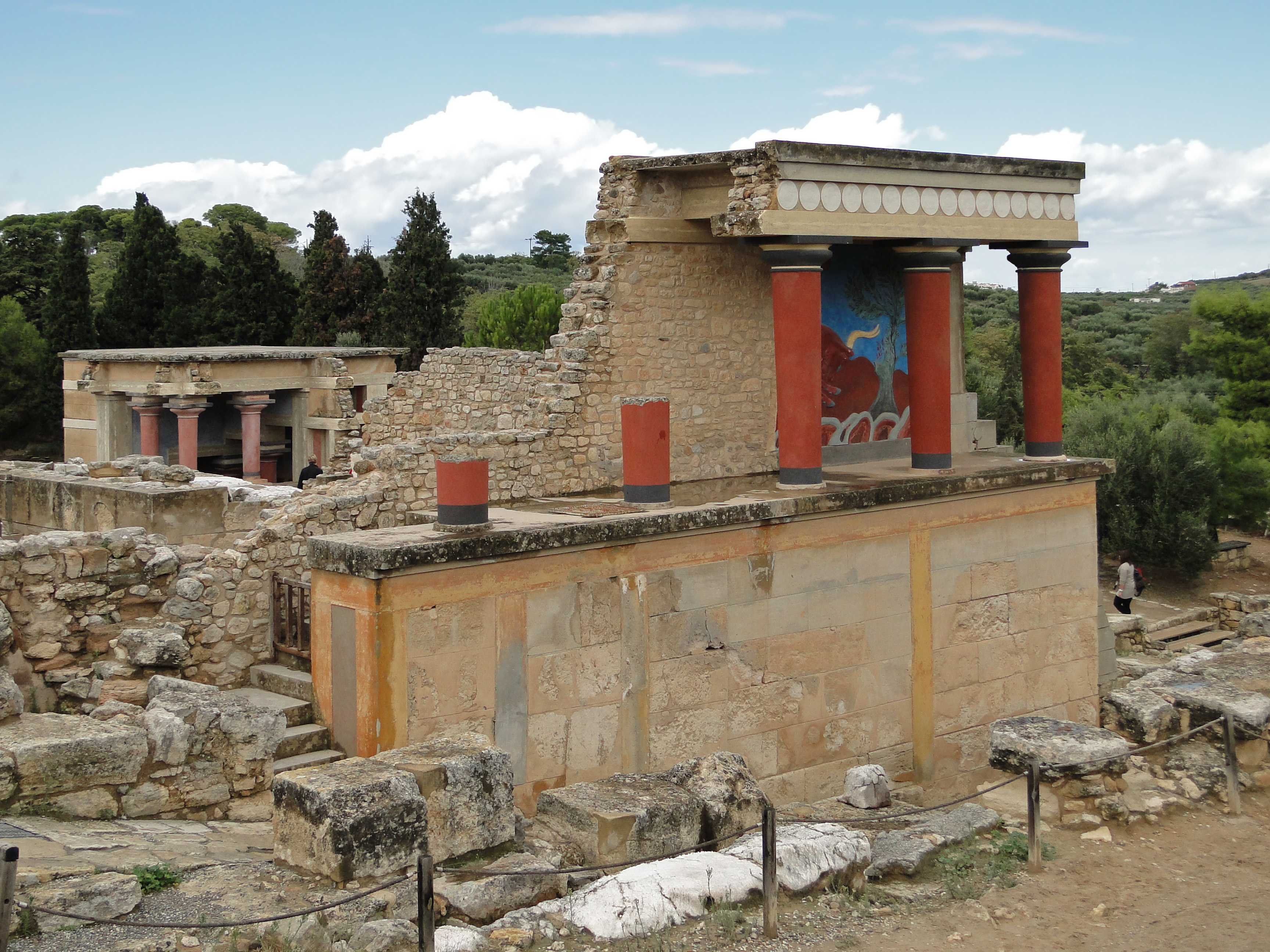
Day Trips from Crete: Knossos, Samaria Gorge, Santorini and the Beaches of the West
Day trips from crete turn a single island into many different holidays. Palaces, gorges, beaches and a volcano island all lie within a day of its shores.
Crete is the largest island of Greece and the fifth largest island in the Mediterranean, and day trips from crete use that scale to the full. The island stretches about 260 kilometres from east to west, with four main cities along its northern shore and mountains running down its spine. Day trips from crete suit a traveller who has a week on the island and wants each day to feel different, because one morning can begin among Bronze Age ruins and the next can end on a pink sand beach. This article follows day trips from crete through their geography, their history and their planning, from the palace of Knossos to the gorge of Samaria, the island of Santorini and the lagoons of the west.
A traveller planning day trips from crete should first choose a base, because the island is long and its mountain roads are slow. Heraklion in the centre serves Knossos and the ferries to Santorini, Chania in the west serves Samaria and the beaches of Elafonisi and Balos, and Agios Nikolaos in the east serves Spinalonga and the quieter eastern shore. Day trips from crete work best from May to October, when the ferries run often, the gorge is open and the sea is warm enough for swimming. Day trips from crete reward a traveller who plans by region rather than by list, because each region holds a different kind of day.
Quick Facts
| Fact | Detail |
|---|---|
| Full name | Day Trips from Crete, one day journeys from the largest island of Greece |
| Focus keyword | day trips from crete |
| Base island | Crete, in the southern Aegean Sea, between mainland Greece and the coast of North Africa |
| Size | About 260 kilometres from east to west and up to about 60 kilometres from north to south |
| Main bases | Heraklion, Chania, Rethymno and Agios Nikolaos, all on the northern coast |
| Best known stops | Knossos, Samaria Gorge, Santorini, Elafonisi, Balos and Spinalonga |
| Nearest UNESCO site | Minoan Palatial Centres, listed in 2025 as reference 1733, with six parts on Crete |
| Transport | Buses on the coastal road, rental cars for the mountains, and fast ferries to other islands |
| Main sea | The Aegean Sea to the north and the Libyan Sea to the south |
| Climate | Mediterranean, with long dry summers, mild winters, and spring flowers on the mountain slopes |
| Language | Greek, and English works in hotels, restaurants and major sights |
| Time zone | Eastern European Time, Eastern European Summer Time in summer, and the euro is the currency |
| Wikidata | No Wikidata item exists for this page, since a collection of day trips is a travel theme rather than a place with coordinates of its own |
| UNESCO setting | Greece holds 21 inscribed World Heritage properties, 18 cultural and 3 mixed, with none natural |
Geography of Day Trips from Crete
A Long Island of Mountains and Two Seas
The geography of day trips from crete begins with the shape of the island, a long and narrow land that runs about 260 kilometres from east to west and reaches about 60 kilometres at its widest point. Mountain ranges run along the whole island, with Psiloritis rising above 2,400 metres in the centre and the White Mountains standing in the west. Those mountains divide Crete into separate regions, each with its own climate, landscape and character, and a traveller on day trips from crete soon learns that a distance on the map says little about the time on the road. The mountain roads wind and climb, so a journey of 50 kilometres can take far longer than the same distance on flat land.
The northern coast of Crete holds the large cities and the resorts, with sandy beaches, small bays and harbours facing the Aegean Sea. The southern coast is steeper, with cliffs and wild beaches reached only by mountain roads or by boat, and the Libyan Sea to the south is warmer and calmer than the Aegean to the north. Day trips from crete cross between those two coasts often, because the gorges cut from north to south through the mountains and end at small fishing villages on the southern shore. A traveller who crosses the island in a day sees both seas and understands why Crete feels like two islands joined by mountains.
The climate of Crete is Mediterranean, with a long, dry and hot summer and a mild, wet winter, and the sea softens the heat along the coast while the mountains stay cooler. Spring brings wild flowers to the mountain slopes, and autumn brings gentle weather with fewer visitors, so both seasons suit walking and sightseeing. The gorge season runs from spring to autumn, because Samaria closes in winter when flash floods threaten the path, and a traveller on day trips from crete should choose the season by the main activity of the day. Swimming suits the summer, walking suits the spring and autumn, and archaeology suits every season of the year.
Gorges, Beaches and the Neighbouring Islands
The great gorges of Crete cut through the mountains from north to south, and Samaria and Imbros are the most famous of them, with high cliffs, old forests and streams along the path. Samaria is one of the longest gorges in Europe, and its walk ends at the small coastal village of Agia Roumeli, where a ferry carries walkers along the southern coast to Sfakia and a bus returns them to Chania. Day trips from crete to the gorges demand strong legs and sturdy shoes, because the path descends for hours over rough stone, yet the reward is a landscape that no beach or palace can match. The gorges show the wild side of Crete, far from the resorts of the northern shore.
The beaches of western Crete are among the finest in the Mediterranean, and Elafonisi and Balos draw day trips from crete from Chania through the whole summer. Elafonisi in the south west is a beach of pink sand and shallow water, with sandbanks and a small lagoon that suits families, while Balos in the north west is a lagoon of clear water and white sand reached by boat from Kissamos or by a long walk. Both beaches grow crowded in high summer, so a traveller should leave early or travel in the quieter months, and a tour from Chania usually covers the transport and the swimming time. The two beaches are the symbols of Crete for many visitors, and they repay the effort of the journey.
The sea around Crete holds many small islands, and Santorini is the most famous of them for day trips from crete, reached by fast ferry from Heraklion with a coach tour of the island on arrival. The island of Dia near Heraklion suits a boat trip in a day, with wild beaches and clear water, while Gramvousa near Balos holds a Venetian fortress above the lagoon. Those small islands show that Crete is not only an island but also a gateway to the Aegean, and a traveller who takes a ferry from Crete steps into a wider archipelago. Day trips from crete by sea are the most popular of all, because the ferry itself is part of the adventure.
The Four Bases and How They Divide the Island
The layout of day trips from crete divides by region, and each base city serves a different set of journeys. Heraklion in the centre of the northern coast is the best base for Knossos, the archaeological museum and the ferries to Santorini, and it also serves the Lassithi Plateau and the mountain villages. Chania in the west is the best base for Samaria Gorge, Elafonisi and Balos, with an old town of Venetian houses and a harbour that rewards an evening walk. A traveller who stays in Chania can reach the finest beaches and the finest gorge of Crete without crossing the whole island.
Rethymno sits in the middle of the island, and it serves both sides with an old town and a long beach of its own, so it suits a traveller who wants to split the island in two. Agios Nikolaos in the east is the base for Spinalonga and the quiet beaches of the eastern shore, with a lake in the town centre and cafes along the water. Day trips from crete work best when a traveller picks a base to match the chosen journeys, because crossing the whole island for a single day trip wastes hours on mountain roads. A week on Crete can cover all three regions without moving house too often, if the traveller plans two or three days in each base.
Crete has no railway, and the bus is the main form of public transport, running along the coastal road between the four cities and into the mountain villages. Most day trips from crete include hotel pick up, so a traveller need not worry about the bus timetable, yet a rental car gives freedom in the mountains and the villages. The main ports of Crete are Heraklion, Chania, Rethymno and Agios Nikolaos, and the fast ferries to Santorini leave from Heraklion. A traveller who understands the island by its four bases will plan better days, because each base opens a different Crete.

Cicada on a branch of a Laurus nobilis — CC BY-SA 4
History of Day Trips from Crete
Knossos and the Minoan World
The history of day trips from crete begins with the Minoan civilisation, one of the oldest civilisations of Europe, which grew on Crete from about 2000 BCE. Knossos near Heraklion was the largest of the Minoan palaces and the centre of ritual and power on the island, and it is tied to the legend of King Minos and the Minotaur in the labyrinth. Arthur Evans excavated Knossos in the early twentieth century and rebuilt parts of the palace, so a visitor today sees both ancient walls and early modern reconstructions. Day trips from crete to Knossos are the most popular archaeological journeys on the island, because the palace opens a window on a Bronze Age world of frescoes, courtyards and storerooms.
The Minoan palaces were not only royal homes but also centres of administration, trade, religion and craft, and Knossos held storerooms, workshops, shrines and a theatre within its walls. The frescoes of the palace show bull leaping, processions and sea life, and they reveal a society that traded across the eastern Mediterranean. The Heraklion Archaeological Museum holds the original finds from Knossos, including the bull leaping fresco and the snake goddess figures, and it is the best companion to a visit to the palace. A traveller on day trips from crete who visits both the palace and the museum will understand the Minoans far better than a traveller who sees only one of them.
The Minoan Palatial Centres entered the World Heritage List on 12 July 2025 as reference 1733, under criteria (ii)(iii)(iv)(vi), and the property joins six sites on Crete: Knossos, Phaistos, Malia, Zakros, Zominthos and Kydonia. The six parts together show the range of Minoan palatial life, from the great palace of Knossos to the smaller centres of the east and west, and they date from about 1900 BCE to about 1100 BCE. Day trips from crete can reach several of the six in a single holiday, with Knossos near Heraklion, Phaistos in the south and Malia on the northern coast. The listing gives Crete its first World Heritage property on the island itself, and it places the Minoan palaces among the great sites of the world.
Romans, Byzantines, Venetians and Ottomans
After the fall of the Minoans, Crete passed through the ancient Greek world, the Roman Empire, the Byzantine Empire and the long rule of Venice, and each age left places that day trips from crete still visit. The Romans built Gortyna in the south, one of the most important Roman cities of the island, with a law code carved in stone that still stands. The Byzantines built churches and monasteries across the mountains, and their frescoes survive in small chapels far from the coast. A traveller on day trips from crete who leaves the beach towns will meet those older layers, in Roman stones, Byzantine chapels and Venetian harbours.
Venice ruled Crete for centuries, and its mark is clearest in the coastal cities of Chania and Rethymno, where fortresses, harbours, warehouses and mansions still stand. The Venetians built the fortresses of Heraklion, Chania and Rethymno to guard the island against pirates and rival fleets, and the old towns behind those walls keep their Venetian streets, churches and squares. Day trips from crete to the old towns are journeys into that Venetian age, and they show a Crete very different from the Minoan palaces of the interior. The Venetian harbours are the finest places on the island for an evening walk, with cafes along the water and fishing boats beside the stone quays.
The Ottoman period followed Venice, and mosques, markets and new quarters rose in the cities, many of which survive in Chania and Rethymno as museums, restaurants and shops. The people of Crete resisted Ottoman rule for centuries, and the monastery of Arkadi became the symbol of that resistance when its defenders chose death over surrender in the uprising of 1866. Crete joined Greece in 1913 after decades of struggle, and in the Second World War the Battle of Crete in 1941 brought one of the great battles of the war to the island. Day trips from crete to Arkadi and to the war memorials show the modern history of the island, and they remind a traveller that Crete is not only ancient but also fiercely modern in spirit.

Sitia, Crete, Greece — CC BY-SA 4
Travel to Day Trips from Crete
Choosing a Base and Moving Around
Travel on day trips from crete starts with the choice of a base, and Heraklion suits archaeology and ferries, Chania suits gorges and beaches, and Agios Nikolaos suits history and quiet shores. A traveller who stays in one base for the whole holiday should pick the region that matters most, because the island is long and its mountain roads are slow. Day trips from crete usually include hotel pick up, so a traveller need not drive, yet a rental car gives freedom in the mountain villages and the southern coast. Buses run along the coastal road between the four cities, and they are the cheapest way to move without a car.
The best season for day trips from crete runs from May to October, when the ferries run often, the gorge is open and the sea is warm. Spring brings flowers and mild walking weather, summer brings heat and crowds, and autumn brings gentle days with fewer visitors. Winter suits archaeology and the old towns, because Knossos and the museums stay open, yet the gorge closes and the ferries run less often. A traveller on day trips from crete should book the Santorini ferry early in high season, because the fast ferries can sell out, and should check the gorge before setting out, because it closes in bad weather.
A Day at Sea and a Day in the Mountains
A day at sea is the classic form of day trips from crete, and the Santorini tour leaves Heraklion in the morning and returns in the evening, with a coach tour of Fira and Oia on the island. The volcanic island holds white towns on the crater rim, blue domed churches and a sunset that draws crowds to Oia, yet a single day shows only part of Santorini, and the island deserves a longer stay if time allows. Day trips from crete by boat also reach Dia, Gramvousa and Spinalonga, and those shorter sails suit a traveller who wants the sea without a whole day away. A boat day needs sun protection, water and a plan for the return sailing.
A day in the mountains is the other classic form of day trips from crete, and the Samaria walk leaves Chania early, crosses the gorge to Agia Roumeli and returns by ferry and bus. Food and wine tours offer a gentler mountain day, with olive farms, wineries and cooking lessons in the villages, and Crete is famous for olive oil, cheese, herbs and wine.
Heraklion is the city where most day trips from crete begin, with its port, its museum and its Venetian fortress, and Chania is the city where the western journeys begin. Athens links to Crete by air and by overnight ferry, and Santorini is the island that most travellers pair with Crete. A traveller should carry water, sturdy shoes and sun protection on every mountain day, because the Cretan sun is strong even in spring.
Notable Places in Day Trips from Crete
Knossos and the Heraklion Museum
Knossos is the most important archaeological site of day trips from crete, with rooms, courtyards and frescoes from the Minoan age, and its rebuilt parts help a visitor picture the scale of the palace. A traveller should allow at least two hours for Knossos, and a guide or an audio guide helps to make sense of the courtyards, the throne room and the storerooms. The Heraklion Archaeological Museum nearby holds the original finds from Knossos, and it is a stop no visitor should miss. Knossos is one of the six parts of the Minoan Palatial Centres, listed by UNESCO in 2025 as reference 1733, and it is the finest single introduction to the Minoan world.
Samaria Gorge
Samaria Gorge is the great natural journey of day trips from crete, a walk of about 16 kilometres through high cliffs, old forests and streams to the southern coast. The walk ends at Agia Roumeli, a small coastal village where walkers can swim before the ferry carries them to Sfakia and a bus returns them to Chania. The narrowest part of the gorge is only a few metres wide, with cliffs rising on both sides, and it is the most dramatic moment of the walk. Samaria is the most memorable natural experience of Crete, and it rewards a traveller who arrives fit and early.
Santorini
Santorini is the most famous island of day trips from crete, a volcanic island with the towns of Fira and Oia on the rim of the crater. A day tour from Crete covers the ferry and a coach tour of the island, with time for views in Oia and Fira, blue domed churches and stone streets above the Aegean. The island is a caldera, and its cliffs, its black beaches and its white towns make it unlike any other place in Greece. A traveller should know that a day tour shows only part of Santorini, and the island deserves a longer visit when time allows.
Elafonisi and Balos
Elafonisi and Balos are the two finest beaches of day trips from crete, and both can be reached in a day from Chania. Elafonisi in the south west is famous for pink sand and shallow clear water, with sandbanks and a lagoon that suit families and swimmers. Balos in the north west is a lagoon of clear water and white sand, reached by boat from Kissamos, and its colours are among the finest in the Mediterranean. Both beaches are symbols of Crete, and both grow crowded in summer, so an early start or a visit in the quieter months is wise.
Spinalonga and Phaistos
Spinalonga is a Venetian fortress on a small island near Elounda, once a leper colony in the twentieth century, and now a historic site open to visitors. A boat from Agios Nikolaos or Elounda reaches the island in about half an hour, and a traveller can walk its walls and its remaining buildings.
Phaistos in the south is another Minoan palace and another part of the UNESCO property of reference 1733, with a wide court and a view over the Messara plain. Rhodes and Corfu are other Greek islands a traveller can pair with Crete, and Thessaloniki is a mainland city that suits a longer Greek journey. Spinalonga and Phaistos show two very different faces of day trips from crete, one a fortress of exile and one a palace of the Bronze Age.
Frequently Asked Questions
Which day trips from crete are best for a first visit?
Santorini by fast ferry, Samaria Gorge, Knossos and the beaches of Elafonisi and Balos are the finest day trips from crete for a first visit. Santorini suits a traveller who wants volcanic views, Samaria suits a keen walker, and Knossos suits a traveller who loves history. A first timer with a week should pick three of the four and leave the rest for a return trip.
How long does the ferry from Heraklion to Santorini take?
The fast ferry from Heraklion to Santorini takes about two to three hours in each direction, and a day tour from Crete lasts the whole day with a coach tour of the island. A traveller should book the ferry early in high season, because the fast ferries can sell out. The return sailing reaches Heraklion in the evening.
Is Samaria Gorge hard to walk?
Samaria Gorge takes about five to eight hours of walking, mostly downhill, so it demands good fitness and sturdy walking shoes. The gorge does not suit a traveller with limited mobility, small children or little walking experience, and it opens only in the warmer months. A traveller should check that the gorge is open before setting out, because it closes in bad weather.
Should I book Knossos in advance?
Knossos is a popular site and grows crowded around midday, yet a traveller can usually buy a ticket on arrival outside the busiest hours. A guided tour helps a visitor understand the Minoan palace far better than a lone walk through the ruins. The Heraklion Archaeological Museum is the best companion to the palace, and the two together fill a full morning.
Which base city suits day trips from crete best?
Heraklion suits Knossos and the ferries to Santorini, Chania suits Samaria Gorge and the beaches of Elafonisi and Balos, and Agios Nikolaos suits Spinalonga and the eastern shore. Rethymno in the middle suits a traveller who wants to reach both sides of the island. A traveller should pick the base that matches the chosen journeys, because the island is long and its roads are slow.
How many days does Crete need?
Crete needs at least five days for its main beaches and sights, and seven to ten days for a deeper journey through its history and culture. A traveller with little time should stay in one region and pick two or three day trips from crete rather than trying to see the whole island. The island rewards a slow pace, because each region holds a different Crete.
Verified
Every statement in the notes that follow was traced to the source cited beside it during the research for this guide.
-
The research behind this guide was completed on 22 November 2026, with each statement below traced to the source named beside it.
-
Crete is the largest island of Greece and the fifth largest island in the Mediterranean, about 260 kilometres from east to west and up to about 60 kilometres from north to south.
-
Psiloritis rises above 2,400 metres, and the White Mountains stand in the west, while the northern coast holds the four main cities and the southern coast holds cliffs and wild beaches.
-
Knossos was built from about 2000 BCE as the largest palace of the Minoan civilisation, and Arthur Evans excavated and partly rebuilt it in the early twentieth century.
-
The Minoan Palatial Centres entered the World Heritage List on 12 July 2025 as reference 1733, under criteria (ii)(iii)(iv)(vi), with six parts on Crete: Knossos, Phaistos, Malia, Zakros, Zominthos and Kydonia.
-
Samaria Gorge is about 16 kilometres long, and its walk ends at Agia Roumeli, where a ferry carries walkers to Sfakia and a bus returns them to Chania.
-
The monastery of Arkadi became a symbol of Cretan resistance in the uprising of 1866, Crete joined Greece in 1913, and the Battle of Crete took place in 1941.
-
Greece holds 21 inscribed World Heritage properties, 18 cultural and 3 mixed, with none natural, and Crete itself holds the Minoan Palatial Centres property.
Unverified
-
The present fast ferry timetable from Heraklion to Santorini changes with the season, so travellers must check the official ferry timetable before they go, and no sailing times are promised in the body of this guide.
-
The present opening dates of Samaria Gorge change with the season and the weather, so travellers must check the official gorge status before they go, and the main text gives no opening dates.
-
The present entry prices for Knossos and the Heraklion Archaeological Museum change with the season, so travellers must check the official price lists before they go.
-
The present boat timetable from Kissamos to Balos and from Agios Nikolaos to Spinalonga changes with the season, so travellers must check the official timetables before they go.
-
The present bus times between Heraklion, Chania, Rethymno and Agios Nikolaos change with the timetable, so travellers must check the official bus timetable before they go.
Sources
-
Wikipedia, Crete: https://en.wikipedia.org/wiki/Crete (checked 22 November 2026).
-
Wikipedia, Knossos: https://en.wikipedia.org/wiki/Knossos (checked 22 November 2026).
-
Wikipedia, Samaria Gorge: https://en.wikipedia.org/wiki/Samaria_Gorge (checked 22 November 2026).
-
UNESCO, Minoan Palatial Centres, reference 1733: https://whc.unesco.org/en/list/1733/ (checked 22 November 2026).
-
UNESCO, States Parties page for Greece: https://whc.unesco.org/en/statesparties/gr (checked 22 November 2026).
-
TheTerraAtlas registry: for the entity TA-L5-crete-day-trips, its parent Crete and the keyword set (checked 22 November 2026).
Illustrations
- Hero: View of Day Trips from Crete. Free image: https://upload.wikimedia.org/wikipedia/commons/e/ea/Knossos_-_North_Portico_02.jpg — CC BY-SA 3.
- In body, crete: Cicada on a branch of a Laurus nobilis. Free image: https://upload.wikimedia.org/wikipedia/commons/8/87/Cicada-Sitia-Lasithi-Crete-Greece.jpg — CC BY-SA 4.
- In body, crete: Sitia, Crete, Greece. Free image: https://upload.wikimedia.org/wikipedia/commons/8/86/Echinops-Sitia-Crete-Greece.jpg — CC BY-SA 4.