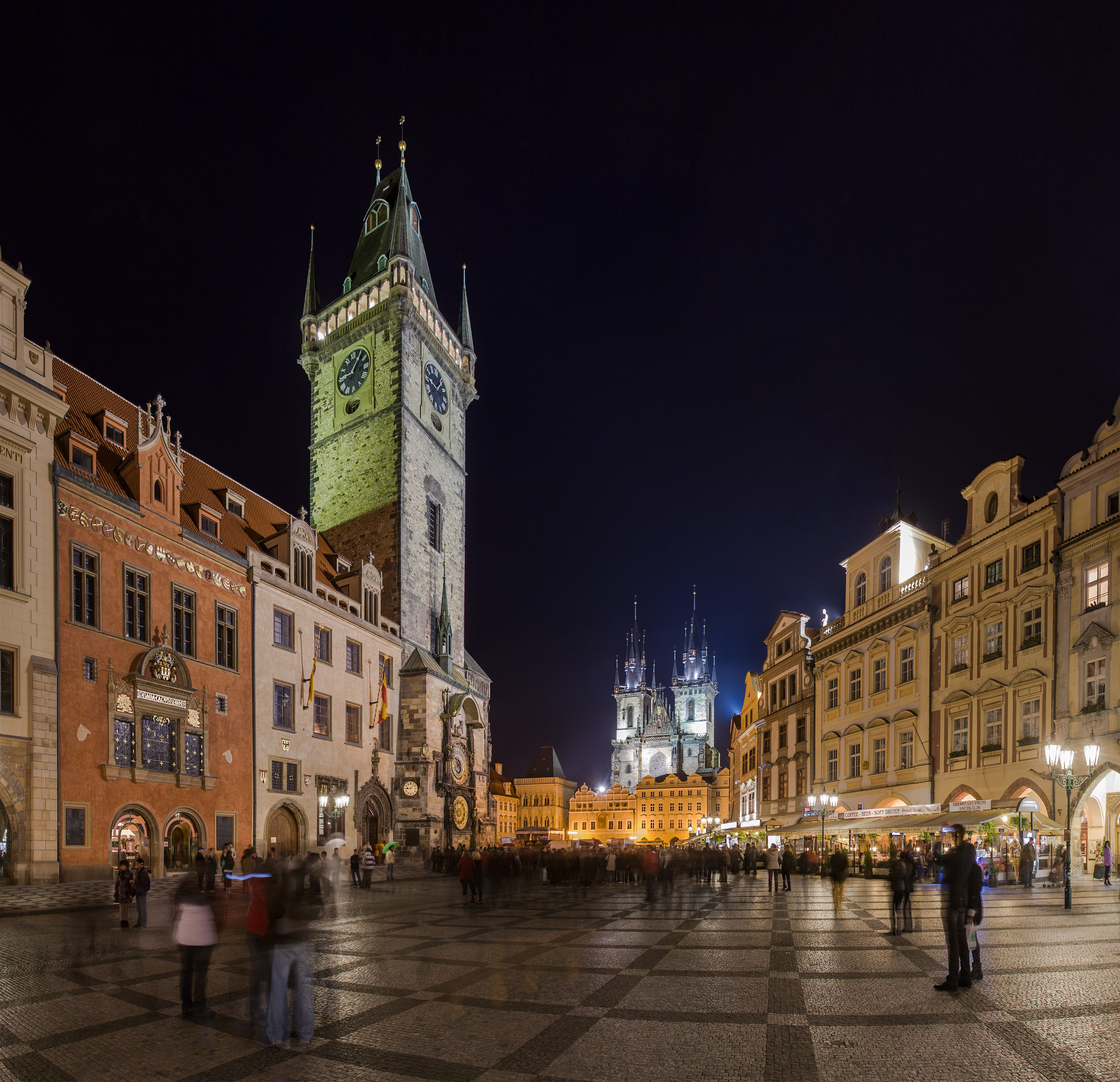
Old Town Square Prague
Old Town Square Prague is the oldest square in the capital of Czechia. Eight centuries of Gothic, Renaissance and Baroque meet on its paving stones.
Old Town Square Prague has been the market, the court, the stage and the meeting place of Prague since the twelfth century, and it still does all four jobs at once. Traders once sold goods where cafes now serve coffee, kings were crowned where tourists now take photographs, and twenty-seven lords were executed where a monument to Jan Hus now stands. The square lies inside the Historic Centre of Prague, a UNESCO World Heritage property, and it is the place where the layered history of the city can be read most clearly, because Gothic, Renaissance, Baroque and Rococo buildings stand side by side on the same paving.
Quick Facts
| Item | Detail |
|---|---|
| Name | Old Town Square Prague (Czech: Staroměstské náměstí) |
| Type | Historic square in the Old Town |
| Location | Staré Město (Old Town), Prague 1, Prague, Czechia |
| Coordinates | 50.0875° N, 14.4214° E |
| Country | Czechia |
| City | Prague |
| Founded | 12th century, as a central market |
| Area | About 9,000 m² |
| Language | Czech |
| Currency | Czech koruna (CZK) |
| Transport | Metro Staroměstská (line A), Můstek (lines A, B), trams |
| Highlights | Old Town Hall and tower, Church of Our Lady before Týn, Church of St Nicholas, Kinský Palace, Jan Hus Monument, Christmas market |
| UNESCO | Inside the Historic Centre of Prague, inscribed 1992, reference 616; Czechia holds 17 World Heritage properties |
| Wikidata code | Q421678 |
Old Town Square Prague is almost square in shape, though its sides are uneven, and streets run from its four corners towards Charles Bridge, Wenceslas Square and the Jewish Quarter of Josefov. That central position makes the square the most important walking junction of old Prague, and visitors can start every tour of the Old Town from here without using public transport. The square is a public space, open day and night without a ticket, and its finest hours are the early morning, when the paving is empty and the sun lights the facades, and the evening, when the lamps light the Town Hall tower and the two spires of the Týn Church.
Geography of Old Town Square Prague
On the right bank of the Vltava
Old Town Square Prague stands on the right bank of the Vltava river, in the Old Town district of Staré Město in Prague 1, about 0.72 km east of Charles Bridge and about 0.78 km north of Wenceslas Square. From the square, visitors can see the towers of Prague Castle across the river, and the red roofs of the Old Town stretching to the foot of the bridge. The ground here is almost flat, because the square lies on low land beside the river, and the surrounding streets are easy to walk.
The climate of Prague is a mild continental climate, with warm summers, cold winters with snow, and cool and pleasant spring and autumn. The square is at its finest at two times of the year: at Christmas, when the Christmas market lights the whole square, and in spring, when the weather warms and the outdoor cafes open again. Summer is the busiest time, when the square is full of visitors from morning to night, so travellers who want photographs without crowds should come early in the morning.
A closed ring of facades
The buildings around Old Town Square Prague form a closed ring of facades, with enough colours and styles to fill an architecture textbook. The west side holds the Old Town Hall with its tall tower, the east side holds the Týn Church with its two pointed spires, the north side holds the Church of St Nicholas and Kinský Palace, and the south side holds a row of town houses with the Stone Bell House and the Storch House. Each facade belongs to a different century, yet together they make a single urban room, and that is why the square feels complete from every corner.
The square as an urban room
Old Town Square Prague works as a single urban room because its buildings are all roughly the same height, between three and five storeys, and none of them overpowers the others. The Town Hall tower is the exception, rising high above the roofs, and it serves as the landmark that orients everyone in the Old Town. The paving of the square is laid with large stone slabs, worn smooth by eight centuries of feet, carts and carriages, and the gentle slope of the ground drains rainwater towards the south-east corner. Market stalls, cafe terraces and festival stages are set out on the paving according to the season, yet the square never loses its shape, because the facades hold the space in place.
The Vltava and the Old Town
The Vltava river shapes the Old Town, and the square lies a short walk from its right bank. The river made Prague a trading city, because goods moved along the water from the south of Bohemia to the north, and the Old Town grew beside the crossing where the river could be forded and later bridged. Charles Bridge, the stone bridge that links the Old Town with Malá Strana and Prague Castle, stands only about 0.72 km west of the square, and the river crossing has always been the reason the market square sits where it does. In winter the Vltava sometimes freezes at the edges, and in summer the river carries tour boats past the Old Town, but the square itself stays dry and calm, sheltered by the ring of buildings around it.

A view of the Old Town Square in Prague — CC BY-SA 4
History of Old Town Square Prague
A market becomes a capital
Old Town Square Prague grew from the twelfth century onwards, when the place was a market at the crossing of important trade routes joining Prague with the lands around it. Traders from Germany, Italy and the East brought goods here to exchange, and the market slowly grew into the trading centre of a rising city. In 1338, the town council bought a house on the western side of the square to serve as the town hall, marking the change of the square from a market into the administrative centre of the Old Town.
The fourteenth and fifteenth centuries were the golden age of the square, when Prague under King Charles IV became the capital of the Holy Roman Empire. The town hall was extended with a tall tower, the Astronomical Clock was installed in 1410, and the Týn Church was built as the main church of the Old Town. The square was then the scene of coronations, festivals, trials and public executions, reflecting its central role in the life of the medieval city. The Astronomical Clock has its own article in this atlas, so this article treats it only as one part of the Town Hall, while the focus here is the square itself and the buildings around it.
The twenty-seven crosses
The saddest event in the history of Old Town Square Prague took place on 21 June 1621, when twenty-seven Czech lords who had joined the revolt against the Habsburg emperor were executed on the square, after the defeat of the rebels at the Battle of White Mountain in 1620. Twenty-seven crosses cut into the paving of the square today mark the place of the execution, and the event became a symbol of the loss of religious and political freedom of the Czech people for more than three hundred years afterwards. The Jan Hus Monument, unveiled in 1915 on the five hundredth anniversary of the burning of Jan Hus, is the late answer of the Czech nation, placing the greatest religious reformer of the country in the middle of the square where the lords had fallen.
From town hall to tourist centre
In the nineteenth and twentieth centuries, the square slowly changed from an administrative centre into a tourist centre, as the Town Hall ceased to be the seat of the city government and the buildings around the square were turned into museums, galleries, restaurants and hotels. In 1992, the whole Historic Centre of Prague, including Old Town Square Prague, was inscribed as a World Heritage property, and the square has been strictly protected ever since. Today the square hosts the famous Christmas market and Easter market, open-air concerts, festivals and national celebrations of Czechia. Prague was inscribed first in 1992, together with Český Krumlov and Telč, and Czechia now holds 17 World Heritage properties.
Timeline
| Year | Event |
|---|---|
| 12th century | Market forms at the crossing of trade routes |
| 1338 | Town council buys a house for the Town Hall |
| 1410 | Astronomical Clock installed on the Town Hall tower |
| 14th–16th century | Týn Church built as the main church of the Old Town |
| 21 June 1621 | Twenty-seven Czech lords executed on the square |
| 1737 | Church of St Nicholas completed |
| 1755–1765 | Kinský Palace built |
| 1915 | Jan Hus Monument unveiled |
| 1992 | Historic Centre of Prague inscribed by UNESCO, reference 616 |

The Old Town Square in Prague — CC BY-SA 4
Travel to Old Town Square Prague
The easiest way to reach Old Town Square Prague is by metro line A to Staroměstská station, then a walk of a few minutes through the old streets, or to Můstek station and a walk from Wenceslas Square. Trams also stop near the square, and from Charles Bridge visitors need only about ten minutes on foot through the small streets to reach it. The whole area around the square is a pedestrian zone, so travellers should wear comfortable shoes and be ready to walk on old stone paving, which turns slippery in rain and ice in winter.
The square is open freely day and night, because it is a public space, and visitors can come at any time without a ticket. The best time to visit is the early morning, when the square is still empty and the sunlight falls on the facades, or the evening, when the street lamps light the Town Hall tower and the two spires of the Týn Church. At midday the square is often very crowded, above all in summer, when tour groups gather before the Town Hall to watch the Astronomical Clock strike the hour. Travellers who want to climb the Town Hall tower for a view over the square and the city from above should check the opening hours and the official price list of the Town Hall before the visit, because the hours change with the season.
Christmas is the busiest time of the year on the square, when the Christmas market rises with a large tree in the middle of the square, dozens of stalls selling crafts, decorations and traditional food such as trdelník, grilled sausages and hot wine. The Easter market in spring also draws large crowds, with decorated eggs, pottery and festive food. Beyond the two market seasons, the square hosts open-air concerts, festivals and national ceremonies, so travellers should check the city events calendar before coming, so as not to miss a special occasion.
Around the square stand many restaurants, cafes and souvenir shops, but prices right on the square are usually higher than in the nearby streets, so travellers who want to eat on a moderate budget should walk into the small streets around it. The square is also a place where street performers, portrait painters and tourist services gather, and travellers should watch their belongings in the crowd, because pickpocketing is a known problem at the busy tourist places of Prague. From the square, visitors can easily walk to Charles Bridge, the Jewish Quarter of Josefov, Wenceslas Square and Malá Strana across the river, making a full tour in a single day. Travellers with more time often combine Prague with Dresden to the north-west or Vienna to the south-east, both easy to reach by train.
Notable Places in Old Town Square Prague
Old Town Hall and the Astronomical Clock
The Old Town Hall is the oldest building on the square, with a tower built from 1338 and a symbol of the self-government of the medieval city. Fixed to the tower is the famous Astronomical Clock, installed in 1410, with a dial showing the positions of the sun, the moon and the constellations, and figures of the apostles appearing every hour. The Astronomical Clock has its own article, so this article mentions it only as a part of the Town Hall, while the focus stays on the whole square and the buildings around it. Visitors can climb the Town Hall tower to see the square, the Old Town and Prague Castle from above.
Church of Our Lady before Týn
The Church of Our Lady before Týn, usually shortened to the Týn Church, is the most striking Gothic building on the square, with two pointed spires rising more than eighty metres and forming a landmark on the skyline of Prague. The church was built from the fourteenth to the sixteenth century, served as the main church of the Hussite movement, and holds the tomb of the astronomer Tycho Brahe inside. The facade of the church, with its two dark spires and ornate main portal, is one of the most photographed sights of Prague, above all when seen from the middle of the square in the afternoon.
Church of St Nicholas and Kinský Palace
The Church of St Nicholas on the northern side of the square is a beautiful Baroque building designed by the architect Kilian Ignaz Dientzenhofer, completed in 1737, with a richly decorated interior and regular classical concerts. Beside the church stands Kinský Palace, a Rococo palace built between 1755 and 1765, today part of the National Gallery, showing Czech art from the Middle Ages to the nineteenth century. The two buildings show that the square holds not only Gothic architecture but also the meeting of Baroque and Rococo styles.
Jan Hus Monument
The Jan Hus Monument in the middle of the square is one of the largest and most debated monuments of Prague, made by the sculptor Ladislav Šaloun and unveiled in 1915. The monument shows Jan Hus standing boldly before the fire, surrounded by groups of figures standing for those who fought for truth and those who went into exile after White Mountain. The monument is the place of the ceremony marking the day Jan Hus was burned, 6 July each year, and it is a familiar meeting point for the people of Prague.
Stone Bell House and Storch House
The Stone Bell House is one of the oldest Gothic houses on the square, dating from the fourteenth century, with a stone facade and a stone bell fixed to its corner, today an art gallery. The Storch House is the house with a wall painting of St Wenceslas on its facade, one of the most famous wall paintings of Prague, painted in the late nineteenth century. Together with the other colourful town houses around the square, the two houses show the trading and residential life of the Old Town through many centuries, and not only its great religious and administrative buildings.
Frequently Asked Questions
Where is Old Town Square Prague in the city?
Old Town Square Prague lies in the Old Town district of Staré Město in Prague 1, about 0.72 km east of Charles Bridge and about 0.78 km north of Wenceslas Square. Travellers can reach it by metro line A to Staroměstská or Můstek station, then a walk of a few minutes.
How is Old Town Square Prague different from the Astronomical Clock?
Old Town Square Prague is the whole square with the buildings around it, while the Astronomical Clock is only one work fixed to the tower of the Old Town Hall on the western side of the square. The Astronomical Clock was installed in 1410 and has its own article, while this article covers the square, the Týn Church, the Church of St Nicholas, Kinský Palace and the Jan Hus Monument.
What do the twenty-seven crosses on the paving mean?
The twenty-seven crosses cut into the paving of the square mark the place where twenty-seven Czech lords were executed on 21 June 1621, after the defeat of the rebels at the Battle of White Mountain in 1620. The event is one of the saddest in Czech history and a symbol of the loss of religious and political freedom for more than three hundred years afterwards.
When does the Christmas market take place on Old Town Square Prague?
The Christmas market usually opens from late November to early January, with a large tree in the middle of the square and dozens of stalls selling crafts, decorations and traditional food. This is the busiest time of the year on the square, so travellers should come in the morning or late in the evening to avoid the crowds.
Can I climb the tower of the Old Town Hall?
Travellers can climb the tower of the Old Town Hall to see the square, the Old Town and Prague Castle from above. The tower opens by season with changing hours, so travellers should check the opening hours and the official price list of the Town Hall before the visit.
What is the link between Old Town Square Prague and UNESCO World Heritage?
Old Town Square Prague lies inside the Historic Centre of Prague, inscribed by UNESCO as a World Heritage property in 1992 with reference 616, under criteria about architecture and urban planning. Czechia holds 17 World Heritage properties in total, and Prague was the first of them, inscribed in 1992 together with two other places.
Verified
- Old Town Square Prague lies in the Old Town district of Staré Město, Prague 1, at 50.0875° N, 14.4214° E, with Wikidata code Q421678, checked through the Wikidata API on 23/11/2026.
- The square formed in the twelfth century as a market; the Town Hall was founded in 1338; the Astronomical Clock was installed in 1410; the execution of the twenty-seven lords took place on 21 June 1621, checked against the matching Vietnamese article, checked 19/11/2026.
- The Týn Church was built from the fourteenth to the sixteenth century; the Church of St Nicholas was completed in 1737; Kinský Palace was built between 1755 and 1765; the Jan Hus Monument was unveiled in 1915, checked against the matching Vietnamese article, checked 19/11/2026.
- The Historic Centre of Prague was inscribed by UNESCO in 1992 with reference 616 under criteria (ii)(iv)(vi); Czechia holds 17 World Heritage properties, checked on whc.unesco.org on 23/11/2026.
- The distance from Old Town Square Prague to Charles Bridge is about 0.72 km in a straight line, and to Wenceslas Square about 0.78 km, computed from coordinates on 23/11/2026.
- This article states no search volume number anywhere in its body, in line with the project standard.
Sources
- Wikidata, https://www.wikidata.org/wiki/Q421678 — Old Town Square, Prague, type, coordinates and country.
- UNESCO World Heritage Centre, https://whc.unesco.org/en/list/616/ — Historic Centre of Prague.
- The matching Vietnamese article plaza-de-la-ciudad-vieja.vi.md — facts and sources, checked 19/11/2026.
Unverified
- Current opening hours and ticket prices for climbing the tower of the Old Town Hall need checking on the official price list of the Town Hall before a visit.
- The exact area of the square, because sources give different figures, needs checking on the website of the Prague city authority.
- The exact timetable of the Christmas market and the Easter market in the current year needs checking on the official tourist website of Prague.
- The exact building year of the Stone Bell House in each phase of its rebuilding needs checking on the official website of the National Gallery.
- The current concert timetable in the Church of St Nicholas needs checking on the official website of the church before a visit.
Illustrations
- Hero: A wide view of the Old Town Square in Prague. Free image: https://upload.wikimedia.org/wikipedia/commons/1/1c/Prague_Old_Town_Square%2C_Czech_Republic_-_Oct_2010.jpg — CC BY-SA 3.
- In body, Old Town Square Prague: A view of the Old Town Square in Prague. Free image: https://upload.wikimedia.org/wikipedia/commons/c/c0/Prague_Old_Town_2021_13.jpg — CC BY-SA 4.
- In body, Old Town Square Prague: The Old Town Square in Prague. Free image: https://upload.wikimedia.org/wikipedia/commons/d/d1/20190816_Rynek_Staromiejski_w_Pradze_1143_5231.jpg — CC BY-SA 4.