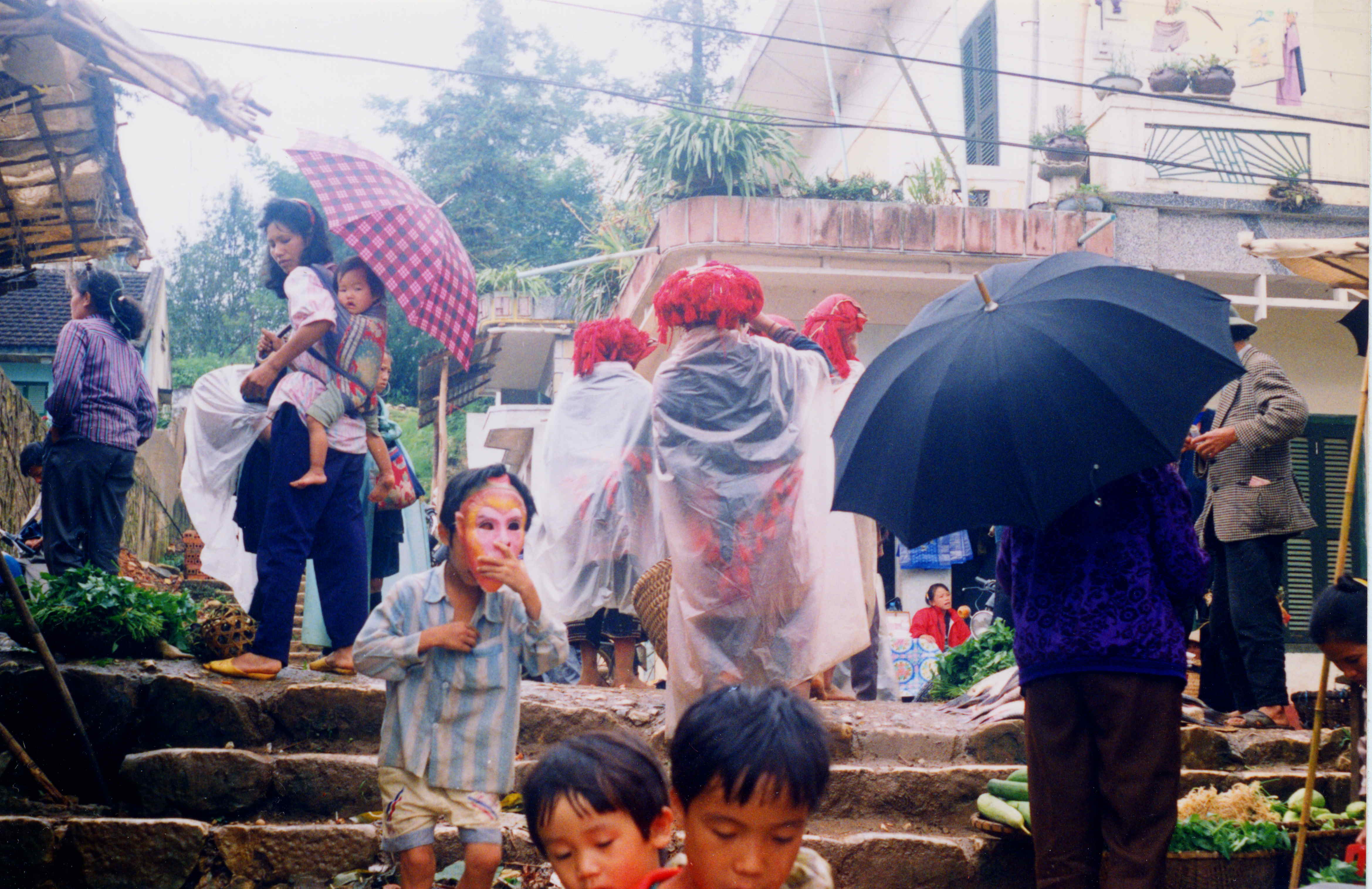
Sa Pa Market: The Highland Market of Brocade, Herbs and Mountain Food
Sa Pa Market is the central market of a highland town, where Hmong and Red Dao traders meet. Its two floors sell brocade, herbs and mountain food.
Sa Pa Market, also called the central market of Sa Pa, stands on Luong Dinh Cua Street in the town of Sa Pa, in Lao Cai Province, about one and a half kilometres from the town centre, on the road that joins Lao Cai with Lai Chau. The market was built and opened in 2015, as a two-storey building that replaced the old market in the centre of town. It is the place where the people of Sa Pa buy and sell every day, and where visitors find the specialities of the highlands: brocade, the herbal bath medicine of the Red Dao, dried buffalo meat, tao meo apples, dried bamboo shoots and forest herbs. This article covers the geography, the history and the practical side of a visit to Sa Pa Market.
The market is more than a place to buy things. At the weekend it becomes a meeting place for the ethnic peoples of the highlands, as Hmong, Red Dao, Tay and Giay traders come in from the villages to exchange goods, produce and tools, wearing bright brocade and silver ornaments. The tradition goes back to the old weekly market of Sa Pa, when the town had a single market on Sunday morning and the villagers had to walk from Saturday morning to reach the town. The market of today keeps that weekend spirit, and the busiest days are still Saturday and Sunday.
Quick Facts About Sa Pa Market
| Item | Detail |
|---|---|
| Name | Sa Pa Market, the central market of Sa Pa |
| Location | Luong Dinh Cua Street, Sa Pa Town, Lao Cai Province, Vietnam, about 1.5 kilometres from the town centre, on the Lao Cai to Lai Chau road |
| Coordinates | No official coordinates in the registry; no coordinates are estimated in this article |
| Wikidata | No Wikidata item for Sa Pa Market |
| Type | Central market of the town, two floors, open every day |
| Built | Built and opened in 2015 |
| Busiest days | The weekend, when Hmong, Red Dao, Tay and Giay traders come in from the villages |
| Main goods | Brocade, Red Dao herbal bath medicine, dried buffalo meat, tao meo apples, dried bamboo shoots, forest herbs, highland produce |
| Layout | Two floors: the lower floor sells food and specialities, the upper floor sells clothes, brocade and souvenirs |
| Best season | All year; the ripe rice season in September and October and the winter snow season are the finest times in Sa Pa |
| UNESCO | Not a World Heritage site |
| Note | Not the same as the Love Market, which is held on Saturday evening at the central square, in front of the Stone Church |
Geography of Sa Pa Market
Sa Pa Town lies in the west of Lao Cai Province, on the Hoang Lien Son range, with Fansipan, the highest peak of Indochina, to the south-west of the town. The town stands at about 1,500 to 1,600 metres above sea level, with a cool temperate climate all year, frequent fog, and snow and frost in winter. Sa Pa Market stands on the western side of the town, on the road out towards Lai Chau, near the bus station and the residential area, rather than in the tourist centre around the Stone Church.
The market is easy to reach from the centre of town. The walk from the Stone Church takes about twenty minutes, and the motorbike ride takes a few minutes. The market building has two airy floors, and the space is clean and open: the lower floor sells food and specialities, and the upper floor sells clothes, brocade and souvenirs, with enough room for the traders to work. The position on the road to Lai Chau makes the market convenient for the villagers who come in from the west, and for visitors who are leaving the town for the villages.
From the market, visitors can continue to the well known villages around Sa Pa: Cat Cat Village, Ta Van Village and Lao Chai Village, where Hmong and Red Dao people live and make brocade. The market is a useful starting point for a village trip, since visitors can buy supplies, hire a local guide and begin the walk from the market. The villages lie in the valleys below the town, and the walks from the market pass through rice terraces and bamboo forest.
The geography of the market is the geography of a highland trading post. The town stands on a ridge, the villages stand in the valleys, and the market stands on the road that joins them. The traders come down from the mountains in the morning and return in the evening, and the market is the place where the ridge and the valleys meet. The fog that covers Sa Pa in the morning often lifts by midday, and the market is at its liveliest in the clear hours of the late morning, when the traders have arrived and the stalls are full.
The valleys below the town hold the rice terraces that Sa Pa is known for, and the walks from the market pass through them. The terraces of the Muong Hoa Valley and the villages of Ta Van and Lao Chai lie below the town, and the paths from the market run down to them through bamboo forest and streams. The market is therefore the high point of a landscape that falls away into terraces, and the visitors who walk from the market to the villages cross the whole of that landscape in a few hours. The terraces change with the season, green in the summer and gold in the autumn, and the market goods change with them.
The road that passes the market is the road from Lao Cai to Lai Chau, and it carries the traffic of the highlands past the town. Buses and trucks use the road every day, and the bus station near the market is the place where the villagers arrive in the morning and leave in the evening. The market therefore sits on a working road, not on a tourist street, and the traffic around it is the traffic of the region. The walk from the market to the bus station takes a few minutes, and the station is the starting point for the buses to Lao Cai, to Lai Chau and to the villages of the district.
The climate of Sa Pa shapes the market day. In the cool months the mornings are foggy and cold, and the traders wear thick clothes and warm themselves with hot food. In the summer the air is mild and the market is busy all day, and in the winter the cold can be sharp, with frost on the roofs and sometimes snow on Fansipan. The market is open every day, and the goods change with the season: the tao meo apples come in the autumn, the dried bamboo shoots in the spring, and the brocade all year round.
History of Sa Pa Market
The weekly market tradition of Sa Pa goes back many generations, to the time when Sa Pa was a resting station of the French on the road to the highlands. In those days Sa Pa had a single market on Sunday morning, and the ethnic peoples of the region, Hmong, Red Dao, Tay and Giay, lived scattered across the high peaks and the deep valleys, and had to walk from Saturday morning to reach the centre of the town in time. The Saturday night became a time to stop, to meet and to talk, and the young people gathered to sing and to play the khen and the flute.
From those Saturday nights of waiting for the market, the Love Market of Sa Pa was born. Young men and women of the ethnic groups met through the sound of the khen, the flute and the answering songs, and many couples found each other at the market. Today the Love Market is held again on Saturday evening at the central square, in front of the Stone Church, with folk performances, traditional games and brocade stalls, and it serves visitors above all, though it keeps the character of the old market. The Love Market and Sa Pa Market are two different places, but they come from the same tradition: the weekend market of the highland peoples.
In the French colonial period Sa Pa became a hill station, and the market was the trading centre of the region. The town grew around the market and the church, and the traders from the villages brought their produce to the town every week. The market was the place where the highland peoples met the lowland traders, and where the goods of the mountains, brocade, herbs and dried meat, were exchanged for salt, tools and cloth from the lowlands. The market was the economic heart of the town, and it remained so through the wars and the changes of the twentieth century.
The Sa Pa Market of today was built and opened in 2015, replacing the old market in the centre of the town. The new market stands on Luong Dinh Cua Street, about one and a half kilometres from the town centre, and it is larger, airier and cleaner than the old market. The move of the market out of the centre also eased the traffic around the Stone Church and the central square, where the tourists gather. The new building has two floors, with food and specialities below and clothes, brocade and souvenirs above, and it is open every day.
Although the market moved to a new place and a smarter building, the weekend market keeps the old atmosphere. The villagers come in from the villages, wearing traditional dress and exchanging goods, and visitors who come to the market at the weekend can still join the lively, vivid space of the old market. The market is a working market first, and the traders are the people of the villages, not performers for tourists, and that is what makes it worth a visit.
The history of Sa Pa Market is the history of a weekly gathering that became a daily market. The Sunday market of the old days, the Saturday nights that gave birth to the Love Market, and the new two-storey building of 2015 are the three stages of that history. The market has moved, but its purpose has not changed: it is the place where the peoples of the highlands meet, trade and talk, and where the visitors to Sa Pa can see the daily life of the town.
The French period left its mark on the town as well as on the market. The Stone Church, which stands in the centre of the town, was built in the French period, and the villas of the old hill station still stand on the slopes around the town. The market of those days served the French residents and the highland peoples together, and the town was a place where the lowland traders, the French officials and the villagers met. The church and the market are the two old centres of the town, and they still face each other across the square, the church for the town and the market for the villages.

A street market at night in Sa Pa — CC BY-SA 4
Travel to Sa Pa Market
The best time to visit Sa Pa Market is the morning, when the market is at its busiest and the traders have just arrived from the villages. The stalls are fullest in the morning, and the light is best for photographs, while the afternoon is quieter, though the market stays open for visitors who want to shop. The weekend is the best time of all, when the Hmong, Red Dao, Tay and Giay traders come in from the villages, and the market is at its most colourful and most crowded.
The market is a place to buy the specialities of the highlands, and the goods to look for are the brocade, the Red Dao herbal bath medicine, the dried buffalo meat, the tao meo apples and the dried bamboo shoots. The brocade is made by the Hmong and Red Dao women, and the patterns and colours differ from village to village. The herbal bath medicine is sold in bundles of dried leaves, and it is used for the herbal baths that the Red Dao are known for. Prices are not fixed, and bargaining is normal, though visitors should bargain with a smile and accept the price that feels fair.
The walk from the centre of town to the market takes about twenty minutes, and the motorbike ride takes a few minutes. The market is on the road to Lai Chau, and the walk passes the residential area of the town, which is quieter than the tourist centre. The market is a good starting point for a walk to the villages, and the guides who work at the market can lead visitors to Cat Cat, Ta Van and Lao Chai. The classic routes of the Sapa Tours page all pass through the town, and the market is the most local of the stops on those routes.
The visa rule for Vietnam depends on the passport: many nationalities come in without a visa for a short stay, and the rest arrange one before they travel, so check your own rule before the trip. Dong cash is essential in the market, since the stalls do not take cards. The traders are friendly, and asking before photographing people, and buying something after a long look at a stall, is the polite way to shop.
A morning at the market pairs well with an afternoon walk to the villages. The guides who work at the market know the paths to Cat Cat, Ta Van and Lao Chai, and they can lead visitors through the rice terraces and the bamboo forest to the houses where the brocade is made. The walk from the town to Cat Cat takes about an hour, and the walk to Ta Van takes longer, so the market is the place to arrange the walk and to buy water and snacks before setting out. Visitors who hire a guide at the market support the local economy directly, and the guide can explain the patterns of the brocade and the uses of the herbs that are sold in the stalls.
The best season for Sa Pa is the ripe rice season in September and October, when the terraces turn gold, and the winter, when snow can fall on Fansipan. The market is open all year, and the goods change with the season, so a visit in the autumn and a visit in the spring will show different produce. The market is a morning place, and the best plan is to visit it early, then spend the afternoon walking to the villages, and return to the town in the evening for the Love Market on Saturday. The early start matters, since the traders arrive in the morning and the stalls are fullest before midday, while the afternoon light is best for the walk to the villages.

A market in Sa Pa — CC BY-SA 4
Notable Places at Sa Pa Market
The Lower Floor
The lower floor of the market sells food and specialities, and it is the busiest part of the building in the morning. The stalls hold fish, meat, vegetables and fruit from the highlands, along with dried buffalo meat, tao meo apples, dried bamboo shoots and forest herbs. The lower floor is where the daily trade of the town happens, and it is the best place to see the food of Sa Pa.
The Upper Floor
The upper floor of the market sells clothes, brocade and souvenirs, and it is the best place to buy the textiles of the highlands. The brocade stalls hold scarves, bags, clothes and wall hangings, made by the Hmong and Red Dao women, with patterns that differ from village to village. The upper floor is quieter than the lower floor, and the traders have time to talk about their work.
The Brocade Stalls
The brocade stalls are the most distinctive part of Sa Pa Market, and they hold the textiles that the highlands are known for. The brocade is woven and dyed by hand, and the colours are the deep indigo of the Hmong and the bright red of the Red Dao. The stalls sell scarves, bags and clothes, and the traders can explain the patterns and the dyes. The brocade is the best souvenir of the market, and it is made in the villages around the town.
The Red Dao Herbal Bath Stalls
The herbal bath stalls sell the dried leaves and roots that the Red Dao use for their herbal baths, and they are a distinctive part of the market. The bundles of herbs are sold by weight, and the traders can explain how the bath is prepared. The herbal bath is one of the best known traditions of Sa Pa, and the market is the place where the herbs are bought.
The Weekend Gathering
The weekend gathering is not a place but a time, and it is the liveliest part of the market. On Saturday and Sunday the Hmong, Red Dao, Tay and Giay traders come in from the villages, wearing traditional dress and silver ornaments, and the market fills with colour and noise. The weekend is the best time to visit, and it is the time when the market most resembles the old weekly market of Sa Pa.
The Love Market at the Central Square
The Love Market is held on Saturday evening at the central square, in front of the Stone Church, and it is the evening counterpart of the morning market. The square holds folk performances, traditional games and brocade stalls, and the young people gather to sing and to talk. The Love Market is a different place from Sa Pa Market, but it comes from the same tradition, and visitors who come to the market in the morning should return to the square in the evening.
Frequently Asked Questions About Sa Pa Market
Where is Sa Pa Market?
Sa Pa Market is on Luong Dinh Cua Street, about one and a half kilometres from the centre of Sa Pa Town, on the road that joins Lao Cai with Lai Chau.
When was Sa Pa Market built?
The present Sa Pa Market was built and opened in 2015, as a two-storey building that replaced the old market in the centre of the town.
What can I buy at Sa Pa Market?
Brocade, Red Dao herbal bath medicine, dried buffalo meat, tao meo apples, dried bamboo shoots, forest herbs and highland produce are the goods to look for.
Is Sa Pa Market the same as the Love Market?
No, Sa Pa Market is the central market, open every day for trade, while the Love Market is a Saturday evening gathering at the central square, in front of the Stone Church.
When is Sa Pa Market busiest?
The market is busiest in the morning, and busiest of all at the weekend, when Hmong, Red Dao, Tay and Giay traders come in from the villages.
How do I get to Sa Pa Market from the town centre?
Walk about twenty minutes from the Stone Church, or take a motorbike for a few minutes, along the road towards Lai Chau.
Verified
- Sa Pa Market stands on Luong Dinh Cua Street, about 1.5 kilometres from the centre of Sa Pa Town, on the road that joins Lao Cai with Lai Chau. Checked 21 November 2026.
- The present market was built and opened in 2015, as a two-storey building that replaced the old market in the centre of the town. Checked 21 November 2026.
- The lower floor sells food and specialities, and the upper floor sells clothes, brocade and souvenirs. Checked 21 November 2026.
- The weekend is the busiest time, when Hmong, Red Dao, Tay and Giay traders come in from the villages. Checked 21 November 2026.
- The Love Market is held on Saturday evening at the central square, in front of the Stone Church, and it is a different place from Sa Pa Market. Checked 21 November 2026.
- Sa Pa Town stands at about 1,500 to 1,600 metres above sea level, with Fansipan, the highest peak of Indochina, to the south-west of the town. Checked 21 November 2026.
- Sa Pa Market has no Wikidata item and no official coordinates in the registry, and no coordinates are estimated in this article. Checked 21 November 2026.
Sources
- Vietnam Tourism, Sa Pa — https://vietnam.travel/things-to-do/sa-pa — for the town, the villages and the highland setting, checked on 21 November 2026.
- Wikidata, search for Sa Pa Market — https://www.wikidata.org/wiki/Special:Search — for the absence of a Wikidata item, checked through the Wikidata API on 21 November 2026.
- Lao Cai Province, Sa Pa Town — https://www.laocai.gov.vn — for the administrative setting of the town and the market, checked on 21 November 2026.
Unverified
- The exact number of stalls in Sa Pa Market is not stated in this article, since no official count has been confirmed.
- The age of the weekly market tradition is given only as many generations, since no written record of its start has been found.
- No coordinates are given for Sa Pa Market, since the market has no Wikidata item and the registry holds no coordinates for it.
Illustrations
- Hero: Sa Pa Market. Free image: https://upload.wikimedia.org/wikipedia/commons/3/39/Sa_Pa_Market.JPG — CC BY-SA 3.0.
- In body, Sa Pa market: A market in Sa Pa. Free image: https://upload.wikimedia.org/wikipedia/commons/a/a9/Market_in_Sa_Pa.jpg — CC BY-SA 4.
- In body, Sa Pa street market: A street market at night in Sa Pa. Free image: https://upload.wikimedia.org/wikipedia/commons/6/6a/Street_market_in_Sa_Pa.jpg — CC BY-SA 4.