
Cua Lo Tours: Three Days from Hanoi to the Beach of Nghe An
Cua Lo tours run from Hanoi to the beach of Cua Lo in Nghe An province. The trip lasts three days and two nights on the coast.
Cua Lo tours are the classic summer escape of Hanoi: a morning’s drive south to the coast of Nghe An, two days of swimming on a long white beach, and a morning at Kim Lien, the home villages of President Ho Chi Minh. Cua Lo beach runs for about 10 kilometres, with fine white sand, clear water and a green line of casuarina trees, and it lies about 16 kilometres north-east of Vinh city and 300 to 340 kilometres by road from Hanoi. The standard tour lasts three days and two nights, and it is a tour of two halves, because the sea is one half and the history of Kim Lien is the other. This guide explains the geography of Cua Lo tours, the history of the beach and the villages, and how the three days run for a first-time traveller.
Quick Facts About Cua Lo Tours
| Fact | Detail |
|---|---|
| Name | Cua Lo tours (Hanoi–Cua Lo, 3 days 2 nights) |
| Destination | Cua Lo beach, Vinh city, Kim Lien Relic Site (Sen village, Hoang Tru village), Nghe An province, Vietnam |
| Route | Hanoi by road on National Highway 1A to Vinh, then out to Cua Lo; or by train or air to Vinh, then on to the beach |
| Duration | 3 days 2 nights (standard); shorter 2-day versions and longer stays are possible |
| Beach | About 10 km long, fine white sand, clear water; three small beaches: Lan Chau, Xuan Huong, Song Ngu |
| Islands | Ngu Island and Lan Chau Island, offshore from the beach |
| History stop | Kim Lien Relic Site, about 30 km from Cua Lo; Sen village and Hoang Tru village |
| Other stop | Quyet Mountain and the temple of King Quang Trung, near Vinh |
| UNESCO | Not a UNESCO World Heritage property |
| Wikidata | None (tour itinerary, not a fixed place) |
Geography of Cua Lo Tours
The Beach and Its Three Shores
Cua Lo tours begin at a beach that is one of the finest of north-central Vietnam, and the beach’s geography is the reason the tour exists. Cua Lo beach runs for about 10 kilometres along the coast of Nghe An province, in north-central Vietnam, a long curve of fine white sand with clear water and a line of casuarina trees behind it. The sand is soft underfoot, and the water is clear enough for swimming in the summer, when the sea is calm and the sun is high.
The beach is divided by local use into three smaller beaches, Lan Chau, Xuan Huong and Song Ngu, and each has its own character, though the sand and the water are the same along the whole shore. The casuarina trees give the beach its shade, and their green line is visible from the sea, a dark fringe behind the white sand.
Offshore from Cua Lo tours lie two small islands, Ngu Island and Lan Chau Island, and they are the beach’s landmarks. Ngu Island stands off the beach as a green hump on the horizon, and Lan Chau Island sits closer to the shore, at the end of the Lan Chau beach. The islands break the waves and shelter the swimming water, and they give the beach its views, because the eye follows the sand to the islands and then to the open sea.
The boats of Cua Lo work around the islands, and the fishermen’s catch is landed on the beach in the morning, so the tour’s seafood is the sea in front of the hotel. The islands are small, and they are not the tour’s destination, but they are the beach’s punctuation, and a photograph of Cua Lo without them is a photograph of only half the shore.
The coast around Cua Lo tours is the coast of Nghe An, a province of long beaches, river mouths and green hills. The beach lies about 16 kilometres north-east of Vinh city, the provincial capital, and the road from Vinh to the beach runs through fields and fishing villages. The Lam River meets the sea near the beach, and the river’s mouth gives the place its name, because Cua Lo means the mouth of the Lo, and the river’s fresh water meets the sea’s salt water at the beach’s edge.
The climate is tropical and monsoonal, with a hot summer and a cooler winter, and the sea is at its calmest and clearest in the summer, when the tours run. The winter brings wind and rough water, and the beach empties, and the tour season ends.

Ngu Island seen from Cua Lo beach — Linhcandng, CC BY-SA 3

Sunrise over Cua Lo beach — Handyhuy, CC BY-SA 3
The Road from Hanoi to the Sea
Cua Lo tours cover a long road, and the road is part of the tour’s geography. Hanoi lies 300 to 340 kilometres north of Cua Lo by road, and the journey runs south on National Highway 1A, through the provinces of the north-central coast, to Vinh and then out to the beach. The road passes through towns and fields, over rivers and past the hills of the central coast, and the drive takes a morning, so the tour leaves Hanoi early and reaches the beach by the afternoon.
The train runs the same route, and the flight to Vinh shortens it, but the road is the tour’s usual way, because the coach carries the group together and the journey is shared. The distance is the reason the tour lasts three days: a shorter tour would spend too much of its time on the road.
The tour’s second geography is the short road from the beach to Kim Lien, about 30 kilometres inland, through the fields of Nam Dan district. The road runs from the sea to the villages, from the sand to the rice fields, and the change of landscape in half an hour is the tour’s contrast. Kim Lien sits in a landscape of villages, ponds and bamboo, and the road to it passes the houses and the fields of the province’s heartland.
The tour’s third geography is the hill of Quyet Mountain, near Vinh, where the temple of King Quang Trung stands above the city and the river. The mountain gives the tour its viewpoint, and the temple gives it its second history, because Quang Trung is the king who defeated the Qing army in 1789. The three geographies of Cua Lo tours, the beach, the villages and the mountain, are three landscapes of Nghe An, and the tour visits all three.
The Sea, the River and the Season
The sea of Cua Lo tours is the South China Sea, and its character changes with the season. In the summer, from May to August, the sea is calm, the water is clear and the sun is strong, and the beach is at its best for swimming. The water is warm, and the waves are gentle, and the beach fills with families from Hanoi who have come for the summer holiday.
In the autumn, the wind rises and the waves grow, and the beach becomes a place for walking rather than swimming. In the winter, the sea is rough and the beach is quiet, and the hotels close or run on a skeleton staff, and the tour season ends. The best season for Cua Lo tours is the summer, and the tour’s calendar follows the sea.
The river mouth at Cua Lo shapes the beach’s water, because the Lam River brings fresh water and silt to the sea, and the meeting of river and sea makes the water rich in fish. The fishermen of Cua Lo work the river mouth and the islands, and their boats are the beach’s morning sight, drawn up on the sand with their nets. The fish of the river mouth are the food of the tour, and the restaurants of the beach serve the catch of the morning with the plain cooking of the coast.
Cua Lo’s mornings belong to the fishermen. Their boats come in with the night’s catch, and the market on the beach sells fish, squid and crabs before the sun is high. The restaurants buy the morning’s catch, and the tour’s dinners are the sea’s dinner, served the same day it was caught.

Biểu tượng Bãi biển Cửa Lò — CC BY-SA 4

The Lam River at Vinh — Bùi Thụy Đào Nguyên, CC BY-SA 3
History of Cua Lo Tours
The Beach That Became a Resort
Cua Lo tours began when the beach of Cua Lo became a resort, and the resort’s history is the history of a fishing coast becoming a holiday coast. Cua Lo was a fishing village before it was a resort, and its people fished the river mouth and the islands, and dried their nets on the sand. The beach’s beauty was known locally, but the road from Hanoi was long and the coast was quiet, so the beach stayed a local place for a long time.
The change came when the road improved and the summer holiday became a habit of the city’s people, and Cua Lo, with its long beach and its clear water, became the beach of Hanoi. The hotels rose along the sand, the restaurants followed, and the tour became the standard way to visit, because the coach, the hotel and the meals were easier together than alone.
The resort’s growth followed the pattern of Vietnam’s seaside towns, with the first hotels simple and the later ones larger, and the beach’s three shores, Lan Chau, Xuan Huong and Song Ngu, each developing its own strip of hotels and restaurants. The casuarina trees were kept, and the beach stayed open to everyone, because the beach is public land and the sea is free. The tour’s history is the history of that growth, from a fishing village with a few guesthouses to a resort town with a summer season that fills every room.
The beach has not lost its fishing life, and the boats still work in the morning, and the market still sells the catch, so the resort and the fishing village share the same sand. The history of Cua Lo tours is the history of a beach that learned to welcome strangers without forgetting its own people.
The tour itself, as a product, has a history of its own, because the three-day form was shaped by the road. The distance from Hanoi, 300 to 340 kilometres, made a two-day tour too rushed, and the beach and Kim Lien together needed three days to be seen properly. The standard itinerary settled into its present form: a morning’s drive, two days of beach and a morning at Kim Lien, with Quyet Mountain on the way home.
The tour’s operators refined the form over the years, adding the islands, the seafood meals and the evening walks, and the form is now so settled that travellers book it by its name alone. The history of Cua Lo tours is the history of a journey that found its shape, and the shape has lasted because the road and the sea have not changed.
Kim Lien, the Home Villages
The history that gives Cua Lo tours its second half is the history of Kim Lien, the home villages of President Ho Chi Minh, about 30 kilometres from the beach. Ho Chi Minh was born in Hoang Tru village, in 1890, and he spent his childhood in Sen village, and the two villages together form the Kim Lien Relic Site, in Nam Dan district. The site keeps the houses of his family, the wells, the ponds and the bamboo groves of the villages, and the museum tells the story of his life from the village to the revolution.
The villages are quiet, and their history is the history of a farming family in the central provinces, and the tour’s visit is a visit to the beginning of a life that changed the country. The contrast with the beach is deliberate: the morning at Kim Lien is a morning of history, after two days of sea, and the tour’s travellers remember both.
The villages of Kim Lien have been preserved as they were, and the houses are the thatched and wooden houses of the nineteenth century, with the furniture and the tools of a farming family. The site’s guides tell the story of the boy who grew up there, and of the family that raised him, and of the village that shaped him. The relic site is a national relic, and it is visited by school groups and by families, and the tour’s groups join them on the paths between the houses.
The history of Kim Lien is not the history of a palace or a battle, but the history of a village, and its power is in its ordinariness, because the house is an ordinary house and the village is an ordinary village. The tour’s visit to Kim Lien is the tour’s quietest hour, and it is often the one the travellers remember longest.
The temple of King Quang Trung on Quyet Mountain is the tour’s other history, and it is the history of a king and a battle. Quang Trung, the Tay Son king, defeated the Qing army in 1789, in the campaign that drove the invaders from the north, and the temple on Quyet Mountain honours him above the city of Vinh. The mountain gives a view over the city and the river, and the temple’s story is told by the guides on the way home from the beach.
The two histories of Cua Lo tours, the village of Ho Chi Minh and the mountain of Quang Trung, are the two histories of Nghe An, and the tour visits both because the province’s history is the tour’s second reason to travel. The beach is the tour’s pleasure, and the history is the tour’s meaning, and the three days hold both.

Tomb of Hoang Thi Loan, mother of Ho Chi Minh, at Kim Lien — David Brewer, CC BY-SA 2
The Tour and the Province
Cua Lo tours are the tours of Nghe An, and the province’s history is the tour’s background. Nghe An is a province of the north-central coast, with a long history of resistance and of scholarship, and its people are known for their plain speech and their strong character. The province’s coast is a coast of fishing villages and long beaches, and its interior is a land of hills and rivers, and the tour’s road from Hanoi to the beach crosses that interior.
The province’s history is written in its temples, its villages and its mountains, and the tour’s stops, Kim Lien and Quyet Mountain, are two of its best-known pages. The tour does not try to tell the whole history of the province, but it tells the two stories that matter most to its travellers: the village where Ho Chi Minh grew up, and the mountain where Quang Trung is honoured.
The future of Cua Lo tours is the future of the beach, and the beach’s future depends on the balance between the resort and the sea. The hotels have grown, and the summer crowds have grown with them, and the beach’s managers work to keep the sand clean and the water clear. The casuarina trees are protected, and the beach’s public access is kept open, and the fishing boats still work in the morning.
The tour’s operators have learned to spread the season, with spring and autumn tours for those who prefer a quieter beach, and the winter is left to the fishermen. The history of Cua Lo tours is still being written, and its next chapter will be decided by whether the beach can stay a beach while it welcomes more travellers every year.

1912 plan of the Vinh citadel — Public domain
Travel to Cua Lo Tours
The Three Days, Day by Day
Cua Lo tours run for three days and two nights, and the days have a settled shape. Day one begins early in Hanoi, with the coach leaving in the morning and driving south on National Highway 1A, through the provinces of the coast, to Vinh and then out to Cua Lo. The drive takes the morning, and the group reaches the beach by the afternoon, checks into the hotel, and spends the rest of the day on the sand, swimming and walking, with a seafood dinner in the evening.
The first day is a day of travel and arrival, and the beach is the reward at the end of the road. The evening walk along the beach, with the casuarina trees behind and the islands in front, is the tour’s first real hour, and the group walks it together.
Day two is the beach day, and it belongs to Cua Lo. The morning is for swimming, when the sea is calmest and the sun is still low, and the afternoon is for the islands, with a boat trip to Ngu Island or Lan Chau Island, or for a walk along the full length of the beach. The tour’s guides arrange the boat, and the group lands on the island, walks its shore and returns to the beach for lunch.
The afternoon’s heat is the time for shade, and the casuarina trees give it, and the evening is for the seafood dinner and the walk along the beachfront, where the restaurants and the shops stay open late. The second day is the tour’s longest day on the sand, and it is the day the travellers remember as the beach day.
Day three begins with the drive inland to Kim Lien, about 30 kilometres from the beach, for the morning at the home villages of Ho Chi Minh. The group walks Sen village and Hoang Tru village, visits the houses and the museum, and hears the story of the boy who grew up there. The late morning is for Quyet Mountain and the temple of King Quang Trung, near Vinh, with its view over the city and the river.
The afternoon is the drive back to Hanoi, on the same highway, and the tour ends in the evening, with the beach behind and the city ahead. The three days are a shape that works, because the travel, the beach and the history each have their own day, and no day is asked to carry too much.

Cua Lo beach at night — Lê Nguyễn Nhật Long, CC BY-SA 4
Choosing a Tour and What to Pack
Choosing among Cua Lo tours is a matter of the hotel, the group and the meals, because the itinerary is much the same from one operator to another. The hotels of Cua Lo range from the simple guesthouses near the beach to the larger hotels with pools, and the tour’s price follows the hotel. The group size matters, because a small group moves faster and a large group moves slower, and the tour’s pace is the group’s pace.
The meals are part of the tour, and the seafood dinners are the tour’s best meals, so a tour that includes them is a better tour than one that leaves the group to find its own food. The traveller should ask what is included, and what is not, before booking, and should check whether the boat trip to the islands is included or extra.
Two kinds of clothing serve this tour. The beach wants swimwear, sandals, a hat and sunscreen, and the coach wants a light jacket against its cold air. Kim Lien wants modesty, with shoulders covered and shoes that slip off easily at the door. Dong in small notes pays for the beach stalls and the village shops, where cards are useless and the cash machines stand in Vinh.

Hotels along Cua Lo beach — Linhcandng, CC BY-SA 3
Money, Weather and the Sea
The money of Cua Lo tours is the Vietnamese dong, and the tour’s price usually covers the coach, the hotel, the meals and the entrance fees, but not the personal spending on the beach. The traveller should carry cash in small notes, because the beach’s vendors and the village’s stalls do not take cards, and the change for a large note is hard to find. The ATMs are in Vinh city, 16 kilometres from the beach, so cash should be taken before the tour leaves the city.
The weather of the tour is the weather of the summer coast: hot, humid and sunny, with afternoon showers that pass quickly. The sea is calmest in the morning, and the swimming is best before noon, when the sun is still low and the water is clear.
The safety of Cua Lo tours is the safety of the sea, and the sea’s rules are simple. Swim in the marked areas, where the lifeguards watch, and do not swim alone, and do not swim after drinking. The islands’ boat trip is safe in calm weather, and the boats do not run when the wind rises, so the trip is cancelled rather than risked.
The road from Hanoi is a long drive, and the coach’s safety is the operator’s responsibility, so the traveller should choose an operator with a good record. The tour’s guides know the beach and the villages, and their advice is the traveller’s best guide, because they have walked the same beach with a hundred groups before.
Travellers who love the beach of Cua Lo often continue to Ha Long Bay, where the limestone karsts rise from the sea.

Cua Lo Port, Nghe An Province, Vietnam — Public domain

Lenin Avenue, Vinh city — Public domain
Notable Places in Cua Lo Tours
Cua Lo Beach. The long beach of Cua Lo tours, about 10 kilometres of fine white sand with clear water and a green line of casuarina trees. The beach’s three shores, Lan Chau, Xuan Huong and Song Ngu, each have their own strip of hotels and restaurants.
Ngu Island and Lan Chau Island. The two small islands offshore from Cua Lo tours, breaking the waves and giving the beach its views. The boat trip to the islands is the tour’s second-day outing, with a landing, a walk and a return to the beach.
Kim Lien Relic Site. The home villages of Ho Chi Minh, Sen village and Hoang Tru village, about 30 kilometres from the beach, in Nam Dan district. The houses, the wells and the museum tell the story of the boy who grew up there.
Quyet Mountain and the Temple of Quang Trung. The hill near Vinh where the temple of King Quang Trung stands above the city and the river. The mountain gives the tour its viewpoint, and the temple gives it its second history.
Vinh City. The provincial capital of Nghe An, 16 kilometres from the beach, and the tour’s gateway, with its stations, its markets and its ATMs. The city is the tour’s first and last stop on the coast.
The Casuarina Line. The green line of casuarina trees behind the beach of Cua Lo tours, holding the sand against the wind and giving the beach its shade. The trees are the beach’s defence and its landmark.
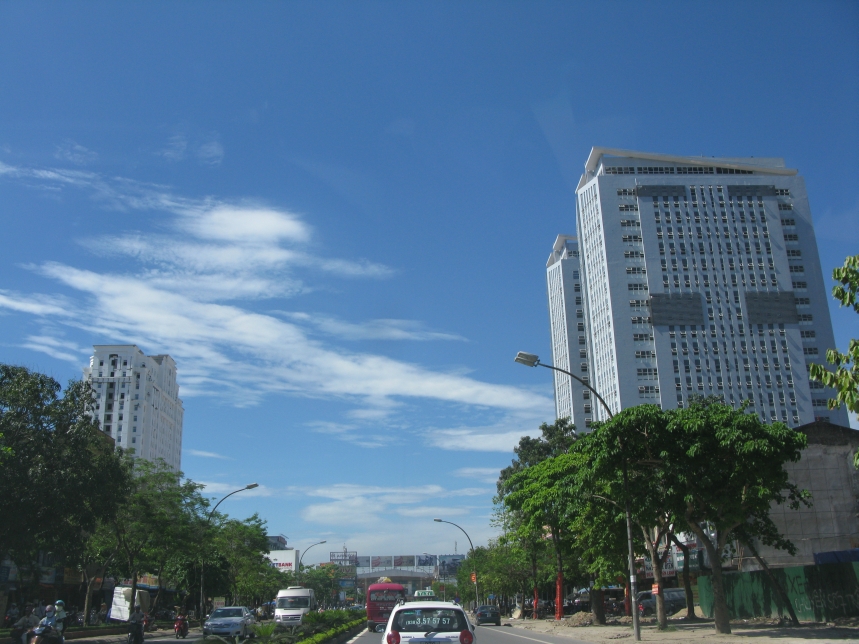
Vinh city, the provincial capital of Nghe An — Public domain
Frequently Asked Questions
How long do Cua Lo tours last?
The standard Cua Lo tours last three days and two nights, with a morning’s drive from Hanoi, two days on the beach and a morning at Kim Lien. Shorter two-day versions exist, but the three-day form is the settled standard, because the road from Hanoi is 300 to 340 kilometres.
Where is Cua Lo beach?
Cua Lo beach is on the coast of Nghe An province, about 16 kilometres north-east of Vinh city and 300 to 340 kilometres by road from Hanoi. The beach runs for about 10 kilometres, with fine white sand, clear water and a line of casuarina trees.
What is Kim Lien on Cua Lo tours?
Kim Lien is the home villages of President Ho Chi Minh, Sen village and Hoang Tru village, about 30 kilometres from Cua Lo beach, in Nam Dan district. The tour visits the villages on the third morning, to see the houses where he was born and grew up.
When is the best time for Cua Lo tours?
The summer, from May to August, is the best time for Cua Lo tours, when the sea is calm, the water is clear and the sun is strong. Winter brings wind and rough seas, and the beach grows quiet.
What are the three beaches of Cua Lo?
The three small beaches of Cua Lo are Lan Chau, Xuan Huong and Song Ngu, three stretches of the same long beach, each with its own character and its own strip of hotels. The two islands offshore are Ngu Island and Lan Chau Island.
Do Cua Lo tours include the boat trip to the islands?
Some Cua Lo tours include the boat trip to Ngu Island or Lan Chau Island, and some charge it as an extra, so the traveller should ask before booking. The boats run only in calm weather, and the trip is cancelled rather than risked when the wind rises.
Verified
The facts in this Cua Lo tours guide were drawn from the Vietnamese article for this entity and its cited sources, checked on 22 November 2026. The route from Hanoi by National Highway 1A to Vinh and out to Cua Lo, the distance of 300 to 340 kilometres by road, the beach of about 10 kilometres with fine white sand and clear water, the three small beaches Lan Chau, Xuan Huong and Song Ngu, the islands Ngu and Lan Chau, the distance of about 16 kilometres from Vinh, the Kim Lien Relic Site about 30 kilometres away with Sen village and Hoang Tru village, and Quyet Mountain with the temple of King Quang Trung are taken from those sources. Cua Lo tours are an itinerary rather than a fixed place, so no coordinates and no Wikidata item apply.
Sources
- Vietnam National Administration of Tourism, Nghe An — https://vietnam.travel/places-to-go/northern-vietnam/nghe-an
- Wikipedia, Cua Lo — https://en.wikipedia.org/wiki/C%E1%BB%ADa_L%C3%B2
- Wikipedia, Ho Chi Minh — https://en.wikipedia.org/wiki/Ho_Chi_Minh
- Nghe An Province, Cua Lo tourism — https://www.nghean.gov.vn
Unverified
The exact hotel prices and tour prices for Cua Lo tours change with the season and the operator, and no price was checked against an operator’s official site for this guide, so prices should be confirmed at booking. The precise founding dates of the resort hotels along the beach were not confirmed from primary sources, and the tour’s exact departure times vary by operator and by season.
Illustrations
- Hero: View of Cua Lo. Free image: https://upload.wikimedia.org/wikipedia/commons/a/a4/B%C3%A3i_bi%E1%BB%83n_C%E1%BB%ADa_L%C3%B2..jpg — CC BY-SA 3.0.
- In body, cua lo: Cua Lo Port, Nghe An Province, Vietnam. Free image: https://upload.wikimedia.org/wikipedia/commons/b/bd/Cang_Cua_Lo.jpg — Public domain.
- In body, cua lo: Biểu tượng Bãi biển Cửa Lò. Free image: https://upload.wikimedia.org/wikipedia/commons/9/9a/Cua_Lo_Beach.jpg — CC BY-SA 4.
- In body, Ngu Island: Ngu Island seen from Cua Lo beach. Free image: https://upload.wikimedia.org/wikipedia/commons/8/88/H%C3%B2n_Ng%C6%B0%2C_C%E1%BB%ADa_L%C3%B2%2C_Ngh%E1%BB%87_An.jpeg — Linhcandng, CC BY-SA 3.
- In body, Cua Lo beach at sunrise: Sunrise over Cua Lo beach. Free image: https://upload.wikimedia.org/wikipedia/commons/3/30/Sun_rise_at_CuaLo.jpg — Handyhuy, CC BY-SA 3.
- In body, Lam River: The Lam River at Vinh. Free image: https://upload.wikimedia.org/wikipedia/commons/a/af/S%C3%B4ng_Lam.jpg — Bùi Thụy Đào Nguyên, CC BY-SA 3.
- In body, Kim Lien: Tomb of Hoang Thi Loan, mother of Ho Chi Minh, at Kim Lien. Free image: https://upload.wikimedia.org/wikipedia/commons/c/c9/Khu_m%E1%BB%99_b%C3%A0_Ho%C3%A0ng_Th%E1%BB%8B_Loan.jpg — David Brewer, CC BY-SA 2.
- In body, Vinh: 1912 plan of the Vinh citadel. Free image: https://upload.wikimedia.org/wikipedia/commons/d/db/B%E1%BA%A3n_v%E1%BA%BD_th%C3%A0nh_Vinh%2C_Ngh%E1%BB%87_An.jpg — Public domain.
- In body, Cua Lo beach at night: Cua Lo beach at night. Free image: https://upload.wikimedia.org/wikipedia/commons/6/61/Cualovedem.jpg — Lê Nguyễn Nhật Long, CC BY-SA 4.
- In body, Cua Lo beach hotels: Hotels along Cua Lo beach. Free image: https://upload.wikimedia.org/wikipedia/commons/d/d2/Kh%C3%A1ch_s%E1%BA%A1n_d%E1%BB%8Dc_bi%E1%BB%83n_C%E1%BB%ADa_L%C3%B2.jpeg — Linhcandng, CC BY-SA 3.
- In body, Vinh city: Lenin Avenue, Vinh city. Free image: https://upload.wikimedia.org/wikipedia/commons/2/2a/Lenin_Avenue_in_Vinh_city.jpg — Public domain.
- In body, Vinh City: Vinh city, the provincial capital of Nghe An. Free image: https://upload.wikimedia.org/wikipedia/commons/a/a2/Vinh_City.jpg — Public domain.