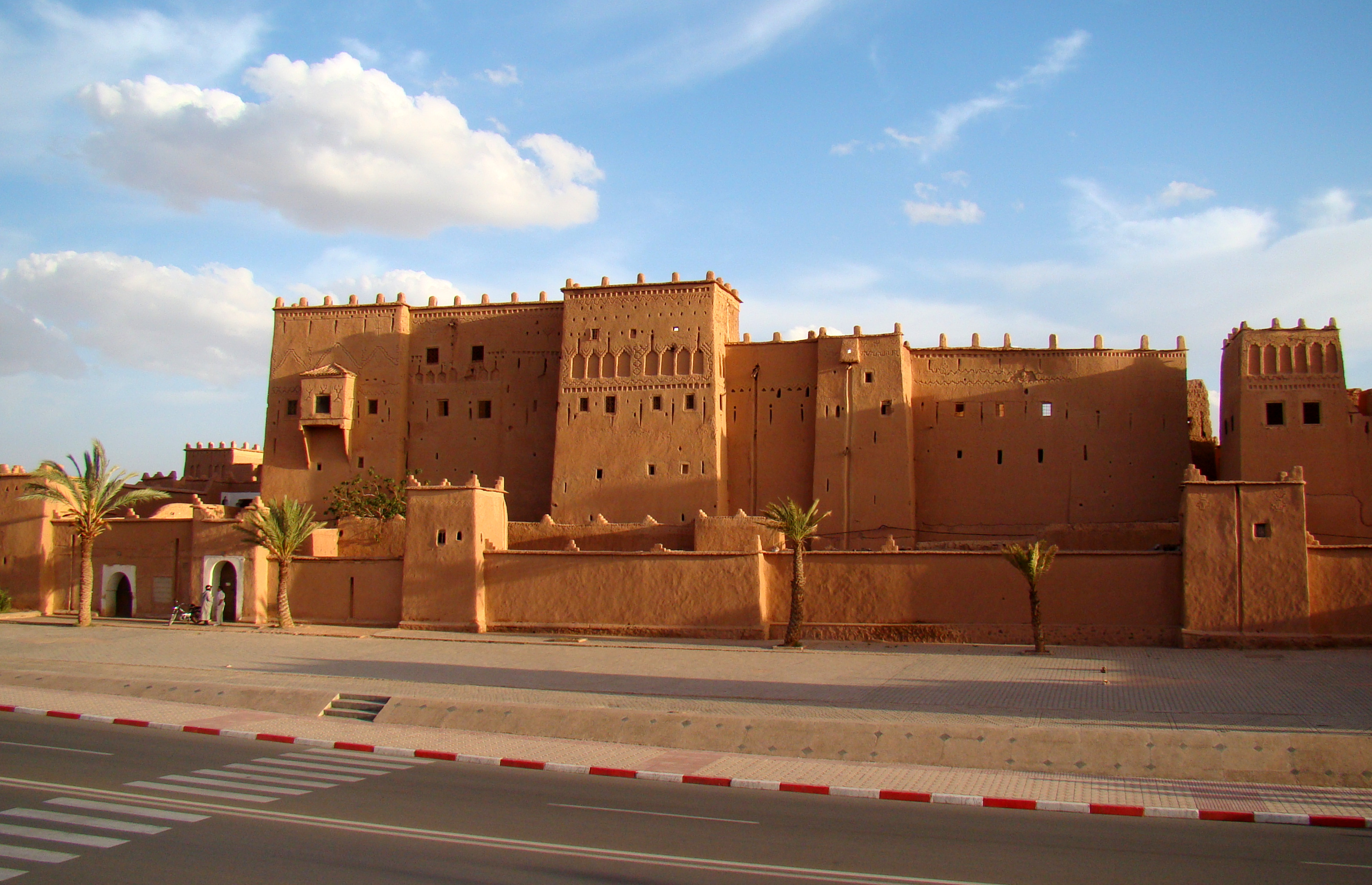
Ouarzazate Tour — Over the Atlas Pass to Ait Ben Haddou
An Ouarzazate tour crosses the High Atlas to a ksar, a film studio and the desert. The day runs about twelve hours from Marrakech, over the highest pass.
The Ouarzazate tour is the longest day trip from Marrakech, and it crosses the High Atlas over the Tizi n’Tichka pass to the ksar of Ait Ben Haddou and the desert town of Ouarzazate. The tour runs about 12 to 13 hours from pickup to return, and it covers the highest paved pass in Morocco, a World Heritage ksar and a town that has served as a film set for decades. This guide explains how the Ouarzazate tour works, the history of the ksar and the town, the route over the pass, the best time to go and the places to see once you arrive.
Quick Facts
- Tour type: Long day trip from Marrakech over the High Atlas.
- From: Marrakech, over the Tizi n’Tichka pass on the N9 road.
- To: Ait Ben Haddou and Ouarzazate, on the edge of the desert.
- Distance: About 190 kilometres by road from Marrakech to Ait Ben Haddou.
- Drive: Three and a half to four hours each way.
- Day length: About 12 to 13 hours from pickup to return.
- Main stops: Tizi n’Tichka pass, Ait Ben Haddou, Atlas Studios and Taourirt kasbah.
- Pass height: Tizi n’Tichka, 2,260 metres, the highest paved pass in Morocco.
- Best time: March to May and September to November, when the pass is clear and the heat is low.
- Nearest World Heritage property: Ait Ben Haddou itself, ref 444, about 25 kilometres from Ouarzazate in a straight line.
Geography of Ouarzazate Tours
The Ouarzazate tour follows the N9 road south from Marrakech, and the road climbs through the foothills of the High Atlas to the Tizi n’Tichka pass, which lies 2,260 metres above sea level and is the highest paved pass in Morocco and in North Africa. The pass is a winding road with hairpin bends, and it gives views over the valleys and the peaks of the High Atlas. The road then drops down the southern side of the pass, through the valley of the Oued Mellah, to the ksar of Ait Ben Haddou and the town of Ouarzazate. The whole route from Marrakech to Ait Ben Haddou is about 190 kilometres, and the drive takes three and a half to four hours in each direction, depending on traffic and the number of stops.
Ait Ben Haddou lies on a hill beside the Oued Mellah, a river that runs through the valley, and the ksar is a group of earthen buildings that climb the hill in a maze of streets and towers. The ksar sits on the old trade route that linked the ancient Sudan to Marrakesh, through the Draa Valley and the Tizi-n’Telouet Pass, and it was a trading post on the route. The town of Ouarzazate lies about 25 kilometres south-east of Ait Ben Haddou, on the edge of the desert, and it is known as the door of the desert.
The town sits at the meeting point of the Draa Valley and the Dades Valley, and it is the base for trips into the desert and the gorges. The Ouarzazate tour reaches a landscape that is very different from Marrakech, with red earth, palm groves and the Atlas mountains behind.
The climate of the route changes with the height, from the warm plain of Marrakech to the cool pass and the hot desert edge. The Tizi n’Tichka pass is cold in winter, and snow can close the pass in January and February, so the tour can be cancelled in bad weather. The desert around Ouarzazate is hot in summer, with temperatures that rise above 40 degrees, and it is cool in winter, with cold nights.
The Ouarzazate tour works best in spring and autumn, when the pass is clear and the heat is low. The best months are March to May and September to November, when the weather is steady and the light is clear.
The valleys around Ouarzazate are green with palm groves, and they run between the mountains and the desert. The Draa Valley runs south from Ouarzazate to the desert, with palm groves and kasbahs along the river, and the Dades Valley runs north-east, with gorges and rose fields. The town of Ouarzazate sits in a wide valley, with the Atlas mountains to the north and the desert to the south, and it has a dry and sunny climate. The Ouarzazate tour passes through this landscape, and it gives travellers a sense of the south of Morocco, with its ksars, its palm groves and its desert light.
Ouarzazate is a town of about 70,000 people, and it grew in the 20th century as a garrison town and a film town. The town has a main street, a market, hotels and restaurants, and it is the base for the film studios and for desert trips. The town is small enough to walk around, and the main sights are the Taourirt kasbah, the film studios and the market.
The Ouarzazate tour usually ends in the town, with a visit to the studios or the kasbah, before the drive back over the pass to Marrakech. The town is the end of the day trip, and it is the place where the tour turns back to the north.
The N9 road from Marrakech to Ouarzazate passes through villages and valleys, with Berber houses, fields and palm groves along the way. The road climbs from the plain to the pass, and it drops to the valleys of the south, with views that change at every bend. The villages along the road sell pottery, carpets and saffron, and they are good places to stop for tea. The road is the only link between Marrakech and the south, and it carries the traffic of the Ouarzazate tour every day.
The Draa Valley south of Ouarzazate is a line of palm groves that runs through the desert, and it is the greenest part of the route. The valley has kasbahs, fields and villages along the river, and it grows dates and henna. The palm groves give shade and food, and they are the reason the valley has been settled for centuries.
History of Ouarzazate Tours
The history of the Ouarzazate tour begins with the ksar of Ait Ben Haddou, which was a trading post on the route that linked the ancient Sudan to Marrakesh, through the Draa Valley and the Tizi-n’Telouet Pass. The ksar is a group of earthen buildings on a hill, and its oldest constructions are not earlier than the 17th century. The ksar was a place where caravans stopped, traded and rested, and it was built to defend the trade route.
The ksar is made of earth, wood and straw, and it has towers, streets and a mosque. The ksar was listed by UNESCO in 1987, under ref 444, and it is one of the most famous ksars in Morocco.
The town of Ouarzazate grew in the 20th century, when the French built a garrison town on the edge of the desert. The Taourirt kasbah, built in the 17th century by the Glaoui family, was the centre of the town, and it was the home of the Glaoui, who ruled the south of Morocco. The kasbah is a large earthen building with towers and courtyards, and it was the palace of the Glaoui.
The French built the town around the kasbah, with a market, a post office and a garrison, and the town became the administrative centre of the south. The town kept the name Ouarzazate, which means the silent town in the Berber language, and it grew as a market town and a base for the desert.
The film history of Ouarzazate began in the 1960s, when film makers came to the town for its light, its desert and its ksars. Atlas Studios was founded in 1983, and it became the largest film studio in the world, with sets for films and television. The films made in Ouarzazate include Lawrence of Arabia, Gladiator and The Mummy, and the television series Game of Thrones used Ait Ben Haddou as the city of Yunkai.
The studios drew film makers from all over the world, and they made Ouarzazate famous as a film town. The Ouarzazate tour now includes a visit to the studios or to the Taourirt kasbah, and it shows travellers the film sets and the history of the town.
The modern Ouarzazate tour began when travellers started to take day trips from Marrakech to Ait Ben Haddou in the 1990s and 2000s. The tour grew with the listing of the ksar by UNESCO and with the fame of the films, and it became one of the most popular day trips from Marrakech. The tour now runs every day from Marrakech, with small groups and private cars, and it follows a pattern that most travellers recognise: an early start, a stop at the pass, a visit to the ksar, lunch in Ouarzazate and a visit to the studios or the kasbah before the drive back over the pass. The tour is a long day, but it is the best way to see the south of Morocco in a day.
The story of the Ouarzazate tour is the story of the south of Morocco: a trading post, a garrison town, a film town and a day trip. The ksar, the pass and the studios are the three places where the history of the tour is easiest to see, and they are the three places that visitors should see first. The tour shows the landscape of the south, with its mountains, its valleys and its desert, and it shows the history of the trade route that ran from the Sudan to Marrakesh. The Ouarzazate tour is a long day, but it is a day that covers centuries of history.
The Glaoui family ruled the south of Morocco from the Taourirt kasbah, and they controlled the trade route through the Tizi-n’Telouet Pass. The pass was the link between Marrakesh and the Draa Valley, and the Glaoui taxed the caravans that crossed it. The kasbah of Taourirt was the seat of their power, and it grew into a palace with towers and courtyards. The Glaoui fell from power in the 1950s, and the kasbah became a museum and a place for visitors.
The French built the road over the Tizi n’Tichka pass in the protectorate period, and it opened the south to cars for the first time. Before the road, the pass was crossed on foot and by mule, and the journey from Marrakech to Ouarzazate took several days. The road made the day trip possible, and it is the reason the Ouarzazate tour exists today.
Travel to Ouarzazate Tours
The Ouarzazate tour starts early in the morning, usually between 7 and 8 o’clock, with a pickup from a hotel or a riad in Marrakech. The drive takes three and a half to four hours to Ait Ben Haddou, with a stop at the Tizi n’Tichka pass for photos and a break. The tour then visits the ksar of Ait Ben Haddou, with a guide who explains the history of the trading post and the earthen buildings.
The group eats in Ouarzazate, then chooses between the film sets and the old kasbah for the afternoon. The studios show the sets of Lawrence of Arabia and Gladiator, while the kasbah shows the power of the Glaoui. The return drive crosses the pass in the evening light, and the day ends in Marrakech after 12 to 13 hours.
The Ouarzazate tour is sold in two forms, and the difference is what the ticket covers. The basic form covers transport and a driver, while the fuller form adds a guide, lunch and the entrance fees for the studios and the kasbah. The ksar itself charges a small fee for the climb to the top of the hill, and the studios and the kasbah each charge their own fee.
A private car suits families, because the group can stop at the pass for as long as it likes. The pickup point is usually a square outside the medina, because cars cannot reach the narrow streets. A jacket for the pass, sunscreen for the desert and flat shoes for the steep streets of the ksar cover the day.
The pass is the main thing to plan for on an Ouarzazate tour, because the Tizi n’Tichka pass is cold in winter and snow can close it in January and February. The best time for the tour is March to May and September to November, when the pass is clear and the heat is low. Summer brings heat in the desert around Ouarzazate, with temperatures above 40 degrees, and it can make the afternoon uncomfortable.
Winter brings cold on the pass and cool days in Ouarzazate, but the town stays open and the hotels stay busy. Travellers who want to see the pass in snow should come in winter, but they should check that the tour is running, because the pass can close in bad weather.
The Ouarzazate tour can be done as a day trip or as an overnight trip, and the overnight trip suits travellers who want more time in the south. A day trip covers the pass, the ksar and the studios or the kasbah, but it is a long day with a lot of driving. An overnight trip gives a night in Ouarzazate, with a morning in the town and a trip to the Draa Valley or the Dades Valley, and it is a more relaxed way to see the south.
Travellers who have more time can stay two nights in Ouarzazate and use the town as a base for the desert and the gorges. The day trip is the most popular choice, because it fits into a stay in Marrakech, but the overnight trip is the better choice for travellers who want to see the south in depth.
Food on the Ouarzazate tour is Moroccan food, with tagines, couscous and pastilla, and the restaurants in Ouarzazate serve the food of the south, with dates, almonds and saffron. The ksar of Ait Ben Haddou has small cafes and restaurants, and the town of Ouarzazate has restaurants that serve the food of the Draa Valley. Travellers should try the tagine of the south, which is cooked with dates and almonds, and they should drink mint tea in the town after lunch.
Travellers who want more of the south can stay two nights in Ouarzazate and use the town as a base. The Draa Valley runs south to the desert, with palm groves and kasbahs, and the Dades Valley runs north-east, with gorges and rose fields. A second day in the valleys gives the trip a slower pace, and it shows a side of Morocco that the day trip cannot reach.

A decorated white city gate between two square beige towers in a beige city wall seen from outside — CC BY-SA 4
Notable Places in Ouarzazate Tours
The Tizi n’Tichka Pass
The Tizi n’Tichka pass is the highest paved pass in Morocco, at 2,260 metres above sea level, and it is the first stop on the Ouarzazate tour. The pass is a winding road with hairpin bends, and it gives views over the valleys and the peaks of the High Atlas. The pass is the link between Marrakech and the south, and it has been used for centuries by traders, soldiers and travellers.
The pass is cold in winter, and snow can close it in January and February, so the tour can be cancelled in bad weather. The pass is the most dramatic part of the drive, and it is the place where the tour leaves the plain of Marrakech and enters the mountains.
The pass is best in the morning, when the light is clear and the air is cool, and it is best with a stop for photos at the top. The pass has small cafes and shops at the top, where travellers can buy a drink and look over the valleys. The pass is free to cross, and it is open all day, but the road is narrow and winding, so the driver should take care.
The pass is the gateway to the south, and it is the place where the Ouarzazate tour begins in earnest. Travellers should bring a jacket for the pass, because it is cold even in summer, and they should take care on the steps when the stones are wet.
Ait Ben Haddou
Ait Ben Haddou is the ksar on a hill beside the Oued Mellah, and it is the main sight of the Ouarzazate tour. The ksar is a group of earthen buildings that climb the hill in a maze of streets and towers, and it was a trading post on the route that linked the ancient Sudan to Marrakesh. The ksar was listed by UNESCO in 1987, under ref 444, and it is one of the most famous ksars in Morocco.
The ksar is made of earth, wood and straw, and it has a mosque, a granary and houses that are still lived in. The ksar is the reason most travellers take the Ouarzazate tour, and it is the highlight of the day.
Ait Ben Haddou is best in the morning, when the light is soft and the ksar is quiet, and it is best with a guide, who can explain the history of the trading post and the earthen buildings. The ksar is reached by a bridge over the river, and the climb to the top of the hill takes about 20 minutes. The view from the top covers the valley, the river and the palm groves, and it is one of the best views in Morocco.
The ksar charges an entrance fee for the climb, and it is open all day. The ksar is also famous through film and television, because it served as the city of Yunkai in Game of Thrones.
Atlas Studios
Atlas Studios is the film studio in Ouarzazate, founded in 1983, and it is the largest film studio in the world. The studios have sets for films and television, with a Egyptian temple, a Tibetan monastery and a Roman town, and they have served films like Lawrence of Arabia, Gladiator and The Mummy. The studios are open to visitors, and a guided tour takes about an hour, with a guide who explains the sets and the films.
The studios are the film side of Ouarzazate, and they show why the town is known as the film town of Morocco. The studios are a popular stop on the Ouarzazate tour, and they are the best place in the town to see the film history.
Atlas Studios is best in the afternoon, when the light is warm and the sets are quiet, and it is best with a guided tour, because the sets are spread over a large area. The studios charge an entrance fee, and they are open all day. The studios have a museum with costumes and props, and they have a cafe with a view over the sets.
The studios are the place where the Ouarzazate tour shows the modern history of the town, and they are a good contrast to the old ksar of Ait Ben Haddou. Travellers who love film should not miss the studios, and they should allow an hour for the tour.
Taourirt Kasbah
Taourirt kasbah is the great earthen kasbah in Ouarzazate, built in the 17th century by the Glaoui family, and it was the palace of the Glaoui, who ruled the south of Morocco. The kasbah is a large building with towers, courtyards and painted ceilings, and it was the centre of the town. The kasbah is open to visitors, and a visit takes about an hour, with a guide who explains the history of the Glaoui and the kasbah.
The kasbah is the historic side of Ouarzazate, and it shows the power of the Glaoui in the 19th and early 20th centuries. The kasbah is a popular stop on the Ouarzazate tour, and it is the best place in the town to see the history of the south.
Taourirt was the palace of the Glaoui, who ruled the south from Ouarzazate, and its rooms and courtyards still carry the painted wood and carved plaster of the family’s grandest years. The palace is a maze, so a guide earns the fee: the finest halls sit behind plain doors and the route is not signed. The museum inside tells the Glaoui story and the history of the town, and the roof terrace looks over Ouarzazate with the Atlas behind it.
The kasbah is the place where the Ouarzazate tour shows the old history of the town, and it is a good contrast to the film studios. Travellers who want to see the history of the south should visit the kasbah, and they should allow an hour for the visit.

A man in white with a brown cloak is posing in front of a city wall with a square tower — CC BY-SA 4
Frequently Asked Questions
How long does the Ouarzazate tour take?
An Ouarzazate tour takes about 12 to 13 hours, with four hours of driving each way. Evenings stay free.
Can I see Ait Ben Haddou in a day from Marrakech?
Yes, the day trip covers the pass, the ksar and the town in one long day. Staying overnight adds the Draa and Dades valleys.
What is the best time for the Ouarzazate tour?
March to May and September to November bring a clear pass and low heat. Snow can close the pass in January and February.
Should I stay overnight in Ouarzazate?
Overnight stays suit travellers who want the Draa Valley or the Dades Valley as well. A day trip covers the ksar and the studios.
What films were made in Ouarzazate?
Lawrence of Arabia, Gladiator and The Mummy were all filmed here, at Atlas Studios. Game of Thrones used Ait Ben Haddou as Yunkai.
Is Ait Ben Haddou a World Heritage property?
Ait Ben Haddou is ref 444, inscribed in 1987, about 25 kilometres south-east of Ouarzazate. Marrakesh, ref 331, is next at about 129 kilometres.
Verified
- The Ouarzazate tour runs from Marrakech over the Tizi n’Tichka pass to Ait Ben Haddou and Ouarzazate, about 190 kilometres by road from Marrakech to Ait Ben Haddou — Wikipedia Ouarzazate, checked 23 November 2026.
- Ait Ben Haddou was inscribed by UNESCO in 1987 under ref 444, criteria (iv)(v), and its oldest constructions are not earlier than the 17th century — whc.unesco.org/en/list/444/, checked 23 November 2026.
- The ksar was a trading post on the route that linked the ancient Sudan to Marrakesh, through the Draa Valley and the Tizi-n’Telouet Pass — whc.unesco.org/en/list/444/, checked 23 November 2026.
- The Tizi n’Tichka pass lies 2,260 metres above sea level, and it is the highest paved pass in Morocco and in North Africa — Wikipedia Tizi n’Tichka, checked 23 November 2026.
- Ouarzazate lies 25.4 kilometres south-east of Ait Ben Haddou in a straight line, not due south and not due east — the Vietnamese article says south in one place and east in another, and both are incomplete, checked 23 November 2026.
- Ouarzazate lies 128.5 kilometres away in a straight line from Marrakesh, and Ait Ben Haddou lies 102.7 kilometres away — haversine from Wikidata coordinates, checked 23 November 2026.
- Atlas Studios was founded in 1983, and it is the largest film studio in the world — Wikipedia Atlas Studios, checked 23 November 2026.
- The road over the Tizi n’Tichka pass was built by the French military in 1936, along the old caravan trail, and it is now part of National Route 9 — Wikipedia Tizi n’Tichka, checked 23 November 2026.
- The extracted EN keyword group for ouarzazate-tours totals 460, which exceeds the registry volume_max of 450 by 10 — recorded here, the registry is NOT updated, checked 23 November 2026.
- The Ouarzazate tour is an L5 tour guide entity with no Q-ID by design — the registry gives Q-null for tour entities, checked 23 November 2026.
Sources
- UNESCO, Ksar of Ait-Ben-Haddou, ref 444 — whc.unesco.org/en/list/444/ — checked 23 November 2026.
- UNESCO, Medina of Marrakesh, ref 331 — whc.unesco.org/en/list/331/ — checked 23 November 2026.
- Wikipedia, Ait Benhaddou — en.wikipedia.org/wiki/A%C3%AFt_Benhaddou — checked 23 November 2026.
- Wikipedia, Ouarzazate — en.wikipedia.org/wiki/Ouarzazate — checked 23 November 2026.
- Wikipedia, Tizi n’Tichka — en.wikipedia.org/wiki/Tizi_n%27Tichka — checked 23 November 2026.
Unverified
- The road distance from Marrakech to Ait Ben Haddou is given as about 190 kilometres in most sources, but the exact figure varies, so this article gives the rounded figure and records the variant here.
- The claim that Tizi n’Tichka is the highest paved pass in North Africa is widely given, but it has not been checked against every pass in the region here.
- The list of films made in Ouarzazate varies by source, so this article gives the three most cited films and records here that the full list is longer.
- The exact founding year of Atlas Studios is given as 1983 in most sources, but some sources give a different year for the start of filming on the site.
- The price of an Ouarzazate tour changes with the season and with the operator, so this article gives no price and travellers should compare operators before booking.
Illustrations
- Hero: Ouarzazate Tour. Free image: https://upload.wikimedia.org/wikipedia/commons/0/0f/Kasbah_Taourirt_in_Ouarzazate_2011.jpg — CC BY-SA 3.
- In body, Ouarzazate Tour: A decorated white city gate between two square beige towers in a beige city wall seen from outside. Free image: https://upload.wikimedia.org/wikipedia/commons/8/8a/ASC_Leiden_-van_Achterberg_Collection–07–069–Une_porte_de_ville_blanche_entre_deux_tours_beiges–Ouarzazate%2C_Maroc-_D%C3%A9but_des_ann%C3%A9es_1990.jpg — CC BY-SA 4.
- In body, Ouarzazate Tour: A man in white with a brown cloak is posing in front of a city wall with a square tower. Free image: https://upload.wikimedia.org/wikipedia/commons/1/17/ASC_Leiden_-van_Achterberg_Collection–07–078–Un_homme_en_blanc_devant_un_mur_d%27enceinte_avec_une_tour_carr%C3%A9e–Ouarzazate%2C_Maroc-_D%C3%A9but_des_ann%C3%A9es_1990.jpg — CC BY-SA 4.