
Kenya and Tanzania Tours — One Migration Across Two Countries
Kenya and Tanzania tours follow one great migration across two countries. The herds cross the Mara River every dry season. Most travellers start in Nairobi or Arusha, cross the border at Namanga or Isebania, and finish on the beaches of Zanzibar. This guide explains the route, the seasons, the types of tour and the practical choices, without giving prices.
Kenya and Tanzania tours work because the two countries share a single ecosystem. The Serengeti of Tanzania and the Masai Mara of Kenya are one grassland divided by a border, and the herds move across it without noticing the line. Travellers who follow the herds therefore see the same migration from two sides, with different landscapes, different lodges and different rules in each country. The sections below cover the geography of the shared ecosystem, the history that shaped the two safari industries, and the practical choices that decide how a tour feels.
The route suits first-time safari travellers and returning visitors alike, because it packs the best of East Africa into one journey. A first visit usually follows the classic loop through the Mara, the Serengeti and Ngorongoro, while a second visit can slow down, add Tarangire and Lake Manyara, or end with a week on Zanzibar. Whatever the length, the shape of the trip stays the same: move with the herds, sleep near the animals, and cross the border where the migration crosses it.
Quick Facts
- Route: Kenya and Tanzania tours cross East Africa from Nairobi or Arusha to the Serengeti, the Masai Mara and Ngorongoro, often ending in Zanzibar.
- Two countries: Kenya and Tanzania share a land border crossed at Namanga and Isebania, with separate visas for each side.
- Pillars: Serengeti National Park in Tanzania and the Masai Mara National Reserve in Kenya, one migration ecosystem.
- Migration: About two million wildebeest, 900,000 Thomson’s gazelles and 300,000 zebras move in a loop of about 1,000 km each year.
- UNESCO sites: Serengeti ref 156, Ngorongoro ref 39 and Kilimanjaro ref 403, plus Stone Town ref 173 on Zanzibar.
- Typical length: Seven to ten days for the classic route; two weeks for the full route with Zanzibar.
- Gateways: Nairobi in Kenya and Arusha in Tanzania, both with international airports and domestic flights to the safari parks.
- Languages: Swahili and English are widely used in both countries.
- Extension: Zanzibar, an Indian Ocean island, is the usual beach ending for a two-week tour.
Geography of Kenya and Tanzania Tours
The Serengeti and the Masai Mara form a single grassland that happens to sit in two countries. The Serengeti covers 1,476,300 hectares in northwestern Tanzania, and the Masai Mara covers 1,672 square kilometres directly to its north in Kenya. The herds treat the two as one plain, and Kenya and Tanzania tours exist for exactly that reason: travellers follow the animals wherever the grass and the rain take them. A tour that stays on one side of the border sees only half the migration, while a tour that crosses it follows the full loop.
Inside the shared ecosystem, five zones shape what a tour sees. The central Seronera area holds kopjes, great granite blocks where lions rest, and the best roads in the park. The western corridor follows the Grumeti River, where the herds make their first river crossings in May and June.
The southern Ndutu plains are short grass country where wildebeest calve in January and February, and the eastern plains are open country where cheetahs hunt from November to June. The northern Mara, across the Kenyan border, is rolling grassland cut by the Mara River, where the famous crossings happen from July to October. Each zone rewards a different month, which is why the route moves through the year instead of staying in one place.
The migration itself is the largest land movement of animals on earth. About two million wildebeest, 900,000 Thomson’s gazelles and 300,000 zebras walk a loop of about 1,000 km every year, followed by lions, leopards, cheetahs and hyenas. The Serengeti holds the densest predator population in the world, with about 4,000 lions, 1,000 leopards, 225 cheetahs and 3,500 spotted hyenas. Kenya and Tanzania tours time their routes to meet the herds: calving in the south in the first months of the year, river crossings in the west and the north in the dry season, and the slow return south when the short rains begin.
East Africa has two rainy seasons and one long dry season, and the herds follow the rain. The long rains fall from March to May, the short rains from October to December, and the long dry season runs from June to October. The dry months are the best for watching animals, because the grass is short, the herds gather at water, and the view across the plains is clear. Kenya and Tanzania tours run all year, but the calving months from January to March offer a different spectacle, with thousands of newborn wildebeest on the Ndutu plains each day and predators drawn to the young herds.
The distances between stops are long, and the choice of transport shapes the trip. The road from Nairobi to the Masai Mara runs about 270 km and takes five to six hours, with the last stretch on dirt roads. From Arusha to Ngorongoro and the Serengeti, travellers drive across the highlands in a four-wheel-drive vehicle, and the longest leg takes a full day. Many Kenya and Tanzania tours mix road and air: light aircraft fly straight to grass airstrips inside the parks, saving time, while driving between nearby stops keeps the game viewing going all day.
The border between Kenya and Tanzania is crossed at Namanga, between Nairobi and Arusha, or at Isebania, between the Masai Mara and the Serengeti. Travellers need a passport and a visa for each country, and the paperwork should be ready before reaching the border, because remote crossings can be slow. Guides and vehicles from one country usually cannot work in the other, so many Kenya and Tanzania tours change vehicles and guides at the border. Package tours usually handle the whole crossing, which is one reason travellers choose them for this route.
Two rivers decide the drama of the migration. The Grumeti in the west and the Mara in the north are the crossings the herds must make, and both hold Nile crocodiles and hippos. The Grumeti crossings come first, in May and June, when the herds leave the southern plains. The Mara crossings follow from July to October, and they are harder: the river runs fast between steep banks, and the herds wait for hours before one animal leads the plunge.
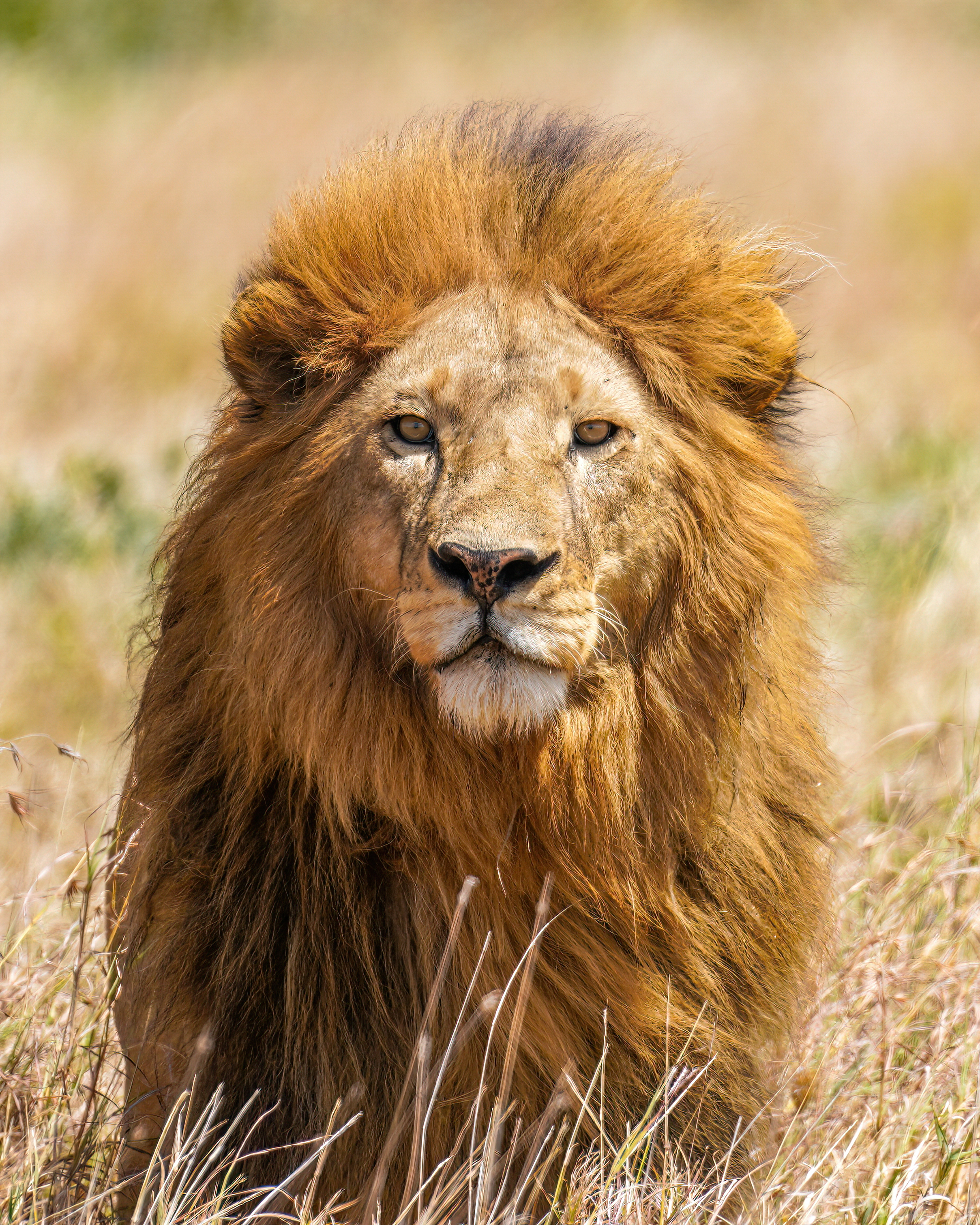
Portrait of the wild lion ( Panthera leo ) Tryggve , son of C-Boy , in the Serengeti National Park , Tanzania — CC BY-SA 4
History of Kenya and Tanzania Tours
The safari began as European sport hunting in the late nineteenth and early twentieth centuries, when hunters and explorers came to East Africa for elephant and lion. Serengeti became a national park in 1951, and Ngorongoro was split off as a separate conservation area in 1959, a multiple land use area where Maasai herders graze cattle beside wild animals. The Masai Mara was established as a reserve in 1961, at first only 520 square kilometres, and later extended to 1,672 square kilometres. These three decisions laid the ground for the modern safari industry in both countries, and Kenya and Tanzania tours still follow the map they drew.
The 1970s brought the great divide between the two countries. Kenya banned sport hunting completely in 1977 and turned the whole hunting industry towards photographic tourism. Tanzania kept a part of controlled hunting in separate blocks, while the national parks of Serengeti and Ngorongoro ban hunting entirely. The difference survives today, and travellers on Kenya and Tanzania tours see two conservation models working side by side in a single ecosystem.
UNESCO listed Ngorongoro in 1979 as ref 39 and Serengeti in 1981 as ref 156, putting both places on the world travel map. Kilimanjaro National Park followed in 1987 as ref 403, protecting the highest mountain in Africa and the forests around it. In 2010 Ngorongoro was recognised again as a mixed property, honouring both its natural value and its culture, including Olduvai Gorge, where early human fossils were found, and the Laetoli footprints, about three and a half million years old. The listings drew investment into airstrips, lodges and tented camps, and the cross-border tour became the flagship product of East African travel.
The Maasai are the people most closely tied to this land. They are semi-nomadic herders who have lived among the wild herds for hundreds of years, and the name Masai Mara comes from their language, describing the spotted grassland. Many Kenya and Tanzania tours visit a Maasai village, where travellers learn about dress, daily life and ceremony. The relationship between conservation and community runs through the whole history of the region: the Maasai were moved out of the Serengeti when the park was created, and land rights in Ngorongoro are still negotiated today.
Cross-border safari travel grew strongly from the 1990s, as roads improved and domestic airlines opened flights to the safari parks. Combined Kenya and Tanzania tours became the leading product of many East African operators, because travellers wanted to see both the Serengeti and the Masai Mara in one trip. The pandemic of 2020 cut visitor numbers sharply in both countries, but from 2022 the guests returned, and the two-week tour came back as the most searched form of the journey. Today the route is one of the most searched safari journeys in the world, with hundreds of operators and many levels of service.
The name Serengeti comes from the Maasai word siringet, meaning endless plains, and the name fits the view from a kopje at dawn. Early European visitors wrote about a plain so wide that the herds looked like a moving shadow on the horizon. The first lodges were simple camps for hunters, then for photographers, and the mobile camp followed, letting guests sleep where the herds slept. Kenya and Tanzania tours keep that idea: the camp moves, the route follows the animals, and the traveller wakes where the migration woke.
The safari model today is photographic, and the money it brings funds the protection of the parks. Lodges and mobile camps pay park fees, employ local guides and buy from nearby villages, so a tour is part of the conservation system, not separate from it. Community conservancies beside the parks give herders income from wildlife, which eases the old tension between cattle and predators. Travellers on Kenya and Tanzania tours who understand this history see more than animals on the grass: they see a landscape where protection, community and tourism have to balance every day.

Panoramic view of the Serengeti National Park during the golden hour of sunrise — CC BY-SA 4
Travel to Kenya and Tanzania Tours
Kenya and Tanzania tours come in three broad forms: budget, mid-range and luxury. Budget tours use a shared vehicle, basic tented camps and simple meals, and suit young travellers and backpackers. Mid-range tours stay in lodges or comfortable tented camps, travel in a private vehicle with a guide, and are the most popular choice. Luxury tours stay in high-end tented camps inside the parks, with a private guide and vehicle throughout, and the three forms cross the same ecosystem and watch the same herds, differing only in lodging, transport and privacy.
The most popular itinerary lasts seven to ten days and starts in Nairobi or Arusha. A typical plan spends three days in the Masai Mara, crosses the border into the Serengeti for three or four days, then spends one or two days in Ngorongoro before ending in Arusha. Two-week Kenya and Tanzania tours add Tarangire, Lake Manyara or Zanzibar, letting travellers move slowly and stay longer at each stop. A five-day tour covers only one country, and travellers with little time should choose one country and explore it deeply rather than rushing through both.
The Zanzibar extension is the most searched addition to Kenya and Tanzania tours. After a week on the grass, travellers fly to the island in the Indian Ocean for the beach, the old town of Stone Town and the spice farms. Zanzibar lies about an hour by air from the mainland, and many tours include the domestic flights and the island stays. The mix of safari and sea is the great difference between this route and a tour that stays in one country, and it is why many couples choose Kenya and Tanzania for a honeymoon.
Travel on Kenya and Tanzania tours needs careful packing and health preparation. Travellers should carry antimalarial medicine, sunscreen, a wide-brimmed hat and light clothes that still cover the skin on cold early mornings. Luggage should go in soft bags rather than hard cases, because light aircraft to grass airstrips set strict weight and size limits. Many tours ask travellers to hold a yellow fever vaccination before entry, so the requirement should be checked with the embassy before departure.
This guide gives no figures for Kenya and Tanzania tours, because the price changes with the migration season, the level of the tented camp and the operator. High season from July to October usually costs more than low season, and the camps inside the parks charge per night and per person. Travellers should compare at least two or three operators, read carefully what is included, and ask clearly about park fees, guide fees, domestic flights and visa costs. Booking early for the migration season helps secure a good camp, because the tented camps in the Serengeti and the Masai Mara hold few rooms.
Booking a Kenya and Tanzania tour for the migration season should happen months ahead, because the small camps fill early. Travellers should confirm how the border crossing is handled, which vehicle and guide change at the border, and whether domestic flights between the parks are included. The booking should also state clearly what the tour covers: park fees, lodging, meals, guide services and transfers, so nothing is left to guess on arrival. A tour booked with these details settled lets the traveller focus on the animals instead of the paperwork.
Notable Places in Kenya and Tanzania Tours
Serengeti and the Great Migration
Serengeti is the centre of Kenya and Tanzania tours, a park of 1,476,300 hectares holding the largest migration on earth. About two million wildebeest, 900,000 Thomson’s gazelles and 300,000 zebras walk the loop each year, and the park also holds about 4,000 lions, 1,000 leopards, 225 cheetahs and 3,500 spotted hyenas. The best visits follow the seasons: calving on the Ndutu plains in January and February, and river crossings on the Grumeti and Mara from May to October.
Masai Mara and the Mara River
The Masai Mara is the Kenyan side of the migration, and the highlight of Kenya and Tanzania tours in the dry season. The reserve covers 1,672 square kilometres, and its river crossings from July to October are the most filmed scenes in the safari world. A dawn balloon flight over the rolling grass, ending with breakfast on the plain, is the classic Mara experience for travellers with an extra morning.
Ngorongoro and the Crater Floor
Ngorongoro is the stop that Kenya and Tanzania tours rarely skip, a conservation area of 809,440 hectares around the largest intact crater in the world. The crater floor covers about 260 square kilometres and holds about 25,000 large animals, including elephant, buffalo, zebra, wildebeest and one of the densest predator populations in Africa. Travellers descend to the floor for a day in a four-wheel-drive vehicle, watching animals at close range, and many tours pair the crater with Lake Manyara and Tarangire on the northern circuit.
Tarangire and Lake Manyara
Tarangire and Lake Manyara are the quieter stops on the northern circuit, and they suit travellers who want elephants and birds without the crowds. Tarangire is famous for giant baobabs and large dry-season elephant herds, while Lake Manyara is known for tree-climbing lions and flamingos on the soda lake. Both parks are reached by day trips from Arusha, and Kenya and Tanzania tours with two weeks to spare add them between the Mara and Ngorongoro.
Zanzibar and Stone Town
Zanzibar is the restful ending of Kenya and Tanzania tours, an island of white-sand beaches, spice farms and the old town of Stone Town. Stone Town is a UNESCO property, ref 173, inscribed in 2000, and its carved doors, narrow lanes and old harbour tell the story of the spice trade. Travellers fly in from Arusha or Nairobi in about an hour, then spend three or four days by the sea before flying home.
Frequently Asked Questions
How long do Kenya and Tanzania tours last?
Seven to ten days covers the Mara, the Serengeti and Ngorongoro. Two weeks adds Tarangire, Lake Manyara or Zanzibar without rushing.
When is the best time for Kenya and Tanzania tours?
July to October for the Mara River crossings. January to March for calving on the Ndutu plains, when predators follow the herds.
Do Kenya and Tanzania tours include Zanzibar?
Many do, usually as a three- to four-day beach extension at the end. Ask whether domestic flights and island stays are included.
Is it better to travel independently or on organised Kenya and Tanzania tours?
Organised tours are easier: guides track the herds and handle the border crossing. Self-driving is difficult, since vehicles rarely work in both countries.
What visas do I need for Kenya and Tanzania tours?
One visa for each country, since they are separate states. Many travellers arrange electronic visas before departure and check current rules with both embassies.
How much do Kenya and Tanzania tours cost?
No figures appear here, because prices change with the season, the lodging level and the operator.
Verified
- Serengeti National Park is a UNESCO property, ref 156, inscribed 1981 under criteria (vii)(x), covering 1,476,300 ha. The synthesis records about 2 million wildebeest, 900,000 Thomson’s gazelles and 300,000 zebras on a migration loop of about 1,000 km — whc.unesco.org/en/list/156/, checked 23/11/2026.
- Ngorongoro Conservation Area is a UNESCO property, ref 39, inscribed 1979 under criteria (vii)(viii)(ix)(x), with criterion (iv) added in 2010, covering 809,440 ha. The synthesis calls its crater the largest unbroken caldera in the world and records about 25,000 large animals — whc.unesco.org/en/list/39/, checked 23/11/2026.
- Kilimanjaro National Park is a UNESCO property, ref 403, inscribed 1987 under criterion (vii), covering 75,575 ha, with the summit at 5,895 m — whc.unesco.org/en/list/403/, checked 23/11/2026.
- Stone Town of Zanzibar is a UNESCO property, ref 173, inscribed 2000 under criteria (ii)(iii)(vi) — whc.unesco.org/en/list/173/, checked 23/11/2026.
- The Masai Mara National Reserve covers 1,672 square kilometres and adjoins the northern Serengeti, per the UNESCO Serengeti synthesis — whc.unesco.org/en/list/156/, checked 23/11/2026.
- Serengeti National Park was established in 1951. Ngorongoro was split off as a separate conservation area in 1959. The Masai Mara was established as a reserve in 1961, at first 520 square kilometres. Kenya banned sport hunting completely in 1977.
- The road from Nairobi to the Masai Mara runs about 270 km and takes five to six hours.
Sources
- UNESCO, Serengeti National Park, ref 156 — https://whc.unesco.org/en/list/156/ — checked 23/11/2026.
- UNESCO, Ngorongoro Conservation Area, ref 39 — https://whc.unesco.org/en/list/39/ — checked 23/11/2026.
- UNESCO, Kilimanjaro National Park, ref 403 — https://whc.unesco.org/en/list/403/ — checked 23/11/2026.
- UNESCO, Stone Town of Zanzibar, ref 173 — https://whc.unesco.org/en/list/173/ — checked 23/11/2026.
Unverified
- The exact position of the herds by month: the herds move with rain and grass, so monthly locations are forecasts, and operators update the expected position before departure.
- Visa and yellow fever rules: requirements change by nationality and over time, so check with the embassies of Kenya and Tanzania before travel.
- No search-volume figure appears in this article.
Illustrations
- Hero: Wild lion ( Panthera leo ) Snyggve (also known as Bob Junior), son of C-Boy , scanning the horizon in the Serengeti National Park. Free image: https://upload.wikimedia.org/wikipedia/commons/7/77/002_The_lion_king_Snyggve_in_the_Serengeti_National_Park_Photo_by_Giles_Laurent.jpg — CC BY-SA 4.
- In body, Serengeti National Park: Panoramic view of the Serengeti National Park during the golden hour of sunrise. Free image: https://upload.wikimedia.org/wikipedia/commons/3/3f/004_Sunrise_at_Serengeti_National_Park_Photo_by_Giles_Laurent.jpg — CC BY-SA 4.
- In body, Serengeti National Park: Portrait of the wild lion ( Panthera leo ) Tryggve , son of C-Boy , in the Serengeti National Park , Tanzania. Free image: https://upload.wikimedia.org/wikipedia/commons/6/6f/011_The_lion_king_Tryggve_in_the_Serengeti_National_Park_Photo_by_Giles_Laurent.jpg — CC BY-SA 4.