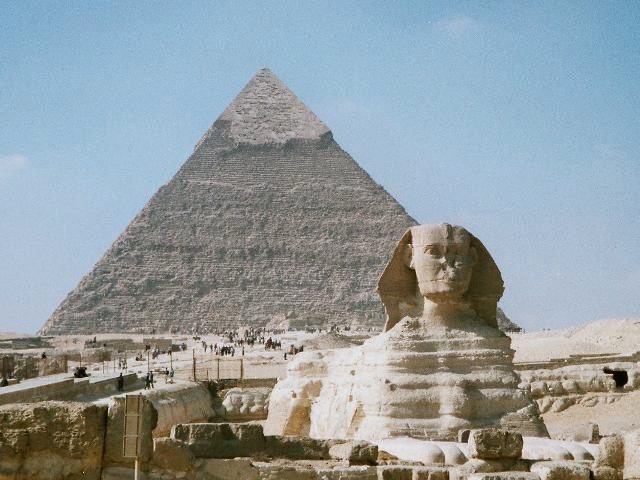
Egypt and Morocco Tours — Two Civilisations from the Nile to the Atlantic
An Egypt and Morocco tour joins two great civilisations in one journey. The usual route runs from the pyramids of Giza to the red city of Marrakech.
The journey below is laid out in the order travellers usually take it, Egypt first and Morocco second, with the choices that shorten or stretch it. Egypt is the Nile, the desert and the tombs of the pharaohs; Morocco is the Atlas, the red city and the Atlantic coast, and the two halves of the trip feel very different.
Quick Facts
- Form: A two-country tour of North Africa, joining ancient Egypt and imperial Morocco in one journey.
- Typical length: 10 to 14 days, with about 6 to 7 days in Egypt and 5 to 7 days in Morocco.
- Usual start: Cairo in Egypt, ending in Marrakech or Casablanca in Morocco, or the other way round.
- Between countries: A direct flight from Cairo to Casablanca, about 5 hours, is the most common way.
- Egypt highlights: The pyramids of Giza, Luxor, the Valley of the Kings, Abu Simbel, a Nile cruise.
- Morocco highlights: Fes, Marrakech, Chefchaouen, the Erg Chebbi desert, Ait Ben Haddou, Essaouira.
- Best time: From October to April, when both countries are cool and easy to travel.
- Format: A package tour with local guides, a tailor-made tour, or a premium tour with boutique hotels and riads.
Geography of Egypt and Morocco Tours
An Egypt and Morocco tour crosses two very different strips of North Africa, although the two countries share the same continent. Egypt stretches along the Nile, from the Mediterranean in the north to the Sudanese border in the south, with desert on both the east and the west. Most of the people and the monuments of Egypt stand in the narrow strip along the Nile, where the river has fed farming for thousands of years.
Morocco stretches from the Mediterranean across the Atlas mountains to the Atlantic, with a long coast, high mountains and the Sahara in the south-east. Knowing these two maps helps travellers picture why an Egypt and Morocco tour moves so much: the Egyptian half follows a river, and the Moroccan half follows a circle of cities, mountains and desert.
In Egypt, the journey usually follows the north to south axis of the Nile. Cairo and Giza stand in the delta, where the Nile divides before it reaches the Mediterranean. From Cairo, the tour goes south to Luxor, where the Karnak Temple, the Luxor Temple and the Valley of the Kings stand.
Further south lies Aswan, the gateway to Abu Simbel and the Aswan Dam. Many tours use a Nile cruise for the Luxor to Aswan stretch, which serves both as transport and as lodging, and shows the changing banks of the river day by day. Domestic flights from Cairo to Luxor and Cairo to Aswan save time over the train or the car.
In Morocco, the journey usually follows a circle through the imperial cities and the desert. Casablanca, on the Atlantic coast, is the biggest air gateway, with the Hassan II Mosque facing the sea. From there the tour goes to Rabat, the administrative capital, and then to Fes, the oldest medina city.
From Fes, the road across the Middle Atlas leads to the Erg Chebbi desert near Merzouga, where the highest dunes of Morocco stand. After the desert, the road through the Todra Gorge and the Dades Valley leads to Ait Ben Haddou, and then the Tizi n’Tichka pass drops down to Marrakech. This circle is about 1,500 km long and usually takes 6 to 7 days.
The flight joining the two countries is the most important leg of an Egypt and Morocco tour. A direct flight from Cairo to Casablanca takes about 5 hours and is the most common choice, because both cities are large air hubs. Some itineraries fly from Luxor or Sharm el-Sheikh with a change in Cairo, while the Moroccan side may start from Marrakech with a change in Casablanca.
Travellers should leave a buffer afternoon after the flight between the two countries, because border formalities and the time change can tire. Egypt runs one hour ahead of Morocco in winter, but this small difference hardly affects the schedule.
Climate decides the timing of an Egypt and Morocco tour. Both countries are hot in summer, with temperatures in Luxor, Aswan and the Moroccan desert often passing 40 degrees. Winter from November to February is the easiest time, with cool days and chilly nights, above all in the Erg Chebbi desert.
October and March to April are also good, with fewer visitors than the high season. The Red Sea in Egypt is warm all year, but an Egypt and Morocco tour focuses on culture and history, so the cool season is still the best choice.
The distances between the stops of an Egypt and Morocco tour are large, so transport needs to be planned in advance. In Egypt, domestic flights and Nile cruises are the two main ways to shorten the road. In Morocco, a private car with a driver is the most common way to cover the circle through the Atlas and the desert, because the mountain roads are fine but winding.
Trains join Casablanca, Rabat, Fes and Marrakech, but they do not reach the desert. Knowing these means of transport helps travellers choose a tour that fits their health and their budget.

Fes Morocco Medina Rcif Sept 2014 – 1 — CC BY-SA 2
History of Egypt and Morocco Tours
An Egypt and Morocco tour was born from the wish to join the two most iconic destinations of North Africa in one trip. Egypt drew European travellers from the nineteenth century, when archaeologists opened the tomb of Tutankhamun in 1922 and Nile cruises became a classic image. Morocco also welcomed visitors from the early twentieth century, when the imperial cities and the Sahara appeared in literature and film. Joining the two countries in one tour became common only when the direct Cairo to Casablanca flight steadied and international operators began selling the two-country journey as a single product.
The Egyptian history of the tour starts with the pharaohs, about 3,100 years before Christ, when the dynasties joined Upper and Lower Egypt. The pyramids of Giza, built about 2560 to 2540 before Christ, are the oldest of the seven wonders of the ancient world still standing. Luxor is ancient Thebes, where the pharaohs of the New Kingdom built Karnak and were buried in the Valley of the Kings.
Abu Simbel, built under Ramesses II about the thirteenth century before Christ, was moved block by block in the 1960s to escape the flooding of the Aswan Dam. These dates make the Egyptian half of an Egypt and Morocco tour.
The Moroccan history of the tour starts later, but it also runs for more than a thousand years. Fes was founded in 789 and became a centre of Islamic learning, with the al-Qarawiyyin university, founded in 859. Marrakech was founded about 1070 and became the capital of many dynasties, from the Almoravids to the Saadians.
Ait Ben Haddou is an earthen ksar, listed by UNESCO in 1987 and seen in many films. Essaouira, the Atlantic port city, was rebuilt in the eighteenth century and listed by UNESCO in 2001. These layers contrast with Egypt: Morocco is the history of cities and Islamic dynasties, while Egypt is the history of pharaohs and the Nile.
The historical link between Egypt and Morocco lies in the shared Arab and Islamic world. After the seventh century both regions became part of the Islamic world, with Arabic as the common language and Islam as the main religion. Caravans and traders joined Cairo with Fes and Marrakech over many centuries, carrying goods, learning and architecture.
Today travellers on an Egypt and Morocco tour still see these common points in the food, the traditional markets and the Islamic architecture. But the two countries also keep clear differences, from Egyptian hieroglyphs to Moroccan zellige tilework.
The modern Egypt and Morocco tour is usually sold as a package, with local guides in each country, a form that grew strongly from the 1990s, when North African tourism expanded and low-cost airlines joined Europe with both countries. Some companies also sell a premium version, with boutique hotels, traditional riads and a luxury Nile cruise. Longer journeys to Jordan and Israel also appear in search terms, but they are a separate product, not part of the standard Egypt and Morocco tour, and this article stays with the two-country journey, because that is the main search intent of the keyword.
The Nile cruise is the oldest part of the tour. Thomas Cook began running organised tourist cruises on the Nile in the late nineteenth century, carrying European travellers from Cairo to Aswan in a comfort that the pharaohs never knew, with cabins, dining rooms and a deck for watching the banks, and the cruise became the classic image of Egypt in books and films. Agatha Christie set her novel Death on the Nile on a river steamer in 1937, and the image of a white steamer on the river still sells the Egyptian half of the tour today. The modern cruise keeps the same route, from Luxor to Aswan, with the same stops at Edfu and Kom Ombo, and it remains the part of the journey that travellers remember longest.
Travel to Egypt and Morocco Tours
A typical 12-day plan for an Egypt and Morocco tour begins in Cairo for 2 to 3 days, with the pyramids of Giza, the Egyptian Museum and the Islamic quarter. Then the tour flies to Luxor, spending 2 days on the Karnak Temple, the Luxor Temple and the Valley of the Kings, and then boards a Nile cruise to Aswan for 3 days. In Aswan, visitors see the Philae Temple and may add a day trip to Abu Simbel. The Egyptian half ends with a flight back to Cairo and on to Casablanca, the start of the Moroccan half.
The Moroccan half of an Egypt and Morocco tour usually begins in Casablanca with the Hassan II Mosque, then goes to Rabat and Fes for 2 days. From Fes, the tour crosses the Middle Atlas to the Erg Chebbi desert, sleeping one night in a tent camp among the dunes. After the desert, the road through the Todra Gorge and Ait Ben Haddou leads to Marrakech, where the tour ends after 2 days in the medina, Jemaa el-Fnaa and the Majorelle Garden. This plan can be shortened by dropping the Nile cruise or the desert, but those two are the highlights of the journey.
Visas need to be checked before the trip, because Egypt and Morocco have different rules by nationality. Many visitors enter Morocco without a visa for 90 days, while Egypt asks for a visa or an electronic visa by nationality. Passports should stay valid at least 6 months after leaving the last country.
Tour companies usually help with visa information, but the final responsibility stays with the traveller. Checking the current rules on the official consular website before booking is a step that should not be skipped.
The budget of an Egypt and Morocco tour depends on the hotel class, the transport and the number of days, so this article gives no figures. A package tour usually includes hotels, domestic flights, the Nile cruise, a private car in Morocco and guides. Usually not included are international flights, visas, tips and free meals.
Travellers should read the included and excluded lists carefully before booking, because the two countries have different tipping habits. Booking early in the high season from November to February gives more hotel choices.
Health and safety are two things to prepare carefully for an Egypt and Morocco tour. The desert sun in both countries is fierce, so sunscreen, a hat and drinking water are essential. Tap water should not be drunk direct in either Egypt or Morocco, and travellers should use bottled water.
Travel insurance covering cancellation and medical help is worth having, because the journey crosses remote areas. Travellers should also check the current travel advice of their own country, because the security situation in the region can change.
Planning an Egypt and Morocco tour is easier with official sources. The official Egypt travel site gives updated information on destinations and entry formalities, and the official Morocco travel site does the same for the Moroccan half. The UNESCO lists for Ancient Thebes, Memphis, Fes, Marrakech, Ait Ben Haddou and Essaouira help travellers understand the value of the stops before they arrive. The tour operator’s list of what is included and what is not is the last document to read before booking, because it settles what the headline price really covers.

Fes Morocco Medina rooftops Sept 2014 – 1 — CC BY-SA 2
Notable Places in Egypt and Morocco Tours
Pyramids of Giza and Cairo
The pyramids of Giza are the classic opening of an Egypt and Morocco tour, with the three large pyramids of Khufu, Khafre and Menkaure. The pyramid of Khufu, built about 2560 before Christ, is the oldest of the seven wonders of the ancient world still standing. Beside the pyramids stands the Sphinx, with a lion body and a human head, guarding the Giza plateau for more than 4,500 years, while Cairo holds the Egyptian Museum, the Islamic quarter and the Khan el-Khalili market, and Giza and Cairo deserve 2 to 3 days in every itinerary.
Luxor, the Valley of the Kings and the Nile Cruise
Luxor is ancient Thebes and the place with the most monuments of ancient Egypt. The Karnak Temple is the largest temple complex of Egypt, built over many dynasties across more than 2,000 years. The Valley of the Kings holds the tombs of the pharaohs of the New Kingdom, among them Tutankhamun, found in 1922, and the Nile cruise from Luxor to Aswan is the signature experience, with stops at Edfu and Kom Ombo, showing why the Nile was called the lifeblood of Egypt for thousands of years.
Fes and Marrakech
Fes and Marrakech are the two most important royal cities of the Moroccan half of an Egypt and Morocco tour. Fes el Bali is the old medina, listed by UNESCO in 1981, with the al-Qarawiyyin university founded in 859 and the famous tanneries. Marrakech has Jemaa el-Fnaa square, the Majorelle Garden and the Saadian Tombs, in the red colour of the earth and brick, and the two cities contrast sharply: Fes is old and closed, Marrakech is lively and open, so at least 2 days for each is the best way to feel the difference.
Erg Chebbi Desert and Ait Ben Haddou
The Erg Chebbi desert near Merzouga holds the highest dunes of Morocco, with sand peaks up to 150 m. Visitors ride camels out to the dunes in the afternoon, sleep one night in a tent camp and watch the sunrise on the sand. Ait Ben Haddou is an earthen ksar on the road from the desert to Marrakech, listed by UNESCO in 1987 and seen in many films, and these two stops are the adventure half of an Egypt and Morocco tour, balancing the archaeology of Egypt.
Aswan and Abu Simbel
Aswan is the gateway to the south of Egypt, with the Philae Temple on an island in the Nile and the Aswan Dam. Abu Simbel, a day trip from Aswan, holds the great temples of Ramesses II, moved block by block in the 1960s to escape the flooding of the dam. The two temples face the rising sun, and the site shows the scale of ancient Egyptian building at its grandest, and it is the southernmost stop of the Egyptian half of the tour.
Essaouira and the Atlantic Coast
Essaouira is the Atlantic port city of the Moroccan half, rebuilt in the eighteenth century and listed by UNESCO in 2001, with white walls, blue shutters and a working fishing port. The city offers a cooler, slower end to an Egypt and Morocco tour after the desert and the imperial cities, with seafood, wind and a medina that is easier to walk than Fes or Marrakech. Many longer tours add Essaouira after Marrakech, and the town is the best place to rest before flying home.
Frequently Asked Questions
How long is an Egypt and Morocco tour?
Most Egypt and Morocco tour itineraries run 10 to 14 days, with 6 to 7 days in Egypt and 5 to 7 in Morocco.
Should I visit Egypt or Morocco first?
Most tours start in Egypt and end in Morocco, since the Cairo to Casablanca flight is handy and Marrakech ends the trip gently.
Does an Egypt and Morocco tour include a Nile cruise?
Most package tours include a Nile cruise from Luxor to Aswan, usually lasting 3 to 4 days.
Can I extend an Egypt and Morocco tour to Jordan?
Some operators sell a three-country trip with Petra, but that adds at least 4 to 5 days.
When is the best time for an Egypt and Morocco tour?
October to April is best, with November to February the mildest and also the busiest season.
Is an Egypt and Morocco tour good for families with children?
The tour suits families with older children best, since the days are long, the sun is strong, and travel is frequent.
Verified
- The standard Egypt and Morocco tour lasts 10 to 14 days, with about 6 to 7 days in Egypt and 5 to 7 days in Morocco.
- The direct flight from Cairo to Casablanca takes about 5 hours and is the most common way to move between the two countries.
- The pyramid of Khufu at Giza was built about 2560 before Christ and is the only surviving wonder of the ancient world.
- Fes was founded in 789, with the al-Qarawiyyin university founded in 859; the medina of Fes el Bali was listed by UNESCO in 1981, ref 170.
- Ait Ben Haddou was listed by UNESCO in 1987, ref 444; Essaouira was listed in 2001, ref 753.
- Ancient Thebes at Luxor was listed by UNESCO in 1979, ref 87, covering 7,390 ha; Memphis and its Necropolis, including the Giza plateau, was listed in 1979, ref 86, covering 16,359 ha, under criteria (i), (iii) and (vi).
- The Giza plateau, part of Memphis and its Necropolis, ref 86, lies about 11.7 km from central Cairo in a straight line — checked 23 November 2026.
- The Medina of Marrakesh was listed by UNESCO in 1985, ref 331; the Medina of Fez was listed in 1981, ref 170 — whc.unesco.org, checked 23 November 2026.
- This tour entity is L5, with no Q-ID by design, and this article gives no prices in the body.
Sources
- Ancient Thebes, UNESCO (https://whc.unesco.org/en/list/87/) — Luxor listed 1979; checked 19 November 2026.
- Medina of Fez, UNESCO (https://whc.unesco.org/en/list/170/) — Fes el Bali listed 1981; checked 19 November 2026.
- Ksar of Ait-Ben-Haddou, UNESCO (https://whc.unesco.org/en/list/444/) — listed 1987; checked 19 November 2026.
- Egypt travel, official site (https://www.egypt.travel/) — destination and entry information for Egypt; checked 19 November 2026.
- Morocco travel, official site (https://www.visitmorocco.com/) — destination information for Morocco; checked 19 November 2026.
Unverified
- Tour prices for an Egypt and Morocco tour change with the season, the operator and the hotel class, so this article gives no figures; travellers should ask the operator direct.
- The timetable of the direct Cairo to Casablanca flight can change with the season and the airline, so travellers should check the current timetable before booking.
- This tour entity sits under Egypt in the registry, although the journey covers both Egypt and Morocco; that is the registry’s way of sorting a two-country tour, not a geographical error.
- Visa rules for Egypt and Morocco change with nationality and over time, so this article gives only the general rules and travellers must check the current rules.
Illustrations
- Hero: The Pyramid of Khafre and the Great Sphinx of Giza on the Giza Plateau , Cairo, Egypt. Free image: https://upload.wikimedia.org/wikipedia/commons/c/c5/Egypt.Giza.Sphinx.01.jpg — CC BY-SA 3.
- In body, egypt morocco: Fes Morocco Medina Rcif Sept 2014 – 1. Free image: https://upload.wikimedia.org/wikipedia/commons/7/7a/Fes_Morocco_Medina_Rcif_Sept_2014_-1%2815735091740%29.jpg — CC BY-SA 2.
- In body, egypt morocco: Fes Morocco Medina rooftops Sept 2014 – 1. Free image: https://upload.wikimedia.org/wikipedia/commons/9/90/Fes_Morocco_Medina_rooftops_Sept_2014_-1%2815922382065%29.jpg — CC BY-SA 2.